
Grenoble Bastille Cable Car: A Visitor's Guide to the Téléphérique
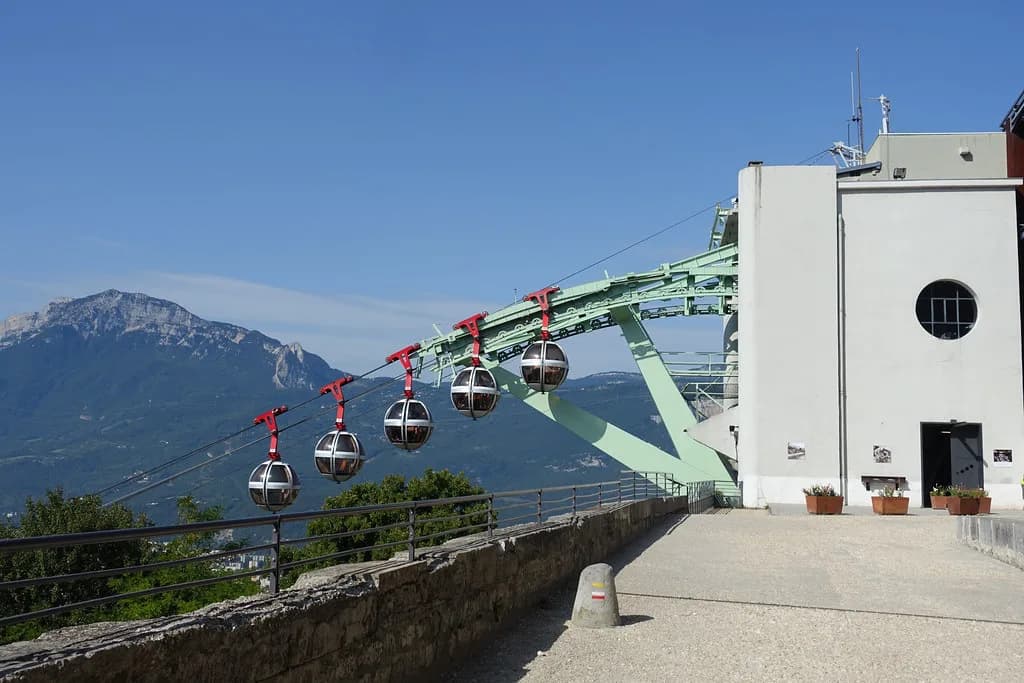
The Grenoble Bastille cable car, the Téléphérique de Grenoble Bastille, runs from the city centre to the Fort de la Bastille at 476m in three minutes. It opened in 1934 and is one of the world's first urban cable cars, and its translucent bubbles are the quickest way up the hill without a car.
Think of it as a lift with a view rather than a day out in itself. The ride is short, so the value comes from pairing it with the fort, the walking trails and the viewpoints on the hill above town.
What the Grenoble Bastille Cable Car Is
The cable car has linked the city to the Fort de la Bastille since 1934, when it was built at the initiative of Paul Michoud and the mayor Paul Mistral. It is counted among the earliest urban cable cars in the world, after Rio de Janeiro and Cape Town.
It climbs from the centre to a 19th-century military fort on the hill that gives the Bastille its name. The site is the most visited attraction in the Grenoble area, so treat it as the anchor of a half-day rather than a passing detour.
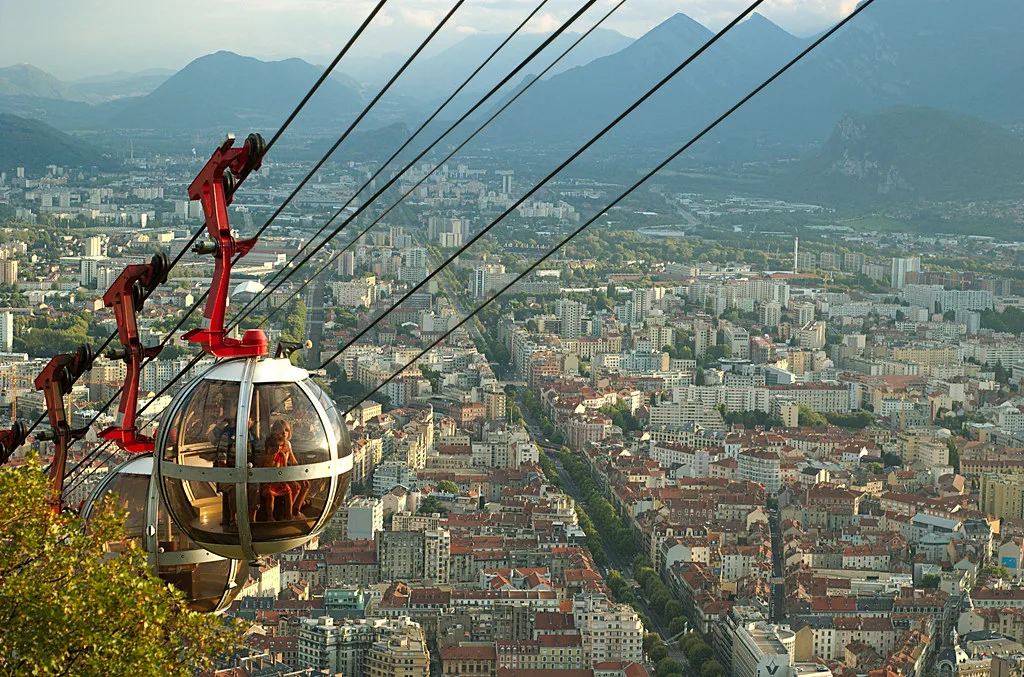
The upper station sits at 476m, high enough to look straight across the valley to the Belledonne, Vercors and Chartreuse massifs. That three-way mountain view is the reason to go up on a clear day.
Where It Starts and How to Reach It
The lower station is on Quai Stéphane Jay in central Grenoble, on the bank of the Isère. You board beside the river and step out on the hillside three minutes later.
By tram, take line A or B to Hubert Dubedout – Maison du Tourisme, which puts you within a short walk of the station. Drivers can use the Grenoble Montorge car park next to the cable car.
If you are arriving by train, the station sits a short ride from the cable car; local buses cover the connection in around ten minutes.
Tickets and Fares
An adult single is 6.60 euros and an adult return 9.80 euros. Children aged 5 to 15 pay 3.70 euros one way or 5.10 euros return, and students pay 4.50 euros single or 6.30 euros return. Visitors with reduced mobility pay 3.70 euros single or 5.10 euros return. Groups of 15 or more pay 4.80 euros single or 6.60 euros return, and an eco rate of 4.50 euros single or 6.30 euros return applies to lycéens, students, large families, partners and SEMITAG subscribers.
A dog travels for 2.40 euros. There is also an annual pass at 60 euros, or 45 euros for under-15s, which only makes sense if you plan several ascents.
If you are happy to walk down, buy a single up and save the difference against the return — but the descent is steep and not the easy option.
The Ride and the Views
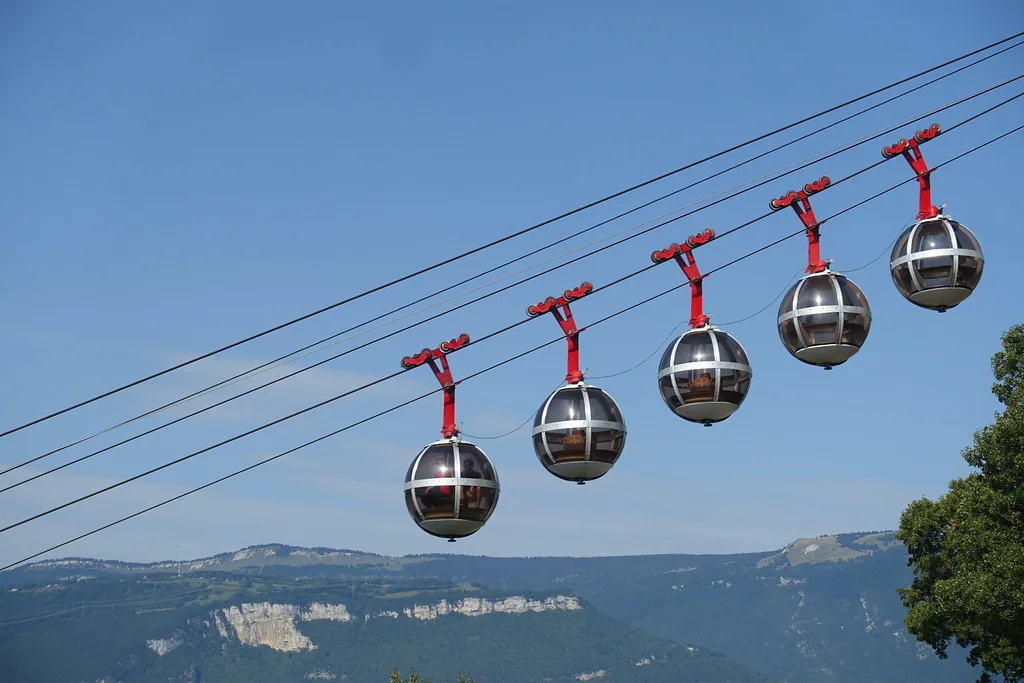
The cabins are the famous translucent bubbles, and the crossing takes about three minutes. You rise quickly from the riverbank, with the city roofs falling away beneath you and the fort walls filling the view ahead.
From the top station the panorama takes in the Belledonne, Vercors and Chartreuse ranges. On a hazy day the ride still works, but the long mountain view is what justifies the fare, so pick a clear one if you can.
What to See at the Fort de la Bastille
The fort itself is a 19th-century military structure, and the cable car drops you directly beside it. Wander the ramparts and terraces first, then pick a trail if you want more height or a different angle on the city.
Walking paths run across the hill, and the cable car is only one way up: you can also reach the site on foot or by car. That makes a one-way ticket and a downhill walk a genuine option for anyone comfortable on steep ground.
Nearby on the Hill
Several other stops cluster around the fort, so one lift can cover more than the ramparts. The Musée des Troupes de montagne, the Grottes de Mandrin and the Acrobastille adventure course are all listed at the Bastille site.
The Grottes de Mandrin are caves in the hillside, and Acrobastille is a treetop ropes course. Both suit travellers who want an activity rather than another viewpoint, but each has its own hours and charges, so check before building a day around them.
Eating at the Top
Two restaurants sit at the Bastille: the Restaurant du Téléphérique and Chez Le Pèr' Gras. Either turns the trip into a lunch stop instead of a quick up-and-down.
Menus, opening days and booking arrangements change by season, so confirm directly before you count on a table. A picnic on the terraces is the simpler fallback if the restaurants are full.
How Long to Allow
Budget two to three hours for the round trip including the fort, terraces and a short walk. The ride is only three minutes each way, so the time goes on what you do at 476m, not on the crossing.
Add an hour if you walk down rather than ride, and more again for the museum, caves or ropes course. A tight schedule can manage the cable car and the fort in under two hours.
When It Closes and How to Check Times
The cable car closes for annual maintenance in January, so a winter visit needs checking first. Exact dates and daily opening hours are published on the official Bastille Grenoble times page, which is the place to confirm before travelling.
The attraction runs under a 2022-2028 tourism designation for the Auvergne-Rhône-Alpes region, and the Téléphérique de Grenoble Bastille maintains and restores the cabins on site rather than buying new ones, keeping as many parts as possible. That is why the bubbles you ride look the way they do. As with any lift, check current prices and dates before you travel.
Is the Cable Car Covered by a Transport Pass?
There is no general inclusion in a Grenoble transport ticket. The only pass-related reduction listed is the eco rate for SEMITAG subscribers, who pay 4.50 euros single or 6.30 euros return.
Everyone else pays the standard fare ladder, so budget for the cable car separately from tram or bus tickets. If you hold a SEMITAG subscription, bring proof to claim the reduced rate.
Pairing It With the Rest of Grenoble
The lower station sits close to the Isère and within walking distance of the Jardin de Ville, a handy stop before or after the climb. The Musée de Grenoble and the cathedral are also in the central grid, so a morning lift and an afternoon indoors works well when the weather turns.
If you want the wider picture of the city's quarters and how they fit together, our area guides cover the layout. Our round-up of things to do in Grenoble helps place the cable car among the city's other sights.
Plan Your Visit
The Grenoble Bastille cable car is a three-minute lift that buys you a 476m viewpoint, a 19th-century fort and a cluster of hillside activities. Buy a single if you plan to walk down, a return if you want the easy option, and check the official times page before a January trip.
For the full set of city guides, start with our Grenoble attractions hub and build the rest of the weekend around the hill.
Explore more Grenoble guides
Frequently Asked Questions
How much does the Grenoble Bastille cable car cost?
Grenoble Alpes Tourisme publishes the full fare ladder on its listing for the Téléphérique de Grenoble Bastille, covering adult, child, student, reduced-mobility and group rates. Look there for the current figures before you buy, since the published list is the one that counts at the ticket window.
How long is the ride up to the Bastille?
About three minutes. The cabins climb from the riverbank to the Fort de la Bastille at 476m, so the trip itself is quick and the time goes on what you do at the top.
Where do you catch the Grenoble Bastille cable car?
The lower station is on Quai Stéphane Jay in central Grenoble, beside the Isère. Trams A and B stop at Hubert Dubedout – Maison du Tourisme, a short walk away, and drivers can use the Grenoble Montorge car park.
Is the cable car included in a transport pass?
Grenoble Alpes Tourisme lists no general inclusion in a transport ticket. The only pass-linked reduction is an eco rate for SEMITAG subscribers, so budget for the cable car separately.
Can you walk up to the Bastille instead of taking the cable car?
Yes. The site is reachable on foot along paths or by car, so a single ticket up and a walk down is a real option for anyone comfortable on steep ground. The descent is steep, which is worth weighing before you give up the return.
When is the Grenoble Bastille cable car closed?
It closes for annual maintenance in January. Daily opening hours and the dates of that closure are published on the official Bastille Grenoble times page, so confirm before you travel.