
Jardin de Ville, Grenoble: What to See at the City's Historic Park
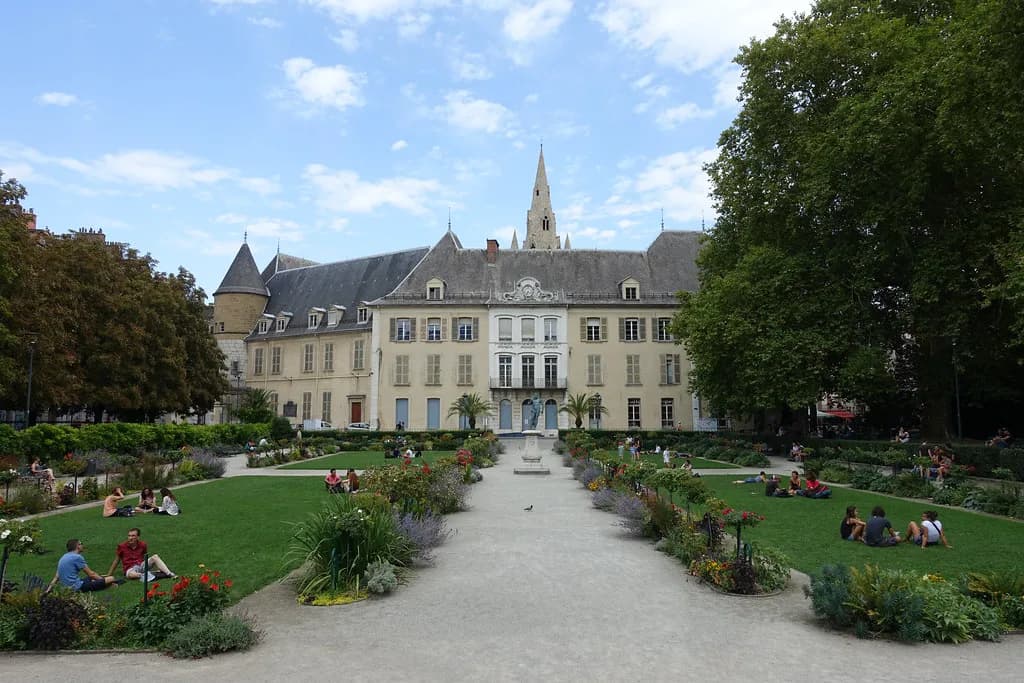
The Jardin de Ville is a free public garden beside Grenoble's pedestrian streets, open every day of the year and small enough to see on a 20-30 minute loop. It keeps its original early-17th-century layout, with a broad wooded area and a rose bed where a flower garden once stood. Treat it as a green breather between sights rather than a half-day destination.
Its appeal is convenience and cost: no ticket, no queue, and a location that puts you minutes from Place Grenette and the old Hôtel de Lesdiguières. If you are building a weekend around Grenoble, the garden slots naturally into a morning in the centre.
What the Jardin de Ville is
This is a historic public garden rather than a botanical collection or a landscaped theme park. The Duke of Lesdiguières had it built next to his own house, and Grenoble residents took it over as a public space from 1719. That civic history is the reason the early-17th-century plan still reads clearly on the ground today.
Entry costs nothing and the garden is open all year, every day, so it works as a filler when a museum is shut or you are early for something else. Check the tourist office page before a special trip if you are travelling for a specific event.
Where it is and how to get there
The address is 2 rue Hector Berlioz, 38000 Grenoble, a short step from Place Grenette and the pedestrian shopping streets. Coming out of the railway station, it is a straightforward walk of well under fifteen minutes.
By tram, take line A or B to Hubert Dubedout / Maison du Tourisme, which puts you at the garden's edge. That same stop serves the tourist office, so it doubles as a sensible first stop on arrival for maps and current information.
The two sides of the park
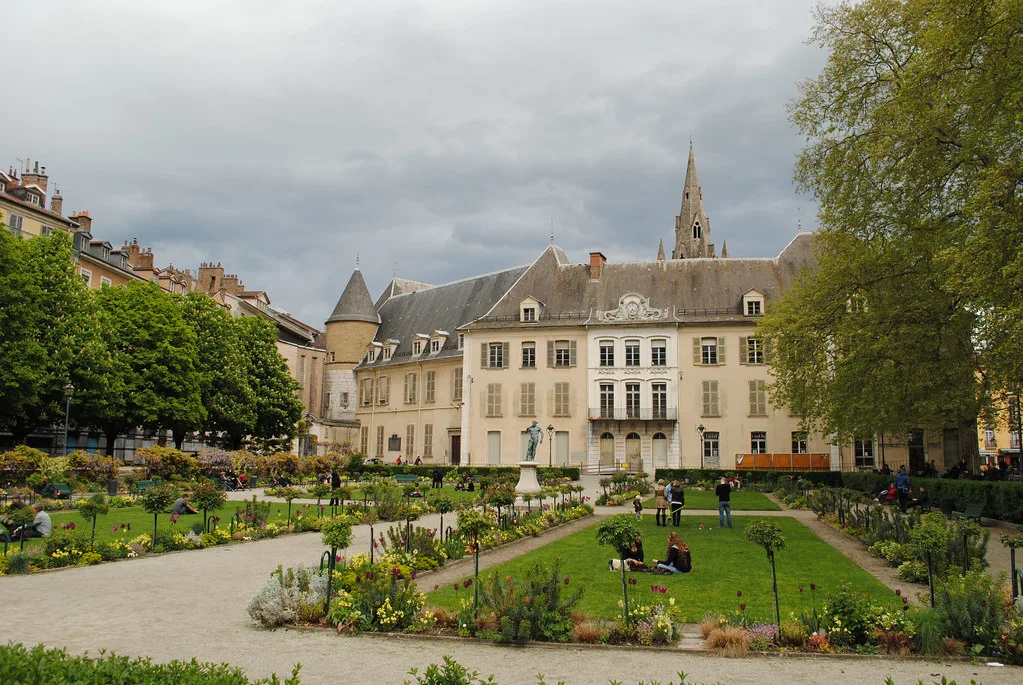
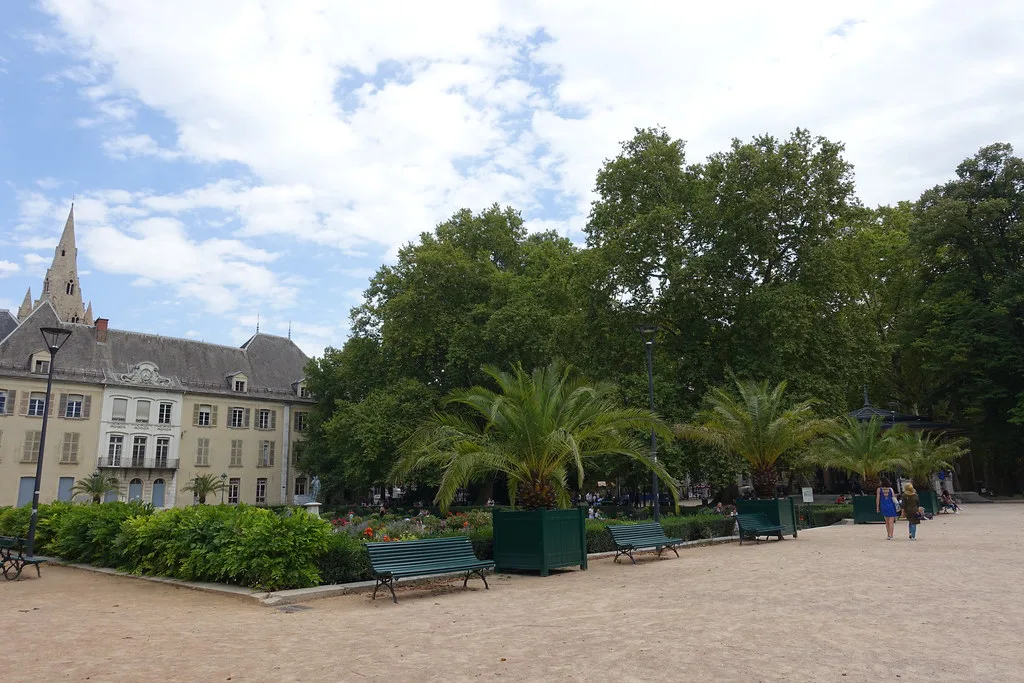
The garden splits into two distinct parts: a formal planted section, the legacy of Lesdiguières' French-style garden, and the shaded bois, a band of plane trees and limes bordering a broad open square. The contrast matters when you are choosing where to sit, because the trees give real shade on a hot afternoon.
Wander both halves rather than stopping at the first bench. The formal side is where you find the rose bed, while the wooded side is the place to slow down with a book or a picnic.
What to look for inside
Beyond the rose bed, the garden's fixtures are simple: a kiosk, plenty of benches, and a children's play area with structures for smaller and larger children plus a sandpit. Families tend to gravitate to the play area, so bring a bucket and spade if you have small children in tow.
The garden also hosts events from time to time, including the Cabaret Frappé festival and concerts according to the tourist office. The Petit Bulletin venue page currently lists no upcoming programme, so check the listings closer to your dates rather than planning around a specific performance.
The Lesdiguières story
The duke built the garden alongside his house, which today houses the Maison de l'International. That link explains why a public park sits so close to a working institution, and it is worth a glance at the building's exterior as you pass.
The 1719 opening to the public is the detail that makes the garden more than a lawn: residents adopted it early and it has stayed a communal space since. Keep that in mind when you see how casually locals use the benches.
Practical visitor facts
Entry is free and the garden is open all year, every day. Dogs are accepted, and the garden is accessible to wheelchair users independently, which makes it one of the easier central stops if mobility is a concern.
There are no tickets to book and no timed slots. The main practical decision is when to come: mid-afternoon on a warm day gives you the shade of the bois, while a morning visit fits neatly before the pedestrian streets get busy.
How long to allow
Budget 20-30 minutes for a loop through both halves, stopping at the rose bed and the kiosk. With children in the play area, or a picnic on the benches, an hour disappears easily.
If you are short of time, cut through rather than linger: the garden sits on the way between Place Grenette and the quays, so it makes a pleasant transit rather than a detour. Do not build a half-day around it.
What's nearby
Place Grenette is immediately adjacent, and the old Hôtel de Lesdiguières is a few steps away, so you can pair the garden with both without planning transport. Snack options cluster around the square and the surrounding lanes if you want to eat on the go.
The Bastille cable-car departure lies along the quays just behind the park, a natural next stop if you want a view over the city. Read up on the bastille Grenoble before you go so you know what you are heading up to.
The Téléphérique de Grenoble Bastille is the quickest way up, and it is worth checking ahead for queues and operating times. Our guide to the Grenoble bastille cable car covers what to expect at the top.
If you want an indoor follow-up, the Museum of Grenoble is the city's main art collection, and the grenoble cathedral is another central stop worth ten minutes. Both fit a half-day in the centre alongside the garden.
For a bigger green space, Parc Paul Mistral, Grenoble offers more room to stretch out than this compact garden, and our grenoble neighborhoods guide helps you place each area on the map.
When to slot it in
Use the Jardin de Ville as a low-cost breather between sights in the pedestrian centre, especially on a day when you are mostly walking. It is free and open daily, so it never needs booking and rarely needs planning.
A sensible sequence is Place Grenette, the garden, then the quays and the cable car. That order keeps you moving in one direction without doubling back through the centre.
Who it suits and who it doesn't
Families, anyone wanting shade and a bench, and budget-conscious weekenders will get the most out of it. Travellers chasing headline monuments should treat it as a ten-minute pass-through rather than a destination.
If your weekend is tight, prioritise the big sights and let the garden fill a gap. If you have a slower day in the centre, it earns a proper sit-down.
Plan Your Visit
The Jardin de Ville is a free, year-round garden with a real history, a handy tram stop and a location that puts half of central Grenoble within a short walk. Allow half an hour, bring children if you have them, and use it as the calm between two busier stops.
Pair it with the cable car and the old town for a full day, and check the tourist office for any events during your dates before you set out.
Explore more Grenoble guides
Frequently Asked Questions
Is the Jardin de Ville free to enter?
Yes. Grenoble Alpes Tourisme lists entry as free, with the garden open all year and every day. There are no tickets to book or timed slots to reserve.
Where is the Jardin de Ville in Grenoble?
It is at 2 rue Hector Berlioz, 38000 Grenoble, a short walk from Place Grenette and the pedestrian shopping streets. The old Hôtel de Lesdiguières, now the Maison de l'International, is next door.
How do I get to the Jardin de Ville by tram?
Take tram line A or B to Hubert Dubedout / Maison du Tourisme, which is at the garden's edge. The stop also serves the tourist office, so it is a useful first stop on arrival.
How long does it take to visit the Jardin de Ville?
Allow 20-30 minutes for a loop through the formal garden and the shaded bois. With children in the play area or a picnic on the benches, an hour goes quickly.
Is the Jardin de Ville good for children?
Yes. The garden has a play area with structures for smaller and larger children, plus a sandpit. The wooded side gives shade on warm days, and benches let adults sit while children play.
What is there to see near the Jardin de Ville?
Place Grenette, the old Hôtel de Lesdiguières and the Bastille cable-car departure along the quays are all within a few minutes' walk. The Museum of Grenoble and the cathedral are also central and easy to add.
When was the Jardin de Ville opened to the public?
It opened to the public in 1719, having been built by the Duke of Lesdiguières alongside his own house. The early-17th-century layout survives.
Is the Jardin de Ville open all year?
Yes. Grenoble Alpes Tourisme lists it as open all year, every day, with free entry and dogs accepted. It is also accessible for wheelchair users independently.