
Centre Pompidou-Metz: What to See and How to Plan a Visit
The Centre Pompidou-Metz is the Metz outpost of the Centre Georges Pompidou in Paris, built as a centre for contemporary art rather than a conventional city museum. Its programme changes with each exhibition, so the visit you get depends on what is hanging when you arrive. Plan around the current show, the building itself and a half-day that leaves room for the rest of Metz.
This is an attraction page, not a whole-city itinerary: it covers one place, the Centre Pompidou-Metz, and the practical decisions that make a visit work. Longer city planning sits in the wider Metz Attractions: 6 Visitor Guides collection.
What the Centre Pompidou-Metz Is and Why It Is Worth Your Time
The Centre Pompidou-Metz opened in 2010 as a decentralised branch of the Paris Pompidou, sharing its parent institution's focus on modern and contemporary art. It is a curated exhibition centre rather than a survey museum of local history, which is precisely why art-minded visitors put it near the top of a Metz shortlist. If contemporary art leaves you cold, the architecture and the views still justify an hour.
Shows here are ambitious and often long-running: a Maurizio Cattelan exhibition that opened on 8 May 2025 was scheduled to run until 2 February 2027. Smaller monographic shows sit alongside them, from Louise Nevelson's black sculptures to a centenary survey of François Morellet with 100 works. Reading the current programme on the Centre Pompidou-Metz website is the single most useful preparation.
Where It Is in Metz
The Centre Pompidou-Metz stands in the Amphithéâtre district, on the edge of the city centre near the main railway station and the convention quarter. That puts it within comfortable walking distance of the station and of the historic core, so it slots easily into a weekend without a bus ride. Use the Metz Attractions: 6 Visitor Guides map to see how it lines up with the cathedral and the old town before you fix a route.
From the station side, allow roughly fifteen to twenty minutes on foot to the museum entrance, longer if you stop for coffee on the way. Arriving by train makes the most sense for a short break, since the station is a short walk from the centre and the museum. If you are driving, the Amphithéâtre area has parking, but a Saturday market morning will slow you down.
The Building by Shigeru Ban and Jean de Gastines
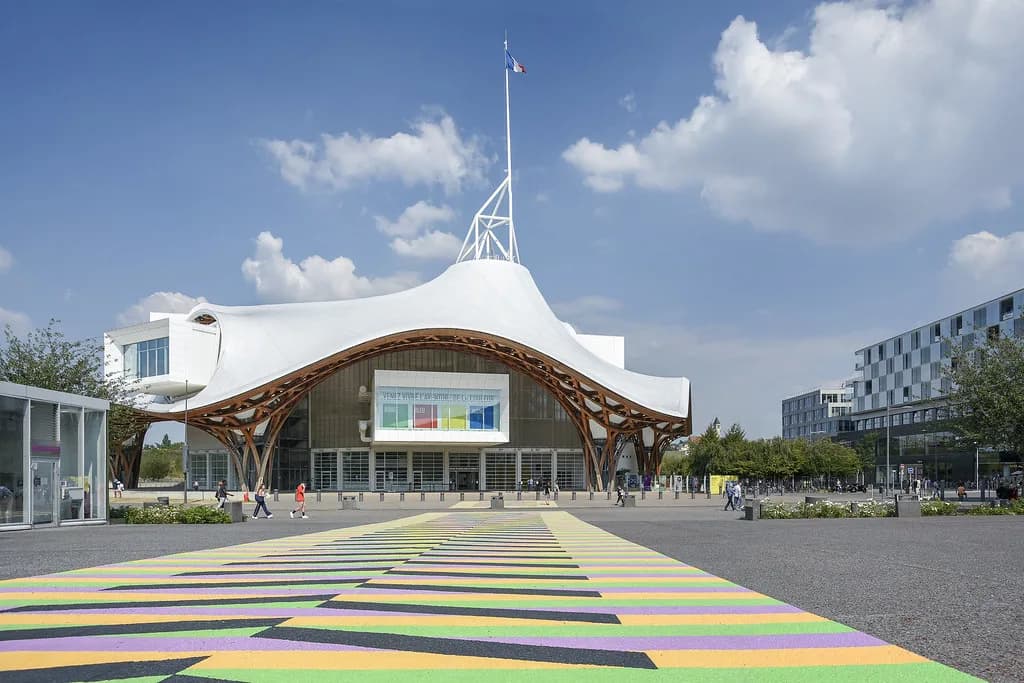
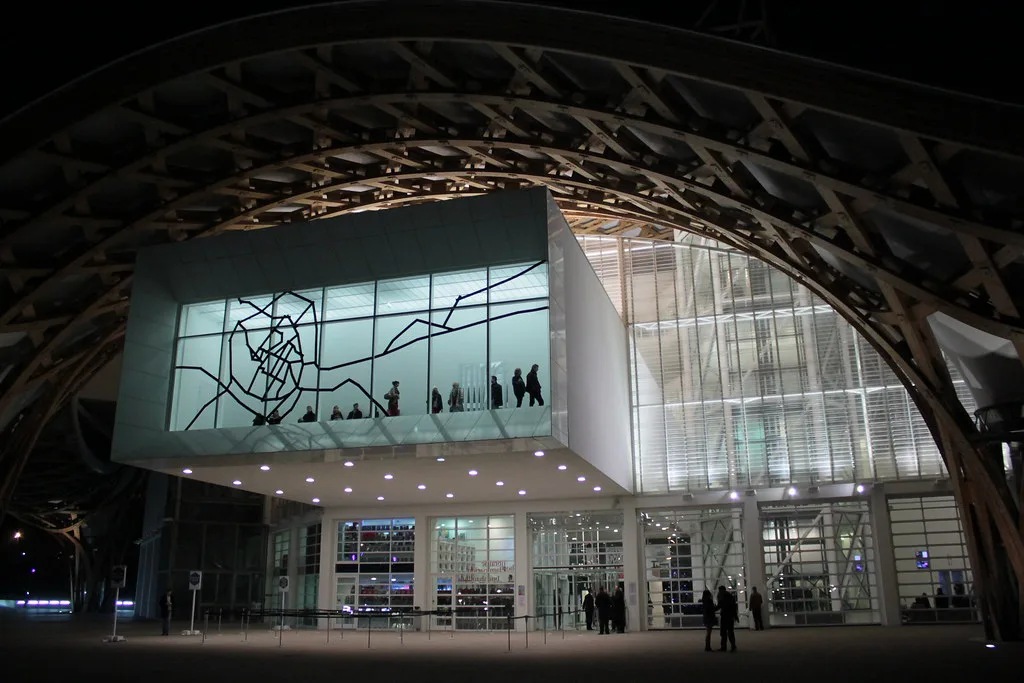
Architects Shigeru Ban and Jean de Gastines designed the museum, and the building is part of the reason to come: a huge undulating roof of laminated timber ribs covered in a translucent fabric, pinned by a central spire. Inside, the roof structure frames long galleries and a tall central space that often hosts large installations. Photographers should look up as much as at the art.
The plan is compact enough to keep your bearings: a forum, a few large gallery volumes stacked around it, and a top-level area where the timber lattice reads most dramatically. Because the roof is not solid, daylight shifts through the day, which changes how the art looks. A slow circuit of the building before diving into the first exhibition is time well spent.
What Is Inside: Temporary Exhibitions Rather Than a Permanent Collection
The museum runs on temporary exhibitions, drawing on the Paris Pompidou's collection and on loans, rather than presenting a fixed hang that stays the same year after year. Curators here have handed whole shows to artists and guest curators, including an extensive Cattelan project that set 40 of his works against 400 pieces from the institution. That approach means return visits genuinely differ.
Past programmes illustrate the range: a two-year Cattelan presentation from 2025, a Morellet centenary with exactly 100 works, a Nevelson retrospective, a photography history with over 300 pieces and a video-game exhibition curated by Hans Ulrich Obrist. There are also smaller gallery spaces used for monographic and group shows. The Centre Pompidou-Metz mounts only temporary exhibitions, so each visit brings a different line-up rather than a standing greatest-hits display.
How to Check What Is On
Because the museum's offer is exhibition-led, the programme is the thing to research first. Use the exhibitions and events search box on the museum's own site, filtering by date, to see exactly which shows overlap your weekend and whether any gallery is closed between installations. A gap between exhibitions can mean a reduced experience, so an email or phone call to the museum is worthwhile if the site is ambiguous.
Special events, talks and one-off installations appear on the same calendar and often sell out or run on fixed dates. If a particular show is the reason for your trip, book the museum slot with the Centre Pompidou-Metz before you book the train. Otherwise, keep the visit flexible and fit it around the rest of your day.
How Long to Allow and a Suggested Order
Budget two to three hours for a normal visit: roughly 45 minutes on the architecture and the central space, 90 minutes to two hours for the main exhibition, and the rest for any smaller show. Add time if a blockbuster is running, because timed-entry queues build at weekends. A tight one-hour visit only works if you stick to a single gallery.
A sensible order is the building first, then the largest temporary exhibition, then the smaller galleries, finishing at the bookshop on the way out. If light-headedness from large shows is a risk, break the visit with a coffee. The top level, with its roof views, rewards anyone who saves energy for the end.
Tickets, Opening Hours and Booking
Ticket prices, opening hours, closure days and booking rules are set by the museum and change with the programme, so confirm them on the official site before you travel. Nothing here can substitute for the museum's own published information. Book online for weekend visits and for any headline exhibition.
If the museum is closed on a particular weekday, that changes your whole plan, so check the calendar before fixing which day you visit. Pair it with the cathedral or the old town on the days the galleries suit you less.
Facilities and the Bookshop
The museum has a café-restaurant area and a design-led bookshop stocked with exhibition catalogues and art books, which is worth twenty minutes if you like printed matter. Lockers and cloakroom facilities are the usual for a major gallery. Check the museum's own practical pages for current on-site services and accessibility.
Nearby: What to Combine With the Visit
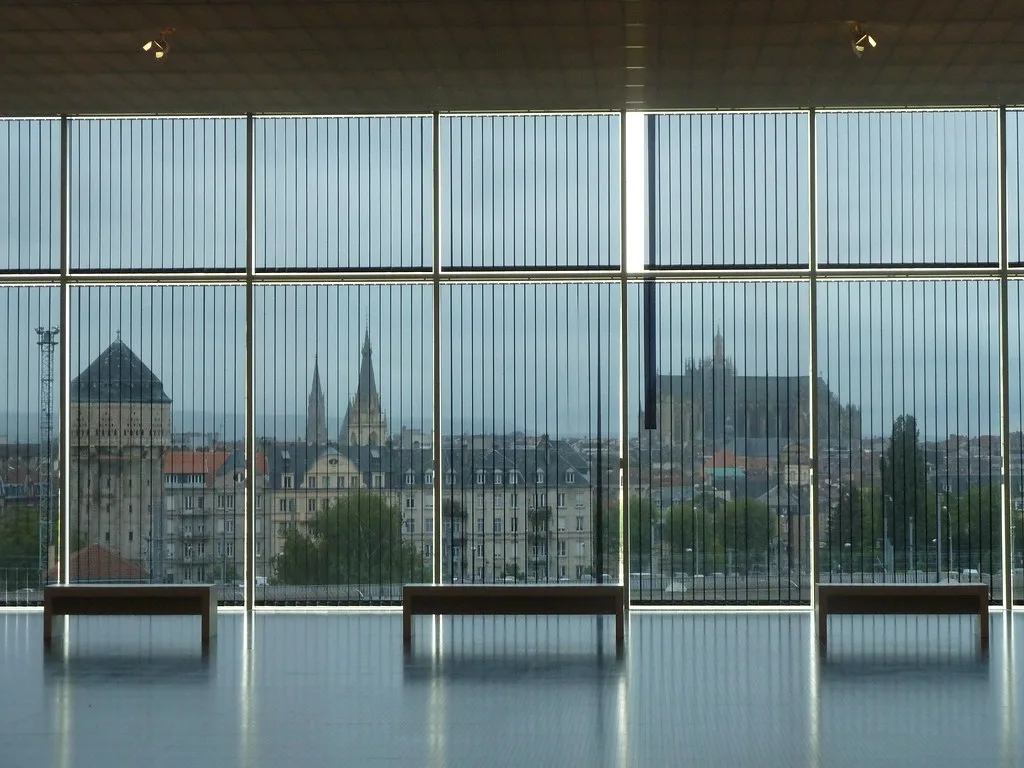
The Metz Cathedral (Cathédrale Saint-Étienne) is the obvious pairing, with its stained glass and soaring nave, and it sits a short walk from the museum in the historic core. Allow an hour, more if you climb the tower. A museum morning followed by the cathedral in the afternoon is a well-balanced day.
The Musée de la Cour d'Or, Metz covers archaeology, medieval art and local history, making it a good counterpart to the Pompidou's contemporary focus if you have a second morning. It is a different kind of collection entirely: objects and archaeology rather than big temporary shows. Check its own opening days before you go, since smaller city museums often close one weekday. Art-minded travellers weighing up which Grand Est city to base themselves in can compare this with the things to do in Nancy, where Art Nouveau and the Stanislas squares set the tone.
For a wander, the Porte des Allemands, Metz and Saint-Pierre-aux-Nonnains, Metz add medieval fortifications and one of France's oldest church buildings to a walk along the river. The Marché Couvert de Metz is a handy lunch stop on a market morning. Combine two of these, not all four, if you also want the Pompidou.
Common Mistakes and Honest Trade-offs
The biggest mistake is assuming a fixed collection. Visitors expecting a Louvre-style permanent hang can be surprised by a single large show or a gap between exhibitions, so read the programme first and set expectations accordingly. The second is under-timing: the building swallows an hour easily and the main show another two.
A second trade-off is location versus convenience: the museum is close enough to the station and centre to walk, but it is not on the cathedral square, so you will walk between the two. Budget the walk into a tight schedule. If contemporary art is not your thing, spend the time on the cathedral and Cour d'Or instead.
Fast Answers on Tickets, Hours, Groups and Timing
Ticket price and hours are the two facts to check on the museum's official website before booking, along with whether your visit falls in a between-exhibitions gap. Groups and school parties use the same building, so midweek mornings can feel busier with organised visits. Weekends and the last days of a big show are the most crowded.
Plan Your Visit
Treat the Centre Pompidou-Metz as a half-day anchor for one morning or afternoon, built around whatever exhibition is running. Check the programme, book ahead for weekend and headline shows, and allow generous time for the building itself.
For the rest of the city, combine it with the cathedral or the Musée de la Cour d'Or on another morning and finish by the river.
Frequently Asked Questions
Does the Centre Pompidou-Metz have a permanent collection?
It presents temporary exhibitions, drawing on the Paris Pompidou's collection and on loans, rather than a fixed permanent hang. What you see depends on the current programme, so check the exhibition calendar before you travel.
Who designed the Centre Pompidou-Metz building?
Shigeru Ban and Jean de Gastines designed the museum, whose undulating timber-and-fabric roof is a central feature of the visit. Look up in the central space and at the top level for the best views of the structure.
How long does a visit to the Centre Pompidou-Metz take?
Allow two to three hours: about 45 minutes for the building and central space, 90 minutes to two hours for the main exhibition, and the rest for smaller shows or the bookshop.
How do I get to the Centre Pompidou-Metz from central Metz?
The museum sits in the Amphithéâtre district, a short walk from the main station and the historic core, roughly fifteen to twenty minutes on foot from the station side.
How do I check what exhibitions are on at the Centre Pompidou-Metz?
Use the exhibitions and events search on the museum's official website, filtering by date, to see which shows overlap your visit and whether any galleries are between installations.
Do I need to book tickets for the Centre Pompidou-Metz?
Booking ahead is wise for weekends and for headline exhibitions. Check the official site for current booking rules, ticket prices and opening hours before you fix your day.