
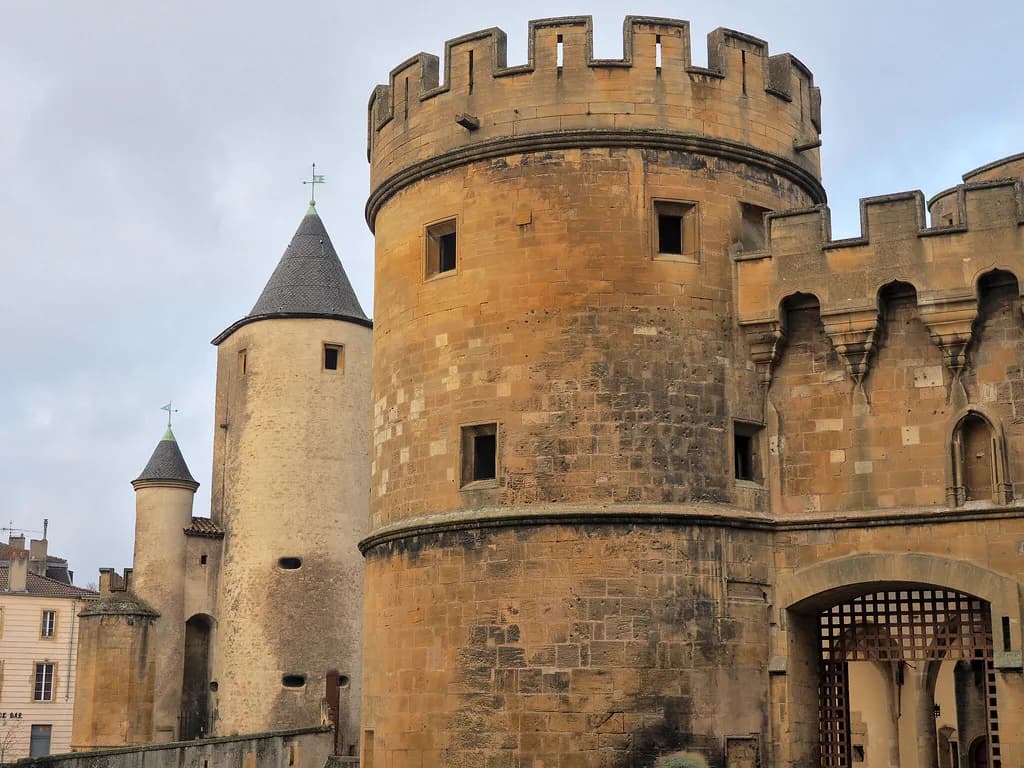
Porte des Allemands: Metz's Medieval Gate on the Seille
The Porte des Allemands is the most imposing piece of Metz's medieval walls still standing, and the only one of the city's medieval gates still upright. It works as two things at once: a fortified double gateway and a bridge across the Seille, which is why its footprint feels unlike a single arch.
Treat it as a short, focused stop of roughly an hour, or as the trailhead for the ramparts circuit that leaves from the gate and traces the vestiges of the city's fortifications. Pair it with the historic centre rather than building a day around it.
What the Porte des Allemands is
The gate is a genuine small fortress in its own right, very emblematic of Metz, combining a double doorway with a bridge span over the Seille. It is the most imposing building left from the medieval ramparts and a symbol of the city's medieval past as a Ville d'art et d'histoire.
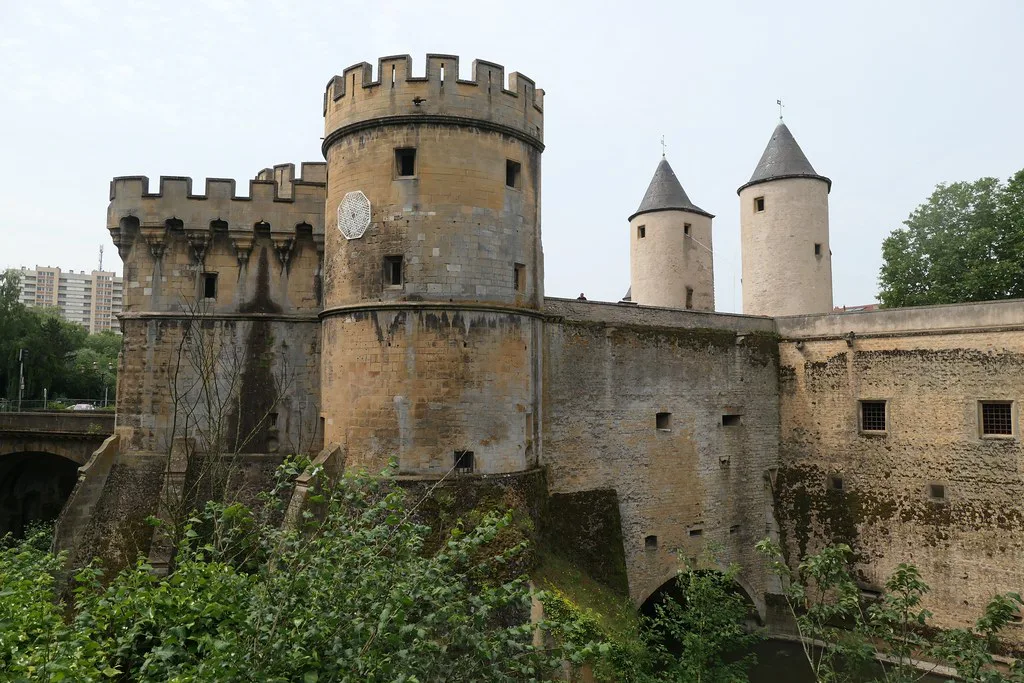
Because the defensive work layers a gatehouse, a crossing and a wall together, the interesting thing is the whole composition rather than one facade. Walk round it before you cross: the scale of the fortification only reads properly from a few steps back, with the Seille in view.
Why it is called the Porte des Allemands
The name comes from the Teutonic knights, or brothers hospitallers of Notre-Dame-des-Allemands, who founded a hospital nearby from the 13th century. Knowing that makes the plaque and the religious-military associations of the gate easier to read.
The city became owner of the gate in 1240, and a museum was later opened there according to a 2019 account. Treat that as history rather than an itinerary promise: plan on seeing the exterior and its setting, and check locally before expecting an interior visit.
Where it is
The gate stands on Boulevard André Maginot in the Outre-Seille quarter, just south-east of the historic centre across the river. Use the Seille and the line of the ramparts as your landmarks: the gate sits on the water rather than in a square.
That position makes it an easy add-on to a centre-ville day rather than a separate excursion. If you are planning the wider city, browse the Metz Attractions: 6 Visitor Guides collection and slot the gate in as the walk between the river and the old streets.
How to get there
The site is accessible by public transport, and the meeting point listed for guided activity there is the gate itself on Boulevard André Maginot. In practice that means you can arrive by bus or on foot along the Seille and orient yourself by the fortification rather than an address plaque.
Route planning is best done with the city's own transport information on the day; exact lines and timings shift, and the gate is only a few minutes from the riverbank path. Build in time to approach from the water side, which gives the best first view of the bridge span.
What to look at on site
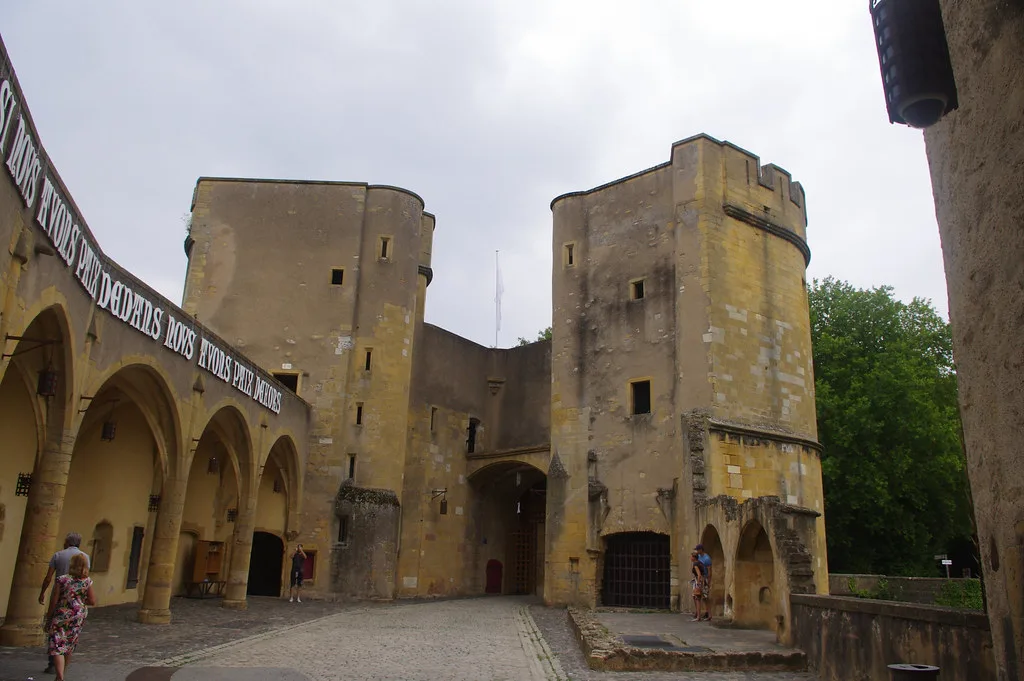
Give your attention to three things: the double gateway itself, the bridge span over the Seille, and the way the wall runs away from the gate into the streets. The gate is the only remaining upright vestige of Metz's medieval town gates, which is what makes the surviving masonry worth a slow look.
Because the gate once doubled as a bridge, its profile is asymmetric and easy to misread at speed. Circle it on both banks and you will see how the crossing and the defence were built as one piece of engineering rather than a doorway dropped onto a road.
How long to allow
Budget around an hour for the gate and its immediate surroundings: the exterior, the riverbanks and a short loop of the adjacent wall. A guided school visit at the site is scheduled for one hour, which is a fair indication of how much there is to say about the building.
If you follow the ramparts circuit beyond the gate, add more time for the walk itself. The visit rewards attention rather than duration: an hour of looking closely beats a hurried circuit, and the gate is best combined with other sights rather than treated as a half-day.
Walking on: the circuit of the ramparts
The circuit of the ramparts starts at the Porte des Allemands and leads you through the vestiges of Metz's fortifications. That makes the gate a natural beginning for a wall walk rather than a standalone photo stop.
Plan the walk in one direction towards the centre so you finish near cafés and museums rather than retracing your steps. Wear shoes that cope with cobbles and the riverside path, and keep the gate in view at the start to fix the line of the old defences in your head.
Nearby options in central Metz
Across the centre, the Metz Cathedral (Cathédrale Saint-Étienne) and the Centre Pompidou-Metz make the obvious pairings, one historic and one contemporary. Both reward a booked slot rather than a passing glance, so check opening days before you build the day around them. If you are weighing a second city against Metz, our things to do in Reims guide covers a comparable mix of cathedral and cellar visits.
For a slower contrast, the Musée de la Cour d'Or, Metz covers the city's archaeology and history, and the Marché Couvert de Metz is the place to pick up lunch. Both fit naturally into a day that starts or ends at the gate.
If you have time for a third stop, Saint-Pierre-aux-Nonnains is a short addition to the same circuit. Otherwise check our things to do in Metz guide for the wider spread of museums and streets to fill a weekend.
Practical points before you go
Plan on the exterior and its riverside setting: the figures published for the site relate to a guided school programme, arranged through the Mairie de Metz's heritage service rather than sold at the gate.
The gate is described as accessible to people with reduced mobility and reachable by public transport. Confirm current details with the Mairie de Metz before travelling if access or an interior visit matters to your plans, and treat the exterior and the riverside walk as the reliable core of the visit.
Plan Your Visit
The Porte des Allemands suits a one-hour stop that anchors a walk along Metz's old walls, best paired with the cathedral and the Centre Pompidou-Metz on the other side of the centre. Come for the double gateway and the bridge over the Seille, not for a museum interior, and let the ramparts circuit carry you back into town.
Frequently Asked Questions
What is the Porte des Allemands in Metz?
It is a medieval fortified gate and bridge over the Seille in the Outre-Seille quarter, the most imposing remnant of Metz's medieval walls and the only surviving upright medieval gate in the city. It combines a double gateway with a river crossing.
Why is it called the Porte des Allemands?
The name refers to the Teutonic knights, or brothers hospitallers of Notre-Dame-des-Allemands, who founded a hospital nearby from the 13th century. The gate became city property in the 13th century.
Is the Porte des Allemands free to visit?
The exterior and its riverside setting are what you see on a normal visit, and no public ticket price is published for the gate. Check with the Mairie de Metz for any paid or guided access.
How long does a visit to the Porte des Allemands take?
Allow about an hour for the gate itself and the immediate surroundings. If you follow the ramparts circuit that begins here, add time for the walk along the vestiges of the fortifications.
How do I get to the Porte des Allemands?
The gate stands on Boulevard André Maginot in the Outre-Seille quarter and is accessible by public transport. From the historic centre it is a short walk across the Seille, with the ramparts as your landmark.
What is the ramparts circuit in Metz?
It is a walking route that starts at the Porte des Allemands and traces the remains of Metz's medieval fortifications. Use it to connect the gate to the rest of the old city rather than visiting the gate in isolation.
What is near the Porte des Allemands?
The historic centre lies just to the north-west, with Metz Cathedral, the Centre Pompidou-Metz, the Musée de la Cour d'Or, the Marché Couvert and Saint-Pierre-aux-Nonnains all within the city centre.