
Metz Cathedral (Cathédrale Saint-Étienne): What to See and How Long to Allow
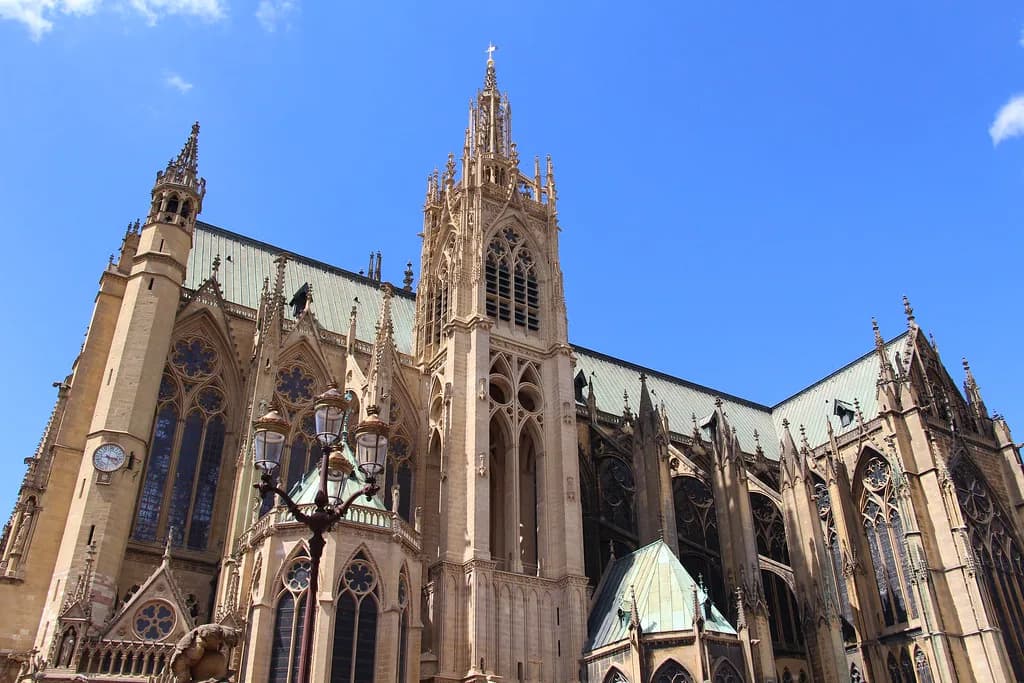
Metz Cathedral, properly the Cathédrale Saint-Étienne, is the reason many people put Metz on a short-break list at all. Entry is free, and inside you get a Gothic nave 42 metres high and more than 6,500 square metres of stained glass spanning the 13th to the 20th centuries. Allow it an hour if you like looking up, and rather less if you only want the photographs.
What Metz Cathedral is and why it matters
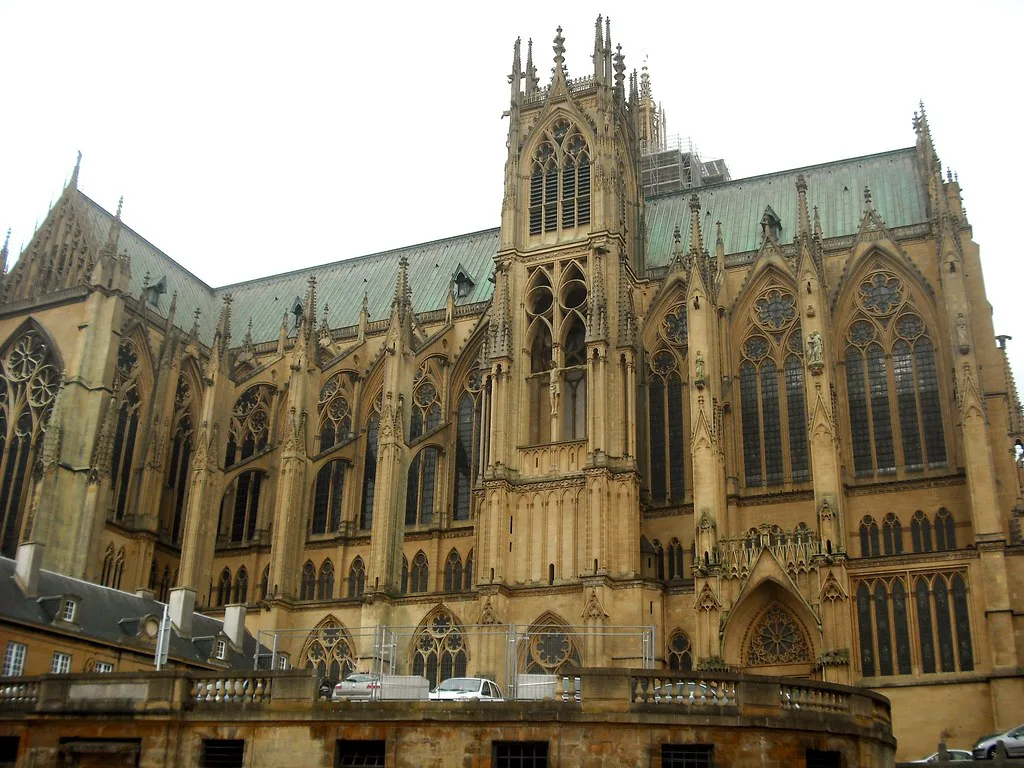
Built between 1220 and 1522, the cathedral is a merge of two earlier churches rather than a single clean design, which is part of why the interior feels so varied. It is built of local limestone and is a listed historic monument. The nave rises over 42 metres, the third highest in France, and the walls are pierced by so much glass that the building has long been nicknamed God's lantern.
If you are choosing which sights in the city deserve your time, this is the one that sets the standard; the wider selection is set out in Metz Attractions: 6 Visitor Guides. What separates it from a hundred other French cathedrals is the glazing rather than the exterior, so plan your visit around the windows.
Where it is and how to get there
The cathedral stands on Place d'Armes on the Île, the island in the middle of central Metz, and it is the natural centre of any walk through the old town. From the station area you can reach it on foot in roughly a quarter of an hour, crossing onto the Île and following the signs for the centre. Because it sits in the middle of everything, most visitors pass it several times in a weekend without trying.
Place d'Armes is also a useful landmark for meeting people, and the square itself is worth a few minutes before you go in. If you are building a half-day out of the island, pair the cathedral with one museum rather than trying to do the whole centre in one stretch.
The stained glass, from the 13th to the 20th century
The glazing is the highlight of the visit. The windows run from Hermann de Münster, Thiebault de Lixheim and Valentin Bousch in the medieval and Renaissance periods through to Jacques Villon and Marc Chagall in the 20th century, which gives the interior the feel of a survey of glass art rather than a single period. The older work is concentrated in the choir and the upper clerestory, while the later panels demand a slower read because the colours behave differently.
Do not skip the west end. Visitors tend to walk down the nave and look at the altar, then turn round and leave; the western windows and the view back up the full length of the building are where the scale becomes obvious. Ten minutes spent sitting in the nave, moving a couple of rows to see the glass against different light, will tell you more than a rushed circuit.
The nave and the God's lantern effect
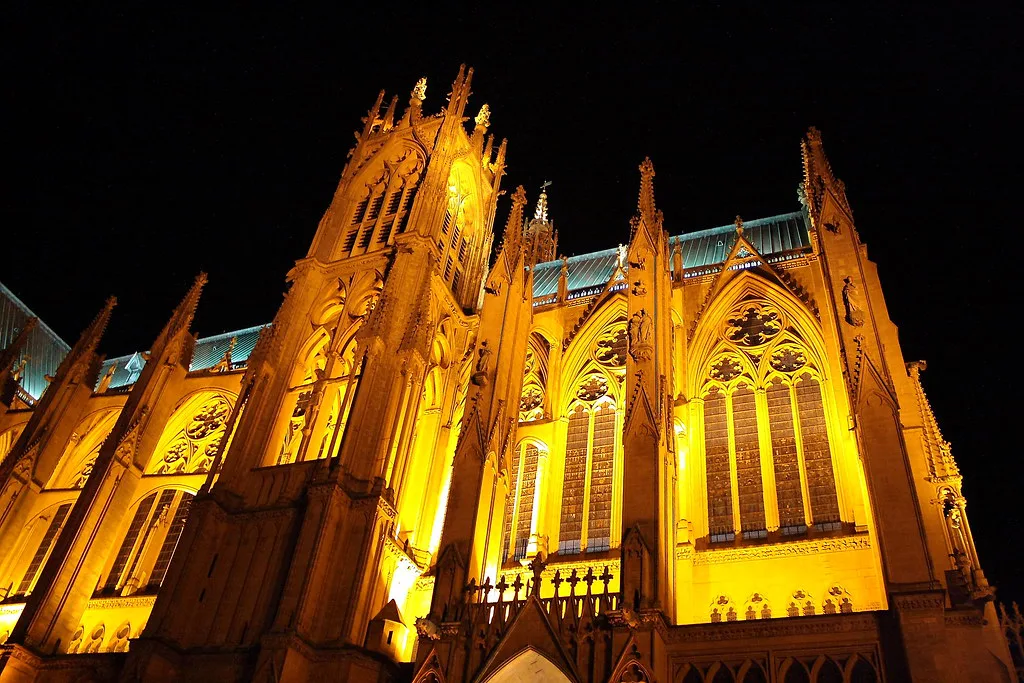
The nickname comes from the sheer quantity of glass and the height of the space: with a nave of over 42 metres and thousands of square metres of windows, the interior is unusually bright for a Gothic building. Look up at the clerestory and then look down the length of the nave to see how the light is carried through. On a dull day the effect is softer and the colours read more clearly; in strong sun the glass glares rather than glows.
Opening hours and tickets
Entrance is free. The cathedral is open for visits on your own at all times, and guided tours are available, including tours that can be booked in advance; groups are accepted by reservation. Book ahead if a guided tour is the point of your visit, and check the published timetable from Inspire Metz before you travel, since seasonal hours can differ from what is listed here.
A published timetable for 19 to 25 October 2026 gives 8:00 am to 6:00 pm every day of that week. That is a dated example, not a year-round promise, so confirm the day you plan to visit before making it the anchor of your morning.
How long to allow and the best time of day
Give the cathedral between 45 minutes and an hour and a half. The short visit covers the nave and the principal windows; the longer version includes the choir, the west end and a slow look at the 20th-century glass. If you are short of time in Metz, this is a better use of an hour than a hurried museum stop, simply because it costs nothing and needs no booking.
Because the visit is built around glass, light matters more than clock time. Mid-morning and late afternoon tend to give the most readable colours on a normal day, and the interior is at its quietest early. It is a working place of worship as well as a monument, so keep voices low and check before photographing around anyone at prayer.
What else is within a short walk
Several of Metz's other sights sit within a few minutes of Place d'Armes, so you can build an island-based half day without public transport. The Centre Pompidou-Metz is the obvious contrast to the cathedral: contemporary art in a striking roof structure, a short walk from the centre. The Musée de la Cour d'Or, Metz covers the city's Roman and medieval past and makes a good companion if the weather turns.
Closer still, the Porte des Allemands, Metz is the surviving medieval gate and bridge over the Seille, and Saint-Pierre-aux-Nonnains, Metz is one of the oldest church buildings in France, now used for events. The Marché Couvert de Metz is the place for a market lunch if you are visiting on a morning when it is trading.
Common mistakes
The most common error is treating the cathedral as a five-minute photo stop on the way to the next square. The facade is not the attraction; the interior is, and it needs at least half an hour of looking. Go in, sit down, and let your eyes adjust before deciding you have seen it. If you are weighing up a city break, the same advice holds at Ajaccio cathedral, where the interior rewards more time than the exterior.
The second is missing the west end and the later windows entirely, which is easy when you follow the crowd towards the altar. Walk the full length of the nave in both directions. If you want an overview of how the cathedral fits into a wider weekend, things to do in Metz sets out the rest of the centre.
Plan Your Visit
Metz Cathedral is free, central and quick to reach from the station, which makes it the easiest good decision on a short break in the city. Give it an hour, go in with the windows as the goal rather than the facade, and check the published timetable before you set out.
Build the rest of the day around the Île so you are not crossing the city twice. One museum, one market and the cathedral is a full and satisfying day in Metz.
Explore more Metz guides
Frequently Asked Questions
Where is Metz Cathedral?
It stands on Place d'Armes on the Île, the island at the centre of Metz, a short walk from the old town's main streets and roughly a quarter of an hour on foot from the station area.
Is Metz Cathedral free to enter?
Yes. Entrance is free, and visits on your own are possible without a ticket. Guided tours are available and can be booked in advance, and groups are accepted by reservation.
How long do you need at Metz Cathedral?
Allow 45 minutes to an hour and a half. The shorter visit covers the nave and main windows; the longer one adds the choir, the west end and a proper look at the 20th-century glass.
Why is Metz Cathedral called God's lantern?
The nickname comes from the volume of stained glass and the height of the space. With a nave of over 42 metres and thousands of square metres of windows, the interior is unusually bright for a Gothic building.
Who made the stained glass in Metz Cathedral?
The windows span the 13th to the 20th centuries and include work by Hermann de Münster, Thiebault de Lixheim and Valentin Bousch, as well as later panels by Jacques Villon and Marc Chagall.
When is the best time to see the windows?
Mid-morning and late afternoon usually give the most readable colours, and the interior is quietest early. Strong direct sun makes the glass glare rather than glow, so a softer day is not a bad one for a visit.
What else is near Metz Cathedral?
The Centre Pompidou-Metz and the Musée de la Cour d'Or, Metz are both a short walk away, as are the Porte des Allemands, Saint-Pierre-aux-Nonnains and the Marché Couvert de Metz.