Cannes Old Town: Le Suquet Walking Guide
Walk Cannes old town, Le Suquet, from the old port to Place de la Castre, with Forville market, Rue Saint-Antoine and the climb to Notre-Dame d'Espérance.
On this page
Cannes old town is Le Suquet, a medieval quarter built on the hill of Mont Chevalier directly above the old port. It is a climb rather than a flat wander: cobbled streets and narrow stairs carry you from the harbour up to Place de la Castre, where the bay, the beaches and the hinterland open out below you. Half a day covers it at an unhurried pace, and you can stop after any stage if the heat or the gradient gets the better of you.
What Cannes Old Town Is
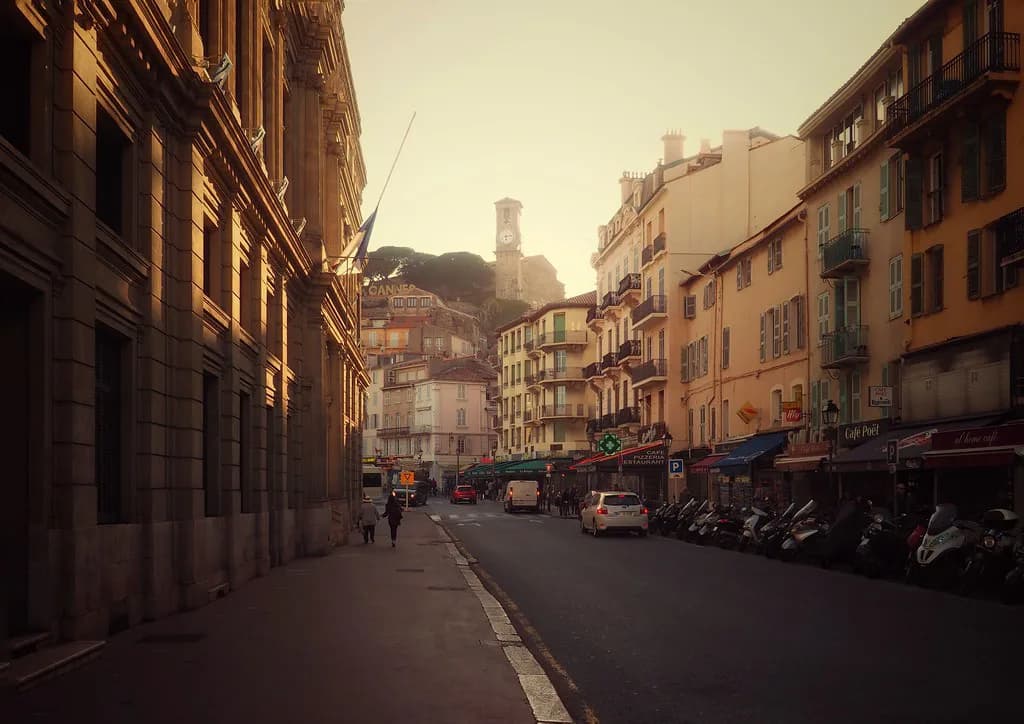
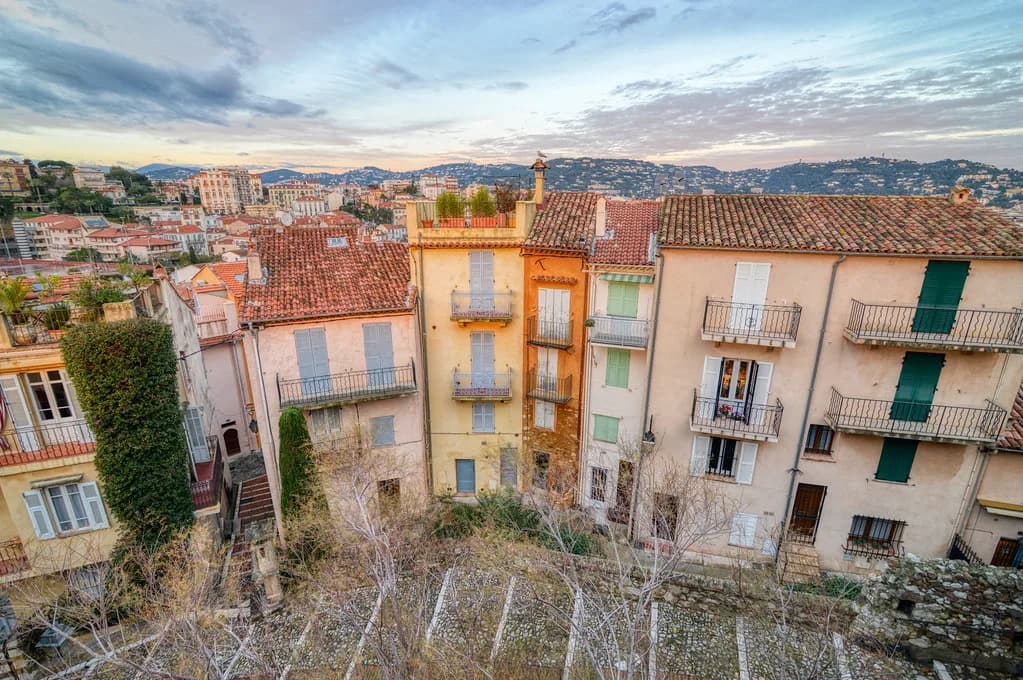
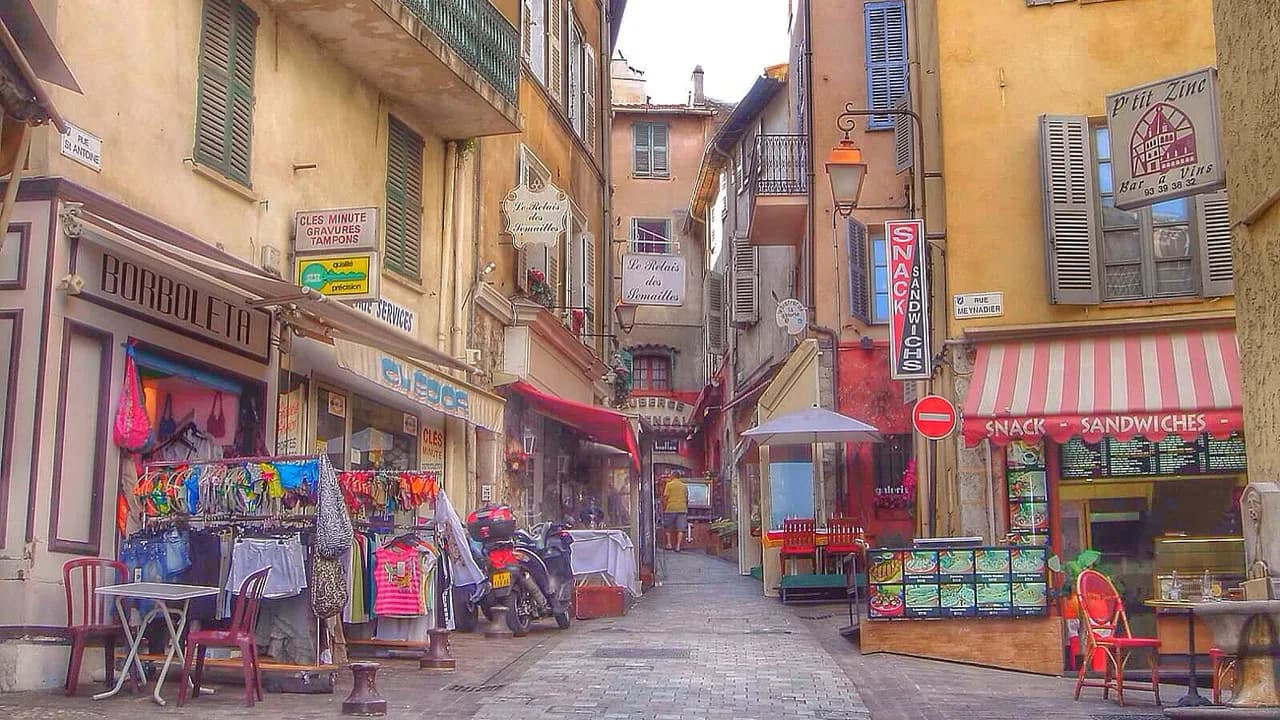
The historic district extends from the old port to La Croix des Gardes and was built in the Middle Ages on the hill of Mont Chevalier. The site belonged to the monks of the Abbey of Saint Honorat, who built a castle there that later became a place of worship. Colourful, flowered facades line the small houses, and the whole quarter has a Provençal character that feels far removed from the hotel frontage along La Croisette.
How Le Suquet Is Laid Out
Think of the old town in three tiers. At the bottom sits the old port; in the middle, the lanes and stairs of the Suquet; at the top, Place de la Castre. Rue Saint-Antoine, the main artery of the quarter, links the citadel to the old port, so it works as your spine whether you are going up or coming down.
Everything is walkable, and walking is the best way to see the old town, La Croisette and the port. The streets of central Cannes are pedestrian-friendly, which makes the approach from the seafront straightforward even on a short break.
Rue Saint-Antoine: The Main Artery
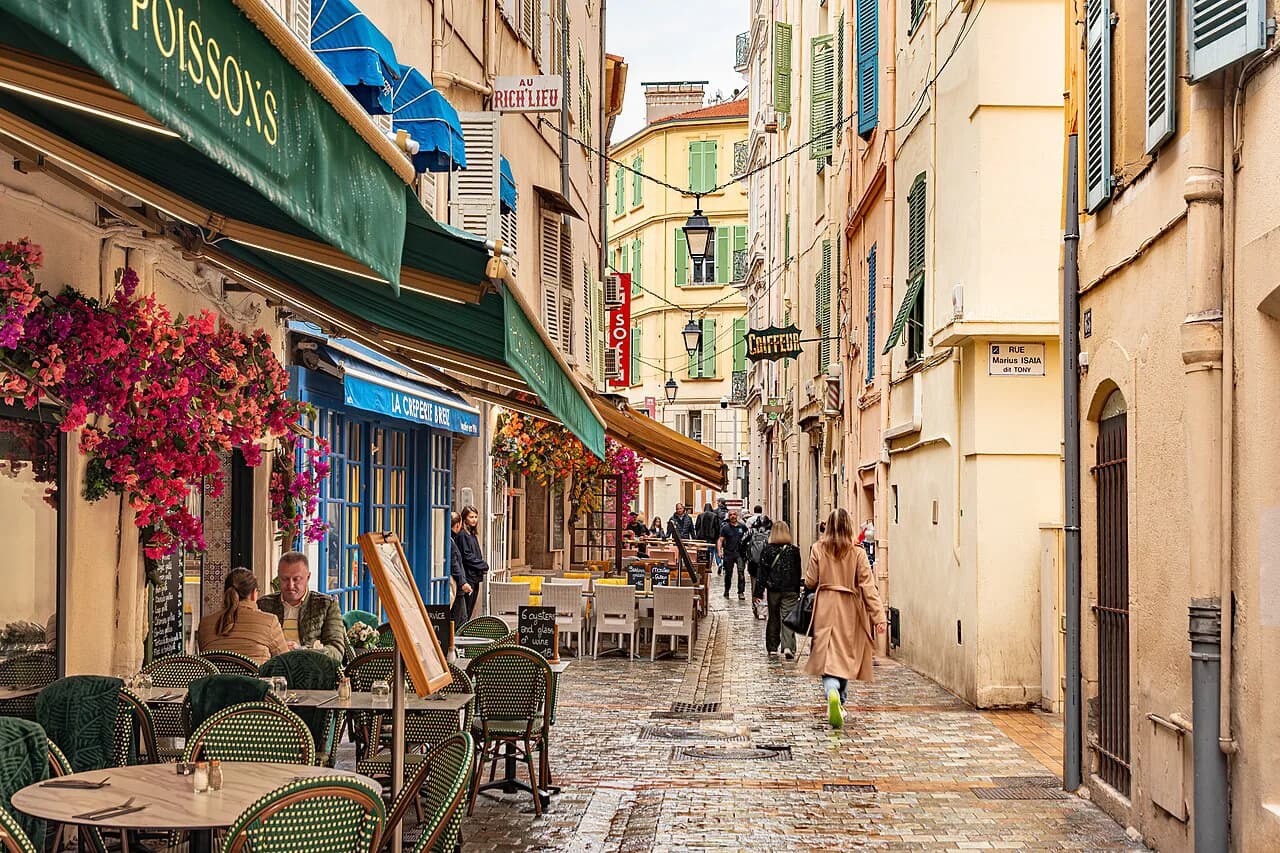
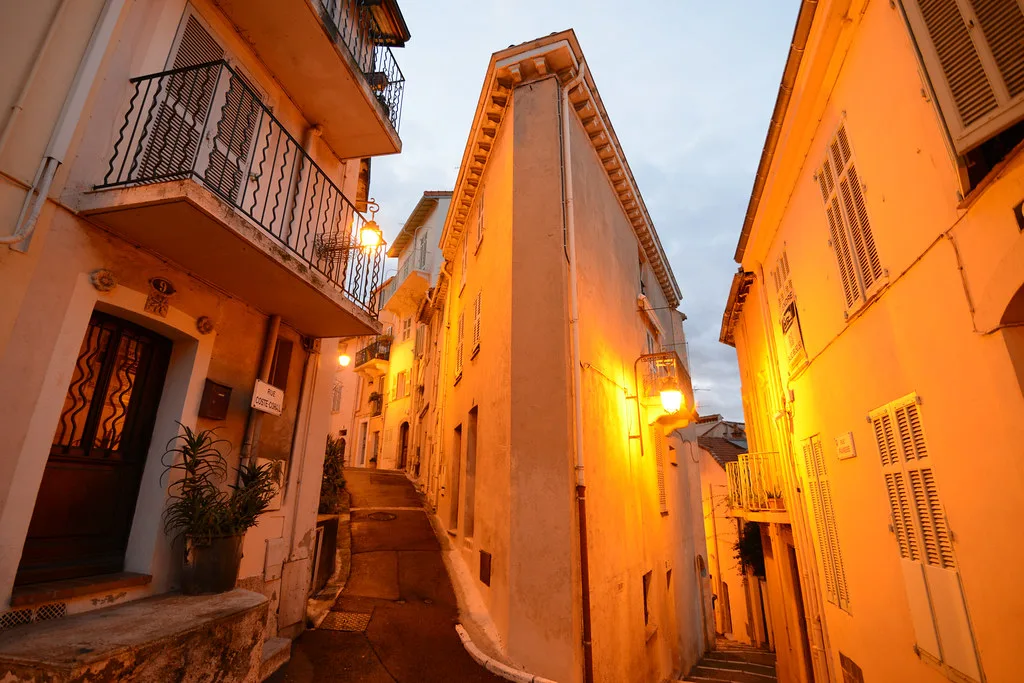
Rue Saint-Antoine runs from the old port up towards the citadel and is lined with typical restaurants in the Provençal style. Treat it as the default route: it gives you a clear line uphill, plenty of places to pause, and easy bail-out points if you decide to turn back. The side alleys off it are where the quarter gets quiet and photogenic.
The Climb: Cobbles, Stairs and How Long to Allow
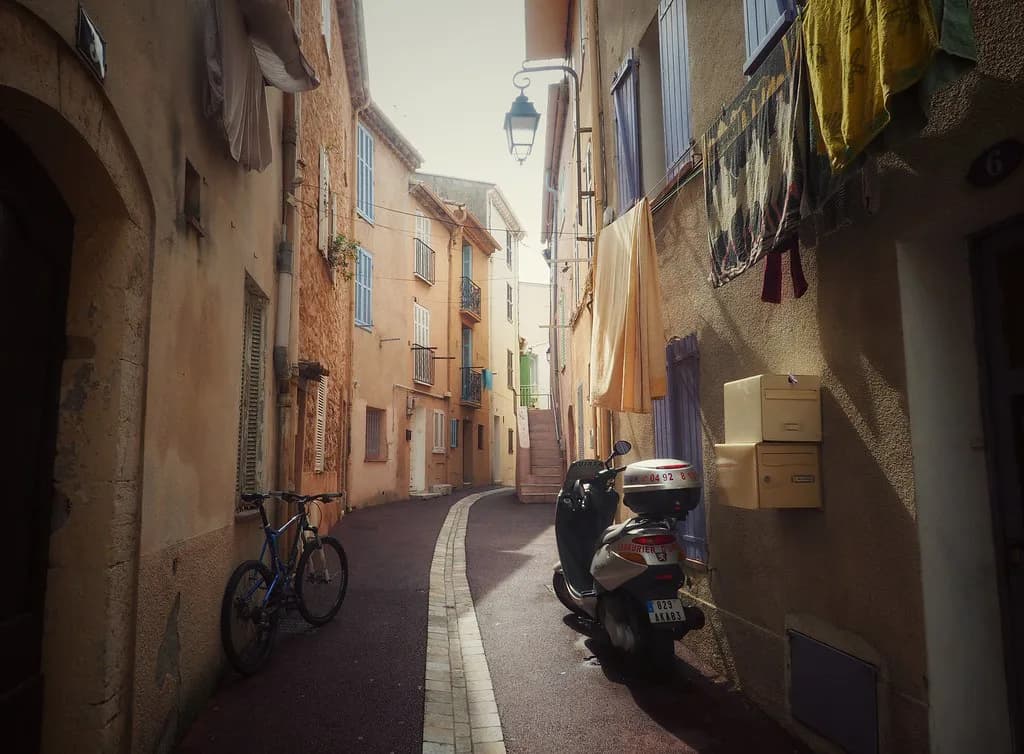
Getting to the top of the Suquet means walking narrow stairs and small alleys, so wear shoes you can trust on cobbles. Le Suquet is easily walkable from central Cannes, but the streets are steep and winding, and the climb is the point rather than an obstacle. Allow a couple of hours for the ascent, the sights at the top and the walk back down, and add time if you stop to eat.
If you would rather not walk up, a small tourist train runs to the hill; it is a transport option, not a substitute for the lanes themselves. The reward at the top is Place de la Castre, where you can look out over the bay of Cannes, the beaches and the hinterland.
Place de la Castre and the Views
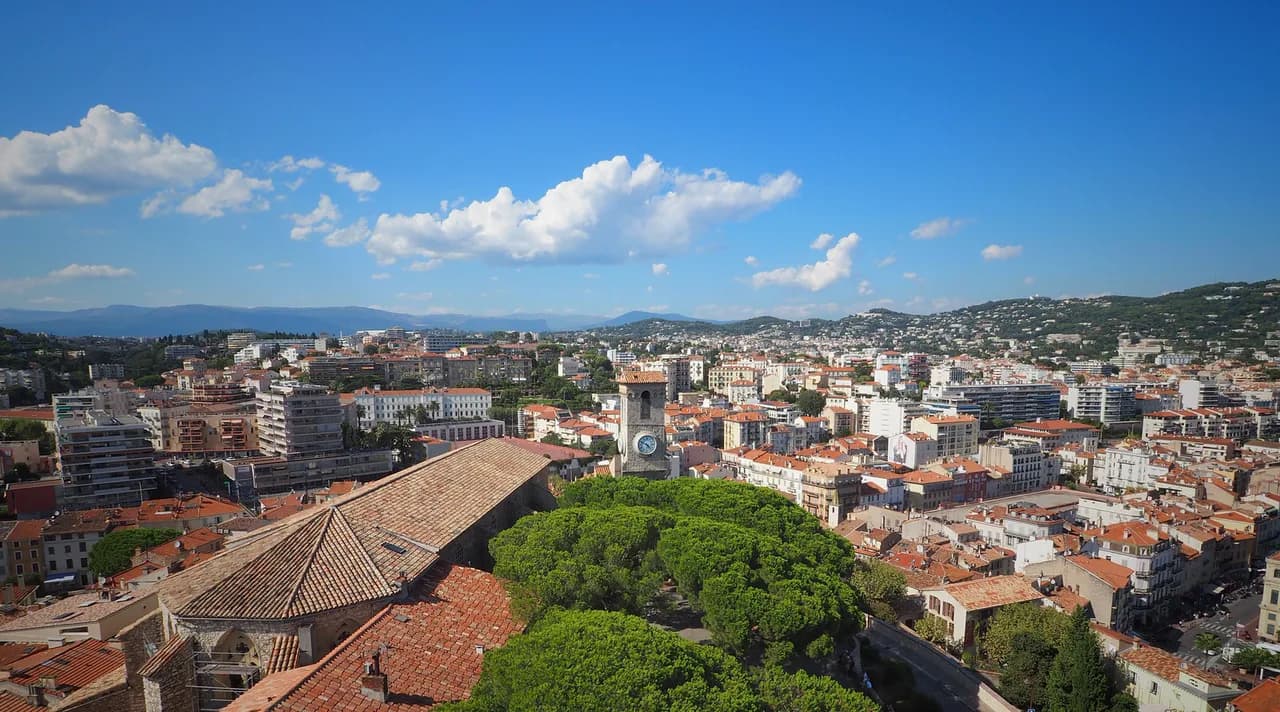
Place de la Castre crowns the hill and is bordered by the castle and the church of Notre-Dame d'Espérance. From the square you take in the bay, the beaches and the land behind the city in one sweep. Come up in the morning for clearer light on the water, or late in the day when the stonework softens.
Château de la Castre and Its Square Tower
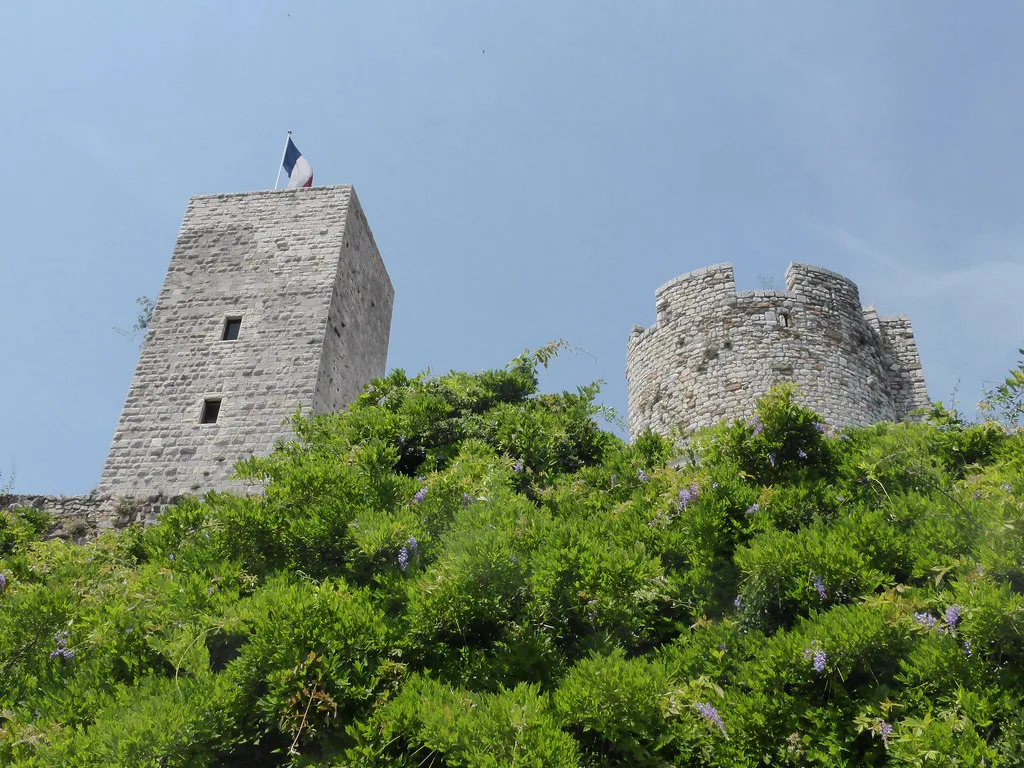
The Château de la Castre is listed as a historical monument and was an important ceramics factory in the 19th century before becoming a museum. Its square tower dominates the city, and the climb of 109 steps to the top gives a 360-degree panorama. The museum holds a permanent exhibition alongside temporary shows, so check current opening days and admission before you build your day around it.
Notre-Dame d'Espérance
Notre-Dame d'Espérance stands on Place de la Castre beside the castle and was completed in 1941 after more than a century of work. It anchors the top of the walk: you reach it through the same narrow stairs and alleys that give the Suquet its atmosphere. Step inside if the doors are open, then use the square outside as your turning point for the descent.
Forville Market: The Flat Stop Before the Climb
Forville market sits in the historic district less than 200 metres from the old port, and it is the natural first stop before you start uphill. The metal structure dates from 1930, when the market outgrew its wooden building, and stalls sell local and regional produce. The Cannois gather there on Sundays over a glass of wine with a cheese platter, so expect the crowd to be at its thickest then.
Go early for the best look at the produce and the calmest aisles. For the wider picture of covered and open markets across the city, and which mornings they run, see our guide to Marché Forville and the rest.
The Old Port at the Foot of the Hill
The old port was built in 1838 and remains a working harbour where traditional fishing is still practised. It is the obvious starting point for the walk: from the quay you can see the hill of the Suquet rising directly behind the boats. Once a year the harbour turns into an open-air guinguette for Le port de Cannes en fête, a free family event with concerts, games and stands.
A Suggested Half-Day Route
Start at Forville market while it is still cool and the stalls are full, then cross to the old port and pick up Rue Saint-Antoine. Climb through the lanes and stairs, pause for lunch on the Provençal streets of the Suquet, and finish at Place de la Castre with the church, the castle and the tower view. Walk back down by a different alley to see another slice of the quarter, then end on the quay.
If you have a full weekend, give the old town one morning and keep La Croisette and the beaches for another. Our weekend in Cannes plan slots Le Suquet in without doubling back across town.
Where to Pause: Restaurants in the Suquet
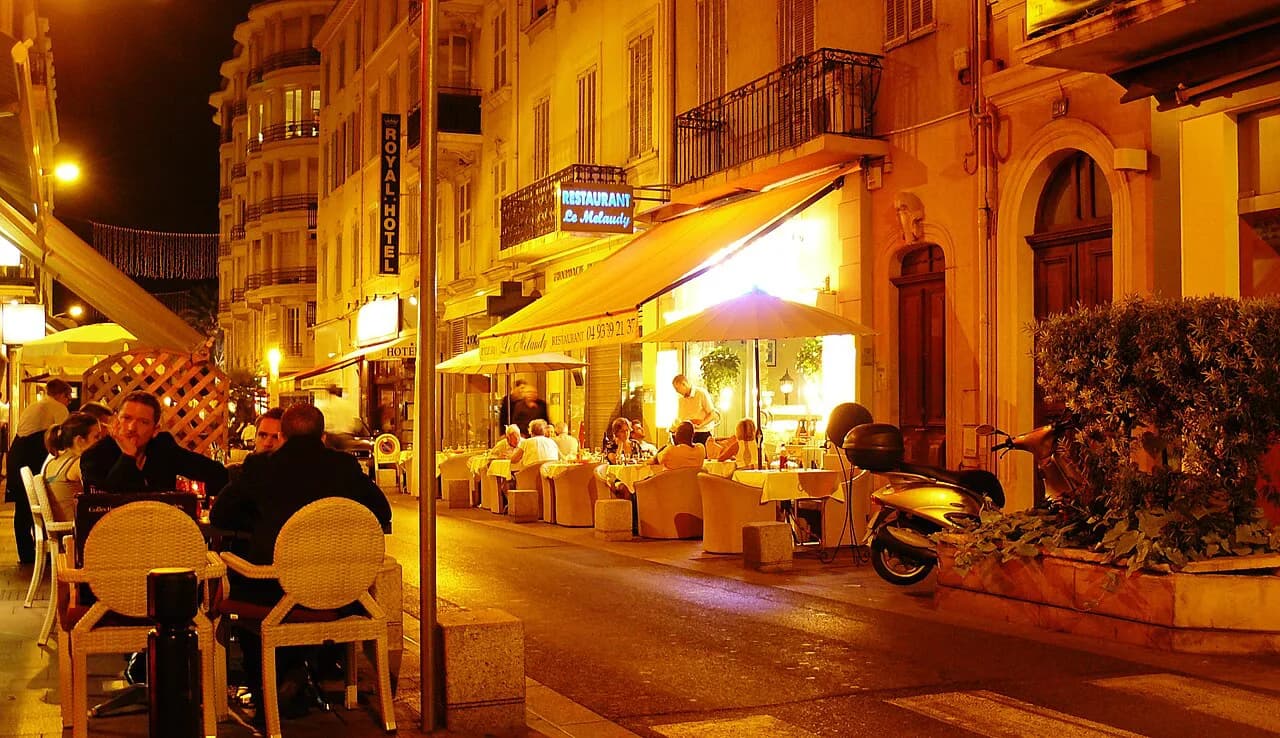
Rue Saint-Antoine has plenty of typical restaurants in the Provençal style. Da bouttau is a Provençal inn founded in 1860 and described as the oldest restaurant in Cannes, while Le jardin secret is a smaller, characterful place on the same streets. Both are popular with visitors through the summer season, and their opening days and menus follow the rhythms of the town's tourist calendar rather than staying fixed all year.
How the Old Town Fits into a Cannes Weekend
Le Suquet is compact enough to combine with the seafront on the same day: market in the morning, climb before lunch, waterfront in the afternoon. In summer the historic district hosts small events, including open-air music on the church square under the Nuits musicales du Suquet banner and the multicultural Le Suquet des arts. Both have run in past years rather than as fixed annual dates, so check what is on during your visit.
Time your trip with the seasons: the French Riviera is busiest and hottest in high summer, while spring and autumn give cooler climbing weather. For a cooler, quieter visit, see our guide to Cannes in October.
Plan Your Visit
Le Suquet rewards an early start and a pair of comfortable shoes more than any planning. Begin flat at Forville market, follow Rue Saint-Antoine up, and let Place de la Castre be the finish line. If you only have an afternoon, do the port and the lower lanes, and save the tower for a return.
Frequently Asked Questions
What is there to see in Cannes old town?
Le Suquet is the old town: the cobbled lanes and stairs of the hill of Mont Chevalier, Rue Saint-Antoine, Place de la Castre with the Château de la Castre and Notre-Dame d'Espérance, Forville market and the old port below. The tower at the castle gives a 360-degree view over the bay.
Is Cannes old town worth visiting?
Yes, if you want history and views rather than beach time. Le Suquet is a genuine medieval quarter with a working harbour at its foot and a clear summit at Place de la Castre. It also sits within easy walking distance of the seafront, so it fits neatly into a short break.
How long does it take to walk around Le Suquet?
Allow around half a day to do it properly: market, climb, a pause for lunch and the sights at the top. A brisk version without stops takes a couple of hours. The streets are steep and cobbled, so pace yourself.
Where is the old town in Cannes?
It rises directly above the old port, on the hill of Mont Chevalier, and stretches towards La Croix des Gardes. Rue Saint-Antoine is the main artery linking the citadel at the top to the harbour below.
Do you need to climb stairs to see the old town?
The upper lanes involve narrow stairs and steep, winding streets. You can see the market and the port on the flat, and a small tourist train serves the hill if you prefer not to walk up. The lanes themselves are on foot.
When is Forville market busiest?
The Cannois gather at Forville on Sundays, so expect the thickest crowds then. The market is less than 200 metres from the old port and sells local and regional produce. Go early for the calmest aisles.
Sources
Notes for French city breaks
Optional updates to our guides.
You might also like
Continue reading
More guides you'll find useful