Is Clermont-Ferrand Worth Visiting? Honest Weekend Guide
Clermont-Ferrand earns a short break with black volcanic stone, a UNESCO Romanesque basilica and Michelin heritage, though nightlife is modest.
On this page
Yes, Clermont-Ferrand is worth visiting, provided you want dark volcanic architecture, a serious Romanesque church and a city that feels lived in rather than staged. The centre is compact, the headline sights cluster together, and two full days covers the city comfortably. It rewards curiosity about stone, volcanoes and engineering more than it rewards a search for nightlife.
The setting is the draw as much as the streets: the city sits in the Auvergne volcanic region, and black lava stone runs through its cathedral and older quarters. That gives Clermont-Ferrand a look you will not find in Lyon or Toulouse, and it makes the central sights worth a deliberate weekend rather than a passing stop.
Who Clermont-Ferrand Suits and Who It Does Not
Book it if you like medieval streets, industrial history and walking a manageable centre without queueing for icons. The city pairs easily with the Chaîne des Puys and Puy de Dôme, so a break here doubles as a base for volcanic landscapes. Skip it if your ideal weekend means late bars, a hostel full of strangers or a glossy, restored old town.
The centre is walkable and the pace is calm, with cafés and shops around the main square rather than a tourist strip. That suits couples, solo travellers and anyone building an Auvergne itinerary around a city stop. Travellers wanting big-city energy should look to Lyon instead and treat Clermont-Ferrand as a two-night pause.
Black Volcanic Stone and the Chaîne des Puys Setting
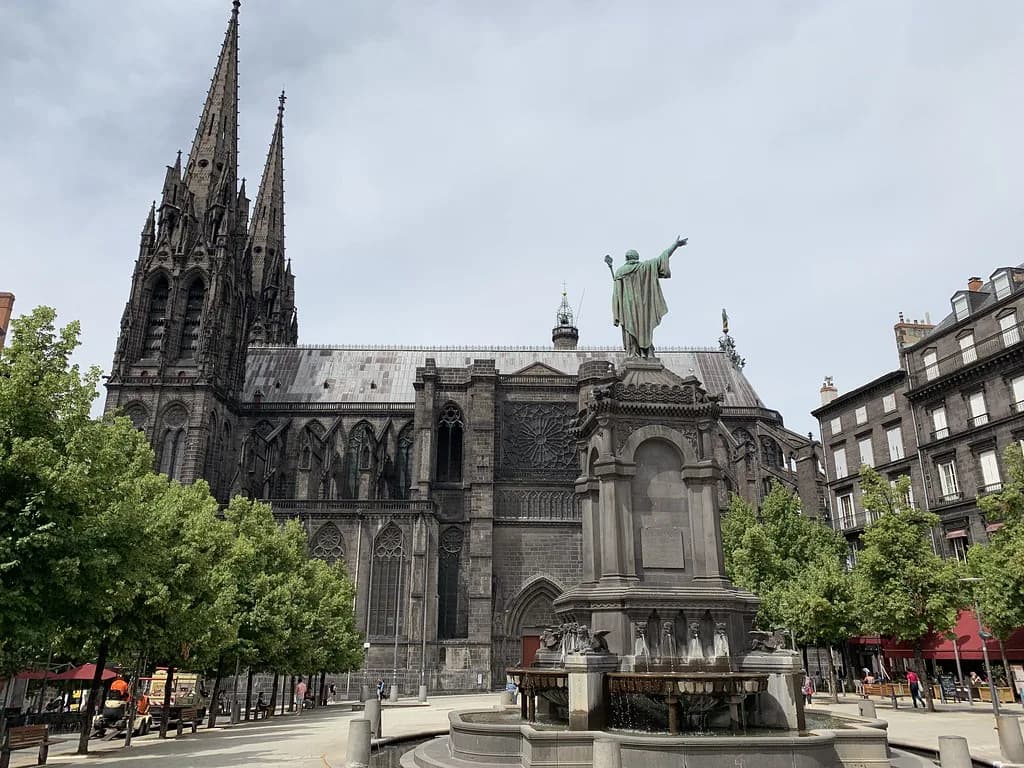
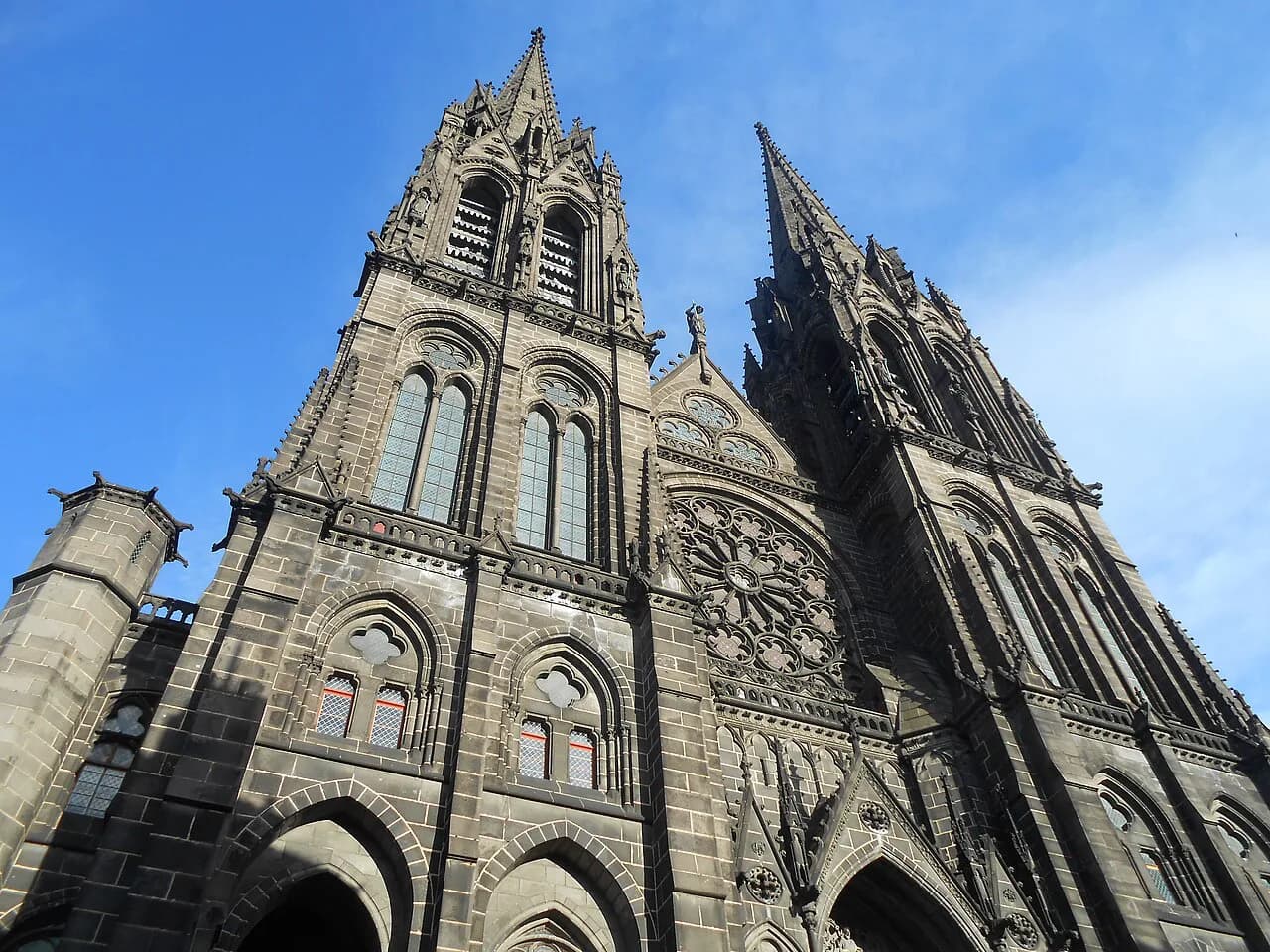
The Cathédrale Notre-Dame-de-l'Assomption is the image most visitors carry away: a Gothic building in dark volcanic stone, with a soaring interior and carved choir stalls. It dominates the skyline and sits within easy walking distance of the main square, so it makes a natural first stop. Give it proper time rather than a photo from the pavement.
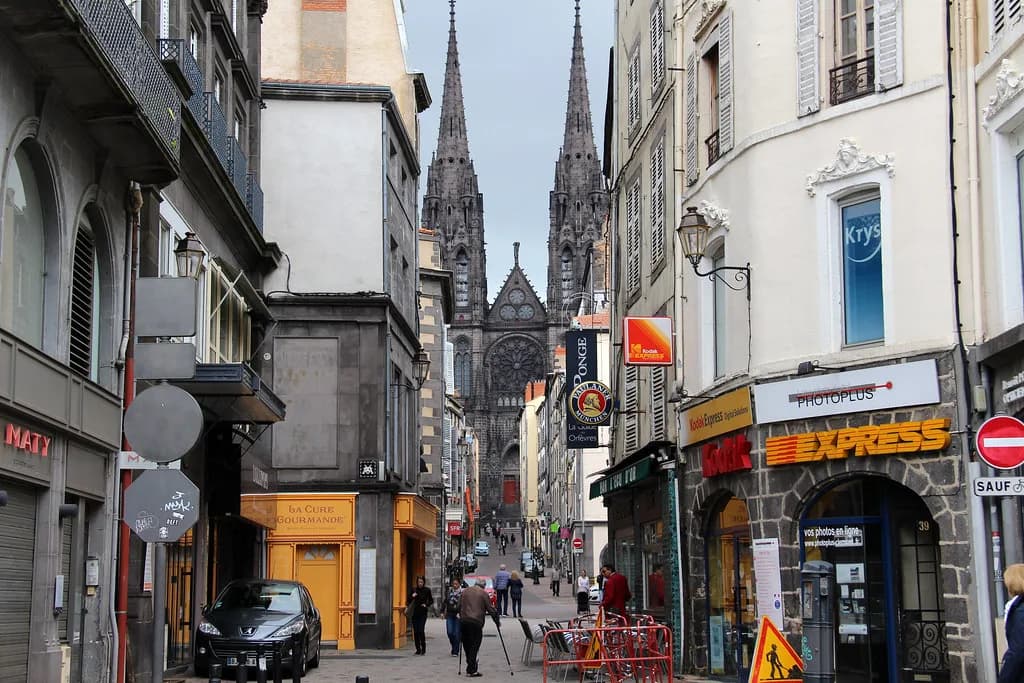
Around the cathedral, the older streets use the same dark lava rock, which gives the centre its brooding, coherent character. Beyond the rooftops, the volcanic chain shapes the horizon and explains why the city feels tied to its landscape. The practical upshot is that architecture and geology belong in the same weekend, not two separate trips.
The Core Sights That Justify the Trip
Start at Place de Jaude, the city's main square, with Bartholdi's statue of Vercingétorix, cafés and shops giving the centre its pulse. From there the Notre-Dame-de-l'Assomption cathedral is a short walk, and the surrounding lanes of the old town reward an unhurried wander. Build the day around these rather than ticking off a long list.
The Basilique Notre-Dame-du-Port is the other essential: a UNESCO-listed Romanesque church tucked into the old quarter, small enough to see properly and rich in carved capitals. It rewards a slow visit rather than a quick look. If you want a structured plan for the two days, our guide to things to do in clermont-ferrand sets the sights in a sensible order.
A day around Place de Jaude, the cathedral and the basilica fills comfortably without rushing, and leaves the evening free. If shopping is part of the plan, the streets off Place de Jaude carry the mainstream names and the browsing is easy. Our notes on shopping in clermont-ferrand cover what sits where in the centre.
Montferrand: The Medieval Rival Town
Montferrand was a rival town before it was grafted onto Clermont, and its narrow streets, medieval squares and calmer mood feel quite different from the centre. It is less touristy, with local shops and a quieter atmosphere, and it rewards an hour or two of wandering. Many short-break plans miss it entirely, which is a mistake.
The trade-off is distance: Montferrand sits away from the cathedral and main square, so it works best as a separate half-day rather than something you fold into a central walk. Pair it with a museum or a long lunch and treat it as the quieter half of the weekend.
Museums for a Wet Afternoon
The Musée Bargoin combines archaeology from local digs with a rich collection on traditional Auvergne textiles, which makes it a genuine cultural deep-dive rather than a rain shelter. The Musée d'Art Roger-Quilliot holds 19th and 20th-century art in a compact, well-curated space. Either fills an afternoon without eating the whole day.
Neither museum is a blockbuster, so the sensible approach is to pick one and give it proper attention instead of rushing both. Check current opening days and admission on the museums' own pages before you commit an afternoon, since these can vary by season. On a short break, one museum plus a long café stop usually beats two rushed visits.
Viewpoints and Green Space
Parc Montjuzet is a hillside park with terraces and panoramic views over the cathedral and the volcanic chain, which makes it the best place to understand the city's shape. Jardin Lecoq, a 19th-century public park with ponds, statues and a greenhouse, is the gentler option near the centre and good for a picnic or a breather. Both are free ways to break up a day of sightseeing.
The climb to Montjuzet is worth it for the view, but treat it as an outing rather than a quick detour, since it takes you away from the centre. Jardin Lecoq is easier to slot in between sights. Together they give the weekend the green space a stone-heavy city needs.
Michelin Heritage and the Volcano Sites
Clermont-Ferrand is the home of Michelin, and the Michelin Adventure museum covers the company's history and its place in the city. Outside town, the Panoramique des Dômes carries visitors up the Puy de Dôme, and the Chaîne des Puys landscape is the reason many people come. Both are mainstream draws rather than secrets, so plan around them rather than stumbling on them.
These sites are the strongest argument for extending beyond a single day, since the volcano excursion alone takes a chunk of the day. The Michelin museum suits a wet afternoon, while the Puy de Dôme needs decent weather. Our guide to the Puy de Dôme covers how the two fit together.
How the City Is Laid Out and How Much You Can Walk
Place de Jaude is the practical anchor: cafés, shops and the city's main pulse, with the cathedral and the old quarter within a short walk. The centre is compact and made for walking, so a weekend needs little more than comfortable shoes. Montferrand and the hilltop parks are the exceptions that justify a bus, tram or a longer stroll.
For the wider spread, the Clermont Auvergne Volcans tourist office publishes bus and tram guidance and a dynamic city map, which is the simplest way to work out what is walkable and what is not.
A sensible shape for the weekend is one day on the central sights and one day split between Montferrand, a museum and a viewpoint. That keeps walking distances honest and stops the trip becoming a march between scattered stops. The layout also makes it easy to retreat to a café when the weather turns.
One Day or a Full Weekend?
One full day gets you Place de Jaude, the cathedral, the basilica and a wander through the old quarter, which is enough to judge the city. A full weekend adds Montferrand, one museum and a viewpoint, and feels unhurried. Anything beyond two days starts to depend on how much time you want in the volcanic countryside.
If you are weighing Clermont-Ferrand against another French city for a short break, our verdict on is aix-en-provence worth visiting gives a useful comparison: Aix is warmer and more polished, while Clermont-Ferrand is darker, cheaper-feeling and more tied to its landscape. For a Roman-influenced alternative, is arles worth visiting makes a different case again. Both help you place Clermont-Ferrand honestly.
What a Weekend Costs
The clearest way to price the sightseeing day is the ClermontPass from the tourist office: 48 hours at €27, or 72 hours at €43, with free access to the Panoramique des Dômes, the Michelin Adventure and one Clermont Auvergne Métropole museum, plus a free guided tour of the tourist office. The 72-hour version adds two of four sites, including the Battle of Gergovie archaeological museum and the Volcan de Lemptegy, and both passes carry discounts at partner retailers and restaurants.
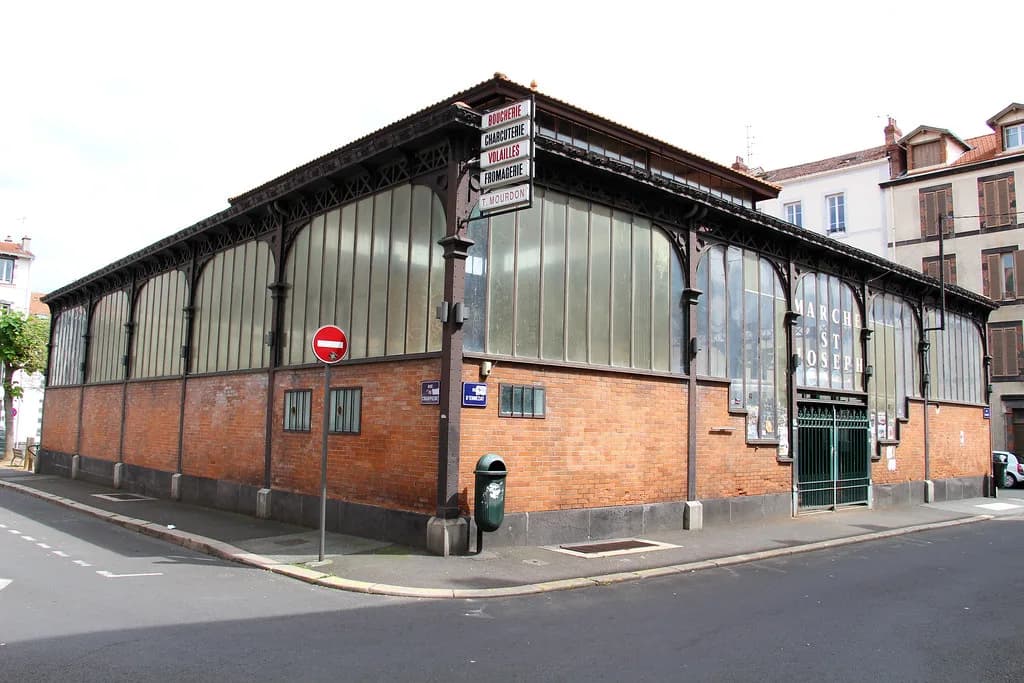
Whether the pass pays depends on how many of those included sights you actually visit, so add up your intended entries before buying. Beyond the pass, the city has a reputation for being cheaper than Lyon, though specific daily budgets vary too much to quote reliably. For food planning, our picks of the best restaurants in Clermont-Ferrand point to where a local lunch and dinner budget goes furthest, and a morning at a clermont-ferrand market keeps costs down.
When to Go
Spring and early autumn are the sweet spot, with typical temperatures around 12 to 20°C, which suits walking and the hilltop parks. Summer can reach 25 to 30°C and brings more visitors around the volcanic sites, while winter sits around 0 to 5°C and is often damp and grey. These are climate averages, not forecasts, so check the weather closer to your dates.
Late spring and early autumn balance daylight, comfort and crowds better than July and August, when the volcano parks are busiest. If your main goal is the Puy de Dôme, choose a clear-weather window rather than a fixed date and keep the city sights as the flexible half of the trip.
Honest Drawbacks
The nightlife is modest and hostels are limited, so meeting other travellers takes deliberate effort and the city does not deliver a big-weekend atmosphere. The centre is lived-in rather than polished, which some visitors read as character and others as shabbiness. If you want a restored, photogenic old town and a busy bar scene, this is the wrong city.
The other trade-off is scale: the headline sights are few, so a third day in the city itself can feel thin unless you head into the volcanic countryside. Treat Clermont-Ferrand as a compact city break with a strong landscape on its doorstep rather than a city that keeps unfolding for a week.
The Verdict
Book Clermont-Ferrand for a two-night break if black volcanic stone, a UNESCO Romanesque basilica and Michelin heritage appeal more than nightlife. Skip it if you want a polished old town and late bars. Save it for a longer Auvergne trip if the volcanoes are your real reason for coming.
Start with our Clermont-Ferrand Attractions: 6 Visitor Guides hub to see the sights laid out, then size your trip against the one-day and weekend plans above. Confirm pass inclusions and museum opening days on the relevant official pages before you buy and book.
Explore more Clermont-Ferrand guides
Frequently Asked Questions
Is Clermont-Ferrand worth visiting for a weekend?
Yes, if dark volcanic architecture, a UNESCO-listed Romanesque basilica and Michelin heritage appeal to you. Two full days covers the centre, Montferrand and one museum without rushing. It is a weaker choice for travellers who want busy nightlife or a large hostel scene.
How many days do you need in Clermont-Ferrand?
One full day covers Place de Jaude, the cathedral, the basilica and the old quarter. A full weekend adds Montferrand, a museum and a viewpoint such as Parc Montjuzet. Beyond two days, plan on spending time in the volcanic countryside rather than the city itself.
What is Clermont-Ferrand known for?
Black volcanic stone architecture, the Cathédrale Notre-Dame-de-l'Assomption, the Basilique Notre-Dame-du-Port and its Michelin heritage. Its setting in the Auvergne volcanic region, with the Chaîne des Puys and Puy de Dôme nearby, shapes the appeal as much as the streets do.
Is Clermont-Ferrand expensive for a short break?
The main variable cost is how many paid sights you visit. The ClermontPass bundles the Panoramique des Dômes, the Michelin Adventure and one city museum, so work out which of those you would actually see before buying. Check current pass inclusions and any individual admission charges on the official pages.
When is the best time to visit Clermont-Ferrand?
Spring and early autumn give typical temperatures of around 12 to 20°C, which suits walking and the parks. Summer is warmer and busier around the volcanic sites, and winter is colder and often damp. These are climate averages, so check the forecast before you travel.
Does the TGV serve Clermont-Ferrand?
The city sits in central France and is reached by rail, but service patterns and journey times vary by route and date. Check current timetables with your rail operator, and treat the train as the default way to arrive for a short break.
Sources
Notes for French city breaks
Optional updates to our guides.
You might also like
Continue reading
More guides you'll find useful