Colmar Market: Covered Hall, Open-Air Stalls and Market Days
Colmar's covered market hall on rue des Ecoles holds around twenty food merchants, and the town's food shops and winstubs fill in the rest of a weekend.
On this page
Colmar's market shopping centres on one permanent address: the covered market hall at 13 rue des Ecoles, where around twenty merchants sell fruit and vegetables, butchery, cheese, bakery and pastry, fish and other regional produce. It is a food hall rather than a craft fair, so come hungry and with a bag rather than expecting souvenirs. The tourist office describes Colmar as a wine capital with a compact, protected historic centre, which makes the hall an easy first stop before a day on foot.
What Colmar's Markets Are
Colmar's market scene splits into the permanent covered hall, which the tourist office lists as a year-round terroir market, and an outdoor market where local merchants sell regional delicacies. The tourist office points shoppers to both, alongside the town's streets of shops selling made in Alsace products. Treat the two as different outings: the hall is a food shop you can visit any morning, while the outdoor market is a browsing experience tied to its own days. If you are weighing which market town fits your trip, the Amboise market guide covers the same hall-versus-outdoor-stalls decision in the Loire Valley.
The tourist office's own pages describe the covered hall as a permanent terroir market, which is the clearest signal that it runs year-round rather than seasonally. The outdoor market is a separate operation, and the office keeps a market calendar and a covered market page as distinct listings. Check the calendar before you build a morning around the open-air stalls, because the hall and the outdoor market are not the same thing.
The Covered Market Hall on Rue des Ecoles
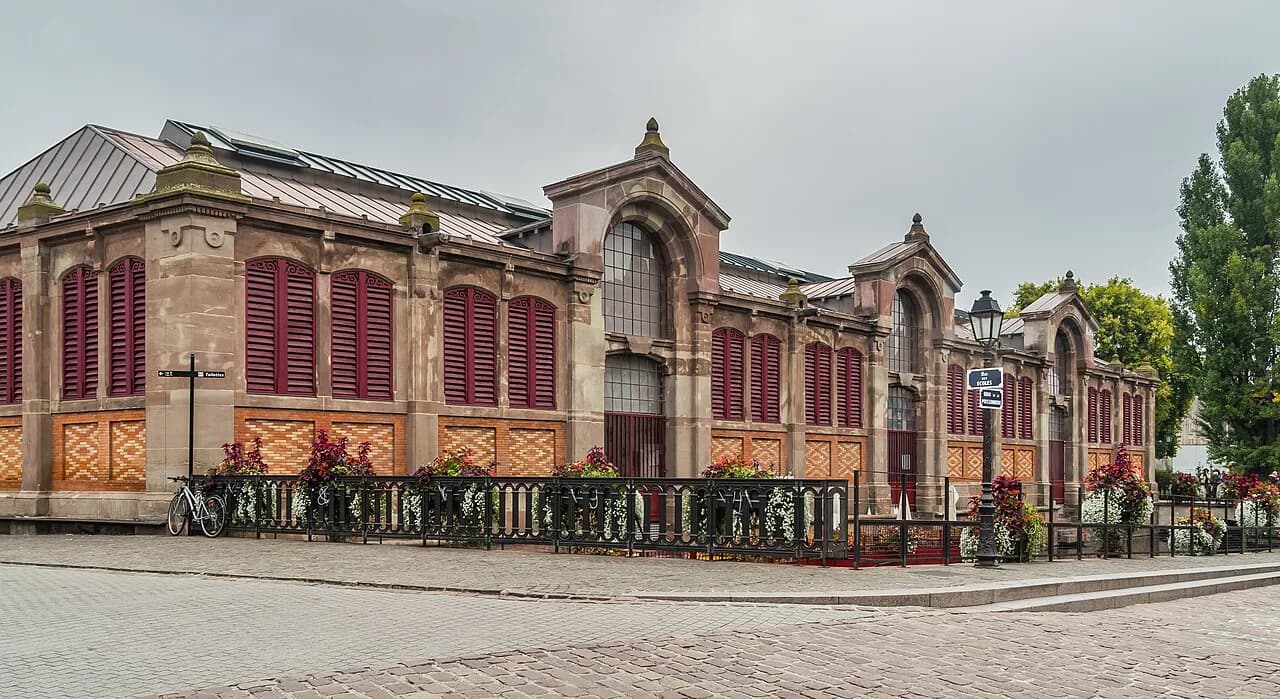
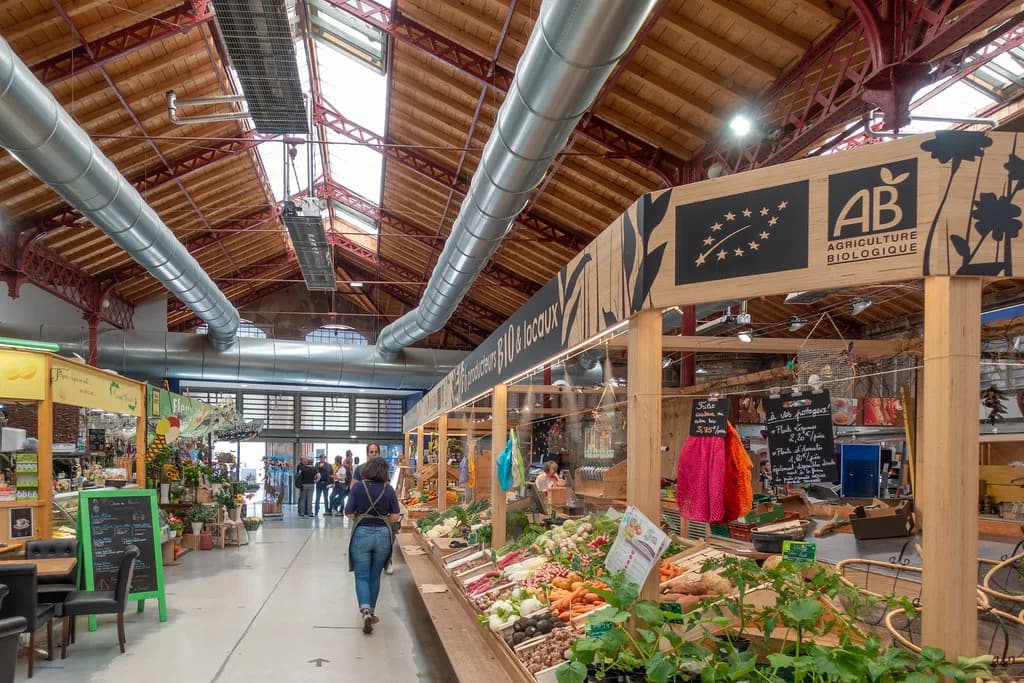
The hall at 13 rue des Ecoles was designed in 1865 as a brick building with a metal frame, and it has returned to its original role as a market hall after passing through several other functions. Around twenty merchants trade inside, covering fruit and vegetables, butchery, a cheese dairy, bakery and pastry, fishmongery and other regional specialities. That spread means one stop covers most of a picnic or a self-catered lunch.
Because the hall is a working food market, the useful visit is a short one: walk the aisles, buy cheese, charcuterie or pastry, and move on. Set aside something closer to half an hour than a whole morning, and pair it with the old town rather than treating it as a standalone sight. The brick-and-metal building itself is worth a look for the 1865 structure as much as for the stalls.
What to Buy and Eat
Alsace's kitchen is rich and pork-heavy, and the tourist office names sauerkraut, flammenkuchen (tartes flambées), munster and kugelhopf among the region's specialities served in traditional restaurants called winstubs. The hall lets you assemble a lighter version of the same shopping list: cheese from the dairy counter, charcuterie from the butcher, bread and pastry from the bakery. Buy a piece of munster if you like washed-rind cheese, and a kugelhopf if you want something sweet for later.
The tourist office also promotes the town's Michelin-starred restaurants and independent vintners, which is useful context if you want a sit-down meal rather than a market lunch. For a market day, though, the hall's own counters are the practical choice: buy what looks good, then eat it outdoors. Colmar's centre is compact and pedestrianised, so carrying a picnic to a bench or back to your lodging is easy.
The Outdoor Market and Friday Browsing
The tourist office describes an outdoor market where a score of local merchants offer local delicacies, alongside streets of shops selling made in Alsace products, from food and table accents to textiles, décor and accessories. It also flags Friday specials and the town's many antique shops for bargain hunters, which makes Friday the most rewarding day for browsing rather than just buying food. If your weekend includes a Friday, shape it around the market and the antique shops.
For a wider look at the town's shops, from food to homeware, plan a loop that starts at the market and drifts through the centre rather than a single-street dash. The tourist office keeps separate shop lists for local products and for shopping generally, useful for choosing which streets to walk. Keep your ambitions modest: a market morning plus one shopping loop is a sensible half-day.
Building a Two-Day Weekend Around the Market
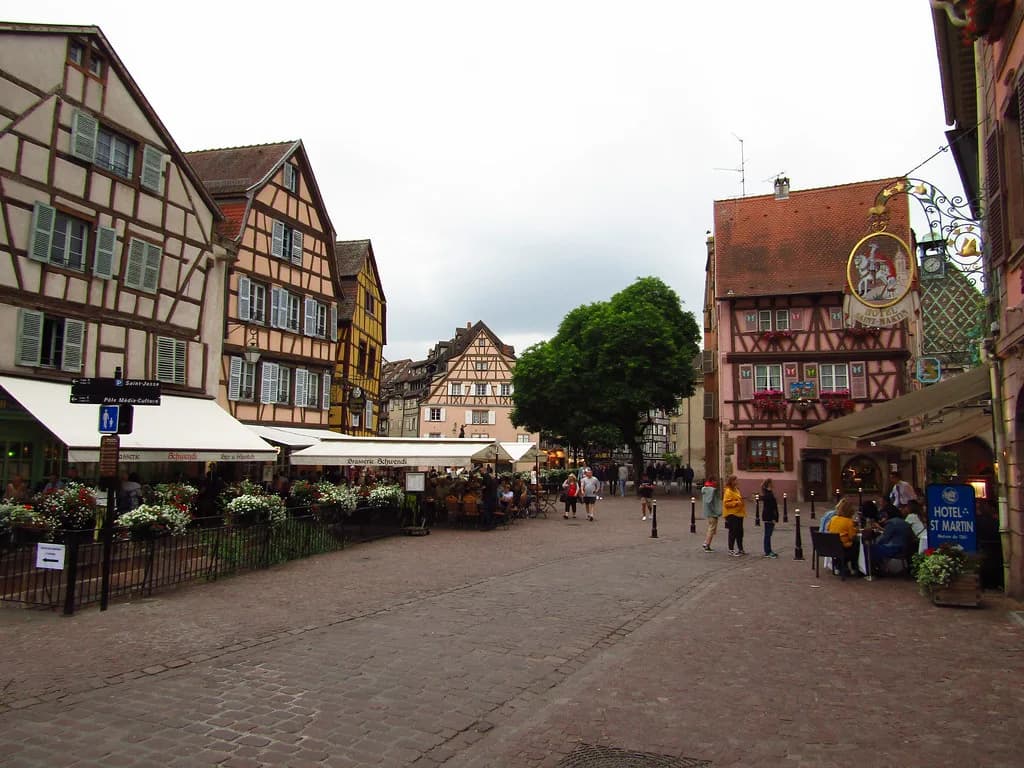
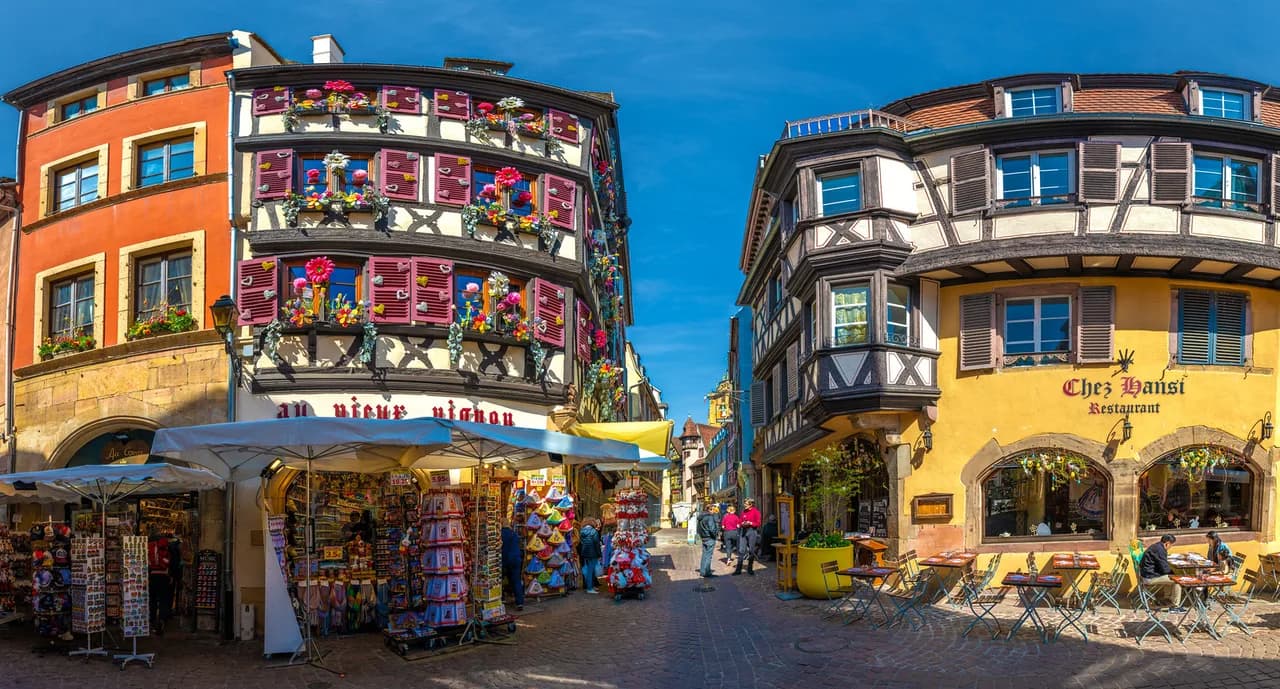
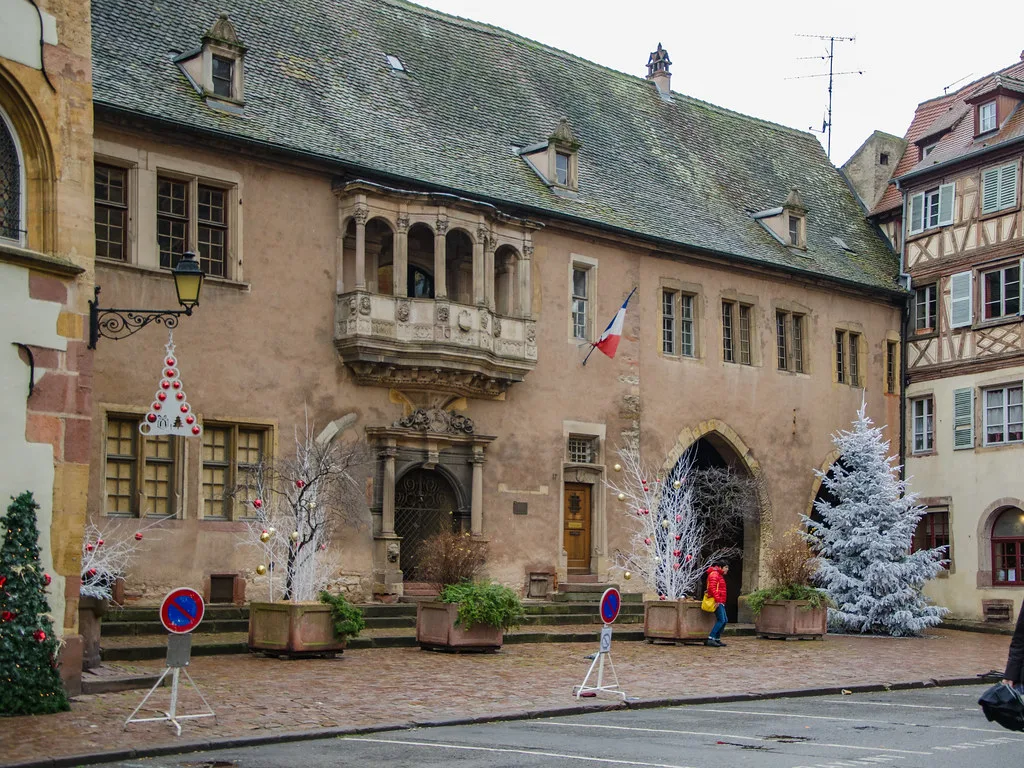
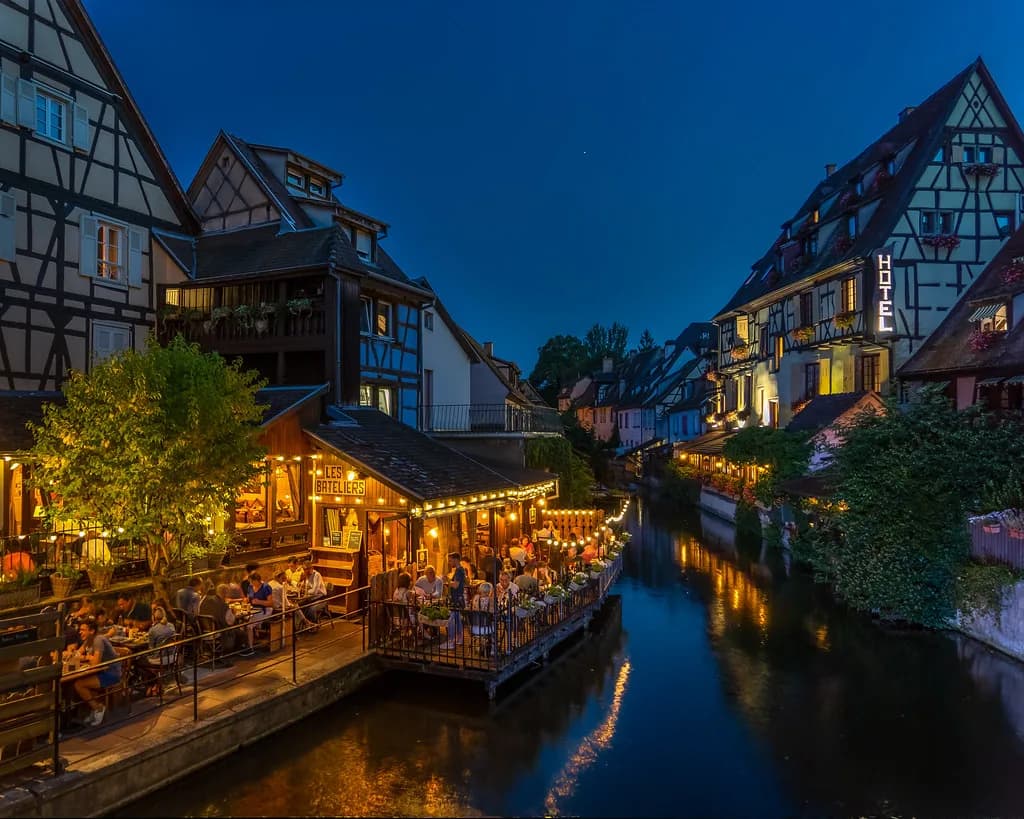
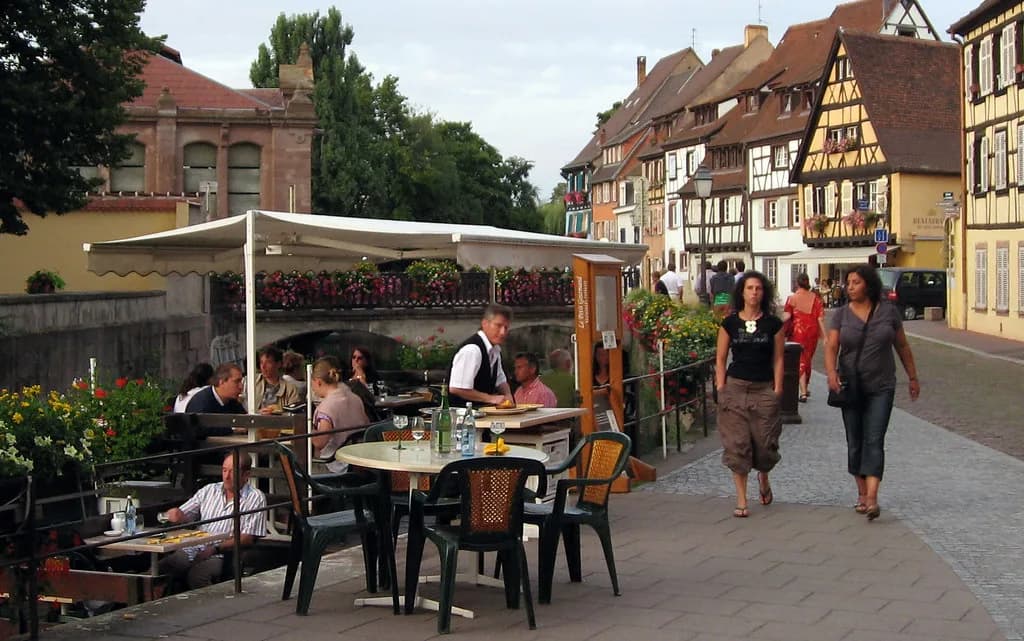
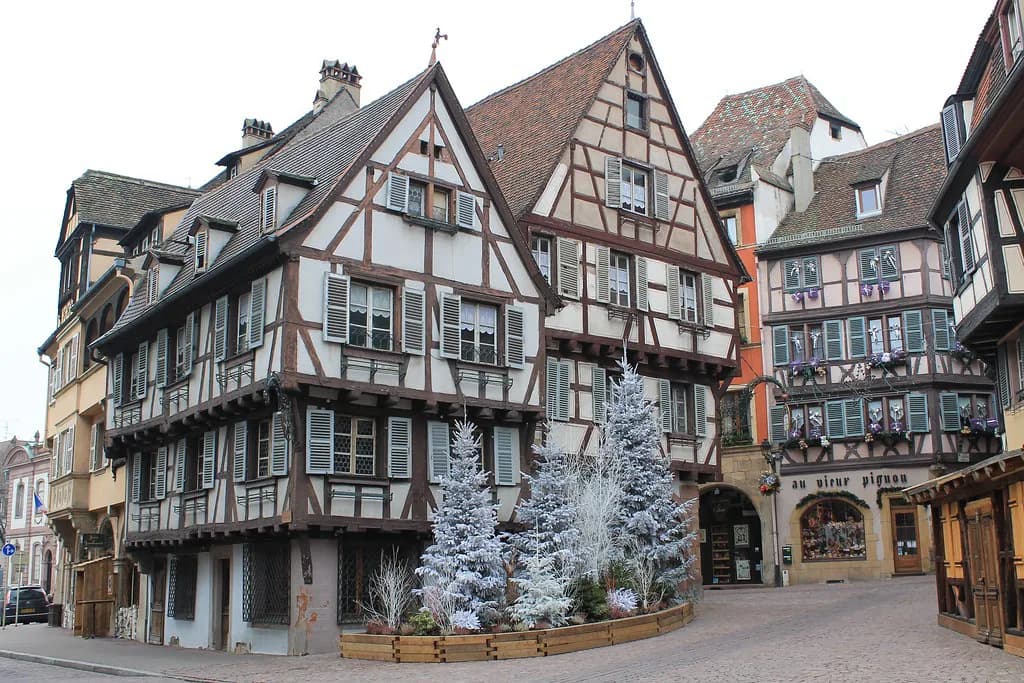
A workable weekend starts with the hall on the first morning, then moves to the old town on foot: the tourist office highlights Little Venice, the Tanners district, the Maison Pfister with its painted murals and wooden gallery, the Maison des Têtes with its 111 masks, and the Collégiale St Martin. All of it sits inside a protected pedestrian sector, so you can link the market to the sights without transport. That makes a market morning and an old-town afternoon a natural single day.
Use the second day for whatever the first left out: a museum, a longer walk, or a slower morning at the market with a proper lunch. The town is small enough that a two-day plan does not need tight scheduling, and leaving slack helps if a stall or shop you wanted is shut. A ready-made two-day structure saves the decision-making.
Markets Versus the Rest of Colmar's Food Scene
The hall is the everyday option; winstubs are the sit-down version of the same Alsatian cooking, serving sauerkraut, tartes flambées, munster and kugelhopf in traditional settings. The town's reputation as a wine capital of Alsace means many addresses pair food with local wine, though you can eat well without making wine the focus. Use the market for a light midday meal and a winstub for dinner.
Beyond food, Colmar's shops sell made in Alsace products in nearly every street of the historic centre, from textiles and tableware to decorations. That makes a market visit a natural gateway to a broader shopping stroll rather than a separate errand. If you want one souvenir that is not edible, this is where to look.
Timing Your Day
Mornings suit the hall best: produce is at its freshest, and you still have the rest of the day for the old town. The tourist office's map includes a discovery tour, which gives you a ready route through the centre after your shopping. A simple shape works well: market first, then a walk through the historic streets, then a late lunch.
Evenings have their own free draw. Colmar runs an original lighting scheme with 1,100 computer-driven light sources across the town, illuminated from nightfall on Fridays and Saturdays throughout the year and every evening during major events. That makes Friday or Saturday the best night for a post-dinner wander.
Practical Points for Market Day
The tourist office sits on Place Unterlinden in central Colmar, and from 1 April to the end of November it opens Monday to Saturday from 9am to 6pm and Sunday from 9am to 1pm, with shorter hours on public holidays. Its booklets and maps page publishes the town map and a Colmar 2026 magazine as downloadable PDFs, which reduces the need for printed copies. Pick up the map before you shop.
The office also lists luggage storage among its services, handy if you arrive before check-in or leave after checkout. A free city map with a discovery tour keeps costs down: the market, the historic houses and the church are all walkable from the centre. Plan your arrival so bags are dropped before the market, not after.
What to Watch for on Sundays and at Lunchtime
The tourist office's own Sunday hours stop at 1pm from April to the end of November, a useful reminder that the town's institutions keep shorter Sunday hours even when the centre is busy. Opening times for individual shops and market stalls vary by trader, so confirm the ones you care about before a Sunday visit. Sunday is better for walking and eating than for a full shopping list.
If the market is the reason for your trip, keep your plan flexible: build in a second morning so a closed stall or a slow start does not spoil the trip. The old town, the historic houses and the church are always worth an hour, whatever the shops are doing.
If You Are Coming in Winter
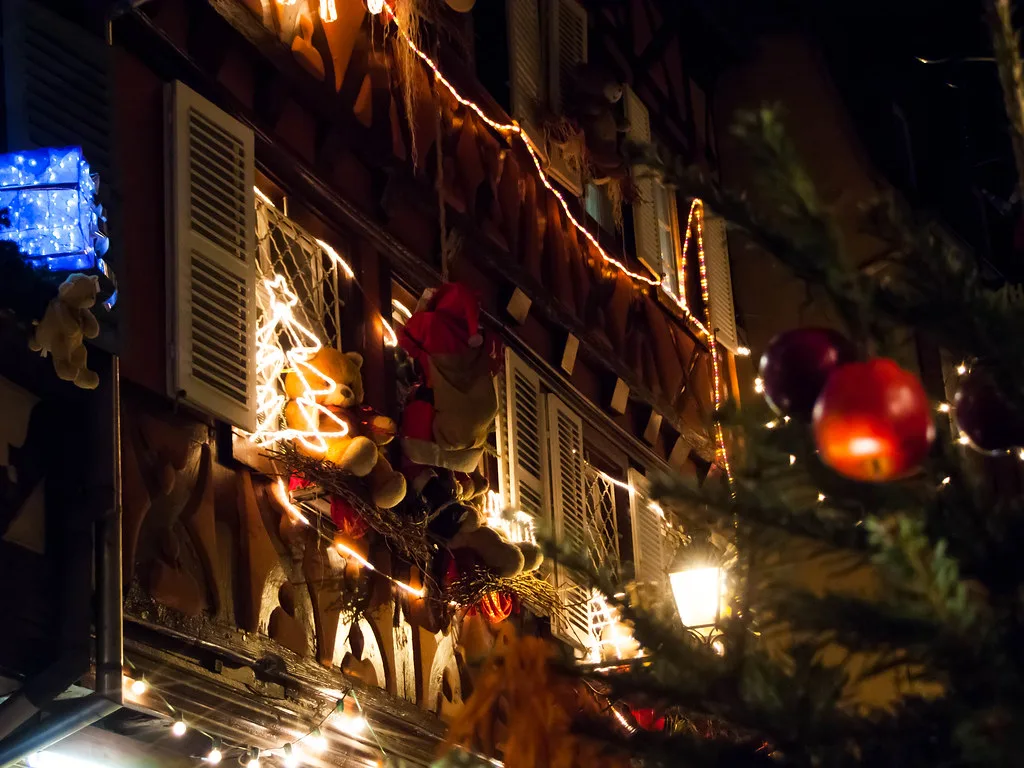
Winter brings Christmas markets to Colmar, which the town's tourist office promotes as one of its main seasonal events. Dates and daily hours change from year to year, so confirm the current season's arrangements on the official site before booking travel. It is a different proposition from the summer market: expect crowds and festive stalls rather than quiet produce shopping.
A winter weekend can still include the covered hall, which the tourist office treats as a permanent market, so the food shopping does not stop in December. Pair a hall visit with the town's winter lighting and the old-town sights. Book early if you want the Christmas period, because Colmar's winter weekends draw heavy demand.
Plan Your Visit
Colmar's market answer is straightforward: the covered hall at 13 rue des Ecoles is the year-round stop, with around twenty food merchants and no need to plan around a specific day. The outdoor market and its Friday browsing, the antique shops and the winstubs fill in the rest. Build a morning around the hall, then let the old town do the rest on foot.
Two days covers Colmar comfortably, with slack for a slow start or a closed stall. Keep Sunday and lunchtime opening in mind, and carry a bag for produce.
Explore more Colmar guides
Frequently Asked Questions
Which days is the Colmar market on?
The covered market hall on rue des Ecoles is listed by the tourist office as a permanent terroir market, so it is not tied to a single market day. The town also has an outdoor market where local merchants sell regional produce, and the tourist office keeps a separate market calendar for its days. Check that calendar before planning a morning around the stalls.
What is sold at Colmar's covered market?
Around twenty merchants trade inside the hall, selling fruit and vegetables, butchery, cheese, bakery and pastry, fish and other regional specialities. It is a food market rather than a craft or souvenir market, so bring a bag and plan to assemble a picnic or a light lunch.
Where is Colmar's covered market?
The hall is at 13 rue des Ecoles in central Colmar, inside the town's protected historic centre. The brick building with a metal frame dates from 1865 and has returned to its original purpose as a market hall. It sits within easy walking distance of the old town sights.
Is the Colmar market open on Sundays?
The covered hall is described as a permanent market, but individual traders set their own hours and the tourist office does not publish a general Sunday opening time for the stalls. The tourist office itself opens on Sundays only until 1pm from April to the end of November, so a Sunday trip is better for walking than for a full shopping list.
How much time do you need at the Colmar market?
Half an hour is enough to walk the hall's aisles and buy cheese, charcuterie, bread or pastry. Most visitors pair it with the old town, giving a morning to the market and an afternoon to the historic houses, Little Venice and the Collégiale St Martin.
Is Colmar expensive for a weekend?
Market shopping is the cheaper way to eat in Colmar: buy from the hall's counters and picnic rather than booking a sit-down meal. Restaurant prices vary, and the tourist office's restaurant search lists options across the range, so compare menus before choosing.
What is Colmar best known for?
The tourist office describes Colmar as the most Alsatian city of Alsace, known for half-timbered houses, Little Venice, the Tanners district, the Maison Pfister and the Maison des Têtes, plus its wine and Alsatian cooking. The covered market and the old-town streets fit naturally into the same day.
Sources
Notes for French city breaks
Optional updates to our guides.
You might also like
Continue reading
More guides you'll find useful