
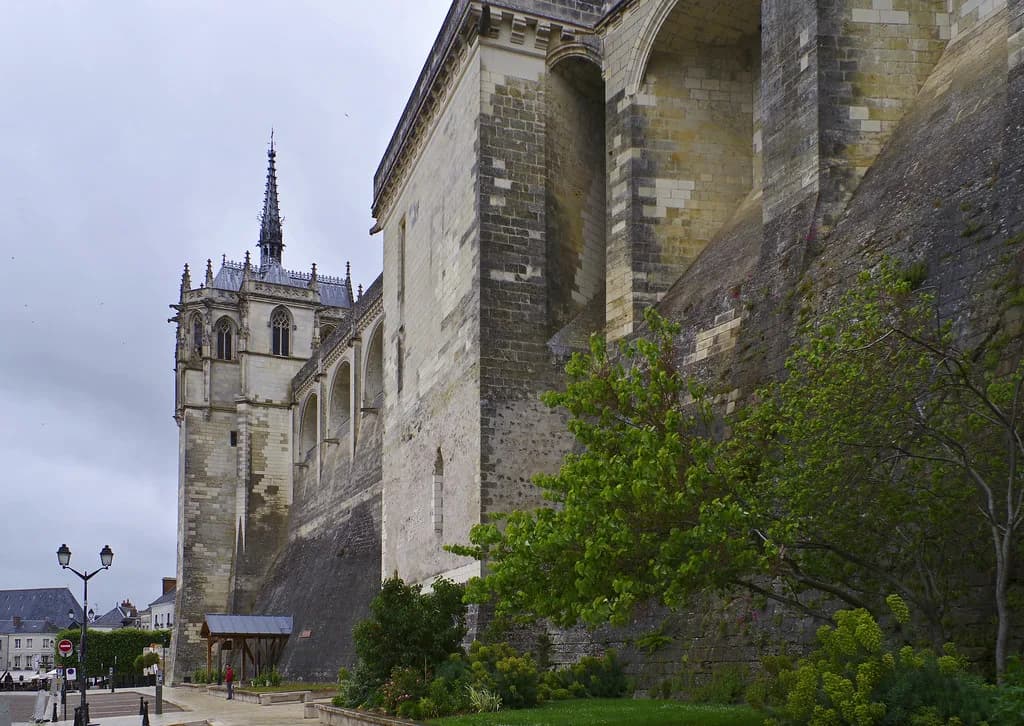
Chapelle Saint-Hubert, Amboise: Leonardo da Vinci's Tomb and the Chapel Above the Town
The Chapelle Saint-Hubert is the small flamboyant Gothic chapel built into the ramparts of the Château d'Amboise, and it is where Leonardo da Vinci is buried. You do not buy a separate ticket for it: the chapel is part of the château visit, reached on foot from the entrance on Montée de l'Emir Abd El Kader. Allow a short stop rather than a half-day, and check the château's official pages for current hours and admission before you go.
The chapel is a component of a château visit, not a standalone sight. Its position above the town, its carved tuffeau stone and its stained glass are the reasons to slow down, while the tomb of Leonardo gives the small space its weight. Read the chapel as the quiet end of a larger visit to the castle and its ramparts.
What the Chapelle Saint-Hubert is and why visitors come
The chapel is dedicated to Saint-Hubert, the patron saint of hunters, and was built in 1493 on the foundations of an older oratory erected under Louis XI. It served as a private place of worship for the kings of France, which explains its small scale and its position tucked against the defences. Visitors come for the setting, the carved decoration and the tomb inside.
The chapel was closed for a little over two and a half years and reopened fully to visitors in spring 2024 after a restoration on a scale not seen in nearly 150 years. That work replaced around 2,000 stone elements on the façades and restored 15 tonnes of lead roofing, including nearly four tonnes of decorative work. Knowing this changes what you look at: the exterior and roof are as much the point as the interior.
Where the chapel sits at the Château d'Amboise, above the town
The chapel stands on the ramparts of the Château d'Amboise, appearing to hang above the town below. That elevated line is the first thing you notice on the approach, and it is worth pausing outside to see how the building is anchored to the wall. Inside the château grounds, follow the route through the castle rather than treating the chapel as a separate destination.
Because the chapel is part of the castle complex, its visit depends on the château being open. Admission to the Château d'Amboise covers the chapel, and the château publishes its own hours, ticket types and access information; confirm those before travelling, especially outside the main season.
Getting there: the approach and the climb
The château's address is Montée de l'Emir Abd El Kader, 37400 Amboise, and the chapel is inside the monument rather than on the street. Expect a climb on the approach to the entrance and further walking within the grounds to reach the ramparts, so the visit suits shoes you can walk in on sloping stone.
Amboise is small enough that the château is reachable on foot from the town centre, and the climb is short but steady. Build the chapel into a wider walk around Amboise rather than making a separate journey for it, since the visit itself takes only a short time.
Inside: flamboyant Gothic detail, tuffeau carving and the stained glass
The interior is flamboyant Gothic, carved in tuffeau, the soft light stone of the Loire Valley that allows very fine work. Look up as well as around: the stained glass is among the features the château singles out, and the sculpted decoration covers the walls rather than sitting in display cases. It is a small space, so a slow circuit takes minutes rather than an hour.
The restoration reinstalled 200 sculpted stone decorative elements inside and restored gilding on the ridge spikes and spire. Those details sit high up and close to the eye in different places, which is why the visit rewards looking twice. The overall cost of the project was 3.5 million euros, shared by the State and the Fondation Saint-Louis, which owns the monument.
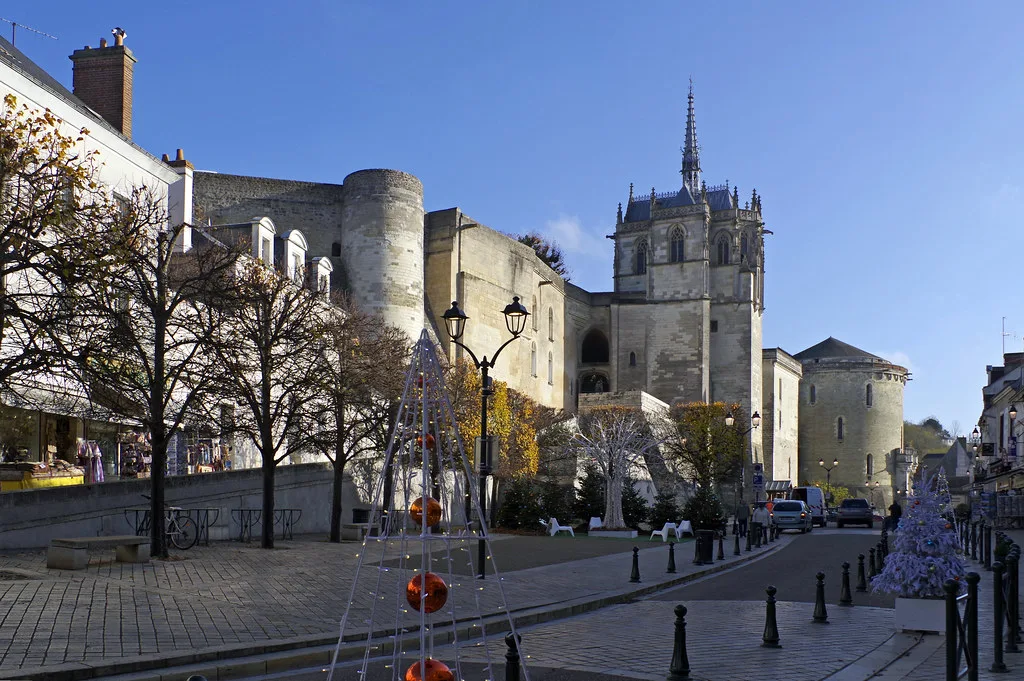
Leonardo da Vinci's tomb: why he rests at Amboise
Leonardo da Vinci died at Amboise on 2 May 1519, and his tomb is in the chapel, in line with the wish attributed to him to rest there. That single fact gives the small Gothic room its pull: the setting was a royal private chapel, and the tomb is what most visitors come to see. Read the chapel's history first and the tomb makes more sense than if you arrive at it cold.
His last house, the Clos Lucé, is nearby in Amboise, which is why the two sights are usually seen on the same day. The Clos Lucé gives the household context and the château chapel gives the tomb, so pairing them turns a quick stop into a coherent half-day about Leonardo in Amboise.
The HistoPad tablet and how to use the visit well
The chapel is interpreted with the HistoPad tablet, a mediation tool the château uses in the space. Decide before you enter whether you want the tablet first for context or after a quiet look at the carving and glass, because the room is small and the screen competes with the stonework. Whichever you choose, give the tomb its own moment without the tablet.
How much time to allow and when to slot it into a château visit
Treat the chapel as a short stop within the château visit, not an excursion in itself. Most of your time at the Château d'Amboise goes on the castle, the ramparts and the views over the Loire, with the chapel a natural point along the way. If you are tight for time, see the chapel before the rest of the grounds rather than risking missing it at the end.
For planning the rest of the day in town, the wider list of Amboise sights helps you balance the château against everything else. The chapel fits neatly into a morning, leaving the afternoon free for the town or the Clos Lucé. If you are weighing a second Loire stop, our guide to things to do in Blois covers a comparable château-and-old-town day.
Restoration: what changed and what to look for
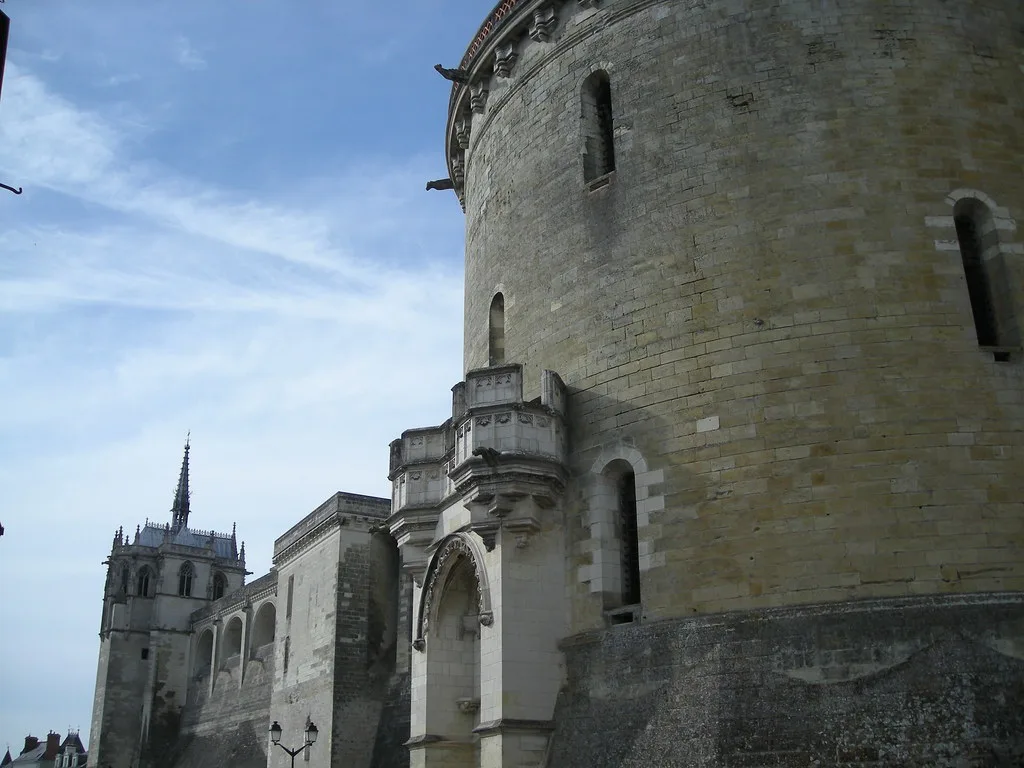
The recent restoration, completed for the spring 2024 reopening, involved around fifty craftspeople from ten different art trades. The bell was put back into service, lead decoration on the roof was restored and gilding returned to the spire and ridge. On the exterior, look for the roof line and the spire; inside, look for the carved stonework.
The chapel's façade carries the story of Saint-Hubert himself, so the exterior repays a second look before you go in. Knowing the legend helps: a huntsman who turned to religious life after a vision, which is why the chapel is dedicated to the patron saint of hunters.
Nearby in Amboise: the Clos Lucé and the town below
Beyond the chapel, the château's other set pieces include the Tour des Minimes, the spiral ramp that once let riders and horses climb from the river side into the castle. It is a reminder that the fortress was built as working defences, not only as a royal residence, and it pairs well with a walk along the ramparts after the chapel.
Down in the town, the Église Saint-Denis d'Amboise gives a contrast to the courtly Gothic of the chapel, and the Pagode de Chanteloup, associated with the Duc de Choiseul, sits further out of the centre. Both are worth building into an afternoon if the château has taken your morning.
Plan Your Visit
The Chapelle Saint-Hubert works best as a deliberate short stop inside a Château d'Amboise visit: arrive knowing the tomb is there, give the carving and glass a slow look, and use the HistoPad as context rather than a substitute. Pair it with the Clos Lucé to make the Leonardo story whole. Confirm current château hours, admission and access on the official pages before you set out.
Frequently Asked Questions
Where is Leonardo da Vinci's tomb?
Leonardo da Vinci's tomb is in the Chapelle Saint-Hubert, inside the Château d'Amboise. He died at Amboise on 2 May 1519 and rests in the chapel on the ramparts above the town.
Why is Leonardo da Vinci buried at Amboise?
Leonardo spent his final years at Amboise, where he died on 2 May 1519. The chapel inside the Château d'Amboise holds his tomb, reflecting the wish attributed to him to be buried there.
Do I need a separate ticket for the Chapelle Saint-Hubert?
No separate ticket is needed: the chapel sits inside the Château d'Amboise and is seen as part of the château visit. Admission is covered by the château's own ticket; check its official pages for current prices, hours and combined options.
How much time does the chapel take?
Allow a short stop rather than a half-day. The chapel is small, so the visit is a matter of minutes; the rest of your time at the château goes on the castle, ramparts and views over the Loire.
What is the legend of Saint-Hubert?
Hubert was a courtier and huntsman who turned to religious life after a vision of a stag carrying a crucifix between its antlers. He became patron saint of hunters, and the chapel's façade tells his story.
What is the style of the Chapelle Saint-Hubert?
The chapel is flamboyant Gothic, built in 1493 on the foundations of an oratory from the reign of Louis XI. It is carved in tuffeau, the soft Loire Valley stone that allows very fine sculpted detail.