
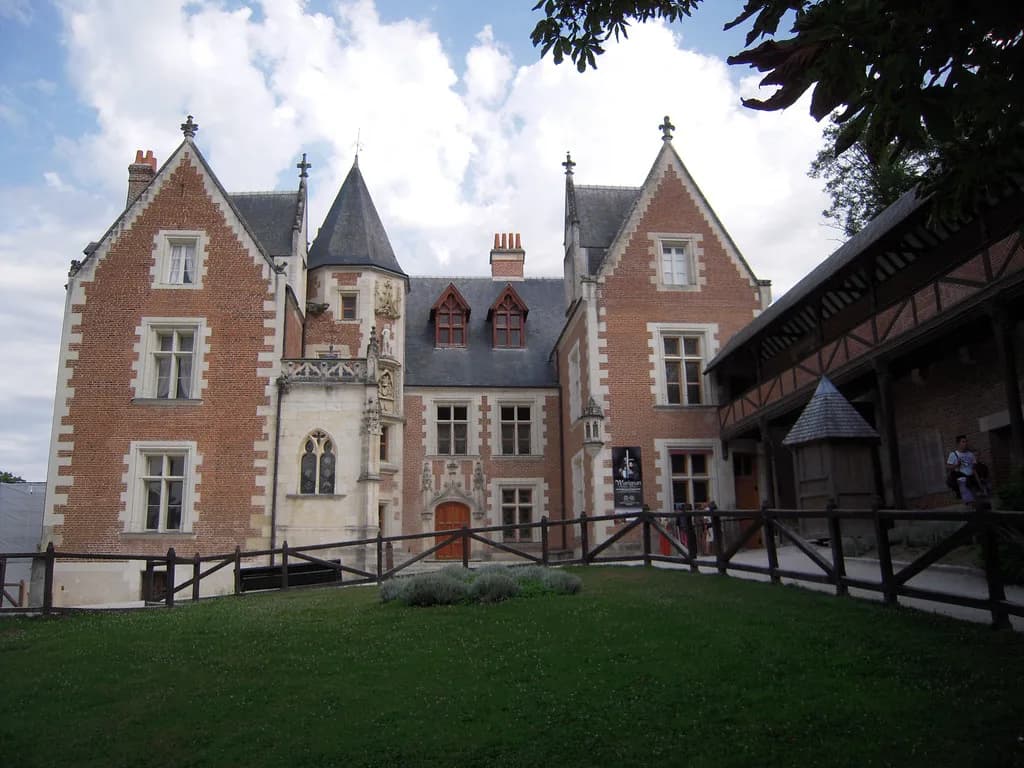
Clos Lucé: Leonardo da Vinci's House in Amboise
The Clos Lucé is the manor in Amboise where Leonardo da Vinci lived for the last three years of his life after crossing the Alps at the invitation of François I in 1516. It is a brick château on the edge of town, now run as a da Vinci attraction with reconstructed rooms, gardens full of scale models and an immersive gallery, rather than a furnished royal residence.
Allow half a day if you want the house and grounds properly, and pair it with the Château d'Amboise, a ten-minute walk away and uphill. The two together explain why the Italian came here and what happened to him afterwards.
What the Clos Lucé is
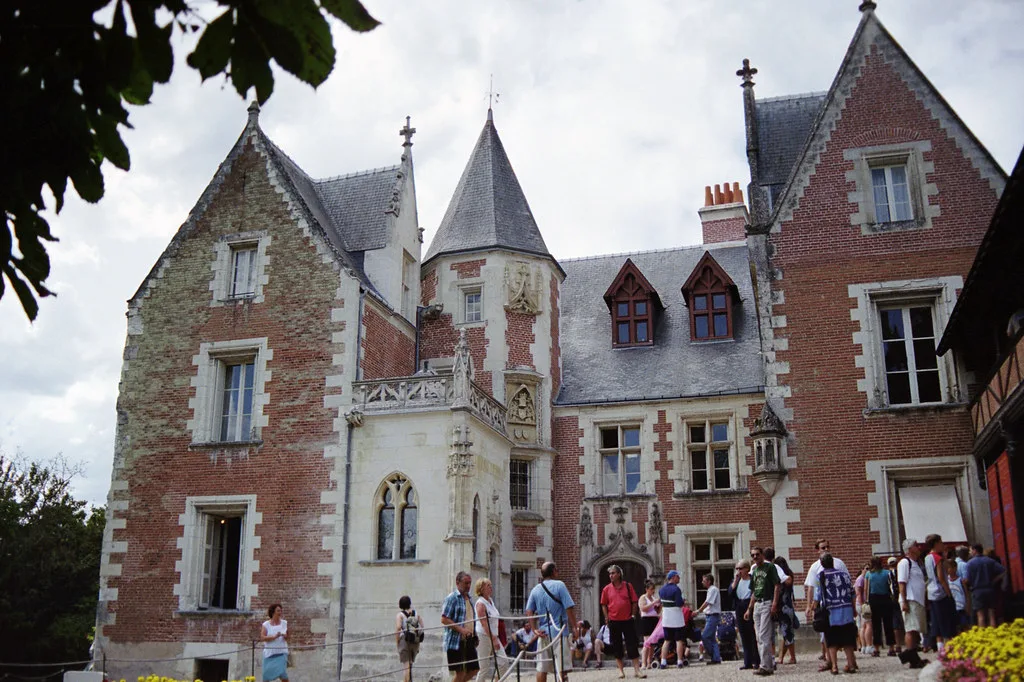
Leonardo arrived in 1516 with three paintings in his luggage and settled into what was then the Manoir du Cloux, a turreted pink-brick house with a royal chapel added a generation earlier. The estate has belonged to the Saint Bris family since 1855, and Leonardo's French home has welcomed visitors since 1954.
The house is small enough to feel intimate: a few rooms up a short staircase, with the reconstituted bedroom and studio where the old man worked on his drawings and notebooks. This is not a château of tapestries and state beds, and going in expecting one leads to disappointment.
Where it sits and how to get there
The address is 2 rue du Clos Lucé, at the edge of the old town and just over a mile from the Amboise train station. A shuttle bus links the station with the centre, and there are three public car parks within walking distance of the château plus a designated Clos Lucé lot.
From Paris, trains leave Austerlitz and Montparnasse and take roughly an hour and a half to two hours, which makes Amboise feasible as a carefully timed day trip. Treat those durations as a guide rather than a timetable and confirm departures when you book.
Once in town, the Clos Lucé and the Château d'Amboise are about a ten-minute walk apart, so you can do either first. Arriving on the shuttle, start with the manor and finish at the castle, or reverse it if you want the castle gardens in the morning light. If you are weighing a longer Loire stop of the same kind, our Angers city guide covers the same decision at another Anjou capital.
What to see inside the manor
Inside, visitors see a reconstitution of Leonardo's bedroom and a reconstruction of his studio, along with the oratory frescoes that Charles VIII commissioned for his wife Anne de Bretagne. A life-size hologram of Leonardo, talking about art with the Cardinal of Aragon, is the theatrical centrepiece of the interior.
Models of his inventions are scattered through the house and grounds: swivelling bridges, helicopters, automobiles, bat-winged gliders and ideal-city plans, alongside the armoured tank and machine gun designs that make uncomfortable viewing. Children tend to move quickly to the moving parts, which is fine, because the grounds hold the larger versions anyway.
The Leonardo da Vinci Galleries
A free-standing immersive gallery opened on the grounds in June 2021, housed in a renovated 19th-century factory. It uses 3-D models, video and games, including simulators that let you fly Leonardo's gliders over the Loire, and a virtual musical montage of 200 images dissolving across the walls.
The gallery is the reason the Clos Lucé works for mixed-age groups: adults get the engineering context, children get buttons and screens, and nobody has to read every panel. Skip it if you have only an hour, because the house and gardens alone will fill it.
The gardens
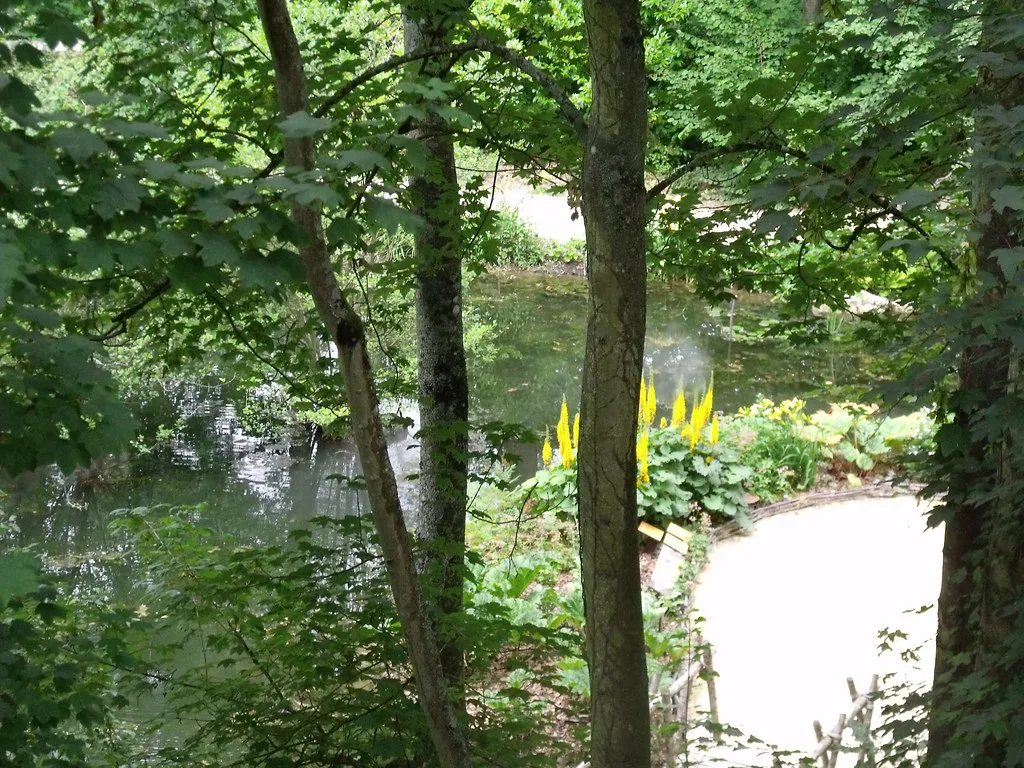
The gardens echo the flowers and foliage in Leonardo's paintings and are punctuated by scale models of his bridge designs and computer-generated images. They are the most pleasant place to slow down, and the shaded picnic tables make a sensible lunch stop.
Who it suits
The Clos Lucé is honestly a da Vinci theme park, with hands-on models, films and interactivity rather than period furniture. Families and mixed-age groups usually enjoy it more than visitors hoping for a fully furnished royal château, who should put their time into the Château d'Amboise instead.
If you want one Leonardo stop with a sense of place, this is it, and the town repays a wander afterwards. Set the manor in the wider context of Amboise's sights with our Amboise Attractions: 6 Visitor Guides, which covers what else is worth the walk.
How long to allow and how to pace it
Give the house about an hour, the galleries another hour and the gardens whatever remains, which puts a comfortable visit at around half a day. Groups with young children often double the gallery time and cut the house short, and that is the sensible trade.
Do the manor first while energy is high, then the galleries, then the gardens before lunch or before the walk uphill to the castle. Doing both the Clos Lucé and the Château d'Amboise in one day is realistic if you start in the morning.
Eating on site
There are two restaurants on the grounds: La Terrasse Renaissance for salads and crêpes, and La Table du Moulin for grilled meat, salads and take-away sandwiches. A third, L'Auberge du Prieuré, serves Renaissance-style fare and wines spiked with herbs and honey for groups of 15 or more, with reservations required.
Picnics are permitted in the grounds of the Château d'Amboise, which has its own café, and the town has plenty of cafés and eateries along the streets worth strolling. Families with fussy eaters are better served by the take-away sandwiches than by a sit-down menu.
Nearby: the Château d'Amboise and Leonardo's tomb
The sprawling clifftop Château d'Amboise is just over a mile from the station and a ten-minute walk from the Clos Lucé, dominating the town and the Loire for more than 800 years. François I grew up there, and an underground passage, since filled in, once linked the two properties for private visits.
Leonardo asked to be buried in the royal chapel in the castle gardens, but that chapel was destroyed during the Revolution and a statue marks its former site. His tomb was moved to the Chapelle de Saint-Hubert, a small Flamboyant Gothic building decorated with antlers because Hubert is the patron saint of hunters, and whether the remains are really his is still debated.
Inside the castle, François-Guillaume Ménageot's 1781 painting shows Leonardo dying in the arms of François I, which is sentimental rather than accurate: the king was at Saint-Germain-en-Laye when Leonardo died at the Clos Lucé. Visit the castle for the terrace views, the histories of its prisoners and that painting.
If you have time left after both, the Pagode de Chanteloup is a curiosity from the Duke of Choiseul's estate on the edge of town, and the Église Saint-Denis d'Amboise repays a short stop. Neither needs long, and both suit a slow final afternoon.
Opening times and tickets
The Clos Lucé closes on 25 December and 1 January; the Château d'Amboise shares those two closure dates. Beyond that, confirm current opening times, ticket prices and any seasonal variations on the official site before you travel, as they change through the year.
Buying ahead is worth it in high season, and the 2019 commemorations of Leonardo's death drew a record 520,000 visitors to the site, so expect queues around anniversary events. A combined day with the castle means two tickets, so check what each includes before committing.
Plan Your Visit
Build your day around the Clos Lucé in the morning and the Château d'Amboise in the afternoon, or reverse the order, leaving time for the gardens either way. The manor rewards curiosity about how Leonardo thought; the castle answers what happened to him afterwards.
Check the official site for current times and prices before booking, then use the Amboise Attractions: 6 Visitor Guides to fill the rest of the weekend. A short walk between the two main sights makes this one of the easier Loire Valley days to plan.
Explore more Amboise guides
Frequently Asked Questions
Where is Leonardo da Vinci's house in France?
It is the Clos Lucé at 2 rue du Clos Lucé in Amboise, in the Loire Valley's Indre-et-Loire department. The manor sits on the edge of the old town, just over a mile from Amboise station and about a ten-minute walk from the Château d'Amboise.
Is the Clos Lucé worth visiting?
Yes if you want the story of Leonardo's final years told through reconstructed rooms, models and an immersive gallery rather than formal state apartments. Visitors expecting a fully furnished royal château should weight their time towards the Château d'Amboise instead, and families usually find the models and simulators the highlight.
How far is the Clos Lucé from Amboise train station?
It is just over a mile from the station, with a shuttle bus linking the station to the centre and public car parks within walking distance of the sight. Trains from Paris's Austerlitz and Montparnasse stations take roughly an hour and a half to two hours.
Can you visit the Clos Lucé and Château d'Amboise in one day?
Yes. The two are about a ten-minute walk apart, so a morning at the Clos Lucé and an afternoon at the castle, or the reverse, fits comfortably into a day if you start early.
What can children see at the Clos Lucé?
Models of Leonardo's inventions throughout the house and gardens, plus the immersive gallery's 3-D models, films and glider simulators. The gallery opened in June 2021 in a renovated 19th-century factory on the grounds.
Is Leonardo da Vinci buried at Amboise?
His remains are associated with the Chapelle de Saint-Hubert at the Château d'Amboise, but the identification is debated and DNA research has not settled it. The chapel where he asked to be buried was destroyed during the Revolution.