
Église Saint-Denis d'Amboise: A Visitor's Guide to the Church
Église Saint-Denis is a Romanesque church with Gothic additions on the Parvis Saint-Denis in central Amboise, and it rewards about 30 minutes rather than a half-day. The building began in 1107 under Hugues Ier d'Amboise and was listed as a monument historique in 1968. Its pull is the interior: carved capitals, a Renaissance Deposition and a 17th-century altarpiece in the south chapel.
It slots easily into a weekend because Amboise's main sights sit close together. The Château d'Amboise is a few minutes' walk from the church, and the Château du Clos Lucé is a short stroll further on. Treat the church as a quiet stop between the two rather than a destination in itself.
What Église Saint-Denis is and why it deserves 30 minutes
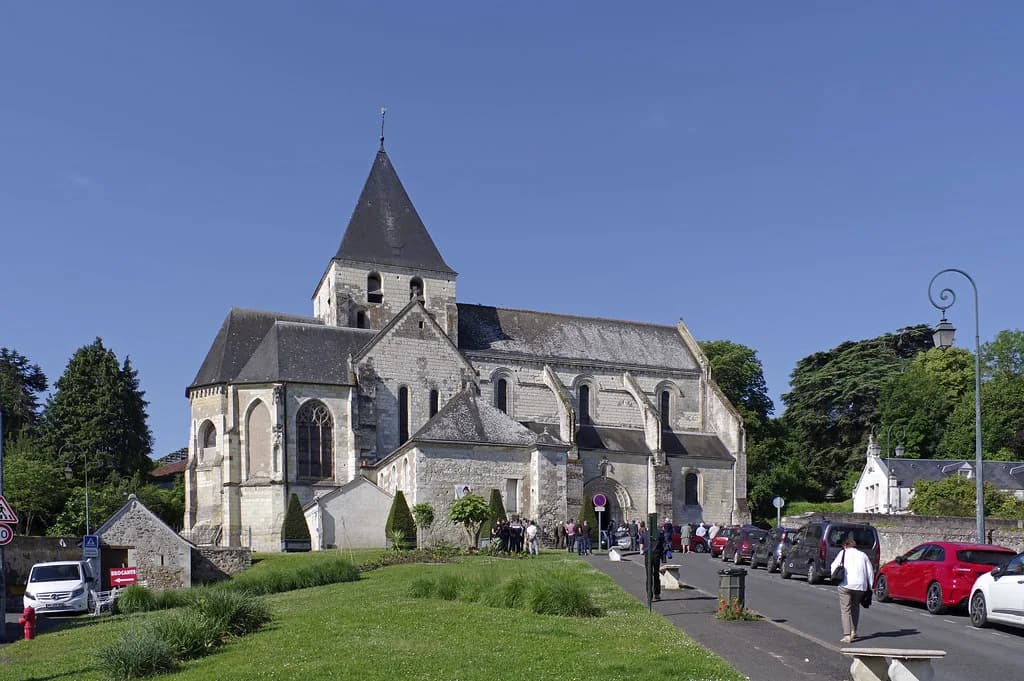
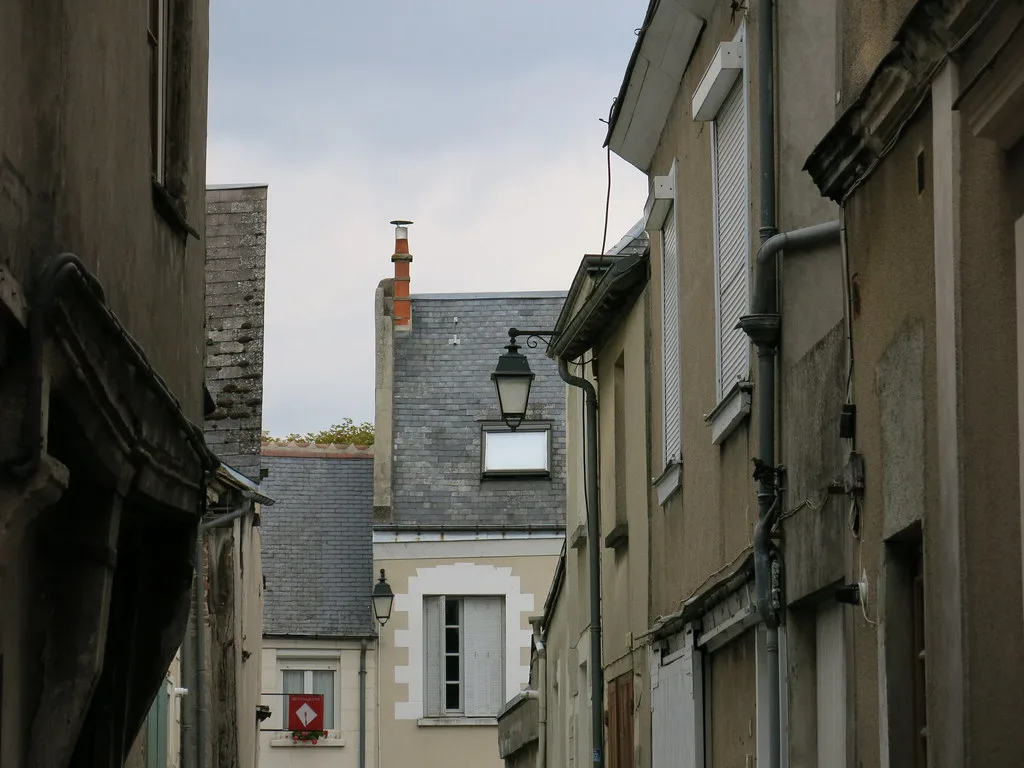
The church sits in the flat lower town, at the foot of the Châteliers plateau, the old settlement site that predates the medieval town. That position explains why the building feels embedded in the street rather than set apart: the north side opens onto the Parvis Saint-Denis, and the south aisle runs close to the surrounding houses.
Half an hour covers the nave, the transept and both apse chapels at an unhurried pace. Add 15 minutes if you want to read the carved capitals closely, because the Roman de Renart scenes hide among the religious ones and are easy to walk past. Budget more only if a guided tour is running on your dates.
Where the church stands: 21 Parvis Saint-Denis
The address is 21 Parvis Saint-Denis, 37400 Amboise, in the Indre-et-Loire department of the Loire Valley. The west front faces the parvis, so you arrive at the main portal rather than a side door if you approach from the town centre.
Do not confuse it with the chapelle Saint-Denis, the former chapel of Amboise's Hôtel-Dieu, which is a separate building with its own history. Nor is this the Basilica of Saint-Denis north of Paris. If you are navigating by map, search for the Parvis Saint-Denis rather than the saint's name alone.
How to get there and how it fits a walk through Amboise
Amboise is compact enough to cross on foot, and the church works best as a stop on a loop between the riverfront and the château. Start at the Parvis Saint-Denis, then climb to the château terrace and drop to the Clos Lucé along the marked route. That order keeps the uphill stretch early and leaves the level riverside for the end.
If you are building a wider weekend, our guide to Amboise Attractions: 6 Visitor Guides sets out the other sights in walking order. The chateau Amboise page covers the royal residence and its gardens in detail, and the clos luce page handles Leonardo da Vinci's last home. Read those before you fix your days, because the church alone will not fill one.
The building: a Latin-cross plan and two building campaigns
The plan is a Latin cross: nave with aisles, transept, and a chevet with side apsidioles. The choir and transept came first in the 12th century, with the nave and its side aisles added later in the same century. That sequence is why the stonework changes as you move west.
Look for the massive buttresses and the round-arched west portal, then compare the south aisle, added in the 16th century and running beyond the line of the nave. The windows of the apsidioles and the main apse were reworked in the 16th and 17th centuries, which is where the Flamboyant Gothic detail comes from.
The crossing tower: a rebuild on medieval stone
The tower over the crossing collapsed in the 18th century and was rebuilt soon after, and it was rebuilt again in the 19th century. Only the base on the north side survives from the medieval campaign. Read the tower as a later structure rather than a Romanesque original.
That matters for how you look at the church: the roofline and the crossing silhouette are not the 12th-century profile. Stand back on the parvis to see how the tower sits against the nave before you go in. The interior vaults, by contrast, keep the three-bay nave layout of the original design.
Inside: carved capitals, including the Roman de Renart
The capitals carry religious scenes, but some also show figures from the Roman de Renart, the medieval satirical cycle. They sit among the sacred carvings rather than in a separate corner, so scan the nave capitals on both sides as you walk east. This is the detail most visitors miss.
The nave is divided into three bays with vaulted ceilings, which gives the interior a height and calm that the plain exterior does not promise. Allow extra minutes near the crossing to look up at the capitals rather than straight ahead.
The furnishing that matters most: the Renaissance Deposition
Set aside time for the carved Deposition of the Christ, a Renaissance-era work in the church's exceptional collection of furnishings. It sits against the back wall of the south aisle. The tourist office singles it out as the highlight of the church's interior, so make it your last stop rather than a passing glance.
The piece repays a slow look: it is a sculpted group rather than a painting, so the figures read differently from the side. Walk along the south aisle to see it from more than one angle. A guided visit helps here more than anywhere else in the building.
The 17th-century altarpiece in the south apse chapel
The south apsidiole holds a 17th-century altarpiece, which is the other interior work worth seeking out. It sits in a small chapel off the chevet, easily missed if you turn back after the transept. Step into the apse chapels before you leave.
Pair it with the Flamboyant tracery of the apse windows, reworked in the 16th century and later. The two together give the east end its character, and five minutes there balances the time you spend in the nave. If you are short of time, choose the Deposition over the altarpiece.
How long to allow and how to pace the visit
A sensible route runs west portal, nave capitals, transept and crossing, south aisle for the Deposition, then the apse chapels for the altarpiece. That is roughly 30 minutes at walking pace and 45 if you read the carvings. Keep the east end for last so you finish at the works that carry the most weight.
Skip the crypt if there is one; the sources describe only the upper church, so do not plan around spaces that are not documented. If you want more depth, plan around a guided tour instead of stretching a self-guided visit. Check the tourist office's agenda for the next scheduled date and reserve a place before travelling.
Guided tours of the church
Guided visits are organised by the Pays d'art et d'histoire Loire Touraine rather than run continuously by the church. One listed tour runs on Wednesday 17 March at 18:00, lasts about 1 hour 30 minutes, and costs from 5 EUR for a full adult ticket, with the meeting point given as 21 Parvis Saint-Denis. Reservations through the Pays d'art et d'histoire Loire Touraine website are strongly recommended.
Treat that as one scheduled event, not a standing weekly tour, and check the agenda for later dates rather than assuming the same slot repeats. The tour is led by Patrick Léon, chief heritage curator, and covers the furnishings in detail. If your weekend does not match a scheduled visit, the self-guided route above is what you have.
Nearby: Château d'Amboise and Château du Clos Lucé
Château d'Amboise is a few minutes' walk uphill from the parvis and is the obvious next stop, with its gardens and river views. Allow a half-day there, which makes the church a natural first or last item on the same morning. The chateau amboise guide covers what to prioritise inside.
Château du Clos Lucé, where Leonardo da Vinci spent his last years, lies a short walk east of the centre. Pair it with the church on a level stretch and leave the château for the uphill section. Our Clos Lucé, Amboise page sets out the house and grounds.
The Hôtel Morin town hall and the Chapelle Saint-Hubert, the small chapel on the château terrace, round out a short walk through the old town. Neither replaces the church as a stop, but both sit within easy reach. If you want the fuller list, things to do in Amboise gathers them in one place. If you are weighing a second Loire base for the same kind of compact old-town walk, compare things to do in Blois before you commit.
Practical points to fix before you go
The tourist office publishes the church's address, contact and guided-tour details, including the meeting point at 21 Parvis Saint-Denis, but does not give standard daily opening times or an entrance charge. Check locally before you set out, especially outside the guided-tour dates. Do not plan a visit around assumed Sunday or lunchtime hours.
The heritage record for the chapelle Saint-Denis confirms that it is a different building, the former Hôtel-Dieu chapel, so do not arrive there expecting the parish church. Save the heritage record for background on the town's hospital history rather than for visiting hours.
Plan Your Visit
Build the church into a morning: 30 minutes inside, then the château terrace and the Clos Lucé on foot. Read the capitals, seek out the Deposition in the south aisle and finish in the apse chapels. Keep the guided tour as an option if a date matches your weekend.
Confirm opening times and any tour date with the tourist office before you travel, since those are the details most likely to shift between seasons. Everything else about the building itself is stable enough to plan around.
Frequently Asked Questions
Where is Église Saint-Denis in Amboise?
It stands at 21 Parvis Saint-Denis in central Amboise, in the lower town at the foot of the Châteliers plateau. The west front faces the parvis, so you arrive at the main portal from the town centre. It is a few minutes' walk from the Château d'Amboise.
When was Église Saint-Denis d'Amboise built?
Construction began in 1107 under Hugues Ier d'Amboise, with the choir and transept built first and the nave and aisles added later in the 12th century. The south aisle dates from the 16th century, and the church was listed as a monument historique in 1968.
What can you see inside the church?
Look for the carved nave capitals, some showing figures from the Roman de Renart, the Renaissance carved Deposition on the back wall of the south aisle, and the 17th-century altarpiece in the south apse chapel. The east-end windows carry Flamboyant Gothic tracery.
How long does a visit take?
Allow about 30 minutes for the nave, transept and apse chapels, or 45 minutes if you read the carvings closely. The listed guided visit lasts roughly 1 hour 30 minutes and covers the furnishings in more depth.
Are there guided tours of the church?
Guided visits are organised by the Pays d'art et d'histoire Loire Touraine on scheduled dates, not as a standing weekly tour. Reservations are strongly recommended through the organiser's website, and the current agenda lists the next available date.
What else is near the church in Amboise?
Château d'Amboise is a few minutes uphill, the Château du Clos Lucé is a short walk east, and the Hôtel Morin and Chapelle Saint-Hubert sit within the old town. All can be combined on foot in a single morning.