
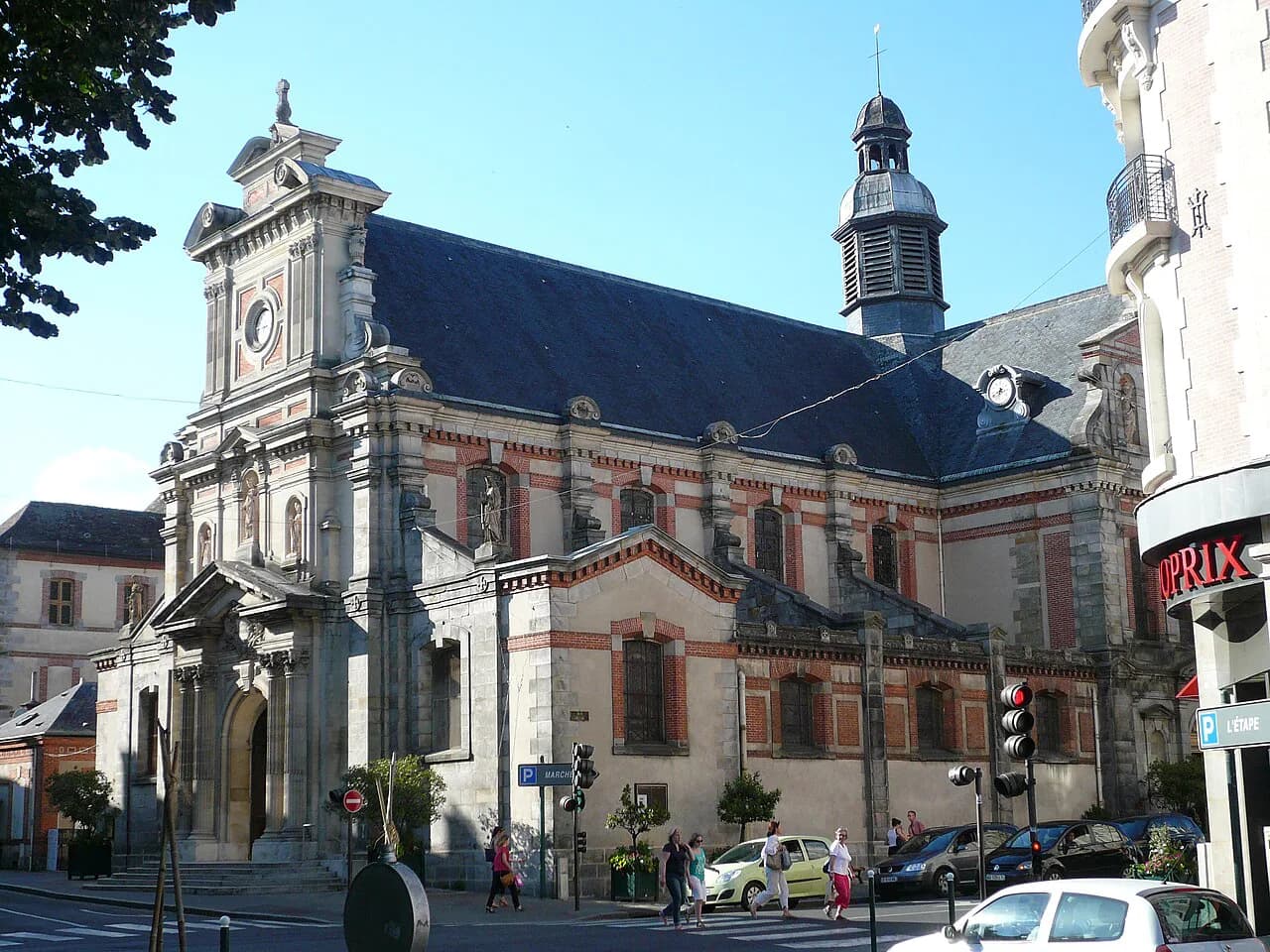
Église Saint-Louis, Fontainebleau: What to See and How to Visit

Église Saint-Louis is the town-centre parish church of Fontainebleau, standing at 2 rue de la Paroisse, 77300 Fontainebleau, a few minutes on foot from the château grounds and rue Royale. It is a working Catholic church in the Diocese of Meaux, not a museum with a ticket desk, so you drop in, look around and leave — usually within twenty to thirty minutes. Treat it as a short, quiet stop woven into a day built around the palace rather than a destination in its own right.
What Église Saint-Louis is and where it sits in Fontainebleau
The church is listed by the Diocese of Meaux at 2 rue de la Paroisse, in the middle of Fontainebleau's old town and within a few streets of the château. It belongs to the Pôle missionnaire de Fontainebleau, which is the local grouping of parishes serving the town and its surrounding villages. That parish status shapes the visit: expect a living place of worship with regular services rather than an interpreted heritage site.
A separate address reference of 4 rue Royale appears in the tourist office's own note on the church, so use it only as a landmark cue: rue Royale is the broad street running past the château towards the town centre. The parish address remains 2 rue de la Paroisse. If you are navigating by phone, search the parish address rather than the rue Royale reference to land at the right door.
How to get there and how long the walk takes
From the château side of town, walk down rue Royale into the shopping streets and turn towards rue de la Paroisse; the church tower is hard to miss once you are in the block behind the main street. From the château forecourt the walk is short enough — a few minutes at an easy pace — that the church works as an add-on before or after a palace visit. From the station side of Fontainebleau the walk is longer, so most visitors pair the church with the town centre rather than making a special trip.
Fontainebleau is compact, and the church, the château entrances and the main shopping streets all sit within a walkable core, which means no bus or taxi is needed once you are in the centre. Wear shoes you can walk in: the surrounding streets are ordinary pavements and paving, not parkland. If you are coming off a forest walk, allow time to change or tidy up before stepping inside.
The church's origins: 1613 and the independent parish of 1661
The tourist office records that the church was built in 1613, in the reign of Henri IV, whose dates are given as 1553 to 1610. The same note explains that the parish of Fontainebleau only became independent in 1661. Those two dates are the useful historical anchor for a visit: a seventeenth-century town church that grew into its own parish rather than a royal chapel attached to the palace. Keep expectations modest — this is local history, not a cathedral-sized monument.
What to see inside
Inside, read the building as a working parish church: a nave for a congregation, side chapels, and the furnishings of regular worship rather than a curated exhibition. Look at how the seventeenth-century shell has been adapted over the centuries, and take a moment at the entrance to see whether a service is in progress before walking further in. Photography is best kept discreet and without flash, and quiet is expected if anyone is praying.
Because the church carries no ticketed monument status, there is no audio guide, no exhibition rooms and no fixed route to follow. That is the honest trade-off: you get an authentic, untouristed interior but far less interpretation than at the château. If you want labels, context panels and a structured visit, put your time into the palace and keep the church for a contemplative quarter of an hour. For the same decision made against a grander monument, see our guide to things to do in Versailles.
Mass times at Saint-Louis
The parish celebrates Mass at Saint-Louis in the ordinary weekly rhythm of a town church, and dated listings show how that pattern looks in practice: on Saturday 24 October 2026 a Mass at 18h00, and on Sunday 25 October 2026 Masses at 09h00 and 10h30. These are dated examples from the published schedule, not a standing timetable, so read them as an illustration of the weekend pattern rather than a promise for your dates.
The wider Pôle missionnaire de Fontainebleau also covers neighbouring churches such as the Carmel on boulevard du Général Leclerc, so the same service may move around the group on different days. If hearing Mass is part of your weekend, plan your other stops around the times listed by the parish or the diocèse de Meaux for your exact dates, since a mid-morning Sunday slot isn't guaranteed from week to week.
How long to allow and when to slot it in
Give the church twenty to thirty minutes if you want to sit, look and read a little; ten minutes is enough for a quick look round. It fits naturally either before the château opens your day or after a palace visit, when you are walking back into town for food. Avoid arriving in the last minutes before a listed service unless you intend to stay for it.
On a two-day Fontainebleau weekend, pair the church with the town centre rather than the forest: the château and its gardens fill a morning, and a short walk through rue Royale and rue de la Paroisse rounds off the afternoon. If you are spending a full day in the Forêt de Fontainebleau, the church is not worth a detour on its own, so save it for a town day.
Nearby: the château, rue Royale and the town centre
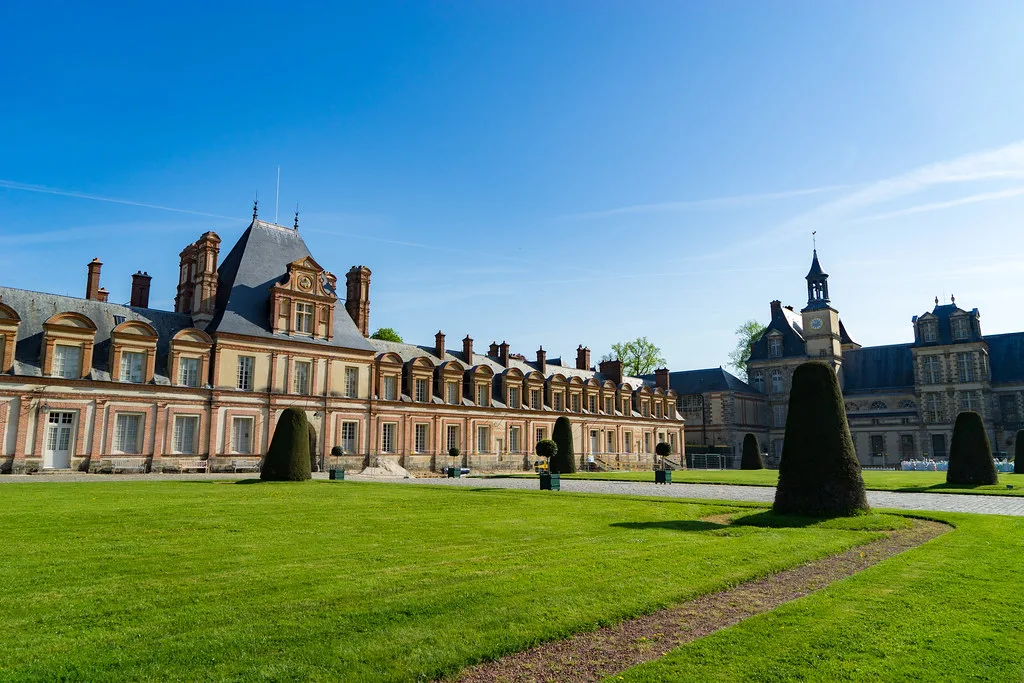
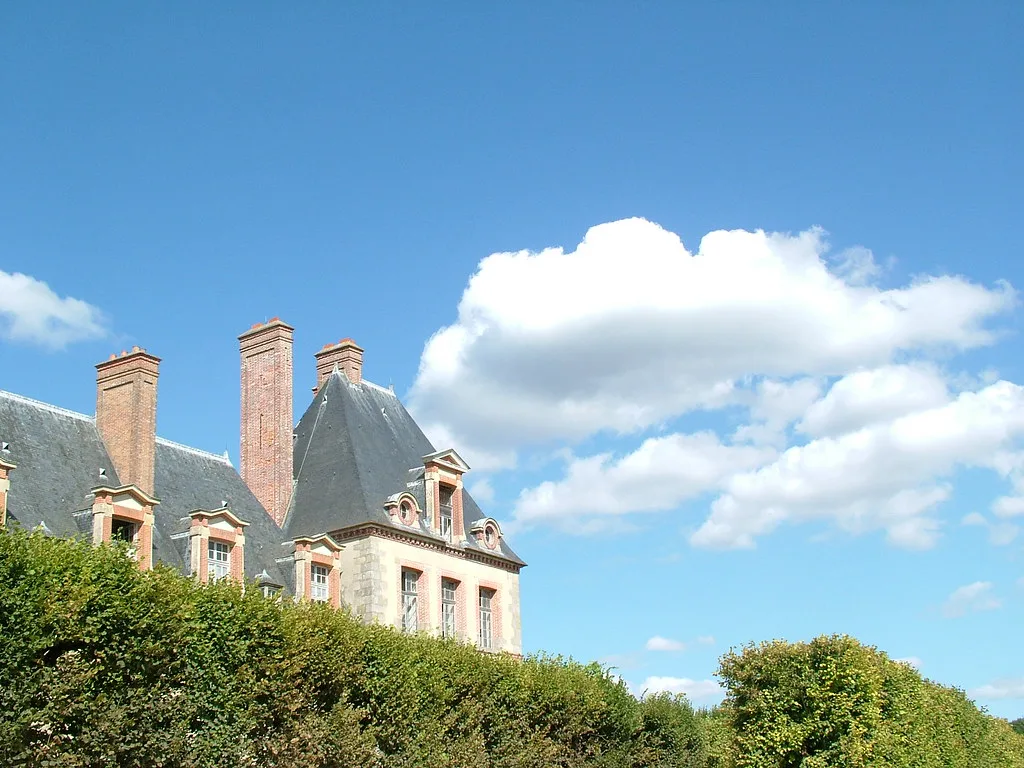
The Château de Fontainebleau is the obvious companion stop, and its gardens give you open-air walking after an indoor morning. The Grand Parterre, the formal garden layout beside the palace, is a short walk away and makes a natural loop back towards the town. Together with the church, these give a compact half-day within a small radius.
If you prefer a quieter garden, the Jardin de Diane, named after the Diana garden associated with the palace, is another nearby green space to fold into the same walk. A little further out, the Musée Stéphane Mallarmé suits anyone who wants a literary stop with more interpretation than the church offers. None of these needs more than an hour, so a town-centre day can hold all of them comfortably.
Practical points for a respectful visit
This is an active place of worship, so dress as you would for any European church: covered shoulders and no beachwear. Time your look around the building outside the published service slots, and if a celebration begins, either stay and participate quietly or step out. Volunteer stewards and parishioners are usually the best source of anything not posted at the door.
The church publishes its own contact and address details through the Diocese of Meaux, and service times appear on the parish and diocesan listings; check those before a Sunday visit. Beyond that, there is little to plan: turn up, be quiet, and treat it as the short, local stop it is.
Plan Your Visit
Église Saint-Louis is a fifteen- to thirty-minute stop at 2 rue de la Paroisse, best folded into a Fontainebleau town-centre day alongside the château and its gardens. Come for the seventeenth-century building and the atmosphere of a working parish, not for exhibitions or ticketed displays. Fit it around the published service times and it earns its place in a weekend.
Explore more Fontainebleau guides
Frequently Asked Questions
Where is Église Saint-Louis in Fontainebleau?
The church is at 2 rue de la Paroisse, 77300 Fontainebleau, in the town centre within a short walk of rue Royale and the château. Use the parish address to navigate, and treat 4 rue Royale, cited by the tourist office, as a landmark reference only.
When was Église Saint-Louis built?
The tourist office records that the church was built in 1613, during the reign of Henri IV. The parish of Fontainebleau became independent in 1661, which is when the church took on its own parish role rather than depending on the palace.
What are the Mass times at Saint-Louis in Fontainebleau?
Published listings show Mass on Saturday 24 October 2026 at 18h00 and on Sunday 25 October 2026 at 09h00 and 10h30. Treat these as dated examples of the weekend pattern and confirm times for your own dates before travelling.
How long does a visit to Église Saint-Louis take?
Allow twenty to thirty minutes to sit and look around, or ten minutes for a brief stop. There are no exhibition rooms or ticketed displays, so the visit is short and fits easily around the château and the town centre.
Is Église Saint-Louis a museum or a working church?
It is an active Catholic parish church in the Diocese of Meaux, part of the Pôle missionnaire de Fontainebleau. Expect regular services and quiet, respectful behaviour rather than interpretation panels, audio guides or a ticket desk.
What is there to see near Église Saint-Louis?
The Château de Fontainebleau and its gardens, including the Grand Parterre and the Jardin de Diane, are within a short walk, as are the streets of the town centre. The Musée Stéphane Mallarmé suits visitors who want a more structured cultural stop.