
Jardin de Diane, Fontainebleau: What to See and How Long It Takes
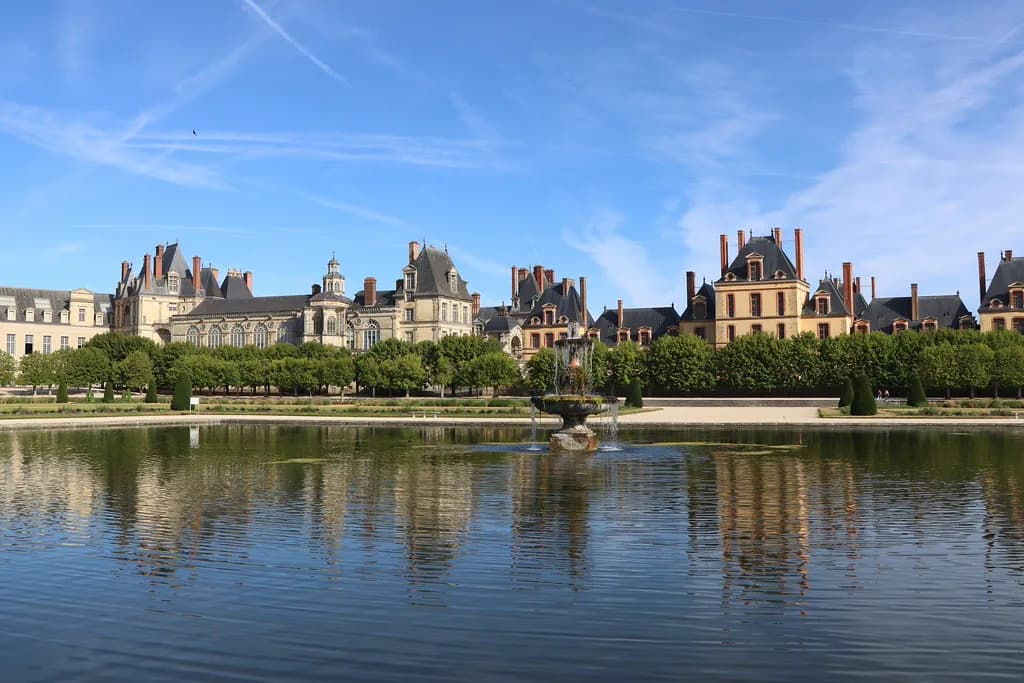
The Jardin de Diane is a compact English-style landscaped garden in the western grounds of the Château de Fontainebleau, named not for its planting but for a fountain crowned by a statue of Diana the Huntress. It sits beside the most private rooms of the former royal apartments and works best as a short, shady pause inside a wider circuit of the gardens.
Treat it as a stop rather than a standalone day out: the garden is one piece of a 130-hectare park and garden ensemble, and the surrounding grounds carry most of the substance. Pairing it with the Fontainebleau Attractions: 6 Visitor Guides overview helps you decide how much of the estate to take on in one weekend. If you are weighing a second château garden weekend, our things to do in Versailles guide applies the same stop-versus-day-out logic to a far larger estate.
What the Jardin de Diane is
This is an English landscaped garden, laid out in the western part of the château grounds on land once won from religious houses. Its design is credited to Hurtault, the architect also responsible for the château's gate of honour in 1810–1812, and it follows the winding-path, rare-species fashion of the period. It is a garden to wander slowly rather than a formal parterre to survey from one viewpoint.
The name comes from the Fontaine de Diane at its centre, and the garden is best understood in that light: a setting built around one surviving piece of sculpture rather than a botanical collection. Expect a compact space, not a long promenade, and plan your time accordingly.
Where the garden sits in the grounds
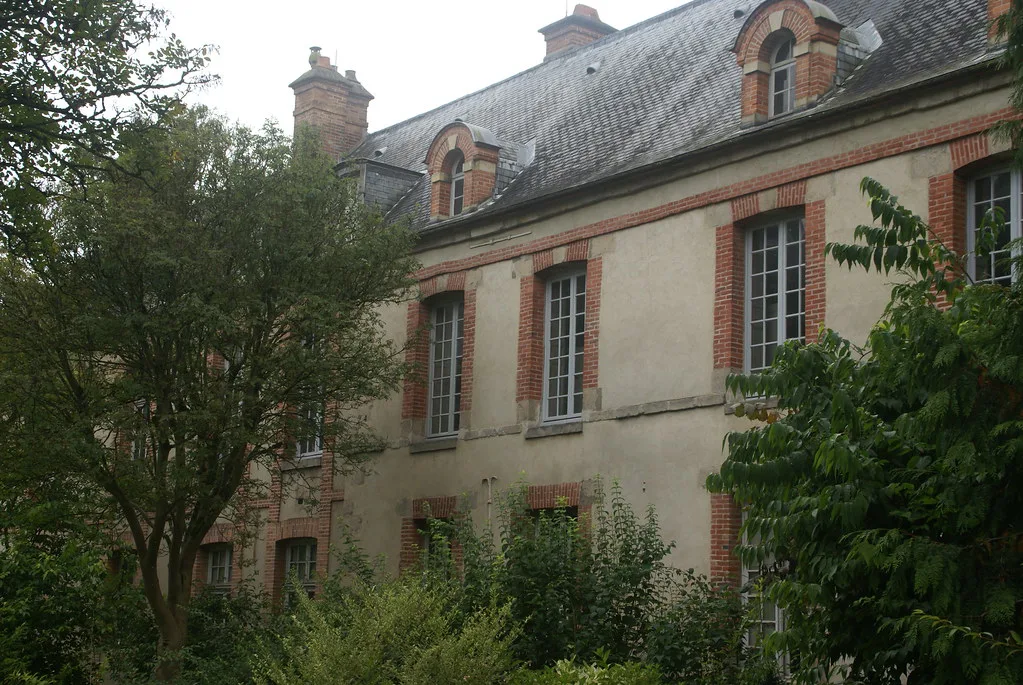
The Jardin de Diane lies in the western gardens, bordered by the intimate spaces of the sovereigns, including the small apartments of the Empress Eugénie and Marie-Antoinette's Turkish boudoir. Until the 19th century it was closed off by buildings; their destruction and the purchase of an extra strip of land opened it towards the town side.
That position matters practically: you reach it from the town side of the estate, so it makes a natural first or last stop rather than a detour deep into the park. If you are coming for the interiors first, the Château de Fontainebleau guide covers the palace itself.
The Fontaine de Diane
The fountain at the centre is the last survivor of the rich series created under Henri IV. It shows the armed goddess with her quiver, and the pedestal carries four bronze deer heads and four dogs, a reminder that Fontainebleau was a hunting castle prized by its royal residents.
Look at the base before you look at the figure: the dogs and antlered heads are the detail that explains the garden's hunting reference, and they are easy to walk past. Give the fountain two or three minutes rather than photographing it from the path and moving on.
What to look for in the planting
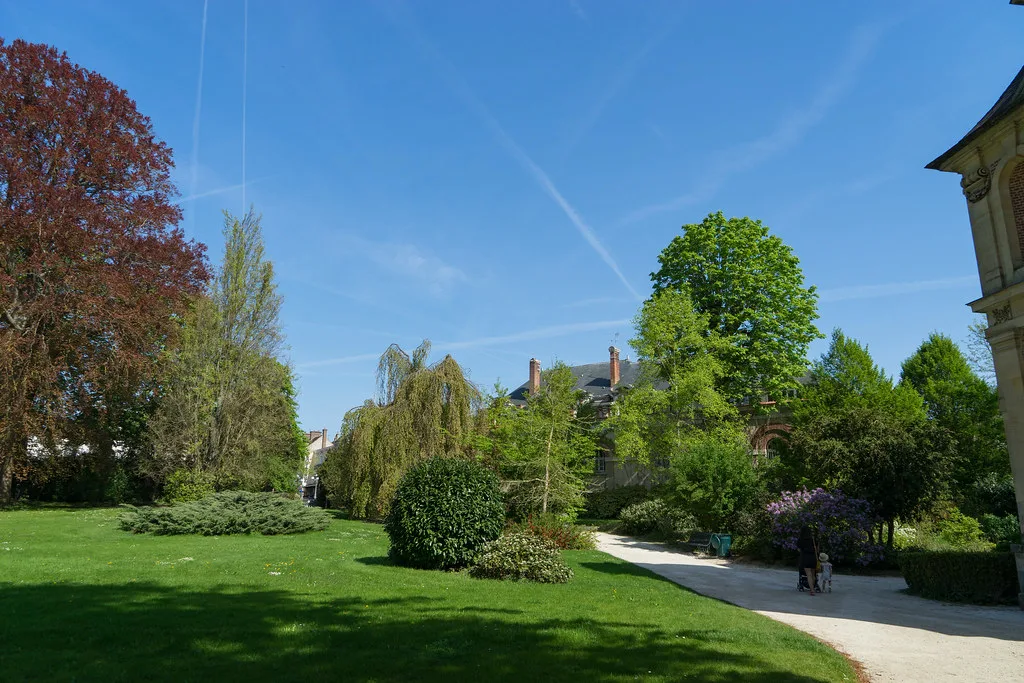
The garden is planted with notable trees, including a cata and a Virginia tulip tree, and large beeches give the shade the garden is known for. Species change over the years, so use the planting as atmosphere rather than a checklist of named specimens to tick off.
Fourteen particularly fine, old or rare species across the château gardens have been recognised with a remarkable-tree label, which tells you the estate takes its planting seriously. In high summer the shade is the reason to come; in winter the structure of the paths and the fountain carry the visit instead.
How to get there and get in
The château stands in Seine-et-Marne in the Île-de-France region, and the gardens are entered from the town side of the estate, close to the streets of Fontainebleau itself. The park and gardens are open free of charge under the usual conditions, so the garden costs nothing to walk through.
That free access applies to the grounds, not to the château interiors, which are a separate matter with their own conditions. Check the château's site for current opening arrangements across the whole estate before you set out.
If you are building a full day around the town, the wider things to do in Fontainebleau list shows how the gardens fit alongside the streets and the forest edge.
How long to allow
Ten to twenty minutes is enough for the Jardin de Diane itself, including a proper look at the fountain pedestal and a turn under the beeches. It is a small garden, and stretching it further means standing about rather than seeing more.
Set it inside a two- to three-hour circuit of the gardens as a whole, which lets you take in the Grand Parterre, the canal and the Carp Pond without rushing. Walkers who stop at every fountain will need the longer end of that range.
Putting it in order with the rest of the grounds
A sensible sequence starts with the Jardin de Diane and the adjoining English garden, then opens out into the Grand Parterre created by André Le Nôtre and Louis Le Vau between 1660 and 1664. At 14 hectares, that parterre is a change of scale, so save it for when you are ready to walk in the open.
Beyond the parterre, the Henri IV canal runs 2,000 metres long and 40 metres wide, and the Cascades basin marks the drop towards it. The Grand Parterre at the Château de Fontainebleau page takes that section of the grounds in more detail if you want to plan the middle of the walk.
Finish at the Étang des Carpes and the Cour de la Fontaine, where the carp pond gives you a long view back at the château façades. Row boats are hired from the freshwater marine pier in front of the château, which is a pleasant way to see the garden side of the building from the water.
Dogs in the park and gardens
Dogs are allowed in the park of the Château de Fontainebleau but are not permitted in the formal gardens, which includes the Grand Parterre. The Jardin de Diane falls on the formal side of that line, so dog owners should plan a park-only route on the day.
In practice that means walking the dog on the park paths and canal side while someone else takes the garden circuit, then regrouping at the Carp Pond. It is worth deciding this before you arrive rather than at the garden gate.
Nearby options
The château interiors are the obvious companion visit, and the palace's own courtyards and gardens pages describe the spaces around the Jardin de Diane. The Empress Eugénie museum, on the ground floor of the Gros Pavillon, sits close to the garden's edge and is a natural add-on for anyone interested in the private apartments.
Back in town, the Église Saint-Louis, Fontainebleau is a short walk from the estate entrances and makes a tidy pairing with a morning in the gardens. The Musée Stéphane Mallarmé suits a slower afternoon if you want something indoors after the park.
For a longer walk, the Forêt de Fontainebleau begins at the edge of the estate and offers a complete change of scene from formal planting. Keep it as a second half-day rather than tacking it onto the garden circuit.
Plan Your Visit
The Jardin de Diane rewards a short, deliberate stop: look at the fountain base, take the shade of the beeches, then move on to the Grand Parterre and the canal while your legs are fresh. It is free to enter with the grounds, and it is the western gardens rather than the château interiors that you are visiting here.
Build the rest of the day around the town and the forest edge, and keep the garden as the calm opening move. One look at the château's own pages before you travel will settle any question about access on the day.
Frequently Asked Questions
Where is the Jardin de Diane at Fontainebleau?
It is in the western gardens of the Château de Fontainebleau estate, in Seine-et-Marne in the Île-de-France region. It sits beside the former private royal apartments, including the Empress's small apartments and Marie-Antoinette's Turkish boudoir, and is reached from the town side of the grounds.
What is there to see in the Jardin de Diane?
The centrepiece is the Fontaine de Diane, a statue of the armed Diana the Huntress on a pedestal carrying four bronze deer heads and four dogs. Around it, the English-style garden has winding paths, large beeches for shade and notable trees. The planting is the setting; the fountain is the reason the garden has its name.
How long do you need for the Jardin de Diane?
Allow ten to twenty minutes for the garden itself, including a close look at the fountain pedestal. Set that inside a two- to three-hour circuit of the wider gardens, which covers the Grand Parterre, the canal and the Carp Pond without rushing.
Is the Jardin de Diane free to visit?
The park and gardens of the Château de Fontainebleau are open free of charge under the usual conditions, and the Jardin de Diane is part of those grounds. Entry to the château interiors is a separate matter with its own conditions, so check the official site before you go.
Can you take dogs into the Jardin de Diane?
No. Dogs are allowed in the park but not in the formal gardens, which include the Grand Parterre, and the Jardin de Diane is on the formal side. Walk the dog along the park paths and canal instead, and meet back at the Carp Pond.
What else is near the Jardin de Diane?
The château interiors, the Cour de la Fontaine and the Étang des Carpes are all within the same estate, and the Grand Parterre leads on towards the canal. In town, the Église Saint-Louis and the Musée Stéphane Mallarmé are short walks from the entrances, and the Forêt de Fontainebleau starts at the estate edge.