
Ruelle des Chats: Troyes' Narrow Cat Alley

The Ruelle des Chats is a narrow medieval alley of half-timbered houses in the old town of Troyes, and the lane itself takes about 10 to 15 minutes to walk and look around. It sits a couple of minutes from the Tourist Office on Place Alexandre Israël, so it fits easily into a morning in the historic centre rather than needing a trip of its own. You walk in from the street, look up at the rooftops, and carry on.
What the Ruelle des Chats is
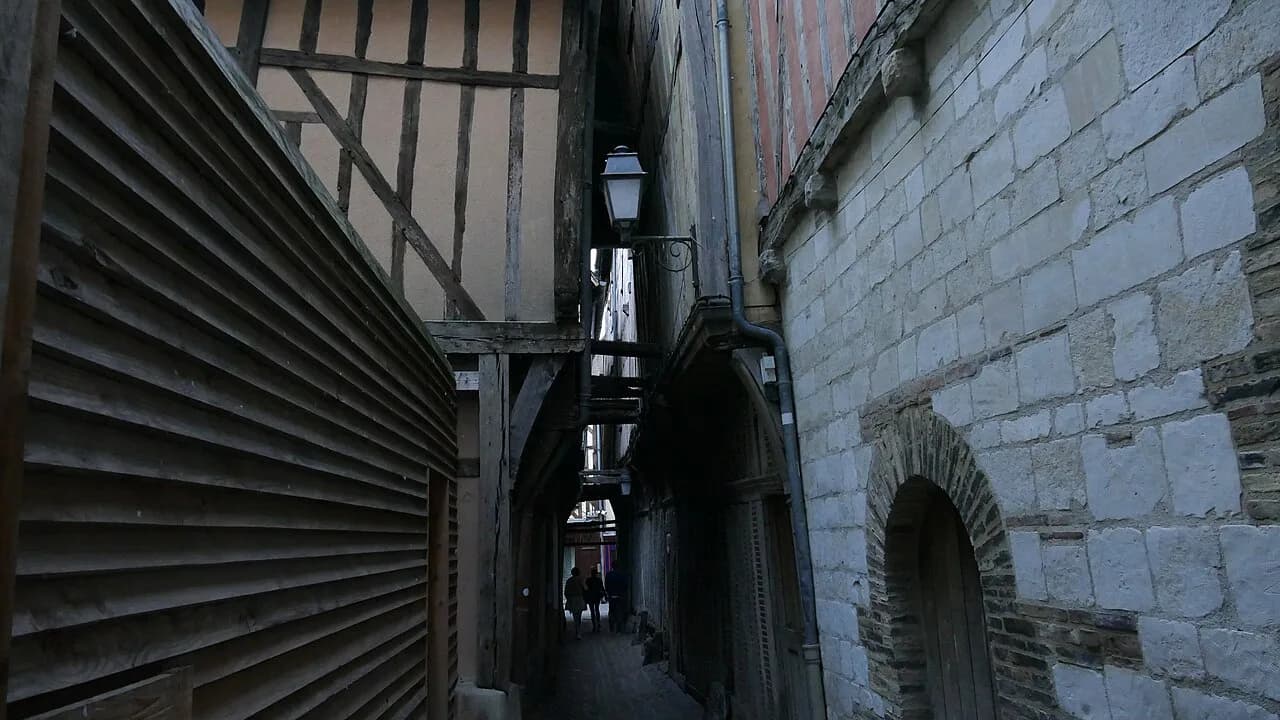
This is the narrowest street in Troyes, a slot between timber-framed houses where the upper storeys lean close enough that locals joke about cats hopping from roof to roof. The lane's central channel was cut to let residents walk without soiling their shoes, a detail that makes sense the moment you see how tight the passage is. Nothing here is staged or roped off; it is a working slice of the old town that happens to be photogenic.
The old town is shaped like a champagne cork, a comparison you will hear repeatedly because it genuinely helps you navigate. The lower, wider half holds the medieval streets around the Ruelle des Chats; the upper part was the spiritual and political centre, where Troyes Cathedral stands today. Pick up the free town map at the Tourist Office before you set off and the alley becomes easy to slot into a loop. If you are weighing a second Champagne city against this one, our things to do in Reims covers cathedral and cellars in similar compass.
Where it is and how to reach it
The alley lies inside the pedestrian heart of Troyes, a short walk from Place Alexandre Israël, where the Tourist Office distributes maps and sells guided tours. Troyes is about 90 minutes from Paris by train, which makes the old town reachable on foot from the station for most weekenders. Once you are in the centre, everything in this guide is within a few minutes of everything else.
Use the cork shape to orient yourself: head for the denser medieval half of the centre, where the half-timbered houses cluster, and you will find the lane without much fuss. The Tourist Office also runs guided walks, useful if you want the history of the medieval fairs and the textile trade that paid for all this timber and glass.
What to look for in the alley
Look up rather than straight ahead. The rooftops along the lane are close enough that cats could jump between them, which is where the name comes from, and carved cat faces are set into the wooden beams if you scan the timbers at eye level and above. The effect is best in flat daylight, when the overhanging storeys and the carved detail both read clearly.
Then look down. The central channel running along the alley floor was cut so that fortunate residents could avoid soiling their shoes, a practical piece of medieval drainage that most visitors walk straight over. The lane has been photographed for more than a century, and older views show the same tight rooflines and half-timbered fronts you see today.
How long to allow
Budget 10 to 15 minutes for the Ruelle des Chats itself: long enough to walk it twice, find the carvings and take a photograph without a crowd of elbows in the frame. It is a small sight, not a museum, and the honest trade-off is that it will not fill an afternoon. Treat it as the hinge of a half-timbered old-town morning rather than a destination in its own right.
Go early if you want the lane quiet, or accept that a sliver of street this photogenic draws a steady trickle of people through the middle of the day. Wet weather makes the timber fronts and the stone underfoot slippery, so wear shoes with grip if you are visiting in winter.
Nearby: the merchant houses on Rue Champeaux
A few minutes away, at the corner of Rue Champeaux and Rue Paillot de Montabert, stand the Baker's House and the Goldsmith's House, the first two buildings restored when work on the old town began in the early 1960s. Look up at the Baker's House for the pulley once used to haul flour sacks to the attic, and at the Goldsmith's House for the corbelled turret staircase that signalled a merchant's wealth: the higher the tower, the richer the owner. Both are exterior viewing only, which keeps them a five-minute stop.
The Jardin Juvénal-des-Ursins, a small Renaissance-style garden, is close by and makes a calm pause between the lane and the surrounding streets. Église Saint-Jean-au-Marché is also within a short walk; Henry V of England married Catherine of France there in June 1420. Neither needs more than a few minutes unless the architecture catches you.
Nearby: Église Sainte-Madeleine and its rood screen
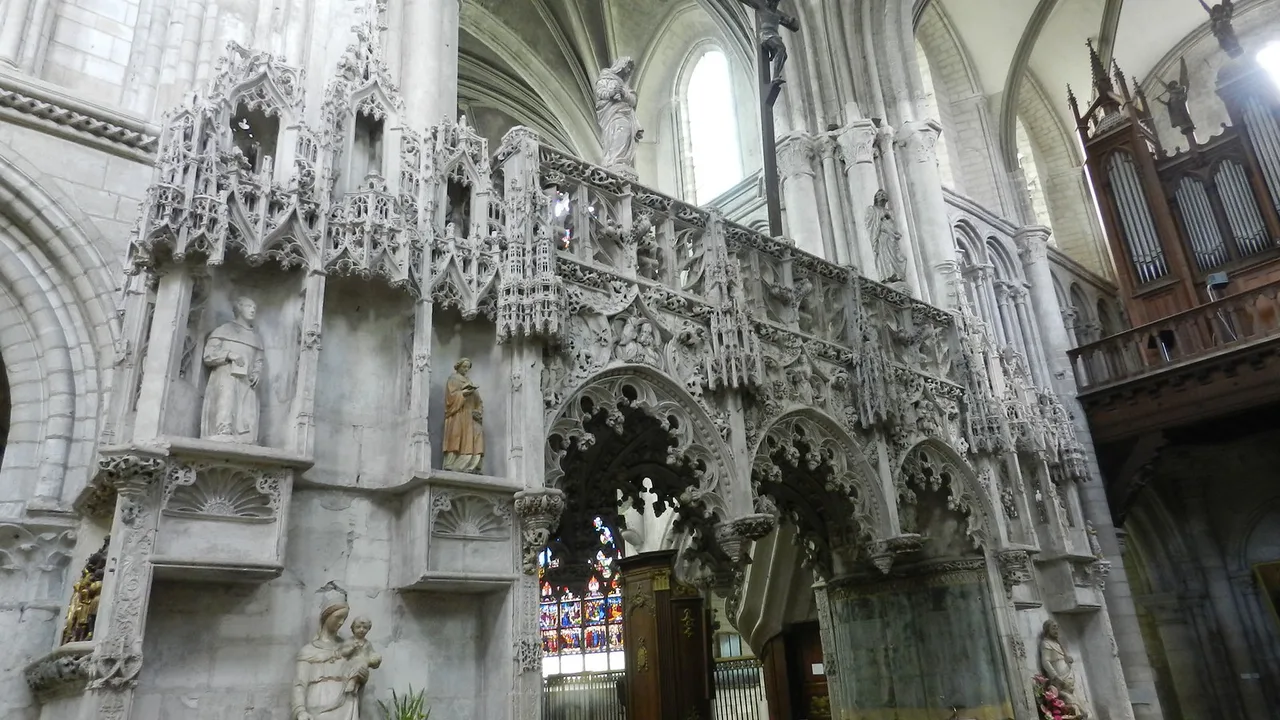
Église Sainte-Madeleine, which dates back to 1120, is the oldest church in the city centre and a short walk from the alley. Inside, one of only ten surviving rood screens in France — an elaborately carved 16th-century stone partition between chancel and nave — is the reason to step in even if churches are not usually your thing. The stained glass tells biblical stories almost like comic strips, designed to teach worshippers who could not read, with local merchants and their families worked into the windows.
Admission is free, and it repays 20 to 30 minutes rather than a quick glance. Check the parish noticeboard or the Tourist Office for current visiting times before you build your morning around it.
Pairing the alley with Troyes Cathedral and the Cité du Vitrail
For an afternoon, walk up to Troyes Cathedral, a Gothic building raised over five centuries and never finished: the north tower stands, the south tower was never built when money ran out. Admission is free, and it holds stained glass on a grand scale plus a collection of relics that includes the skull of Bernard of Clairvaux. Allow an hour if you like glass, less if you are ticking off the highlights.
Near the cathedral, the Cité du Vitrail opened in the Hôtel-Dieu-le-Comte in December 2022 as France's first centre devoted to stained glass; roughly 40 percent of the world's stained-glass windows are in Troyes and the surrounding Aube department. Exhibits sit at eye level rather than high in a church, and the displays rotate. Check the current programme and ticket price before you go.
Practical points for the lane
The Ruelle des Chats is an open-air lane woven into the streets of the old town, so it slots into a walk past the surrounding half-timbered houses rather than needing a visit of its own. That makes it the easiest item on a Troyes itinerary to move if rain or a late arrival reshuffles your day. The only planning it needs is knowing where it is.
Wear shoes that cope with cobbles and stone, and keep an eye on the ground as well as the rooflines. The lane is short and the surrounding streets are pedestrian, so it suits a slow amble between churches, gardens and the covered market rather than a timed schedule.
Fitting the alley into a Troyes weekend
A sensible shape for day one: collect the map from the Tourist Office, walk the Ruelle des Chats and the merchant houses, then Sainte-Madeleine before lunch. The covered market, Marché Central des Halles, has 35 food stalls selling andouillette, Chaource cheese and Prunelle de Troyes, and closes at 1pm Monday to Thursday and on Sundays, staying open all day Friday and Saturday. Plan lunch there on a Friday or Saturday if you want the full choice.
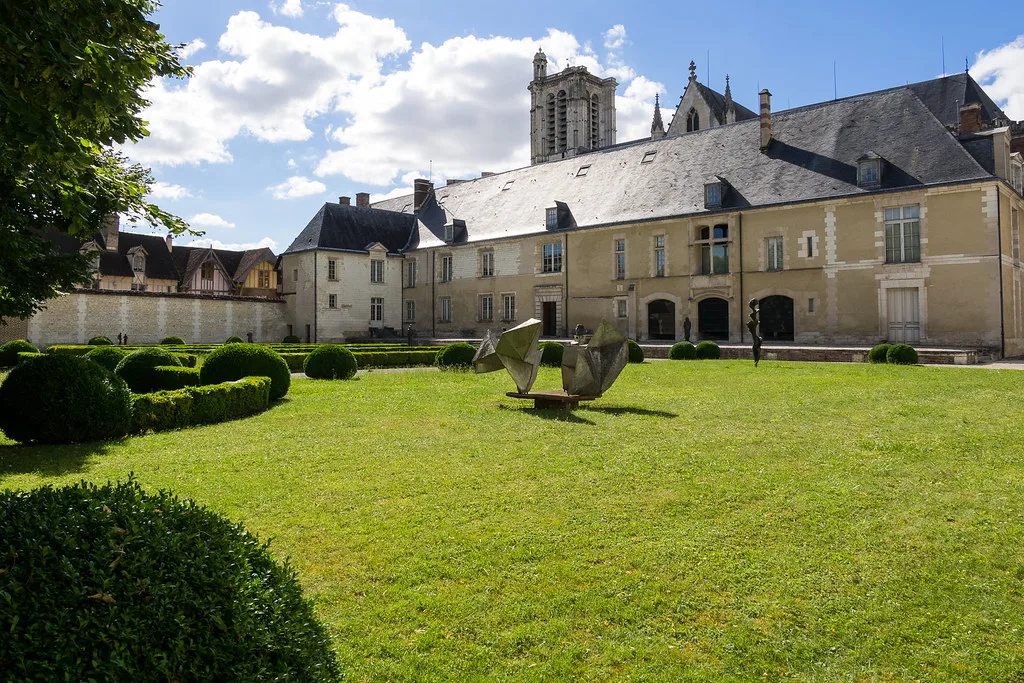
If you have a second day, give it to the museums. The Musée d'Art Moderne de Troyes, built on the Lévy textile fortune, reopened fully on 16 April 2024 after four years of works, with a rehung collection across three floors and a sculpture garden. It sits almost next door to the cathedral, so glass and paintings combine neatly into one afternoon.
What to skip if you are short on time
If you have only a few hours in Troyes, the Ruelle des Chats is worth ten minutes and no more; the cathedral glass and Sainte-Madeleine's rood screen carry more weight. The lane rewards a photographer and a wanderer, not someone hunting a headline sight. Pair it with the streets around it and treat the stop as scenery on the way to something bigger.
The outlet centres on the edge of town, including McArthurGlen and Marques Avenue, take a bus ride and a chunk of the day; save them for a trip with shopping as the point. The same goes for the vineyards around Montgueux, where visits are by arrangement. For a compact weekend, keep your time inside the cork.
Plan Your Visit
The Ruelle des Chats asks almost nothing of you: just a narrow lane where the roofs lean close and the old drainage channel runs underfoot. Give it 10 to 15 minutes on a half-timbered old-town morning and let the churches, gardens and glass do the rest of the work.
Check the current hours and prices for the cathedral, the Cité du Vitrail and the museums before you travel, then build your day around the market's morning opening. That way the small sights and the big ones fit together without wasted walking.
Explore more Troyes guides
Frequently Asked Questions
Where is the Ruelle des Chats in Troyes?
It runs through the medieval old town of Troyes, a couple of minutes from the Tourist Office on Place Alexandre Israël. The historic centre is shaped like a champagne cork, and the lane sits in the lower, denser half where the half-timbered houses cluster.
Is the Ruelle des Chats free to visit?
Yes. It is an open-air public lane with no ticket, no gate and no opening hours, so you can walk through whenever you are in the old town.
How long do you need at the Ruelle des Chats?
Allow 10 to 15 minutes. That is enough to walk the lane, spot the carved cat faces in the beams and look down at the central channel, with time left over for the surrounding streets.
Why is it called Cat Alley?
The rooftops along the lane are so close that cats could jump between them, which is the local explanation for the name. Carved cat faces appear in the wooden beams, so look up and at eye level as you walk.
What else is nearby in Troyes old town?
The Baker's House and Goldsmith's House on Rue Champeaux, the Jardin Juvénal-des-Ursins, Église Saint-Jean-au-Marché and Église Sainte-Madeleine are all within a short walk. Troyes Cathedral and the Cité du Vitrail are a little further north, in the upper part of the cork.
When is the best time to walk the Ruelle des Chats?
Early in the day is quietest, and flat daylight shows the timber detail best. The lane is short and popular with photographers, so expect a trickle of people at peak times.