
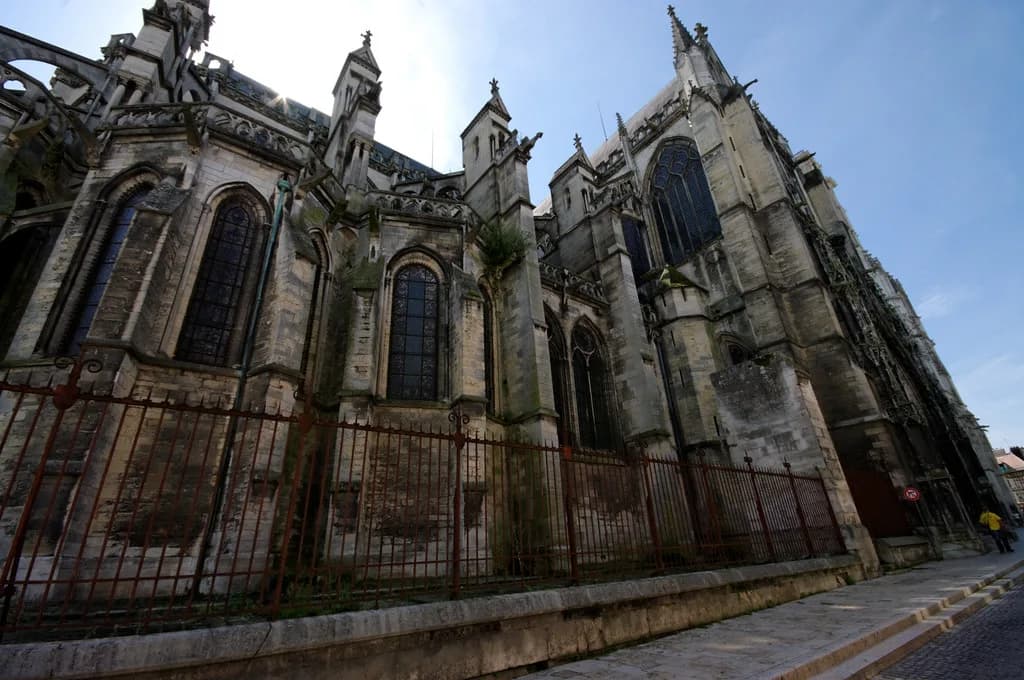
Troyes Cathedral (Cathédrale Saint-Pierre-et-Saint-Paul)
Troyes Cathedral, formally the Cathédrale Saint-Pierre-et-Saint-Paul, is the principal Gothic church of Troyes in the Aube department of the Grand Est, and the reason to give the city's old centre more than a passing afternoon. Work began around 1200 and continued until the middle of the 16th century, so the building is best read as a record of changing Gothic taste rather than a single moment of design.
Come for two things: the stained-glass windows and the arcading, both singled out as the building's remarkable architectural elements. Set aside roughly an hour inside, more if you like to work slowly through glass and stonework, and treat the surrounding medieval lanes as a separate walk rather than squeezing them into the same stop.
What Troyes Cathedral is and where it sits in Troyes
The cathedral stands at the heart of Troyes, listed at 10000 Troyes, which places it firmly in the city centre rather than on the outskirts, so it slots naturally into a walk through the old town. The site is recorded as an urban church in a city setting, with a square in front of the façade, so you arrive at the building across open paving rather than through a narrow passage.
Troyes itself is the Champagne city whose historic core is the main draw, and this cathedral is the anchor of that core. Use the cathedral as your fixed point and build the rest of the day around it; the city's other churches and lanes sit within walking distance, which is how most visitors cover the centre.
Because the building is the defining monument of the old centre, it makes a sensible first stop on a short break, giving you a mental map of the city before you wander. Arriving early in the day leaves the afternoon free for the streets and museums that cluster nearby.
How to get there and how to find the entrance
Troyes sits in the Aube, roughly ninety minutes from Paris by rail on the main line into the city, which makes the cathedral feasible as a day trip from the capital or as the centrepiece of a weekend. Once in the city, the old centre is compact and walkable, and the cathedral's square gives you a clear approach from the surrounding streets.
The visitor entrance is normally through the west front facing the square, but the cathedral's own signage and the noticeboards at the doors are the reliable guide on the day. Check the current opening arrangements with the cathedral before you travel, since these are set locally and can vary by season.
A quick orientation: the building's long construction story
Construction began about 1200 and continued until the middle of the 16th century, a span of roughly three and a half centuries that explains almost everything about the building's appearance. The dominant style is Gothic, so you are looking at a fabric assembled by successive generations of masons who each worked in the manner of their own time.
Read the stonework with that timeline in mind: the lower stages and the later additions do not match, and the transitions between campaigns are visible in the masonry and the window tracery. This is the single most useful thing to know before you walk in, because it turns a beautiful church into a legible document of changing Gothic design.
The present building replaced an earlier cathedral on the site, and the long campaign means no one architect's plan governs the whole. Look for where the rhythm of the arcades changes and where the window designs shift, then carry those observations inside with you.
What to look for on the façade and church square
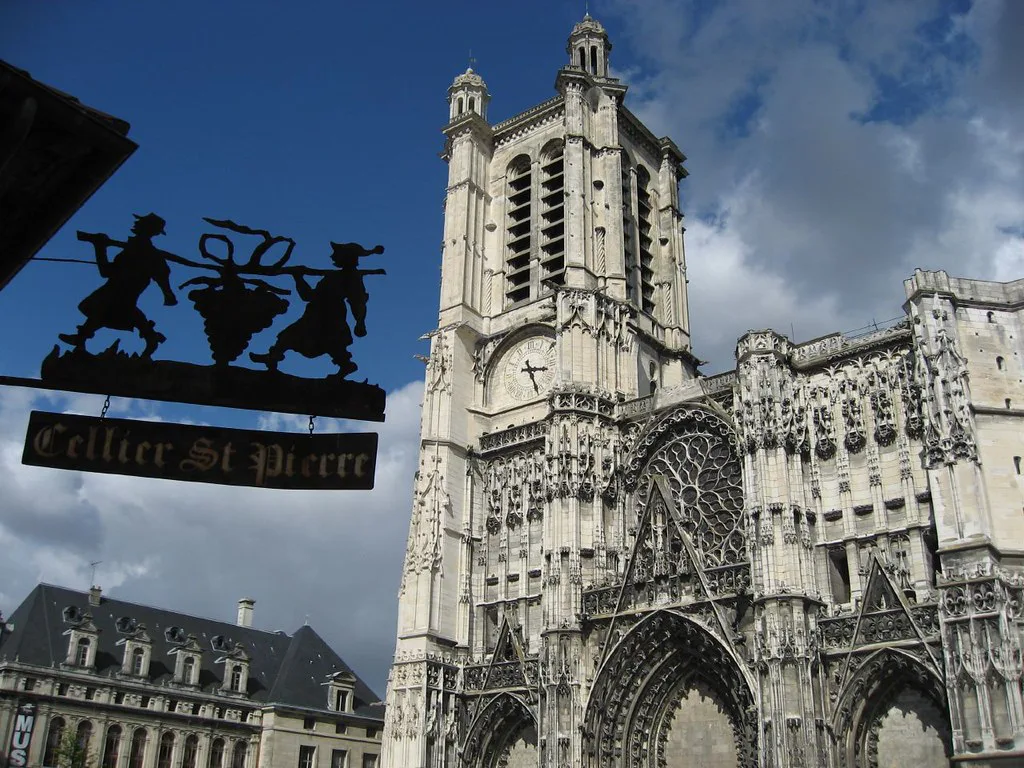
Start outside, on the square, where you can take in the west front at a distance and then approach it slowly. The façade gives you the clearest view of the building's mixed fabric, since the lower and upper stages were built at different points in the long campaign.
The square itself functions as the cathedral's forecourt and the natural meeting point in this part of the old centre. Pause there before going in, use it to get your bearings on the surrounding streets, and photograph the front from the far side of the paving where you can take in the full height.
Inside: stained glass and arcading
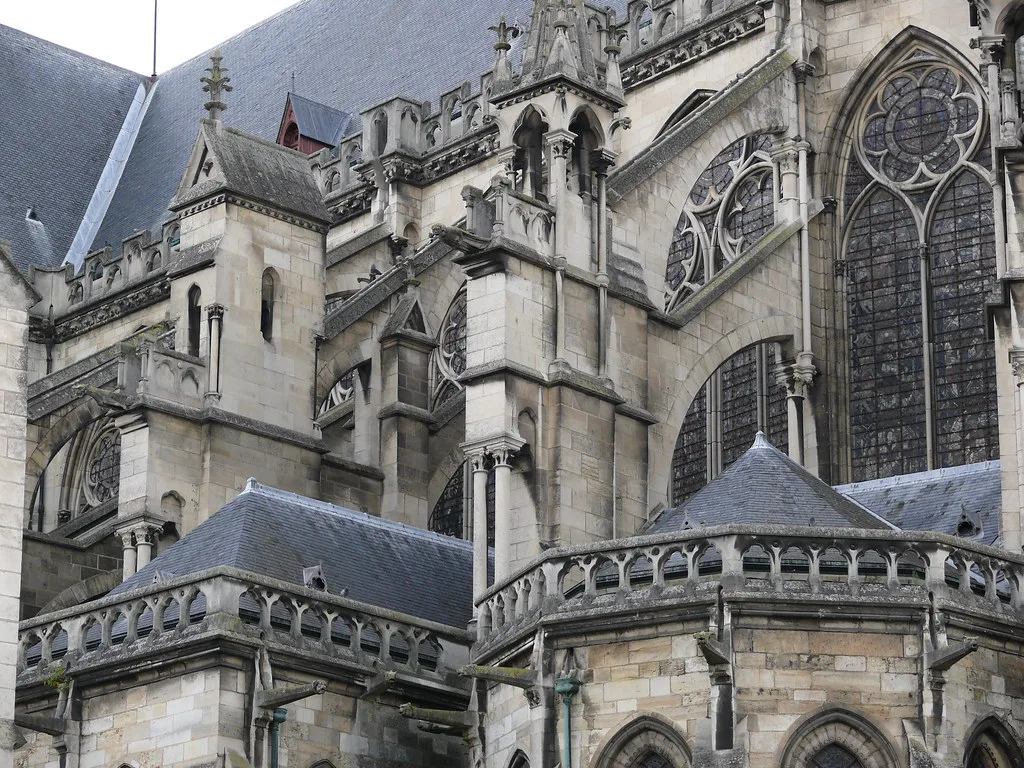
Stained glass and arcading are the two features singled out in the building's own architectural record, so make those your priorities once you are through the doors. The glass rewards a slow pass along the aisles, where you can follow the windows at eye level and then look back across the nave for the full effect.
The arcading is the structural spine of the interior, and the differing profiles from one bay to the next are where the long construction history becomes easiest to see. Walk the length of the nave and choir rather than stopping at the entrance, since the interior's character only emerges as you move through it.
How much time to allow for a visit
Budget around an hour for the cathedral interior at an unhurried pace, with the glass and the arcading taking most of it. If you read every window and study the masonry transitions, allow ninety minutes; if you simply want a look around, forty-five minutes is realistic.
The cathedral works best as one substantial stop rather than a quick tick on a list, so plan the rest of the day around it instead of squeezing it between other sights. Keep the medieval streets for afterwards, when you can give them proper attention.
Nearby: medieval houses around the cathedral
The immediate neighbours of the cathedral are the well-preserved medieval houses of the old centre, the timber-framed buildings that give Troyes its character. Rather than treating them as a separate excursion, walk a loop out from the cathedral square and back, which keeps the cathedral at the centre of your morning.
Among the lanes within easy walking distance, the Ruelle des Chats is the narrow passage most visitors seek out, and it pairs naturally with a cathedral visit. Two other churches, the Église Sainte-Madeleine and the Basilique Saint-Urbain, sit within the same central walking area if you want to compare Gothic interiors in one day. If you are weighing up other cathedral cities for the trip, our guide to Antibes Cathedral covers the same kind of old-town church visit.
For a change of register after all that glass and stone, the Musée d'Art Moderne de Troyes and the Maison de l'Outil et de la Pensée Ouvrière are both in the centre and make good afternoon counterweights. Both are worth checking for opening days before you set out, since French museums often close on a Monday or Tuesday.
Practical points to confirm before you go
Opening hours, entry arrangements and any closures are set by the cathedral and change with the seasons and the liturgical calendar, so confirm them directly with the cathedral before travelling rather than relying on older listings. The same applies to any guided access inside the building.
Because the cathedral is an active place of worship in a working city centre, expect some parts of the building to be in use at certain times and plan your visit around a flexible slot. Outside, the square and the surrounding medieval lanes are open public space, so you can always see the exterior whatever the interior arrangements turn out to be.
If you are building a wider short break around Troyes, use the city's attractions guide to sequence the cathedral with the lanes, churches and museums so that your days do not double back on themselves. The cathedral is central enough that most other sights fall within a fifteen- to twenty-minute walk.
Plan Your Visit
Troyes Cathedral rewards a visit planned around one idea: this is a Gothic building made across more than three centuries, and the mixed fabric is the attraction rather than a flaw. Give it an hour, concentrate on the stained glass and the arcading, and let the surrounding medieval lanes fill the rest of your morning.
Confirm the cathedral's current opening arrangements before you set out, then build the day around the square and the streets within walking distance. That way the cathedral stays the anchor of the visit rather than an item you rush through.
Explore more Troyes guides
Frequently Asked Questions
When was Troyes Cathedral built?
Construction began around 1200 and continued until the middle of the 16th century, which is why the building shows several phases of Gothic design rather than a single uniform style.
How long does it take to visit Troyes Cathedral?
Allow around an hour for the interior at an unhurried pace. If you want to study the stained glass and the arcading closely, ninety minutes is realistic; a quick look takes about forty-five minutes.
What should I look for inside Troyes Cathedral?
The stained glass and the arcading are the building's outstanding architectural elements. Walk the full length of the nave and choir, since the interior's character only becomes clear as you move through it.
Where is Troyes Cathedral?
It stands in the centre of Troyes in the Aube department of the Grand Est, listed at 10000 Troyes, with a square in front of the façade. The old centre around it is compact and walkable.
Is Troyes Cathedral near other sights in Troyes?
Yes. The medieval houses of the old centre surround it, and the Ruelle des Chats, the Église Sainte-Madeleine and the Basilique Saint-Urbain are all within walking distance in the central area.
Do I need to check opening hours before visiting Troyes Cathedral?
Yes. Opening arrangements are set locally and vary with the season and the liturgical calendar, so confirm them with the cathedral before you travel.