Is Amboise Worth Visiting? Honest Travel Guide
Yes, Amboise is worth visiting for two châteaux in one small town, a riverside setting and easy train access. Here is who will love it and how long to allow.
On this page
Yes, Amboise is worth visiting, provided you want two châteaux you can reach on foot and a town small enough to cross in an afternoon. The Château Royal and Clos Lucé both sit within the town, so you can see Leonardo da Vinci's last home and the fortress where he is buried without a car. What you will not get is a big-city choice of restaurants or beds, which is why the answer changes for some travellers.
Amboise suits a two-night break from Paris by train, a first taste of the Loire Valley, or a base for Chenonceau and Chaumont-sur-Loire. It suits less well anyone who wants a wide dining scene, late-night bustle or lots of hotel options in high summer. Blois and Tours each answer one of those needs better, and the comparison below sets out which.
What Amboise does well: two châteaux within walking distance
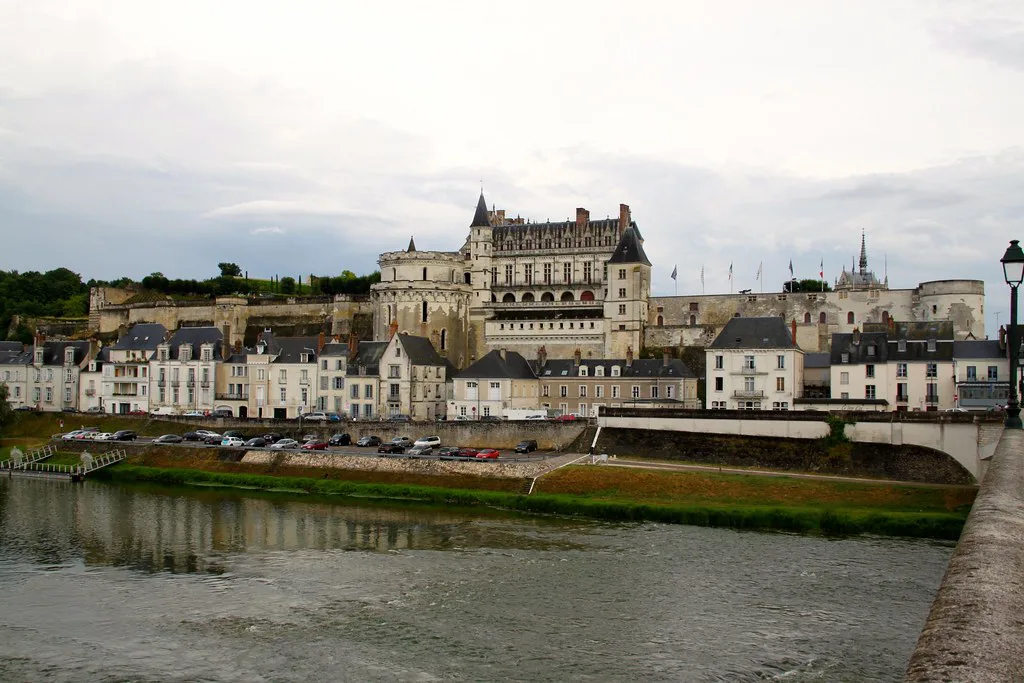
The strongest argument for Amboise is concentration. The Château Royal sits above the river in the middle of town and Clos Lucé is a few hundred metres from the centre, so a short break here involves no car, no taxi and no timetables between the two headline sights. That is rare in the Loire Valley, where the famous châteaux are scattered across the countryside.
Amboise works best for first-time Loire Valley visitors who picture a fairytale castle above a river, cobbled streets and a genuine village feel rather than a tourist resort. Everything is strung along one main street, which makes the town easy to read on the first afternoon and keeps orientation simple for a short stay. The trade-off is scale: this is a small place, and it feels like one.
Château Royal d'Amboise: the riverside fortress and Leonardo's chapel
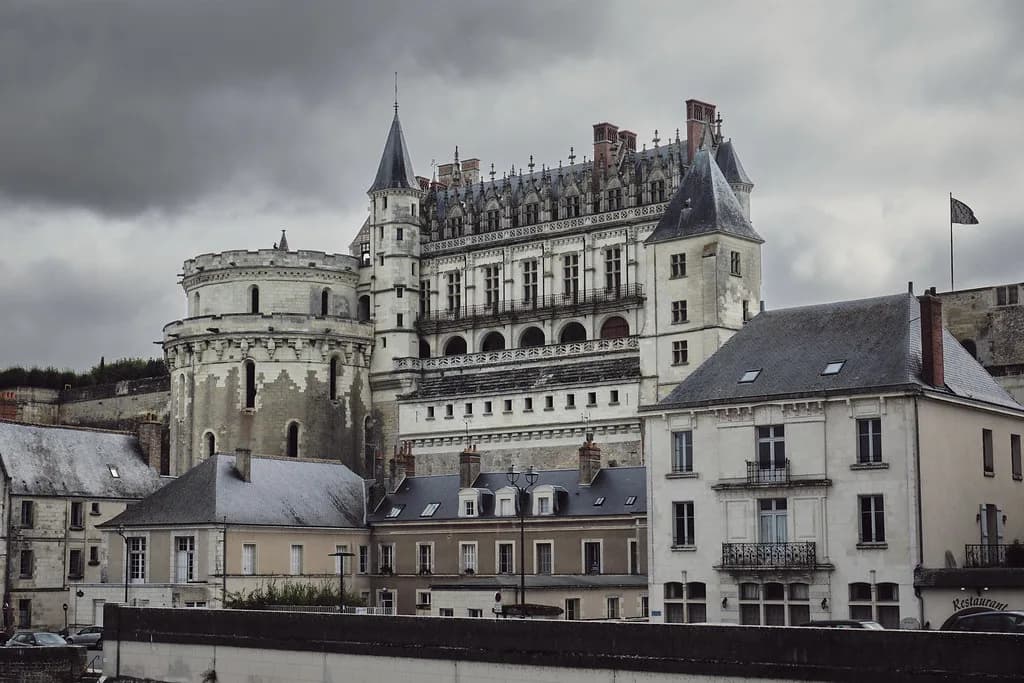
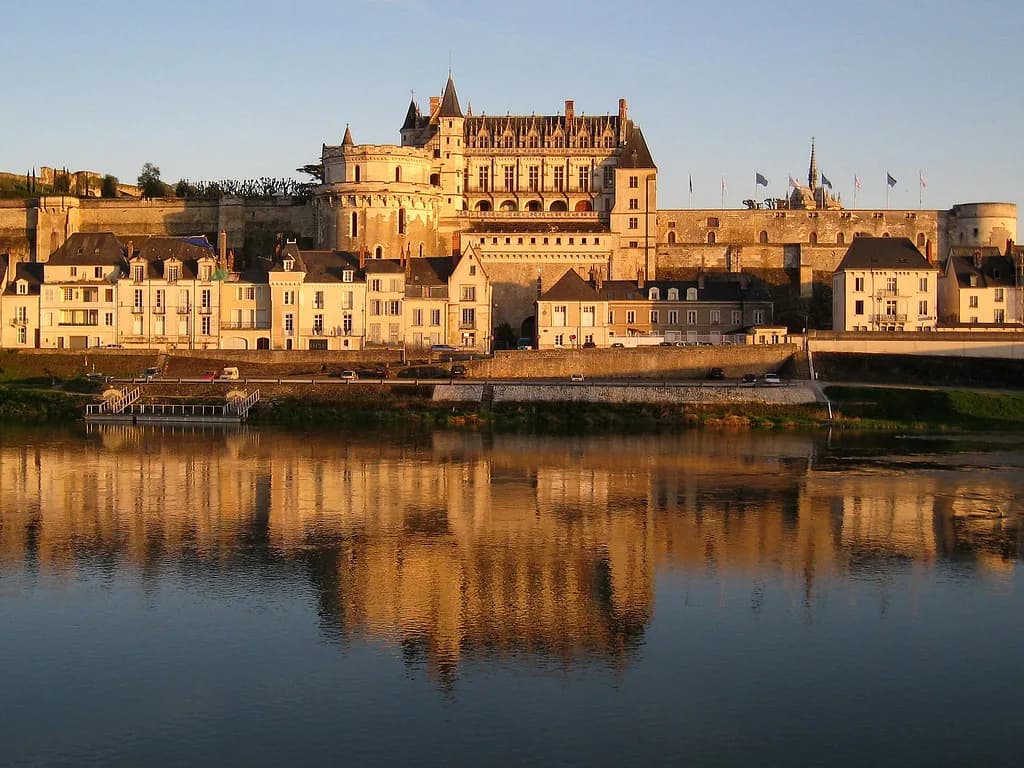
The Château Royal dominates Amboise from its ridge above the Loire, and its history runs from the powerful House of Amboise into the hands of the French crown. It became a favoured royal residence and saw the birth and upbringing of several future kings, including Francis I. Beyond the state rooms, the castle's small chapel holds the burial place of Leonardo da Vinci.
It is a genuinely handsome building rather than a ruin, with worked architecture and terraces looking over the river and the town roofs. It also draws the heaviest footfall in Amboise, and coach parties arrive through the morning, so visiting early gives you the courtyards and views with fewer people around. Allow roughly two hours if you read the displays and walk the ramparts.
Clos Lucé: Leonardo da Vinci's last home and its park
Clos Lucé is the residence where Francis I installed Leonardo da Vinci at the end of his life, and it is now a museum devoted to the man and his inventions. The house itself is elegant, but the park is what makes it work for families: life-size and scale reproductions of his machines sit among the trees, and children can walk around them rather than past glass cases.
For many visitors this is the more interesting of the two châteaux, and it rewards a slower visit than the Château Royal. There is a restaurant in the park, the Auberge du Prieuré, where staff dress in period costume and speak in old French, which makes a memorable lunch stop inside the visit itself. Budget half a day here and half a day for the Château Royal rather than trying to fit both into one morning.
The old town, rue Nationale and the Clock Tower
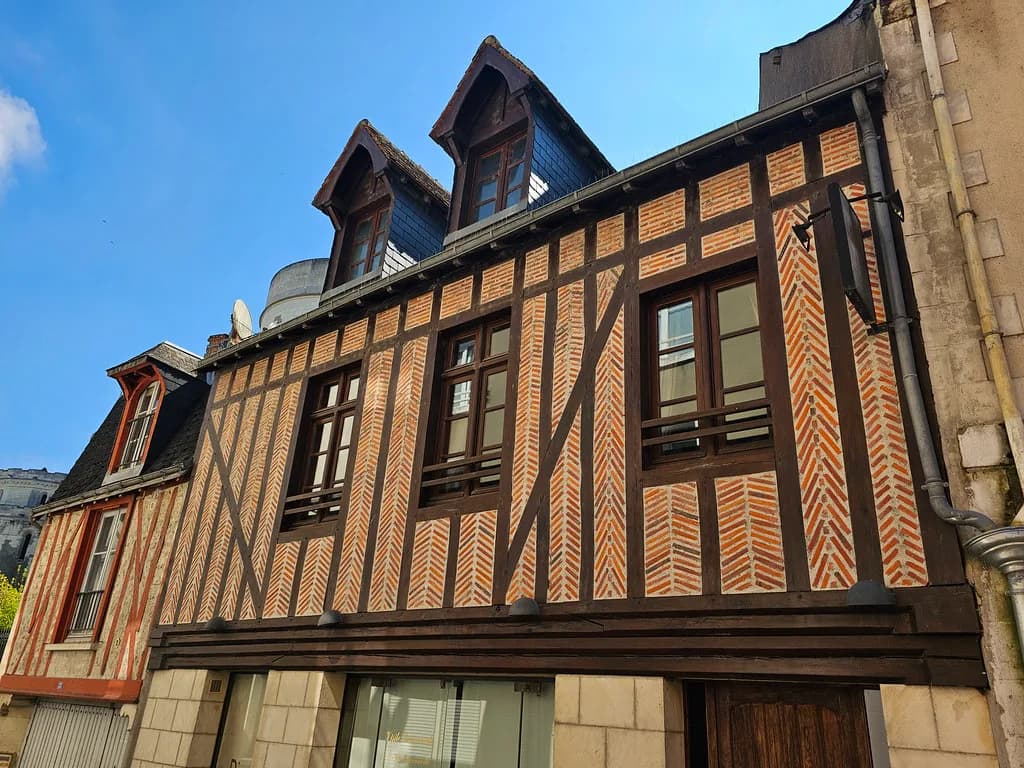
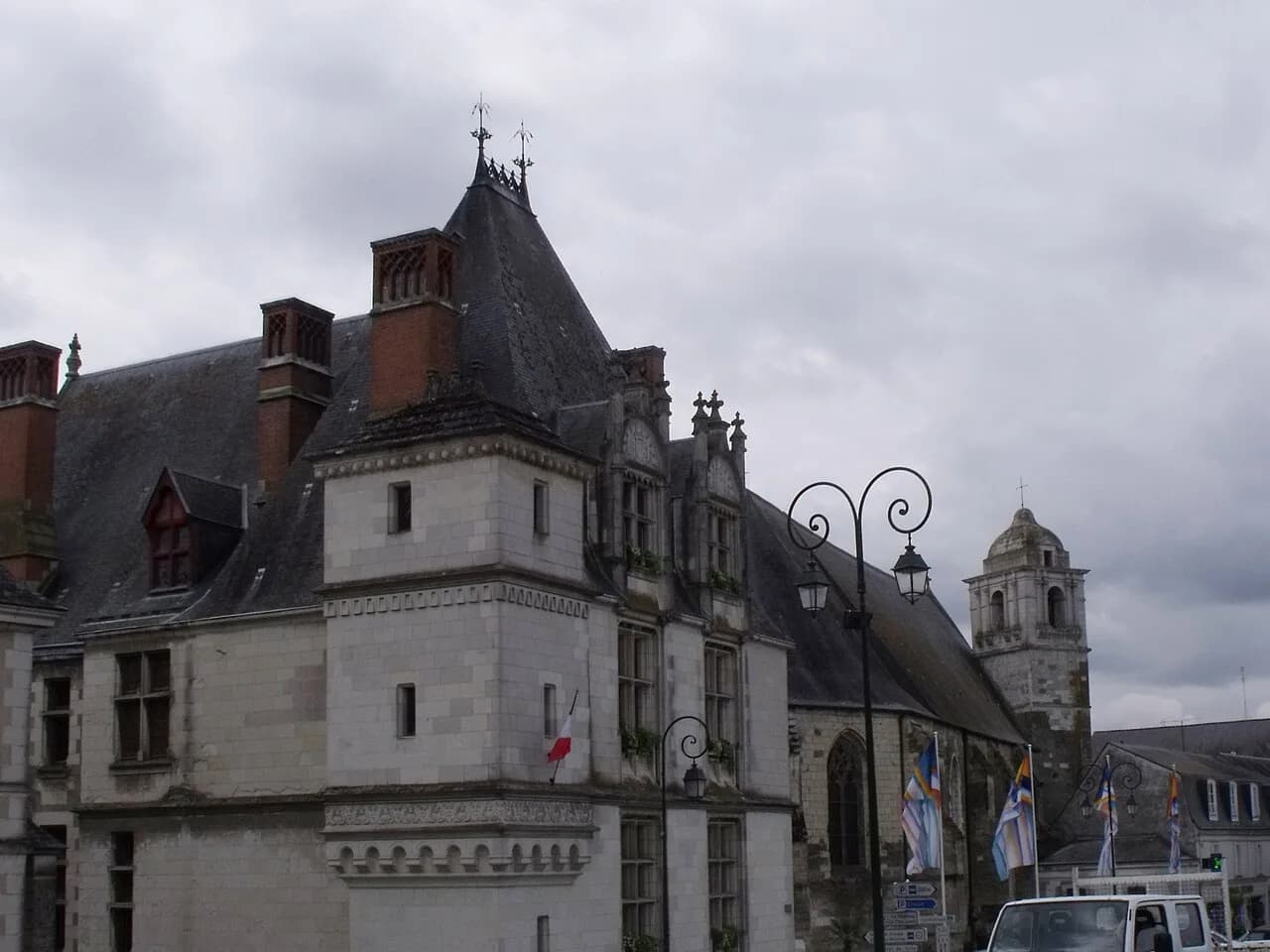
Amboise's centre is a compact knot of small streets wrapped around the castle hill, with rue Nationale running through it as the main axis. The shopfronts and hanging signs are part of the appeal, and the town is pleasant to wander without a plan between castle visits. Look out for troglodyte houses cut into the rock if you walk a little beyond the centre.
On rue Nationale stands the Clock Tower, a fifteenth-century belfry built over an old town gate whose vaults survive, and it has been listed as a historical monument since 1933. The interior is worth a look if you find it open, though the entrance is not obvious from the street. Treat it as a five-minute stop on the way up to the castle rather than a destination in itself.
The Loire banks and the view back to the château
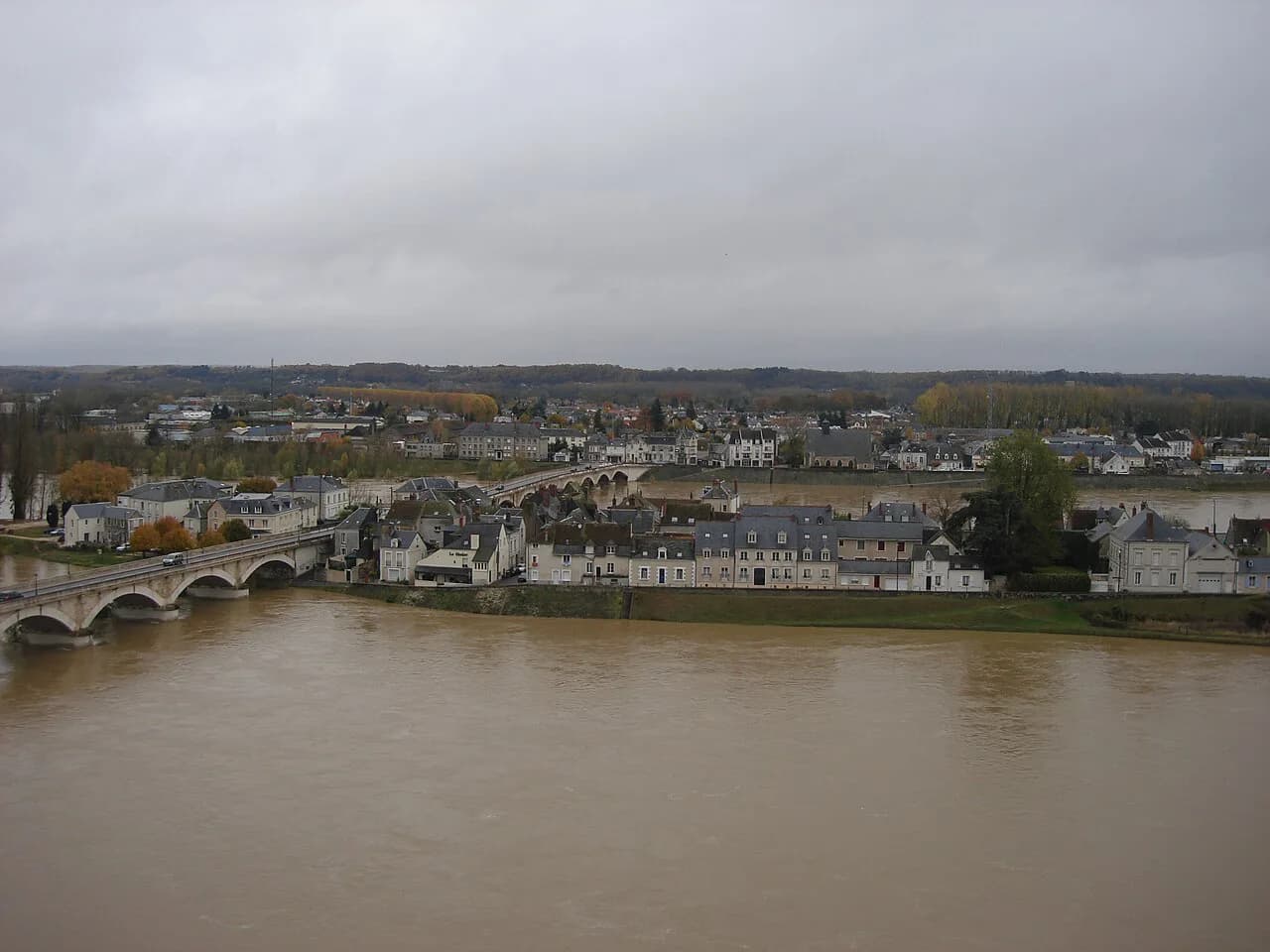
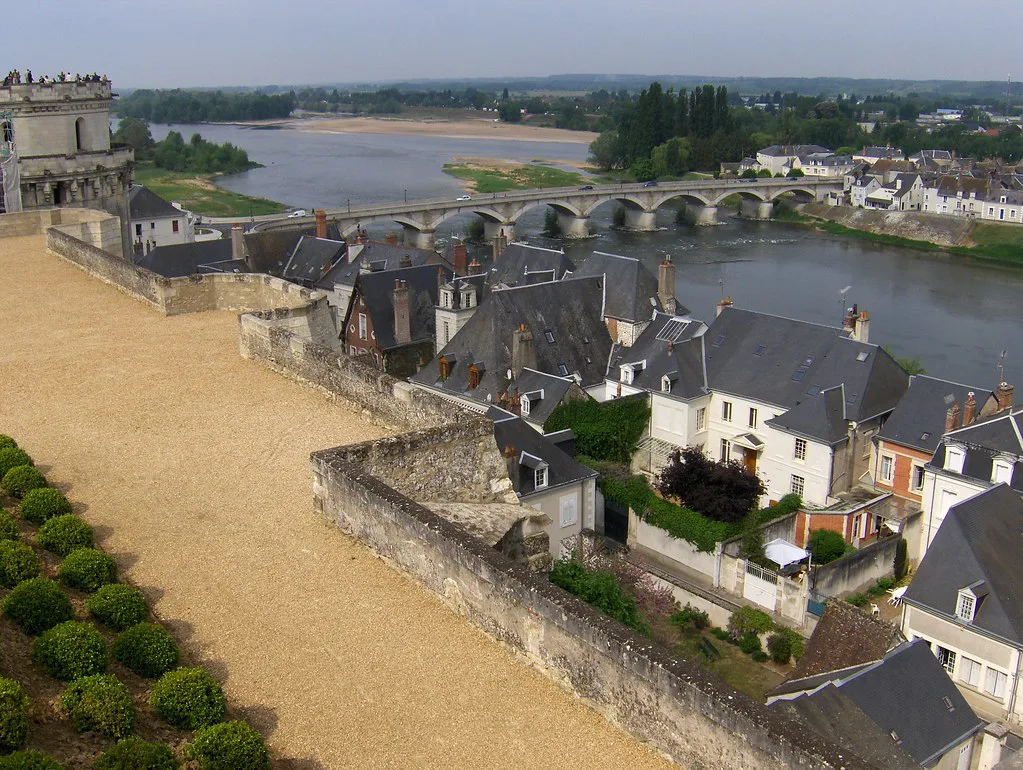
The Loire quays give Amboise its second act after the châteaux, and the walk along the water needs no ticket or timetable. For the classic view of the castle above the roofs, cross the bridge and head onto the island in the middle of the river, from where the whole ridge lines up. Late afternoon light is the reason to save this walk for the end of the day.
This is also where a short break slows down usefully: the riverside is free, flat and close to the centre, so it fills the gap between a morning at Clos Lucé and an evening meal. If you have a third day, the banks are the place to spend an unhurried hour rather than adding another ticketed visit.
Where Amboise falls short: crowds, a small restaurant choice and limited beds
Amboise's weaknesses follow directly from its size. In summer the town fills with coach tours running from Paris and Tours, and the main street can feel busier than a village of this scale should. Restaurant choice is correspondingly narrow, which matters if eating well is a big part of your trip rather than an afterthought.
Accommodation is the other constraint. Amboise has a limited stock of rooms and beds, and they sell out quickly in summer, so a last-minute booking in July or August is a gamble. Book well ahead, or accept a larger base such as Tours and visit Amboise as a day out. For a first stay of a few nights, Amboise is still the more atmospheric choice.
How long Amboise needs: one day, two days or a base for three
One day covers the essentials: the Château Royal in the morning, a walk through the old town and along the Loire, and a meal in the centre. Two days is the comfortable minimum, adding Clos Lucé and the riverside at leisure without rushing either château. Anything beyond that is about the surrounding castles rather than Amboise itself.
With three days, Amboise becomes a base rather than a destination, and Château Gaillard and the Chanteloup Pagoda fill an extra half-day if you want to stay local. Château Gaillard was a royal estate built for Charles VIII, with Italian Renaissance-inspired gardens, an orangery and a chapel cut into the rock. The pagoda is the surviving fragment of a grand eighteenth-century estate, with a pond and a very small staircase to the top; expect little beyond the tower itself.
Be realistic about the pagoda: there is little to see beyond the tower, its pond and a climb up a very small staircase, and the quiet setting is the main reward. If your time is short, spend it on Clos Lucé instead and leave the pagoda for a return visit. The one-day version of Amboise is good; the two-day version is better.
Amboise as a base for Chenonceau, Chaumont-sur-Loire and Chambord
Amboise sits within about an hour's drive of most of the great Loire châteaux, including Chenonceau, Chaumont-sur-Loire, Chambord and Blois, which makes it a practical hub for a longer trip. Chenonceau is the closest of the headline names, roughly fifteen minutes by car or about an hour by train, while Chaumont-sur-Loire is around twenty minutes by car. Chambord is the awkward one, about 45 minutes by car with no straightforward rail link.
Without a car, Amboise still functions: the châteaux around the valley are reachable by regional train or bus, and bikes can be rented from shops on the banks of the Loire. That said, a car turns a fixed itinerary into a flexible one, and Chambord in particular is far easier with one. Choose your base on transport before you choose it on charm.
Amboise or Blois: which town suits your trip
Choose Blois if you want to see a lot of châteaux from one centre and value daily markets over a village atmosphere. Blois is larger, feels more like a working French town, and sits centrally between the big names, with markets on most days of the week except Monday and its best ones on Saturday morning around Place Louis XII and Place de la République. Its own château is in the middle of town.
Choose Amboise if two castles on foot, a riverside view and a small-town feel matter more than market choice or château count. Blois is also the weaker of the two for organised group tours, so travellers who prefer joining a tour to driving should weigh Tours instead. Both towns are built on a slope above the Loire, and both are walkable from their stations.
Amboise or Tours: village feel against bigger-city choice
Tours wins on choice. It is the largest of the three towns, with the widest restaurant scene, a university crowd, a medieval old town around Place Plumereau and the best train connections from Paris, including a direct TGV from Montparnasse in about an hour. It is the right base for travellers who care more about dinner and transport than about a postcard castle view.
Amboise wins on atmosphere and on walking to the sights. The Loire is prettier here than at Tours, the town reads as a village, and the two châteaux are on your doorstep rather than a journey away. Tours is the better base for organised day tours and for anyone staying a week or more; Amboise is the better short break.
Getting there and getting around without a car
Amboise's station sits across the Loire from the town, and it is served by trains from Paris Austerlitz, Tours, Orléans, Nantes and Bordeaux. From Paris, some direct services take about 1 hour 50, while routing via Montparnasse with a change at Tours can be quicker at around 1 hour 30. From Orléans the journey is roughly 45 minutes and from Tours about 20.
Once in town, walking is the sensible way round: the centre is full of narrow one-way streets with priority to pedestrians, so park and leave the car. There are paid car parks along the Loire and two free ones that are well placed, behind Clos Lucé and at the parking des Tanneurs about five minutes from the castle, though spaces go quickly in high season.
Arriving by train, the walk into the centre is short enough that you can reach the old town and the riverside without any onward transport. That makes Amboise unusually friendly for a car-free weekend, provided you keep the surrounding châteaux for a day when you have wheels or a booked tour.
The cost picture: what a weekend in Amboise adds up to
Amboise is not a budget destination, and its accommodation leans slightly touristy in pricing, though not dramatically above Blois or Tours. Mid-range hotel rooms in Amboise come in around 100 to 150 euros a night, with dinner for two without drinks around 35 to 60 euros. Treat those as a planning range and confirm actual rates when you book.
Train fares from Paris are the other variable, quoted at roughly 15 to 30 euros for the journey, with the price depending on how far ahead you book and which route you take. Set against that, the riverside, the old town streets and the views cost nothing, so a weekend here can be as cheap or as expensive as your choice of bed and table.
When to go: spring and autumn against a busy summer
Spring and autumn give the best balance in Amboise, with fewer crowds than midsummer and weather still suited to walking between the châteaux. Summer is when the coach parties arrive and the main street feels compressed, so if you travel in July or August, start at the Château Royal early and keep the afternoon for the river. Winter is quieter and colder, and the town's Christmas decorations are a draw in their own right.
Is Amboise worth it for families?
Families get a good deal here. Two castles sit within walking distance, Clos Lucé's park lets children move around life-size machines rather than queue past displays, and the riverside gives them space to run after a morning indoors. The town is small and safe to walk, which removes the usual logistics of shuttling between sights.
The constraint is beds rather than things to do: family-friendly rooms are scarce because the town's accommodation stock is small, so book early or look at Blois, which has more spacious options and daily markets. Either way, Amboise fills a family weekend comfortably without a car.
Verdict: who should book Amboise and who should not
Book Amboise if you have two or three nights, want two châteaux on foot, and like the idea of a village-sized town on a river. It is the strongest first stop in the Loire Valley for a short break from Paris, and it works without a car. Go for the Château Royal early, give Clos Lucé half a day and leave an evening for the quays.
Do not book Amboise as your only base for a week of château-hopping, or if a wide choice of restaurants and a lively evening matter to you. Blois handles heavy château touring better and Tours offers more organised tours and better connections. Amboise rewards a short, focused visit; stretch it too far and its small scale starts to work against you.
Plan Your Visit
Amboise earns its reputation for a two-night break: two châteaux within walking distance, a walkable old town and a riverside view that costs nothing. Match it to the right trip and it delivers; use it as a week-long hub for the whole valley and you will feel its limits.
Fix your dates outside midsummer if you can, reserve a bed well ahead, and decide before booking whether you want Blois's markets and central position or Tours's restaurants and connections. Then give Amboise the two days it deserves and leave the rest of the valley for another visit.
Explore more Amboise guides
Frequently Asked Questions
Is Amboise worth visiting for a day?
Yes, a day covers the Château Royal, a walk through the old town and the riverside, plus a meal in the centre. It is a tight schedule, though, and you will likely skip Clos Lucé. Two days lets you see both castles at a sensible pace.
How many days do you need in Amboise?
Two days is the comfortable minimum for the Château Royal, Clos Lucé, the old town and the Loire banks. Three days turns Amboise into a base and adds Château Gaillard or the Chanteloup Pagoda as a half-day. A week is better spent from a larger town.
Can you visit Amboise without a car?
Yes. Trains from Paris, Tours, Orléans, Nantes and Bordeaux serve Amboise station across the river, and the town centre, both châteaux and the riverside are all walkable. The surrounding châteaux are the point where transport decides, since some are far easier by car or organised tour.
Is it better to stay in Blois or Amboise?
Choose Amboise for two castles on foot and a village feel on a short break. Choose Blois for a central base between the big châteaux, daily markets and a more workaday French town. Amboise has fewer beds and restaurants, and both sell out or fill up in summer.
Which is better to visit, Tours or Amboise?
Tours has the widest restaurant choice, a medieval old town and the best train connections, including a direct TGV from Paris. Amboise has the prettier riverside and two châteaux you can walk to. Tours suits longer stays and organised tours; Amboise suits a focused two-night break.
Is Amboise castle worth visiting?
Yes. The Château Royal is a striking riverside fortress with royal history and the chapel holding Leonardo da Vinci's burial place. It is the busiest sight in town, so go early to see the courtyards and terraces before the coach parties arrive.
Is Amboise good for families?
It works well: two castles within walking distance, a park at Clos Lucé with life-size machines for children to explore, and a flat riverside for burning off energy. Family rooms are limited because the town's accommodation stock is small, so book well ahead.
When is the best time to visit Amboise?
Spring and autumn give the best balance of fewer crowds and weather suited to walking between the châteaux. Summer brings coach tours and a crowded main street, while winter is quieter and colder with Christmas decorations through the town.
Sources
Notes for French city breaks
Optional updates to our guides.
You might also like
Continue reading
More guides you'll find useful