Versailles Flea Market: Markets, Days and What to Expect
Versailles has no permanent flea market, but its covered halls and open-air squares trade on set days. Here is when to browse and what you will find.
On this page
Versailles has no permanent flea market in the antique-and-bric-a-brac sense. What it does have is a lively market quarter at Place du Marché Notre-Dame, where covered halls and open-air stalls sell food, organic produce and general goods rather than second-hand furniture. If you want a food-and-general market morning folded into a palace weekend, this is the place; if you want stalls of vintage silver and old postcards, plan a different trip.
The practical rhythm is simple: the Halles Notre-Dame open Tuesday to Saturday and Sunday, with Monday closed, while the open-air Carrés trade on Tuesday, Friday and Sunday mornings at Place du Marché Notre-Dame. That Monday closure is the single most useful fact when you are building a two-day plan, because it removes the market from one of your days entirely.
Is There a Flea Market in Versailles?
Not in the sense most British and American visitors mean. A flea market, brocante or vide-grenier is built around second-hand and vintage goods, and the market quarter here is built around fresh food, local produce and everyday shopping. Treat the words carefully when you search, because results can pull in unrelated markets with similar names far away from the Yvelines.
What Versailles does deliver is a proper French town market with a long history, and it sits a short walk from the palace. For a weekend break, that is a better use of a morning than a speculative hunt for antique stalls that are not part of the town's regular market offer.
Where the Market Action Is: Place du Marché Notre-Dame
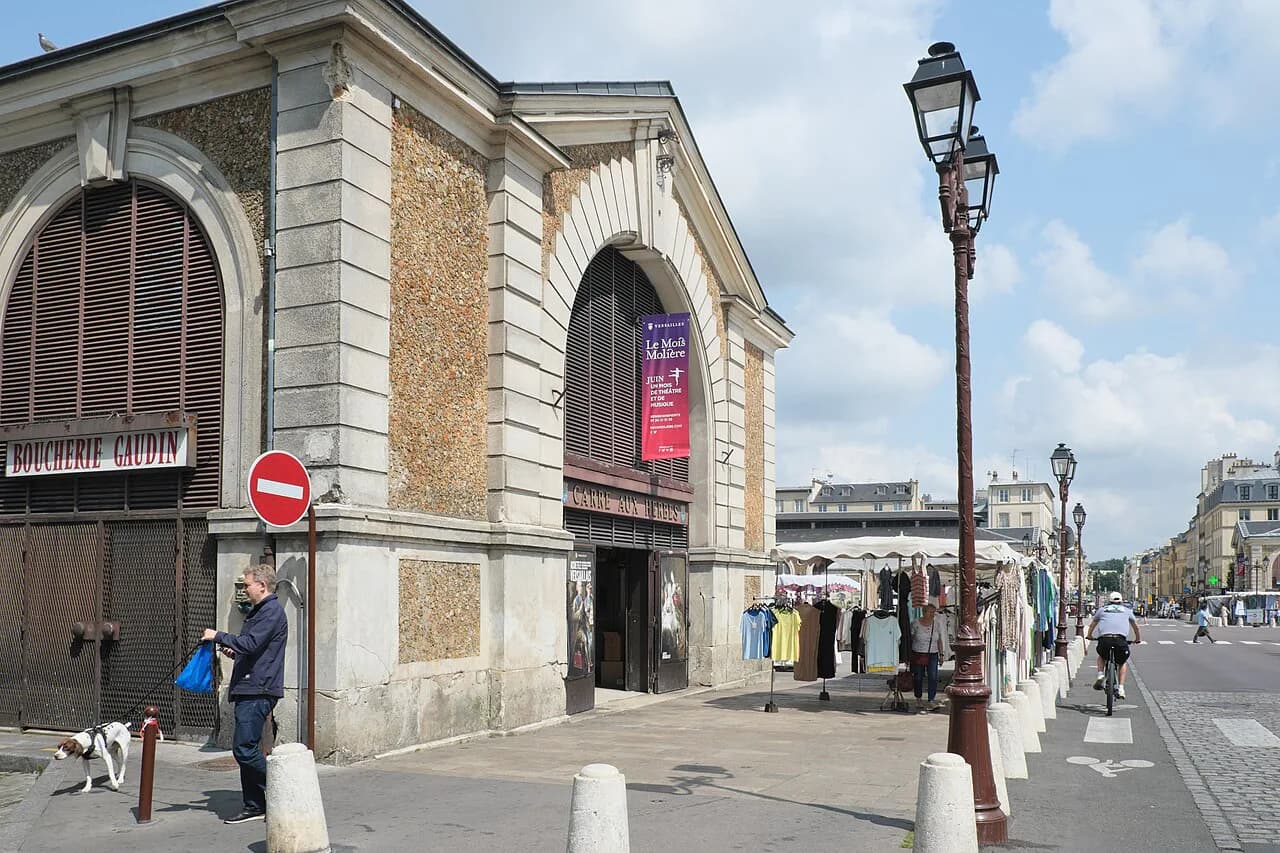
Everything centres on Place du Marché Notre-Dame in the Quartier Notre-Dame, the grid of streets between the palace and the station. The covered Halles Notre-Dame stand on the square itself, and the Carrés spread out as open-air pitches around them. Both are at the same address, so you are not choosing between two destinations.
This is the commercial heart of the town rather than a tourist set-piece, which is exactly why it works. You can shop for a picnic lunch, buy fruit for the train, or simply walk the aisles before heading up to the palace. The market has traded on this spot since the 17th century, and the tourist office frames it as the continuation of a long local tradition.
Opening Days at a Glance
The covered Halles Notre-Dame open Tuesday to Saturday and Sunday, and they are closed on Monday. On Tuesday to Saturday the tourist office lists a morning session from 7am to 1.30pm and an afternoon session from 3pm to 7.30pm, while Sunday runs as a single stretch from 7am to 2pm.
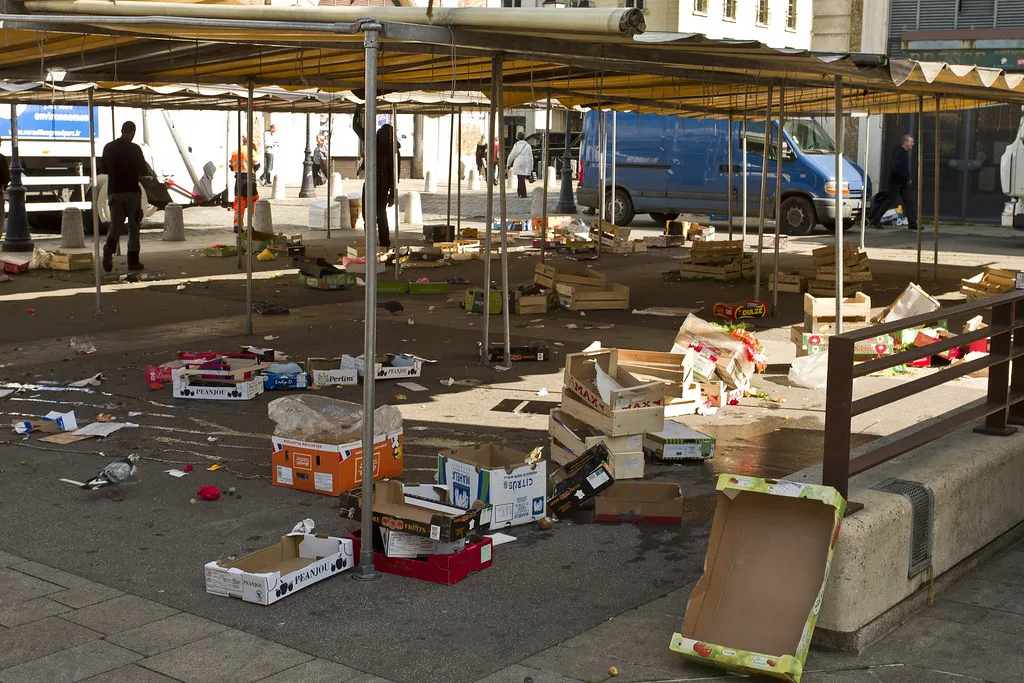
The open-air Carrés Notre-Dame are the more limited of the two, running on Tuesday, Friday and Sunday mornings only. If the open-air bustle is what you came for, those are your three days, and you need to arrive before the early-afternoon close. The covered halls suit a flexible schedule; the Carrés demand a fixed morning.
What's Actually on the Stalls
Expect fruit and vegetables, cheese, meat, fish and flowers in the covered halls, with organic produce given its own identified section. Since 2016 a dedicated Carré Bio has grouped organic traders, and marked banners identify local, organic or environmentally responsible products. Non-food pitches add clothing, accessories, small appliances, crafts and practical services such as bicycle repairs, watchmaking and tailoring.
Newer food corners, including Carré à la Marée and Carré à la Farine, extend a market visit into a snack stop. That makes the market a genuine lunch option rather than just a shopping errand, though seating is informal and you may end up eating standing.
Second-Hand and Vintage: Setting Expectations
There is no regular stall-by-stall antiques trade here. The tourist office lists clothing, accessories, crafts and services among the non-food pitches, which means you may find a bargain or a repair, but not a curated vintage market. If your trip is built around thrifting, be honest with yourself about what this market is.
For a dedicated rummage, Paris's puces are the obvious alternative and sit within reach for a day. Save that for a separate morning rather than trying to bend the Versailles market into something it is not.
Timing Your Visit Around the Palace
Build the market into a palace day as a morning stop, with the wider list of things to do in Versailles as your frame for the rest of the day. The Carrés finish early, so a Tuesday, Friday or Sunday start at the square leaves the rest of the day for the château and gardens. On other days the covered halls give you more slack, with the lunchtime break worth planning around.
If you are working out how many days the town deserves, two full days covers the palace, the gardens and a market morning comfortably. A single day forces a choice between the estate and the town, and the estate usually wins.
Practical Browsing Tips
Bring cash, since small pitches and food stalls are easier to deal with that way, and bring a bag for produce. Mornings are calmer than late morning on Carrés days, and the covered halls are busiest around lunch. Short supply chains are a selling point here, so ask what is local rather than assuming.
Stall prices are not published in advance, so budget loosely and check the individual pitch. The tourist office's own page is the place to confirm the day's sessions before you set out.
Where to Go Next if You Want a Dedicated Flea Market
Paris remains the region's answer for serious flea browsing, and it is a straightforward train ride away. Treat it as one extra morning on a longer break, not a substitute for the Versailles market.
Elsewhere in France, the Braderie de Lille and Marseille's long-running market streets show what a real brocante scene looks like. They are a different trip, but useful context for what you are and are not getting in Versailles.
Honest Trade-Off: Worth a Detour?
The Notre-Dame market is worth a morning if you are already in Versailles, and it pairs neatly with the palace. As a standalone reason to travel, it is thin: this is a town market, not a destination flea market. The tourist office calls it the most beautiful market in Île-de-France, which is the town's own billing rather than an independent ranking.
Give it an hour, buy lunch, and move on to the estate or the parks. That is the honest shape of a Versailles market visit.
Plan Your Visit
Pick Tuesday, Friday or Sunday if you want the open-air Carrés, and avoid Monday for the market entirely. The covered halls cover the rest of the week and make an easy morning stop before the palace.
Expect food, produce and general goods rather than antiques, and you will enjoy it for what it is. The Versailles market rewards an hour of browsing, not a dedicated pilgrimage.
Explore more Versailles guides
Frequently Asked Questions
Is there a flea market in Versailles?
Not a permanent dedicated one. The town's regular market at Place du Marché Notre-Dame sells food, organic produce and general goods rather than antiques and second-hand furniture. For a true flea market, look to Paris.
What days is the market in Versailles open?
The covered Halles Notre-Dame open Tuesday to Sunday and are closed on Monday. The open-air Carrés trade on Tuesday, Friday and Sunday mornings only, so those are the days to plan around if you want the outdoor stalls.
Is the Notre-Dame market open on Monday?
No. Monday is the closed day for the covered halls, and the open-air Carrés do not run then either. Build your market morning into another day of your weekend.
What can you buy at the Notre-Dame market?
Fruit and vegetables, cheese, meat, fish and flowers in the halls, plus an organic section and non-food pitches selling clothing, accessories, crafts and small services. There are also food corners for a snack.
Is the market worth visiting alongside the Palace of Versailles?
Yes, as a morning stop before the palace. It is a short walk from the château and gives you a proper French town market experience, but it is not a destination flea market in its own right.
Sources
Notes for French city breaks
Optional updates to our guides.
You might also like
Continue reading
More guides you'll find useful