Dijon Old Town: What to See and How to Walk It
A practical walk through Dijon's old town, from the Palace of the Dukes and Rue de la Verrerie to Rue des Forges, with free museums and honest trade-offs.
On this page
Dijon's old town is small enough to cross on foot in half an hour and rich enough to fill two days, which makes it one of the easiest French city breaks to plan. The historic centre was listed as a UNESCO world heritage site in 2015, and it holds a ducal palace, two free museums and a web of medieval streets with half-timbered houses. The city is 1h30 from Paris Gare de Lyon by high-speed train, so a weekend here costs you very little travel time.
This guide covers the old town itself: the squares, the streets worth walking, the sights that justify a pause, and the order that keeps you from doubling back. If you want the wider city picture first, our guide to the things to do in Dijon sets the old town alongside everything else. What follows assumes you are on foot and would rather see six things properly than twelve badly.
What Dijon's Old Town Is and Why It Rewards a Slow Morning
This was the capital of the Dukes of Burgundy, who in the 14th and 15th centuries ruled a territory stretching from the North Sea to the Swiss border and were second only to the French kings in power. The centre still reads as a late medieval and Renaissance city, and the Palace of the Dukes of Burgundy, mostly rebuilt in the 18th century, dominates the middle of it. Dijon is now the capital of the Bourgogne-Franche-Comté region, with a population of just over 150,000.
The old town is not a museum piece sealed off from the city: it holds the city hall, the tourist information office and the history museum inside the ducal palace itself. That mix of civic business and medieval fabric is what makes a slow morning work here. Start early, pick two sights, and let the streets between them do the rest.
How the Old Town Is Laid Out: Place de la Libération to Rue de la Liberté
Think of the old town as a half-circle west of the shopping spine. The Place de la Libération, the semicircular square in front of the ducal palace, is the centre of gravity, and the Rue de la Liberté runs west from it as the main pedestrian shopping street. Almost everything else worth seeing hangs off those two.
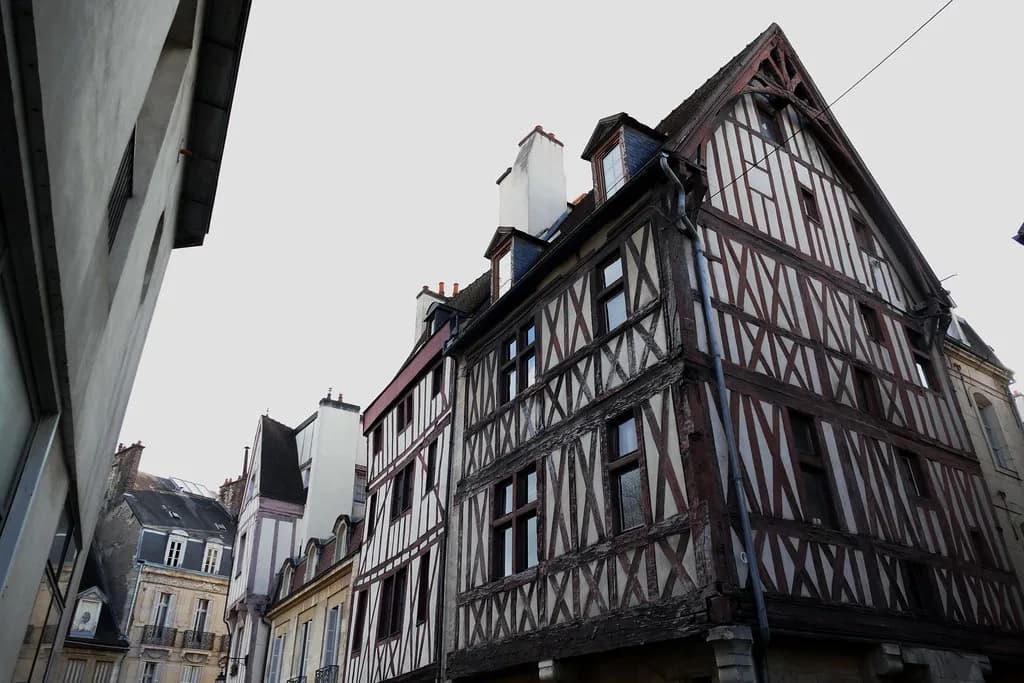
North of the palace, the Rue de la Verrerie is one of the most interesting old streets in the city, lined with overhanging half-timbered houses. West of the palace, the Rue des Forges is the old town's other great street, with shops, cafés and architecture packed into a short stretch. Those two streets plus the palace square give you the skeleton of a walk.
Start at the Palace of the Dukes of Burgundy
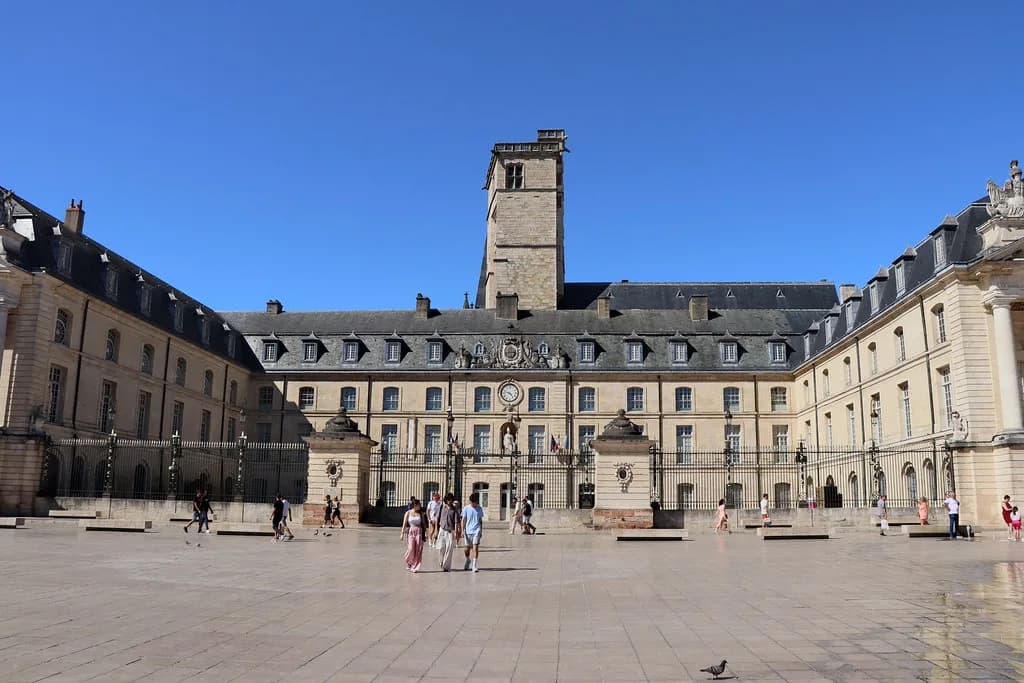
The Palace of the Dukes of Burgundy is the most impressive of Dijon's old buildings and the logical first stop: you get your bearings, the tourist office is inside, and two of the city's sights share the building. The history museum here is free and holds artefacts relating to Burgundian life and history.
Allow an hour for the palace and its museums and rather more if the art collection pulls you in. The square outside, the Place de la Libération, is the natural place to sit and reset between sights. From here every other stop in the old town is within a fifteen-minute walk.
Climb the Tour Philippe le Bon for the View
The Tour Philippe le Bon rises from the palace complex, and the climb pays off with a panoramic view over the rooftops of Dijon and the surrounding plain. It is the one sight in the old town that gives you the whole layout at once, which makes it worth doing early rather than late. Treat it as the paid extra to your otherwise free morning.
Ticket prices and opening times change by season, so buy at the tourist office inside the palace and confirm the day's slots while you are there. If the tower is shut, the same office can tell you what else is running. Our Dijon Attractions hub collects the individual sight guides if you want to plan around a closure.
The Musée des Beaux-Arts: Free, and One of France's Largest Outside Paris
Part of the palace houses the Musée des Beaux-Arts, one of the oldest and largest fine art museums in France outside Paris, and entry is free. The collection runs from the Middle Ages to the 19th century and includes works by Titian, Veronese, Delacroix, Monet, Manet and Sisley. For a city break budget, this is the single best-value hour in Dijon.
Free does not mean empty, and the museum is a sensible rainy-morning anchor. Pair it with the history museum in the same building and you have covered two of the old town's headline sights without spending anything. If you want the wider picture of what else is free or ticketed, our museums in Dijon guide sorts them.
Walk Rue de la Verrerie for Half-Timbered Houses
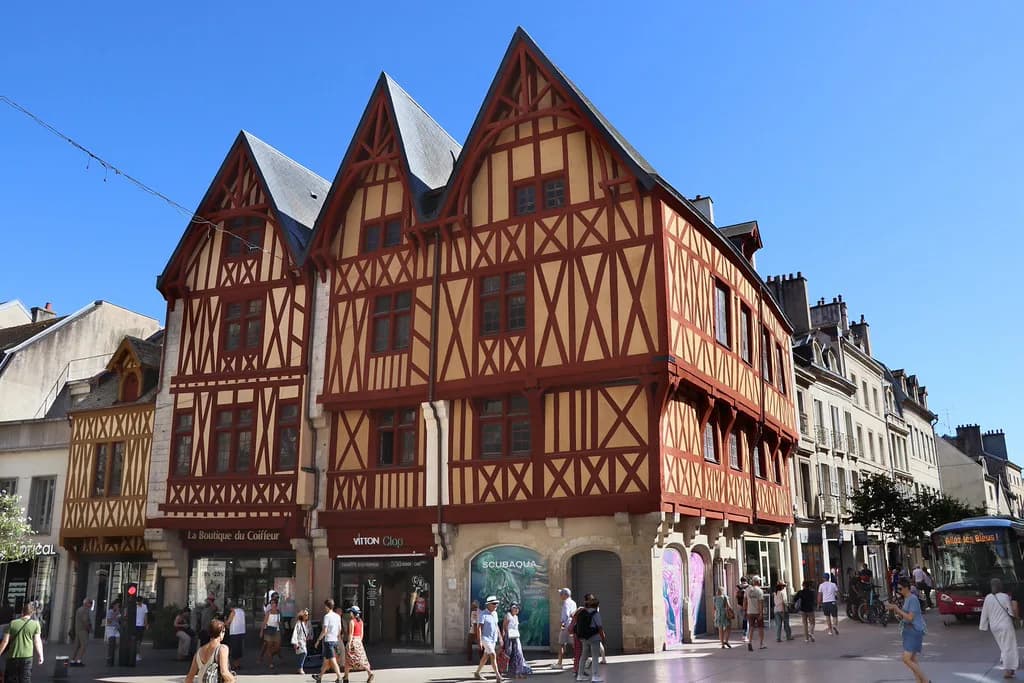
Running north from just behind the fine art museum, the Rue de la Verrerie is the street to walk if you want the medieval Dijon of postcards, with overhanging half-timbered houses leaning over the pavement. It is short, so walk it slowly and look up rather than treating it as a through-route. This is the stretch most people photograph.
Rue des Forges: Shops, Cafés and Architecture
The Rue des Forges is the other essential old-town street, and it mixes shopping, cafés and handsome buildings in a way that makes it easy to lose an hour without noticing. Use it as your lunch stop rather than a sight to tick off. When you want a proper sit-down meal, our best restaurants in Dijon covers the city's tables beyond the obvious.
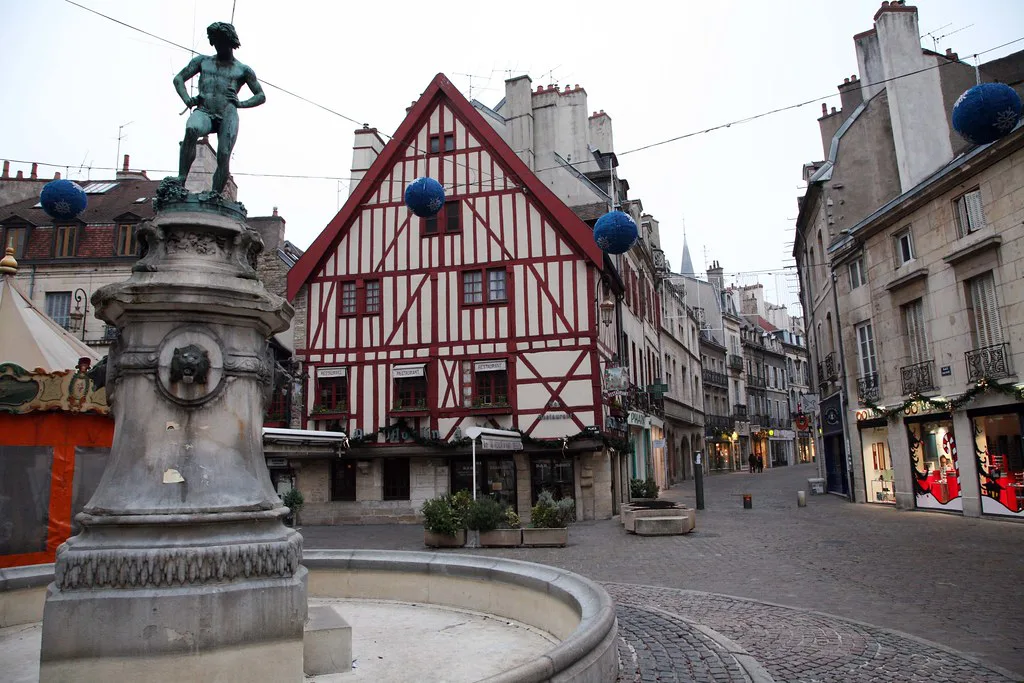
Place Francis Rudé, Rue Musette and the Walk to Notre-Dame
Just off the Rue de la Liberté, the Place Francis Rudé is the pivot for the most rewarding short detour in the old town. Follow the Rue Rudé, then turn right into the Rue Musette, an attractive lane of boutiques and cafés. It delivers you to Notre-Dame without any map reading.
This is the best sequence in Dijon for street-level atmosphere: a small square, a narrow shopping lane, then a church facade that stops you in your tracks. Walk it once to orient yourself and again on your last morning when you know what you are looking at. It takes ten minutes at a stroll.
Notre-Dame's Western Facade and Its Rows of Arches
The 13th-century church of Notre-Dame has the strangest facade in Dijon, decorated with three superimposed rows of arches and 51 decorative gargoyles. Those gargoyles are not medieval: the originals were removed after a fatal accident and the present ones went up during 19th-century restoration. That oddity is exactly why the facade repays a proper look rather than a photo from the corner.
Saint-Bénigne Cathedral and Saint-Michel
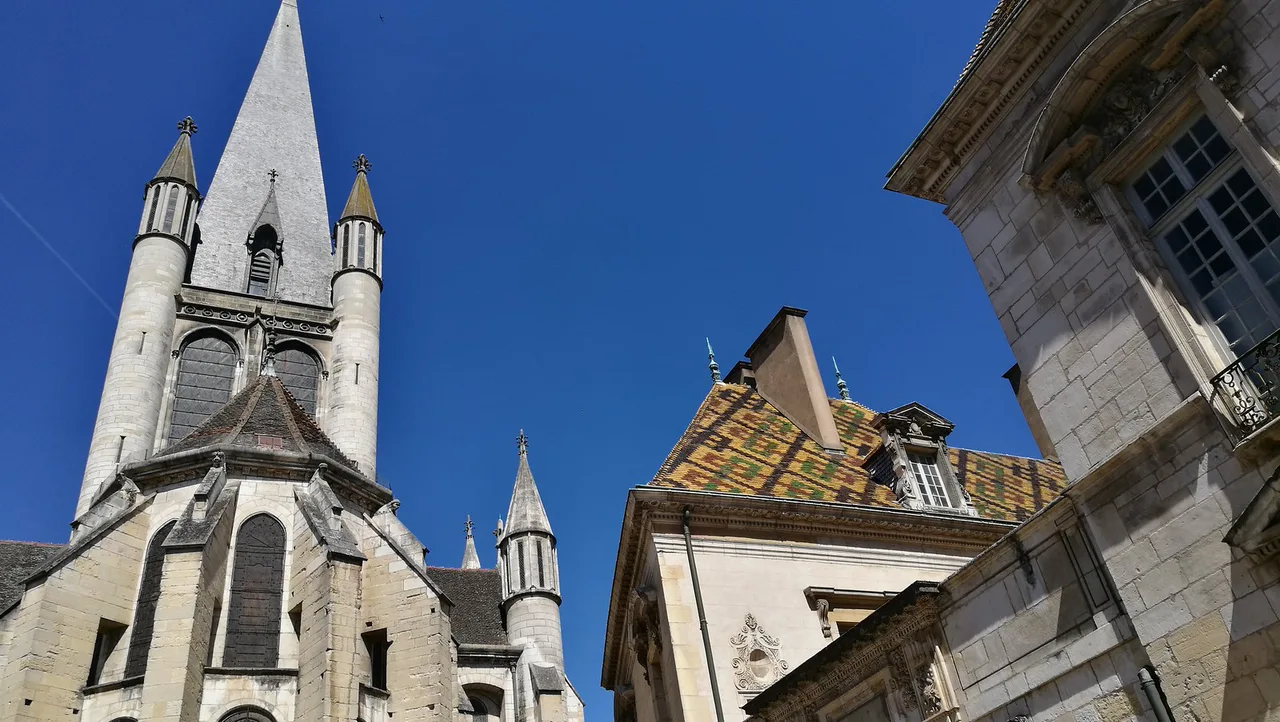
Two more churches inside the protected centre are worth the detour. Saint-Bénigne Cathedral is a 13th- and 14th-century building in a rather severe Burgundian Gothic style. The 16th- and 17th-century church of Saint-Michel, standing 200 metres east of the ducal palace, is unique in France for starting in Gothic and finishing in Renaissance style, most visibly in its west facade and towers.
If you only have time for one, choose Saint-Michel for the stylistic shift, which you can read straight off the building. Saint-Bénigne suits anyone who likes their Gothic uncompromising. Both are working churches, so treat a visit as a quiet pause rather than a sightseeing stop.
Musée Magnin in the Hôtel Lantin
Opposite the ducal palace, the Musée Magnin occupies the 17th-century Hôtel Lantin and holds the collection of the 19th-century collector Maurice Magnin. He acquired over 2,000 works of European art from the 16th to the 19th century, including paintings by Breughel the younger, Le Sueur and Géricault, shown alongside decorative arts in the rooms of the house.
It is a small museum in a domestic setting, which makes it a good counterweight to the vast Beaux-Arts galleries. Because it sits directly across from the palace, it costs you almost no walking time. Check the door for the day's opening before you commit an hour to it.
The Puits de Moïse at the Chartreuse, Just Beyond the Centre
The Puits de Moïse is the finest thing in Dijon and it is not in the old town. Sculpted around 1400 by Claus Sluter as a memorial for Duke Philip the Bold, it stands in the gardens of the Chartreuse hospital, south of the railway tracks just past the western end of the station. It is considered the finest example of late Gothic sculpture.
Budget twenty minutes each way on foot from the palace, or take the tram. The trade-off is real: this is the sight sculpture-lovers should not miss, but it eats a chunk of a short break. Fold it into a station-side arrival or departure rather than a mid-morning detour.
The Owl Trail as a Way to Structure the Walk
The Owl trail, the Parcours de la Chouette, is the tourist office's marked route through the old town, and it is the simplest way to give a loose morning a shape. It strings the main squares and streets together so you are not choosing between them at every corner. Use it as scaffolding and break off whenever a side street looks better.
The trail is no substitute for knowing why you are looking at a building, so read up on the palace and the churches before you set out. It also works well as a first-morning orientation, with the museums saved for the afternoon. If you prefer to build your own route, our Dijon itinerary does exactly that.
How Long the Old Town Needs and How to Split a Day
Give the old town a full morning and a full afternoon if you want the palace, both free museums, the tower and the three churches. A half-day version is honest and satisfying: palace and Beaux-Arts first, then Rue de la Verrerie, Notre-Dame via Rue Musette, and lunch on Rue des Forges. That is perhaps three hours at a comfortable pace.
On a two-day break, put the old town core on day one and the Puits de Moïse plus anything further out on day two. Splitting it this way keeps you from rushing the best streets. Our guide to whether Dijon is worth visiting weighs the old town against the rest of the city for a short break.
Timetable Traps: Museum Closing Days and Shop Hours
Dijon's sights do not all keep the same hours, and the museums inside the palace follow their own weekly closing day, so check the door or the tourist office before you build a day around one. The same applies to the tower: a closed staircase is a wasted morning. Confirm the day's pattern when you arrive rather than assuming Paris hours apply.
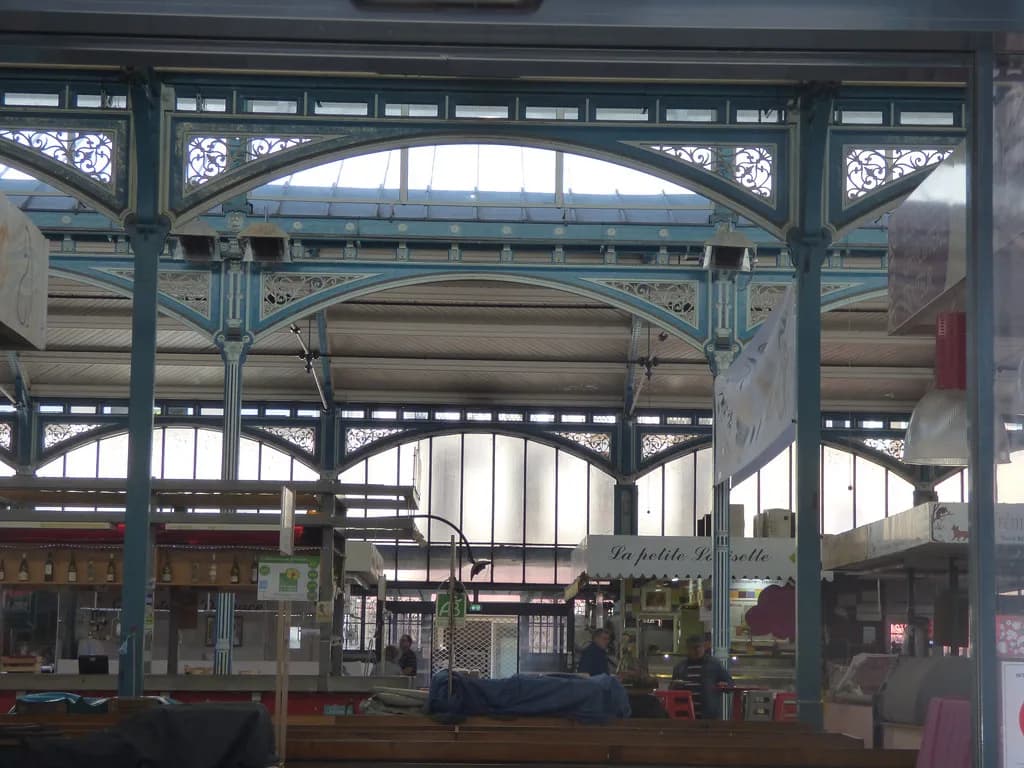
Shops on the Rue de la Liberté and Rue des Forges are the old town's retail spine, and Sunday and lunchtime closing is common enough in French provincial cities to plan around. The markets are another fixed-timetable element; our Markets in Dijon guide covers which mornings they run.
Where the Old Town Sits for Transport
Dijon is a major rail hub with high-speed links to Paris, Lyon, Strasbourg, Marseille and Zürich, and the station sits just east of the old town, a short walk from the palace. Traffic access to the historic centre is limited, but there are numerous car parks and street parking, with several near the tram route. Arriving by train is the simpler choice.
If you drive in, park on the edge and walk rather than circling the medieval core. The old town is compact enough that a car is a liability once you are inside it. There is no airport in Dijon itself, so most visitors come by rail from Paris or Lyon.
Honest Trade-offs: What to Skip With Half a Day
With half a day, skip the tower climb and the Musée Magnin, and do not attempt the Puits de Moïse. The palace, the free Beaux-Arts collection, Rue de la Verrerie and Notre-Dame give you the essence without a rushed march. Save Saint-Bénigne and Saint-Michel for a return or for anyone with a particular interest in church architecture.
If you have a full day, the reverse applies: the tower is the view, Magnin is the intimate collection, and the Puits de Moïse is the masterpiece outside the walls. Adding all three turns a pleasant walk into a proper day of sightseeing. The only real cost is time on your feet.
Plan Your Visit
Walk Dijon's old town in this order: palace and its free museums first, Rue de la Verrerie north, Rue des Forges for lunch, then Rue Musette to Notre-Dame, finishing with the churches or the tower depending on your legs. That sequence follows the street geography and avoids doubling back. A half-day version is genuinely satisfying; a full day lets you add Magnin and the Puits de Moïse.
The old town rewards a slow pace more than a long list, so pick your sights and let the streets between them fill the time. For a sense of how Dijon compares with other French old towns, our Aix-en-Provence old town guide makes a useful contrast.
Explore more Dijon guides
Frequently Asked Questions
Is Dijon old town walkable?
Yes. The historic centre is compact and flat, and the palace, Rue de la Verrerie, Rue des Forges and Notre-Dame are all within about fifteen minutes of each other on foot. The one sight that sits outside the core is the Puits de Moïse, south of the station.
Are Dijon's museums free?
The Musée des Beaux-Arts and the history museum inside the Palace of the Dukes of Burgundy have free entry. Do not assume that applies to every museum in the city; check at each door or at the tourist office inside the palace.
How long do you need for Dijon old town?
A half-day covers the palace, the free art museum, Rue de la Verrerie and Notre-Dame at a comfortable pace. A full day adds the Tour Philippe le Bon, the Musée Magnin and the Puits de Moïse without rushing.
What is the Owl trail in Dijon?
The Parcours de la Chouette is a marked route through the old town set by the tourist office. It links the main squares and streets, which makes it a useful structure for a first morning before you branch off into the side streets.
What is Dijon old town famous for?
Its medieval and Renaissance centre, listed as a UNESCO world heritage site in 2015, and the Palace of the Dukes of Burgundy at its heart. The half-timbered houses on Rue de la Verrerie and the gargoyle-covered facade of Notre-Dame are the images most visitors come for.
How do you get to Dijon old town from the station?
The station sits just east of the historic centre and the palace is a short walk from it. Dijon has high-speed rail links to Paris, Lyon, Strasbourg and Marseille, and no airport of its own.
What should you skip in Dijon old town if you only have half a day?
Leave the tower climb, the Musée Magnin and the Puits de Moïse for another visit. The palace, the free Beaux-Arts museum, Rue de la Verrerie and Notre-Dame give you the essence of the old town in about three hours.
Sources
Notes for French city breaks
Optional updates to our guides.
You might also like
Continue reading
More guides you'll find useful