Shopping in Dijon: Streets, Markets and Local Buys
Plan shopping in Dijon with the Rue de la Liberté spine, Les Halles market mornings, mustard souvenirs and the Toison d'Or retail park outside the centre.
On this page
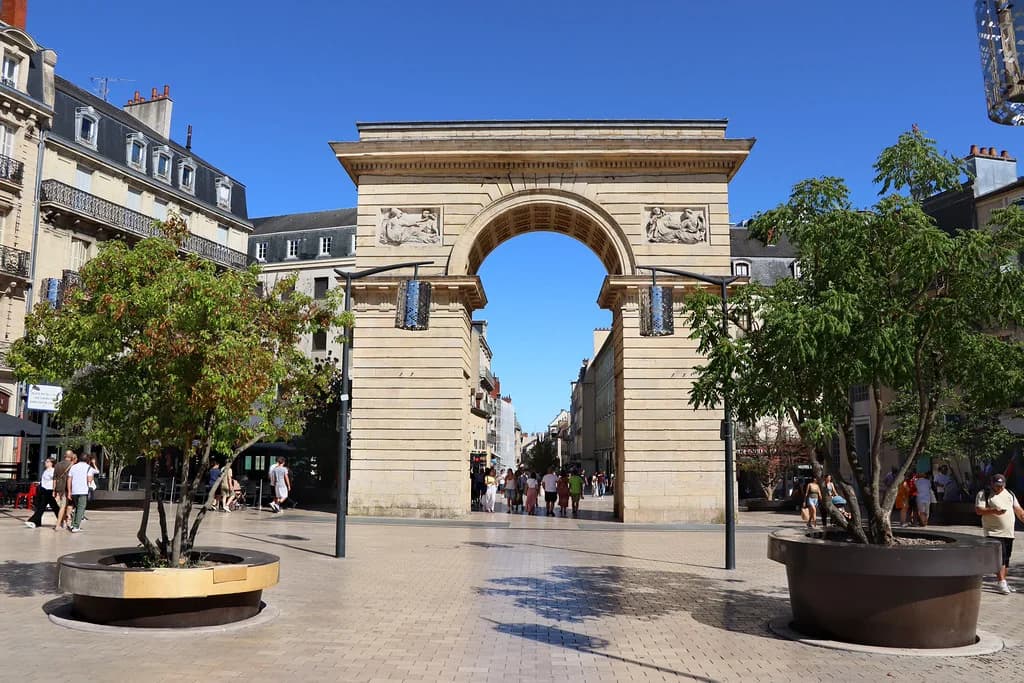
Shopping in Dijon is not a separate excursion from the sights; it runs along the same pedestrian street you will use to cross the old town. Rue de la Liberté connects Place Darcy, by the Porte Guillaume arch, to Place de la Libération, and it is Dijon's main shopping street, lined with 15th- to 18th-century houses. That makes a browse-and-buy hour easy to slot between the Palais des Ducs and the market.
Two things decide how much you buy: the day of the week, because Les Halles market only runs on certain mornings, and your luggage, because mustard jars are heavy and glass. Build the route around those two facts and the rest of the trip stays flexible. The broader sights are covered in our guide to things to do in Dijon, so here we stick to streets, shops and produce.
How Dijon is laid out for shoppers
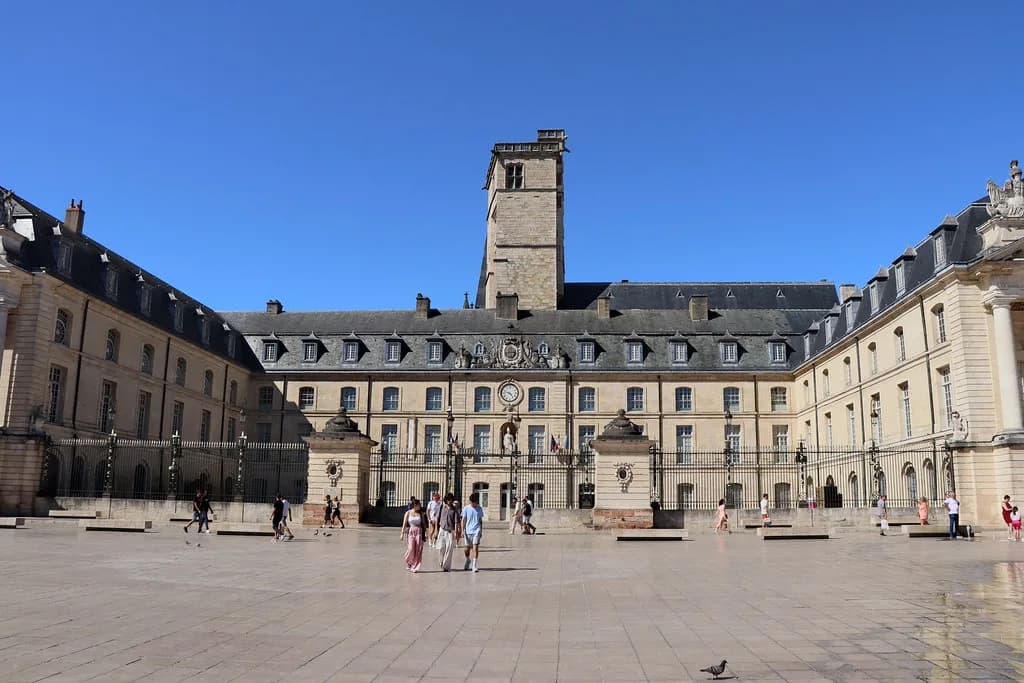
The shopping geography is a straight line. Start at Place Darcy in the west, walk through the Porte Guillaume arch and follow Rue de la Liberté east to Place de la Libération, the semi-circular royal square designed in the 17th century by Jules Hardouin Mansart and fronted by the Palais des Ducs et des États de Bourgogne. Almost everything a weekend shopper wants sits within a few minutes of that spine.
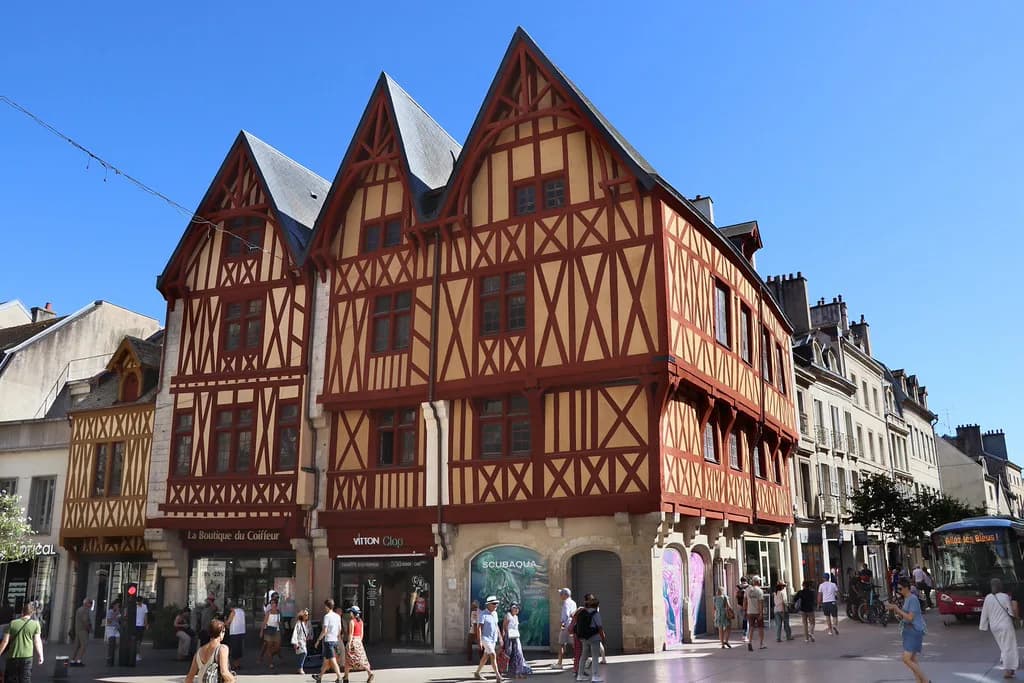
Off the spine, the old town lanes hold the smaller boutiques. Rue des Forges, Place François-Rude and the surrounding streets are where you find independent shops, tearooms and fashion stores in late-medieval and Renaissance houses around the Vendangeur statue. Treat this as a loop rather than a destination: you can cover it on foot while following the owl plaques of the Parcours de la Chouette.
Because the centre is compact, you do not need transport for a shopping afternoon. The one exception is the retail park east of the centre, which is a tram or bus ride away. If you are working out whether the city justifies a weekend at all, our honest weekend verdict on whether Dijon is worth visiting sets out what the centre delivers in two days.
Rue de la Liberté: the central pedestrian shopping street
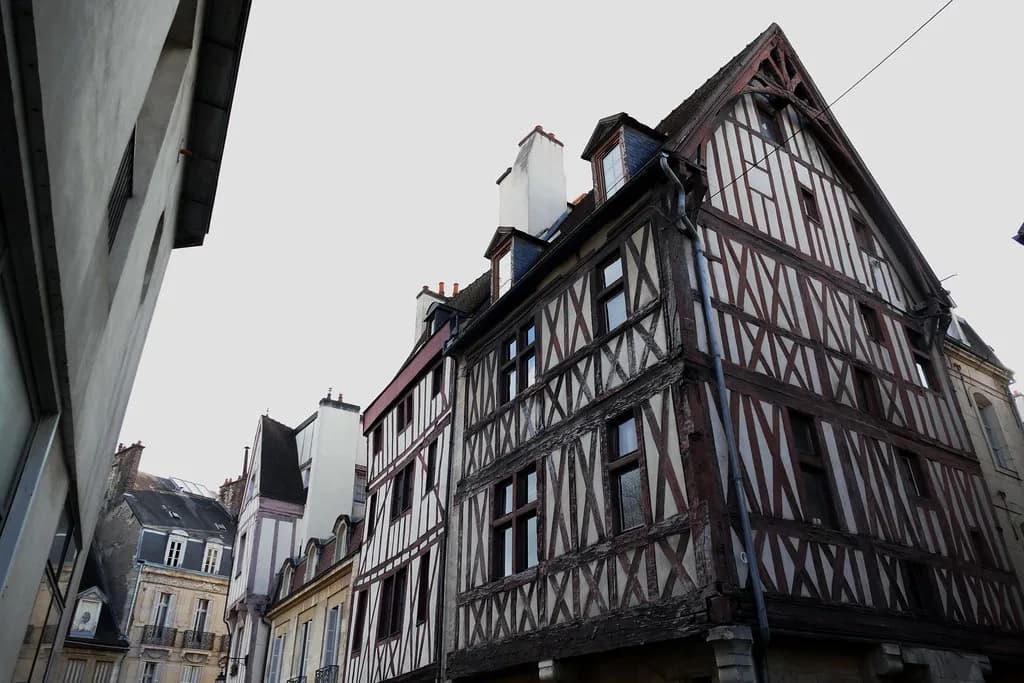
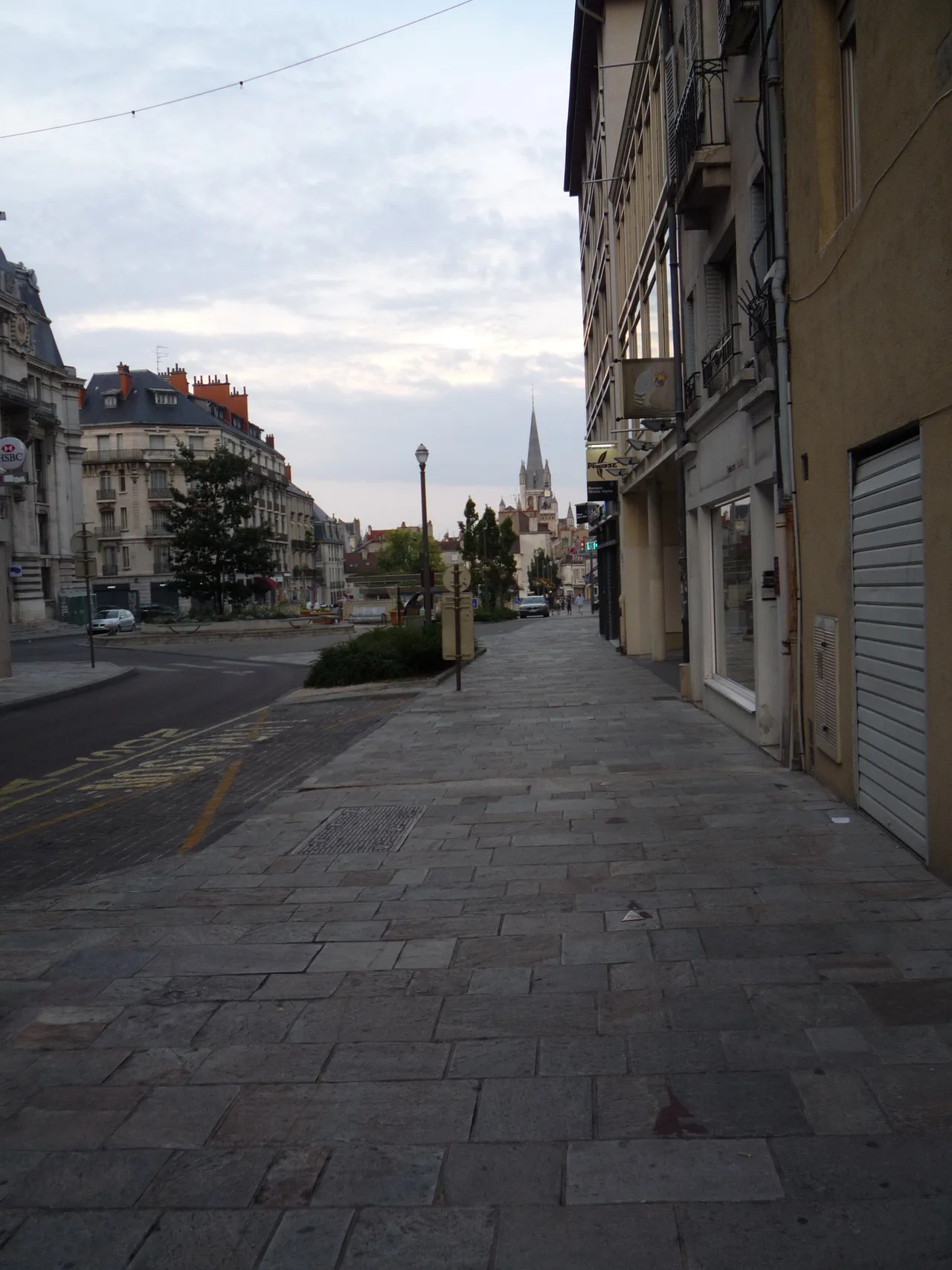
Rue de la Liberté is the practical answer to where to shop in Dijon. It is fully pedestrianised, runs between Place Darcy and Place de la Libération, and mixes national chains with older townhouses, some half-timbered, above the shopfronts. You can walk the length in roughly ten minutes without stopping, which makes it a useful route even on a non-shopping day.
Use it as your orientation line. The tourist office sits next to the train station near Place Darcy, so you can pick up a map and the owl-trail booklet at the start, then walk the street towards the Palais des Ducs. That way the shopping happens on the way to the sights rather than as a separate trip.
Place François-Rude and Rue des Forges: boutiques in the historic core
Place François-Rude is the prettiest small square for a browse. It sits between Place Darcy and Place de la Libération, is surrounded by late-medieval and Renaissance mansions, and holds tearooms, cafés and fashion stores around the Vendangeur statue and a carousel. It is a good place to break up a shopping walk with a coffee rather than a place to hunt for bargains.
Rue des Forges and the lanes around it reward slow walking: small shopfronts, carved doorways and the glazed Burgundy tiles on buildings such as the Hôtel de Vogüé. Give the old town a half-day on foot and treat purchases as they come. Our Dijon old town guide maps the streets so you do not double back.
Les Halles market: which mornings it runs
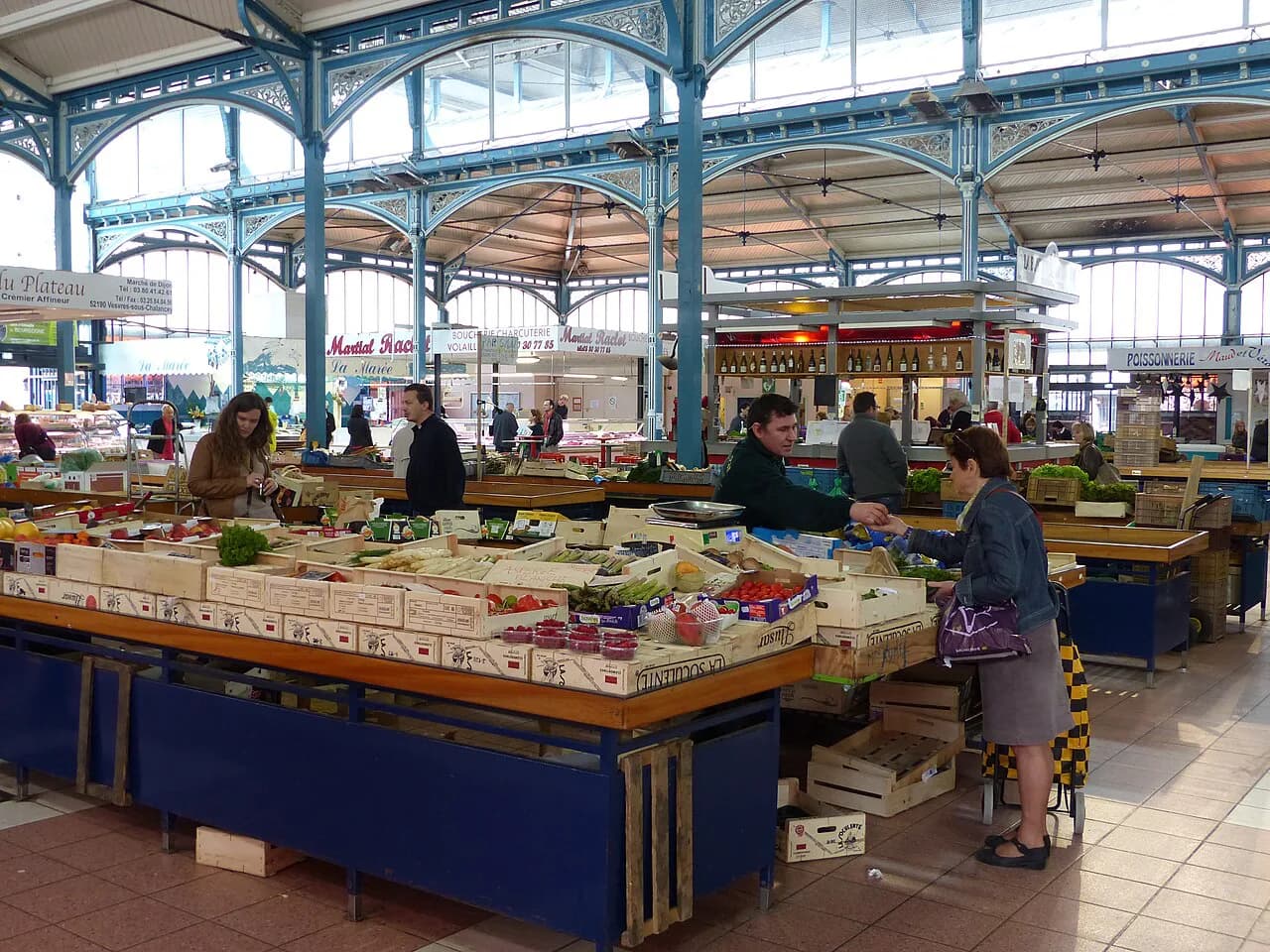
Les Halles is the shopping highlight of a Dijon weekend, and its days are fixed: Tuesday, Thursday, Friday and Saturday, from morning until afternoon. Inside and around the iron-and-glass hall you find butchers, cheesemongers, olive vendors, florists and bakers, plus cafés and restaurants along the perimeter. It is worth lingering once you have filled your bags.
Plan a visit for late morning, when stalls are fully stocked and the surrounding cafés are open for a sit-down break. On some days flea-market style vendors sell clothing, shoes and toys outside. If you are building a market-led trip, our guide to markets in Dijon pairs Les Halles with the city's other covered and outdoor markets.
The trade-off is weight. Cheese, jars and produce are lovely and awkward to carry home, so buy perishables for a picnic lunch in the Jardin Darcy or along the Parc de l'Arquebuse instead of packing them. Anything vacuum-sealed or tinned travels better.
Mustard and food souvenirs: Boutique Moutarde Maille
For the classic Dijon souvenir, go to Boutique Moutarde Maille at 32 Rue de la Liberté. The brand dates from the early 18th century, and the shop sells flavoured mustards including mushroom, balsamic and pesto alongside standard jars. Small jars suit hand luggage; larger jars go in checked bags.
Holders of the Dijon City Pass get a discount at the shop, though the standard pass mainly covers museum entry and public transport rather than retail. If mustard is your main errand, do it on the same walk as Rue de la Liberté rather than making a special trip.
What Dijon is known for beyond mustard
Dijon's reputation is gastronomic rather than retail. The city is the capital of Burgundy, a region whose vineyards south of Dijon form the UNESCO-listed climats, and the ducal palace itself is part of that listing. Food shops selling Burgundy produce, gingerbread and chocolate are therefore a better souvenir hunt than generic gift shops.
If you want a proper meal between shops, the city has serious kitchens, from Michelin-starred dining rooms to casual Alsatian-style beer halls. Our pick of the best restaurants in Dijon covers where to book and which places suit a lunch stop; reserve ahead for the starred rooms since they are small.
Centre Commercial Toison d'Or: the out-of-town option
Toison d'Or is Dijon's big retail park, with 160 shops and restaurants including Apple Store, Zara, Primark, Lego, Bershka and Starbucks. It is the answer when you need a specific chain, a pharmacy-sized haul or a rainy-afternoon indoor plan. It is not in the historic centre, so budget a tram or bus trip each way.
The honest trade-off: the centre gives you atmosphere and local produce, Toison d'Or gives you choice and parking. Unless you need a particular brand, the centre wins for a short break. If you are comparing French cities, our shopping in Lyon guide shows how a larger city spreads its retail across several districts.
When to shop: market mornings and museum days
Time your shopping around Les Halles (Tuesday, Thursday, Friday, Saturday mornings) and around museum opening hours. Dijon's Musée des Beaux-Arts, in the Palais des Ducs, reopened in May 2019 after a decade-long renovation that added 50 per cent more space, and its galleries run from ancient Egypt to contemporary art. Pairing a market morning with a museum afternoon is the most efficient Saturday.
Check the museum's own site for current opening days before you set the plan, since French museums often close one weekday. Our guide to museums in Dijon sets out which collections are worth your hours and how long to allow.
A workable shape: market and Rue de la Liberté on Saturday morning, old-town boutiques on Saturday afternoon, then a museum or the Toison d'Or retail park on Sunday if it is raining. Keep one flexible slot in case a shop you wanted is shut.
Sunday and lunchtime closing: what to expect
French opening habits apply: many independent shops in provincial centres close on Sunday and some shut over the lunch hour, though large retail parks and chains keep longer hours. Dijon's street markets run on set mornings, so a Sunday arrival limits both marketing and browsing. Plan shopping for Friday or Saturday and leave Sunday for sights and parks.
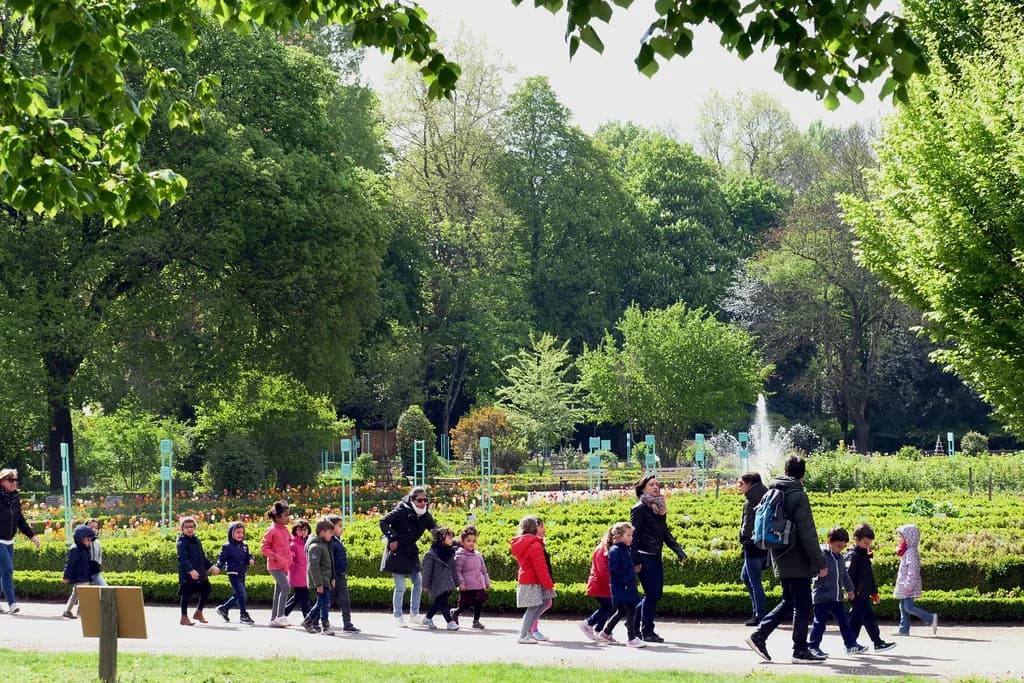
If you are arriving on a Sunday, use the time for the Jardin Darcy, the Parc de l'Arquebuse botanical garden and the owl trail, which need no shop opening. The city's Christmas market period is a separate draw but is best treated as its own trip; our guide covers what happens on Place de la Libération and Place de la République.
A half-day shopping plan that fits around sightseeing
Start at Place Darcy around 9.30am, walk through the Porte Guillaume and down Rue de la Liberté to Boutique Moutarde Maille at number 32. Continue to Place de la Libération for the Palais des Ducs exterior, then loop through Place François-Rude and Rue des Forges for the independent shops. Allow two to three hours with a coffee stop.
If it is a market morning, swap in Les Halles first, then shop. If you are here mainly for the sights, our Dijon itinerary gives a full two-day shape you can trim; the self guided walking tour covers the streets in more detail than a shopping list needs.
Common mistakes to avoid
The first mistake is assuming Les Halles runs daily; it does not, and a Monday or Wednesday visit will find it closed. The second is cramming shopping into a Monday, when many museums and some shops are also shut. Check both market days and museum days before booking trains — note that Les Halles is open on Tuesday, Thursday, Friday and Saturday.
The third is overbuying jars. Mustard is heavy and glass, so buy small jars for hand luggage and one larger jar for the hold. Finally, do not treat the Toison d'Or retail park as a city-centre substitute: it is a tram ride out and is best used for specific purchases.
If you are weighing Dijon against a larger French city for a shopping break, our guide to shopping in Cannes shows how a coastal city organises its retail around La Croisette and the old port. Dijon is the smaller, more walkable option.
Plan Your Visit
Dijon's shopping works because it is compact: one pedestrian spine, a covered market with set mornings, a legendary mustard shop and a big retail park for anything the centre lacks. Time the trip for Friday or Saturday, keep Sunday for sights, and carry small jars home.
Before you travel, confirm market days and museum opening hours on the tourist office site, since schedules shift by season. Everything else — the street, the architecture and the mustard — is reliably there.
Explore more Dijon guides
Frequently Asked Questions
Where is the main shopping street in Dijon?
Rue de la Liberté is the main pedestrian shopping street, running from Place Darcy and the Porte Guillaume arch east to Place de la Libération. It is lined with 15th- to 18th-century houses and mixes chains with smaller shops.
What days is Les Halles market open in Dijon?
Les Halles runs on Tuesday, Thursday, Friday and Saturday, from morning until afternoon. It sells meat, cheese, olives, flowers and baked goods, with cafés and restaurants around the hall.
Where can I buy Dijon mustard in the city centre?
Boutique Moutarde Maille at 32 Rue de la Liberté sells flavoured mustards including mushroom, balsamic and pesto. Small jars suit hand luggage and larger jars go in checked bags.
Is there a shopping centre in Dijon?
Centre Commercial Toison d'Or has 160 shops and restaurants including Apple Store, Zara, Primark, Lego and Starbucks. It sits outside the historic centre, so plan a tram or bus ride each way.
What souvenirs should I buy in Dijon?
Mustard is the obvious buy, but Burgundy produce, gingerbread and chocolate are also worth packing. Buy perishables for a picnic rather than the journey home, and choose small jars for carry-on luggage.
Are shops open on Sunday in Dijon?
Many independent shops in the centre close on Sunday, while the retail park and chains keep longer hours. Plan browsing and market shopping for Friday or Saturday and keep Sunday for parks and museums.
Sources
Notes for French city breaks
Optional updates to our guides.
You might also like

Continue reading
More guides you'll find useful