Is Dijon Worth Visiting? An Honest Weekend Verdict
Yes, Dijon earns a short break: a compact old town, a serious fine arts museum and a market that sets the rhythm of a weekend. Here is who it suits.
On this page
Yes, Dijon is worth visiting, provided you want a walkable historic centre, a first-rate art collection and a serious food market rather than a checklist of blockbuster sights. The old town rewards two unhurried days, and a single day covers the essentials if you move deliberately. Anyone who needs nightlife, beaches or mountain scenery should book elsewhere.
The city sits at the heart of Burgundy and was the capital of a duchy that ran from the eleventh to the fifteenth century, which is why the centre is packed with ducal and medieval architecture rather than modern filler. Trains from Paris take about an hour and a half, making it a realistic weekend from the UK via Eurostar connections or a direct TGV from the capital.
Is Dijon worth visiting? The short answer
Dijon earns its place on a short-break shortlist because three things sit within a few minutes of each other: the Palais des Ducs et des États de Bourgogne, the Musée des Beaux-Arts inside it, and the market at Les Halles. Add the Owl's Trail plaques that thread through the streets and you have a weekend that needs almost no public transport.
The honest trade-off is scale. Dijon is not Paris, Lyon or Bordeaux, and nobody should arrive expecting a nonstop big-city programme. What it offers is depth in a small area, so the pleasure comes from lingering in the old town rather than racing between districts. If you want a full plan, our guide to the best things to do in Dijon maps the sights onto a day.
How Dijon is laid out: train station, Place Darcy, Rue de la Liberté, Place de la Libération
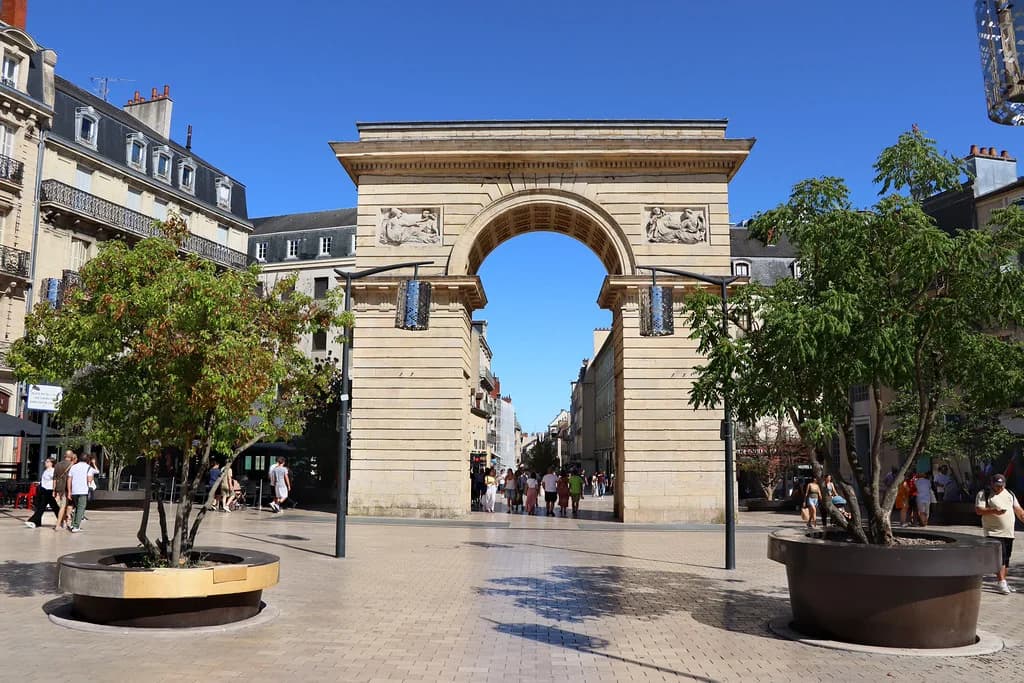
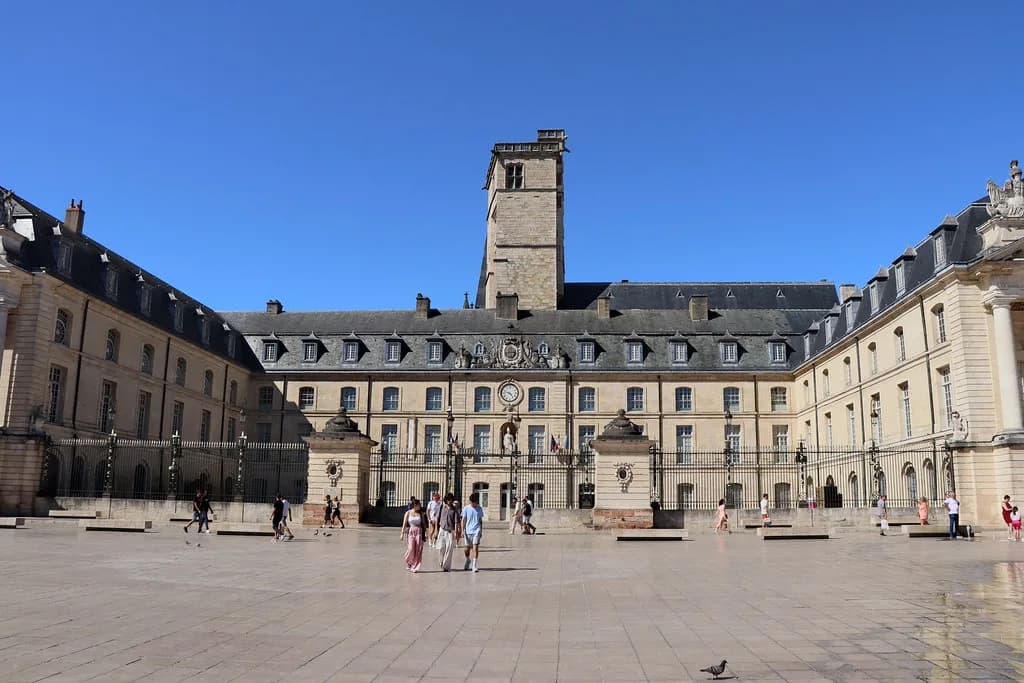
Arriving by train puts you within a short walk of everything that matters: the station sits beside Place Darcy, where the Porte Guillaume arch marks the entrance to the old town. From there, Rue de la Liberté runs straight through the pedestrian centre to Place de la Libération, the semicircular royal square designed in the seventeenth century by Jules Hardouin-Mansart and fronted by the ducal palace.
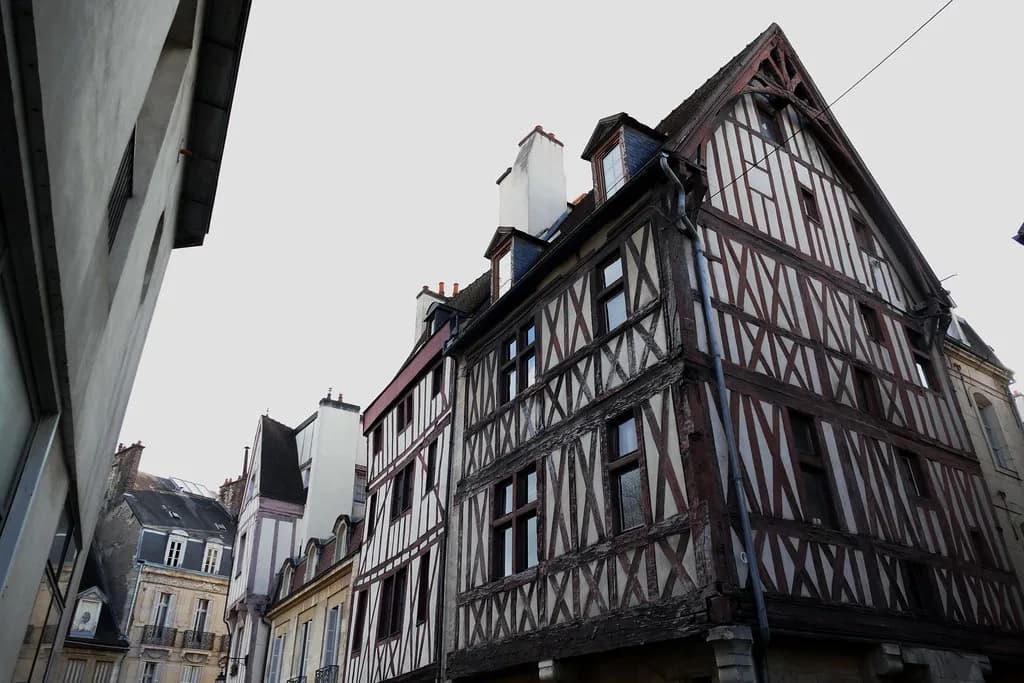
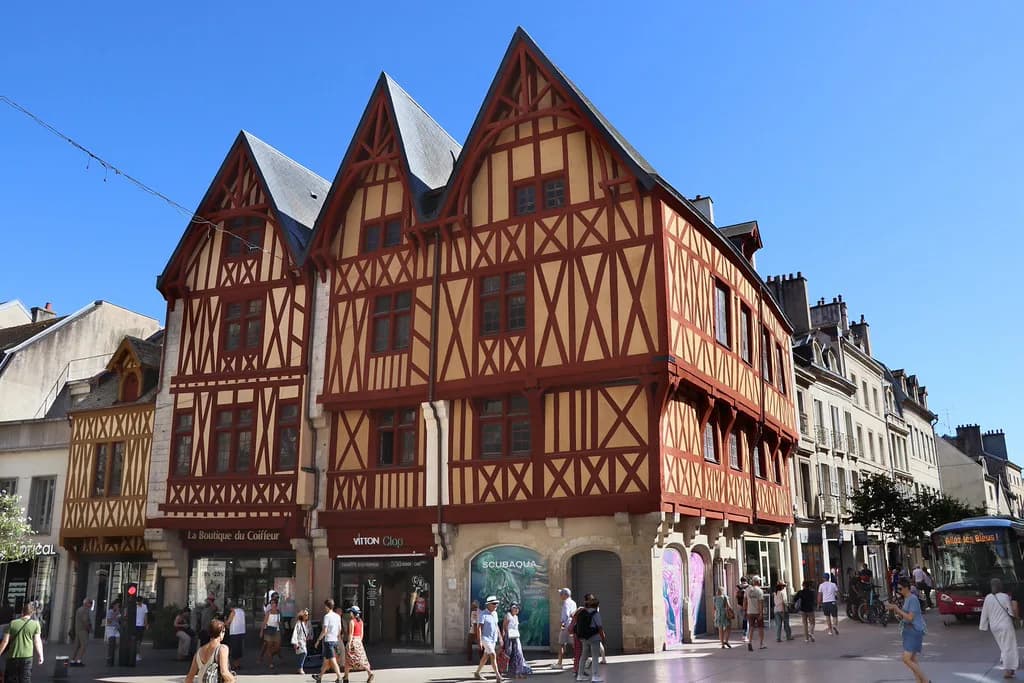
That single axis is the reason a Dijon weekend works on foot. Stay anywhere near Rue de la Liberté and you can reach the market, the museums and the cathedral without touching a tram. The street is also the city's main shopping spine, lined with fifteenth- to eighteenth-century houses, some of them half-timbered, which makes the walk between the station and the palace a sight in itself.
Place François-Rude sits between Place Darcy and Place de la Libération, a small square of late-medieval and Renaissance mansions now holding tearooms, cafés and shops, with the statue of Le Vendangeur at its centre. It is the natural midpoint for a coffee rather than a destination in its own right.
The old town on foot: the Owl's Trail and its 22 marked landmarks
The Owl's Trail, or Parcours de la Chouette, links 22 notable locations across the centre, each marked by a gold plaque bearing an owl, and the tourist office beside the station supplies the map and booklet that explain them. It is the most efficient way to see the old town's highlights in a day without a guide, because the plaques do the navigating for you.
The stone owl itself sits on the side of Notre-Dame de Dijon, around the corner on the left as you face the front, worn smooth by visitors rubbing it for luck. The church is worth a proper look inside as well as out, since the facade draws most of the crowd.
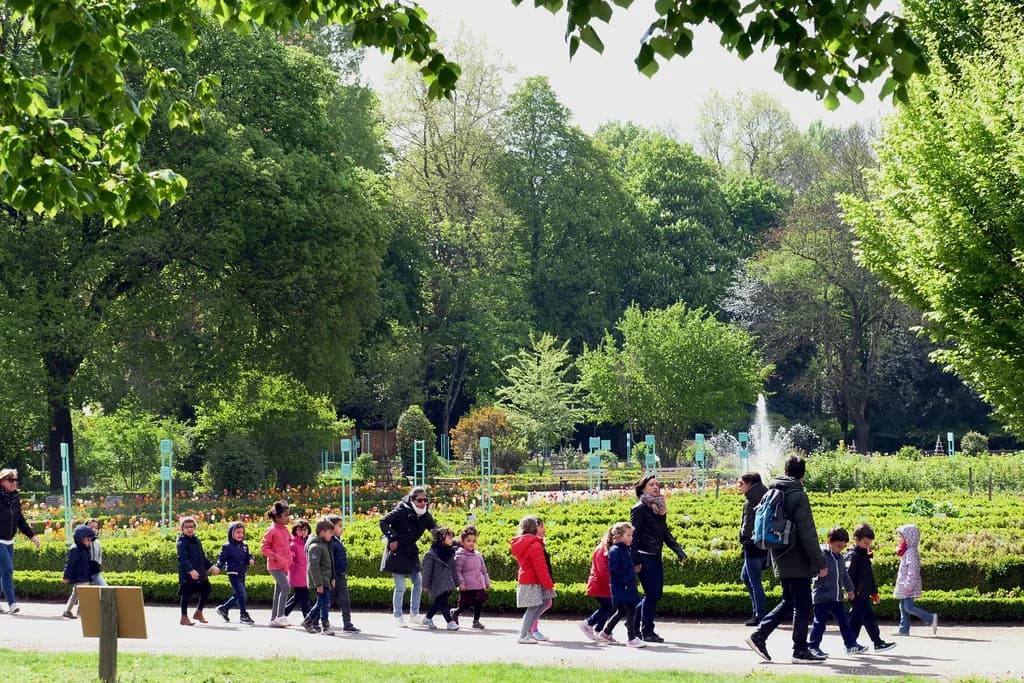
Allow two to three hours to follow the plaques at an unhurried pace, longer if you stop at the parks en route. Jardin Darcy holds the polar bear sculpture that became a city emblem, and the Arquebuse botanical garden lies a little further out towards the Cité de la Gastronomie. Walking the trail yourself beats a fixed group tour if you want to linger.
Palais des Ducs et des États de Bourgogne and the Tour Philippe le Bon
The Palace of the Dukes of Burgundy anchors Place de la Libération and still houses the city hall alongside the museum, so you walk through working civic rooms to reach the galleries. The Salle des Gardes, the former banqueting hall, holds the tombs of Philip the Bold and John the Fearless with their carved alabaster mourners, the single most compelling object group in the city.
The Tour Philippe le Bon, the fifteenth-century tower above the palace, opens only on a guided tour that must be booked in advance, and you cannot climb it independently. Tours often have same-day space outside peak periods, but booking ahead protects a short weekend. From the top you look over the cathedral, the ducal roofs and the glazed Burgundy tiles of the Hôtel de Vogüé.
Musée des Beaux-Arts: why the collection punches above the city's size
The Musée des Beaux-Arts opened in 1799, making it one of the oldest public museums in France, and it occupies a former medieval palace much as the Louvre does in Paris. A decade-long renovation completed in 2019 added roughly half as much space again, leaving 50 rooms for the permanent collection and two new temporary galleries.
The permanent collection runs chronologically from ancient Egypt and Greece to contemporary art, with rooms given to Dijon-trained artists such as François Rude and Sophie Rude, and later gifts bringing in Georges de la Tour, Courbet, Delacroix and Odilon Redon. The Granville bequests of 1969 to 1986 did much of that work, and the display deliberately mixes decorative arts with paintings so nothing sits in a hierarchy.
Budget two hours for the museum proper and add more if the tower tour is on the same day, since both sit inside the same building complex and one ticket desk serves the visit. Check the museum's own site for current opening days and admission before you build the day around it.
Markets and food: Les Halles and its Tuesday, Thursday, Friday and Saturday mornings
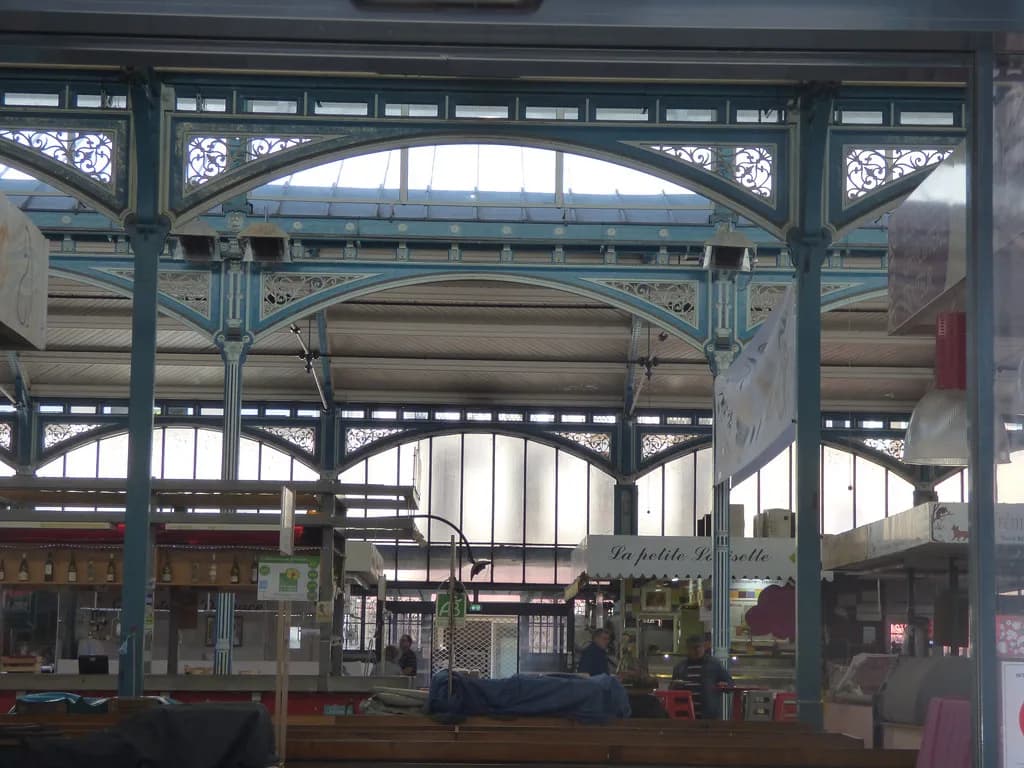
Les Halles, the covered market hall with its polychrome roof, is the city's food engine. The stated market days are Tuesday, Thursday, Friday and Saturday from morning into the afternoon, which makes Saturday the obvious anchor for a weekend and a Friday arrival a sensible plan.
Inside you find butchers, cheese sellers, olive stalls, florists and bakers, with cafés and restaurants around the perimeter for a sit-down break, plus a free toilet. Outside, flea-market style vendors appear on some days selling clothes, shoes and children's toys, but which days is not fixed in what the city publishes, so treat that as a bonus rather than a reason to go.
For lunch, CIBO is a Michelin-starred restaurant with only a handful of tables, so reserve two to three weeks out if you want it. The menu follows the seasons and the kitchen sources its ingredients from farms and suppliers within 200km. For a casual, cheaper meal, our pick of the best restaurants in Dijon covers the city's everyday tables.
The Cité de la Gastronomie and the tram back to the station
The Cité de la Gastronomie occupies a new building just south of the train station, and the architecture alone justifies a look even if you skip the exhibitions inside. A tram stop sits directly in front, which makes it the easiest add-on at the end of a day: see it, then ride back to the station in minutes.
It pairs naturally with the Arquebuse botanical garden, a short walk away, so a southern loop of garden and gastronomy centre fills an afternoon without retracing steps. This is the one part of a Dijon weekend where public transport genuinely earns its place, since the walk back to the station is long when you are carrying bags.
Mustard, Maille and the souvenir question
Dijon's mustard fame is largely a souvenir-shop affair now, and walking the old town you would barely guess the association. Boutique Moutarde Maille at 32 Rue de la Liberté is the address to know, a house founded in the early eighteenth century that sells flavoured mustards in jars small enough for hand luggage or large enough for a checked bag.
Treat the mustard as a gift errand rather than the reason for the trip. The city's real draw is the ducal palace, the museum and the market, and a weekend built only around condiment shopping would be a thin one.
Who will love Dijon, and who should pick somewhere else
Dijon suits walkers, museum-goers, market shoppers and couples who want a compact, handsome city where the next sight is five minutes away. It also works well for travellers breaking a longer French journey, since the TGV from Paris takes about an hour and a half and Lyon is under two hours away.
It is a poor fit for anyone who needs nightlife, big-city bustle or a beach, and the old town is small enough that four nights can feel generous for the city itself. If you want a Provençal or Roman alternative with a different texture, it is worth weighing is Arles worth visiting before you commit.
Families do fine here thanks to the parks and the flat, pedestrian centre, and travellers with limited mobility will find the core manageable on foot, though the tower climb is out. The city rewards curiosity about architecture and food more than it rewards a tick-box approach.
One day or two? How many days Dijon needs
One day covers the Owl's Trail, the Palais des Ducs, a quick pass through the Musée des Beaux-Arts and a wander round Les Halles if you hit a market morning. What it drops is the tower tour, the Cité de la Gastronomie and any unhurried time in the museum's 50 rooms, which is where Dijon's quality actually lives.
Two days is the right length. Day one takes the old town trail, the palace and the market; day two gives the museum a proper morning, puts the tower tour in the afternoon and finishes at the Cité de la Gastronomie. That pattern also keeps you flexible if a tour is booked out on your first choice of slot.
A note on the Dijon City Pass: the 24, 48 and 72-hour versions bundle museum entry, public transport and discounts, but many of the castles and museums it includes are ten to sixty minutes away by car. For a city-centre weekend on foot, the pass rarely pays for itself; it makes more sense if you are renting a car and staying longer.
When to go and what a weekend costs
Late spring and early autumn give the best walking weather for a trip built around streets and markets, and summer brings the fullest café terraces at the cost of crowds around the palace and the museum. Winter quiets the old town considerably, and the festive season fills the squares, though that programme is a bonus rather than a reason to plan the trip.
On cost, the honest answer is that the biggest variables are train fares and where you eat, not the sights themselves. Museum and tower admission change, so check the official Dijon tourist office pages for current prices before booking, and reserve the tower tour early since places are limited.
Verdict: where Dijon fits among French short breaks
Dijon is worth visiting if you want a compact, cultured weekend where the old town, a serious museum and a proper market sit within a ten-minute walk of each other. Give it two days and it delivers; try to fit it into an afternoon and you will see the postcard and miss the point.
Book the tower tour ahead, plan around a Tuesday, Thursday, Friday or Saturday market morning, and put the museum on a separate half-day from the palace. Do that and Dijon stands comfortably alongside France's better-known short-break cities, with the advantage of far fewer crowds.
Explore more Dijon guides
Frequently Asked Questions
Is Dijon worth visiting for a weekend?
Yes, if you want a walkable old town, a strong fine arts museum and a lively covered market rather than big-city nightlife. Two days gives you the Owl's Trail, the Palais des Ducs, the museum and Les Halles without rushing, and the centre is compact enough to cover on foot.
How many days do you need in Dijon?
Two days is the right length. One day covers the old town trail, the palace and a quick museum visit, but you will miss the Tour Philippe le Bon and the Cité de la Gastronomie. A longer stay only makes sense if you plan to explore the surrounding vineyards by car.
What is Dijon famous for?
Dijon is known for its mustard, but the city itself is defined by its ducal heritage: the Palais des Ducs et des États de Bourgogne, the tombs in the Salle des Gardes and the Musée des Beaux-Arts. The Owl's Trail plaques and the market at Les Halles give a weekend its structure.
Is Dijon a walkable city?
Yes. The old town runs in a straight line from Place Darcy and the Porte Guillaume along Rue de la Liberté to Place de la Libération, and the main sights sit within that band. Trams help for the Cité de la Gastronomie, but most of a weekend needs no transport at all.
Should I visit Dijon or Beaune?
Dijon gives you a full city with a major museum, a market hall and ducal architecture; Beaune is smaller and more vineyard-focused. If you have one weekend and want urban texture plus food, choose Dijon, and treat the surrounding wine country as a single side trip rather than a separate stay.
Which is nicer, Lyon or Dijon?
Lyon is larger, busier and better for nightlife and shopping; Dijon is calmer, cheaper-feeling and easier to cover in two days. Choose Dijon for a compact, cultured break and Lyon if you want a big-city weekend with more variety on the doorstep.
What can you do in Dijon in one day?
Follow the Owl's Trail through the old town, look inside Notre-Dame de Dijon, walk the Palais des Ducs and the Salle des Gardes, and pass an hour in the Musée des Beaux-Arts. If you are there on a Tuesday, Thursday, Friday or Saturday, add a morning at Les Halles before the museums open.
Sources
Notes for French city breaks
Optional updates to our guides.
You might also like
Continue reading
More guides you'll find useful