Dijon Itinerary: Plan 1, 2 or 3 Days in Dijon
Plan a Dijon itinerary by day and quarter, with the owl trail, Les Halles market mornings, the Tour Philippe le Bon and an honest view of the City Pass.
On this page
Two days is the right amount of time for Dijon: enough to walk the owl trail without rushing, see Les Halles on a market morning, climb the Tour Philippe le Bon and eat properly. One day works if you cut hard, and three days only pays off if you want a slower half-day or time beyond the centre.
The city is compact and the sights sit close together, so this plan groups them by quarter rather than sending you back and forth across the old town. The one fixed point to build around is the guided Tour Philippe le Bon slot, which you book ahead.
How Many Days Dijon Needs
A time budget of two days is enough to explore the highlights of Dijon without rushing, and the old town is compact enough that most of it is walkable. Treat one day as a highlights sprint and three days as two comfortable days plus a gentler morning or an afternoon out of the centre.
What eats time is not distance but timing: the market runs on set mornings, the tower is guided-tour only, and museums keep daytime hours rather than evening ones. Building the plan around those slots matters more than any clever route.
How Dijon Is Laid Out
The train station sits at the southern edge of the centre, and the tourist office is right next to it — the obvious first stop for maps and the owl trail booklet. From there you walk north into the old town, with the Palais des Ducs and Place de la Libération at its heart and Les Halles a few minutes east of the palace.
That geography makes a natural loop: station and tourist office first, then the Notre-Dame and Rue de la Chouette area, the palace and museum, and the market on a second morning. Rue Verrerie and the half-timbered lanes fit into the same wander rather than needing their own trip.
When to Go: Market Days and Museum Patterns
Les Halles is open every Tuesday, Thursday, Friday and Saturday from morning until afternoon, so a weekend break lands on two market mornings if you include the Friday. Arrive in the morning: the displays are fullest shortly after ten, and the hall is much quieter in the afternoon.
Museums and monuments generally run roughly ten in the morning to five or six in the evening, which is worth factoring in if you arrive late in the day. A Sunday visit trades market browsing for a quieter centre, so put the market on the Saturday morning instead.
For a fuller calendar of which halls and street markets operate on which mornings, our guide to the Dijon market scene is the place to look before fixing your dates.
Day 1 Morning: the Owl Trail, Notre-Dame and the Stone Owl
Start with the Parcours de la Chouette, the city's self-guided walk marked by gold owl plaques on pavements and buildings. It strings together 22 stations across the old town, taking in Notre-Dame and the Opera House, and the accompanying booklet adds a short history of each stop.
The booklet cost 3.50 euros in 2023 at the tourist office. You do not strictly need it — the plaques alone lead you to the main sights — but it turns a pleasant walk into something you learn from.
At Notre-Dame, walk around the building to the left-hand side to find the small stone owl on Rue de la Chouette, worn smooth by passing hands. It is smaller than most visitors expect and easy to miss if you only look at the façade.
If you would rather follow a fixed route with timings, our Dijon self-guided walking tour covers the same ground in a half-day format.
Day 1 Afternoon: Palace, Musée des Beaux-Arts and the Tower View
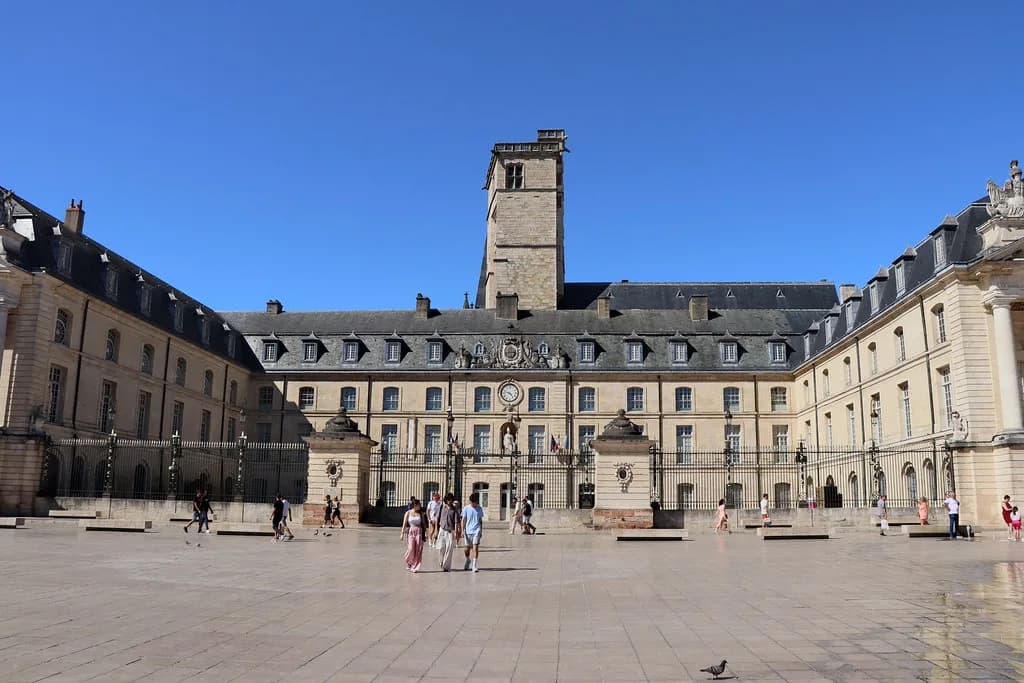
After lunch, head to the Palais des Ducs et des États de Bourgogne, whose palatial rooms and sculpture gallery are the reason to go in rather than just photograph the courtyard. The Musée des Beaux-Arts de Dijon occupies the former ducal palace and holds Burgundian art of the late Middle Ages; renovation work has left parts of the collection closed, but admission was free when visited, which makes a partial visit easy to justify.
The Tour Philippe le Bon is the best view in the city, and it is not open to the public on your own terms: you go up only on a guided tour, booked in advance online or through the tourist office. The tour runs about 45 minutes and cost 5 euros full price in 2023, so it is worth reserving your slot early.
Day 2 Morning: Les Halles and the Streets Around It
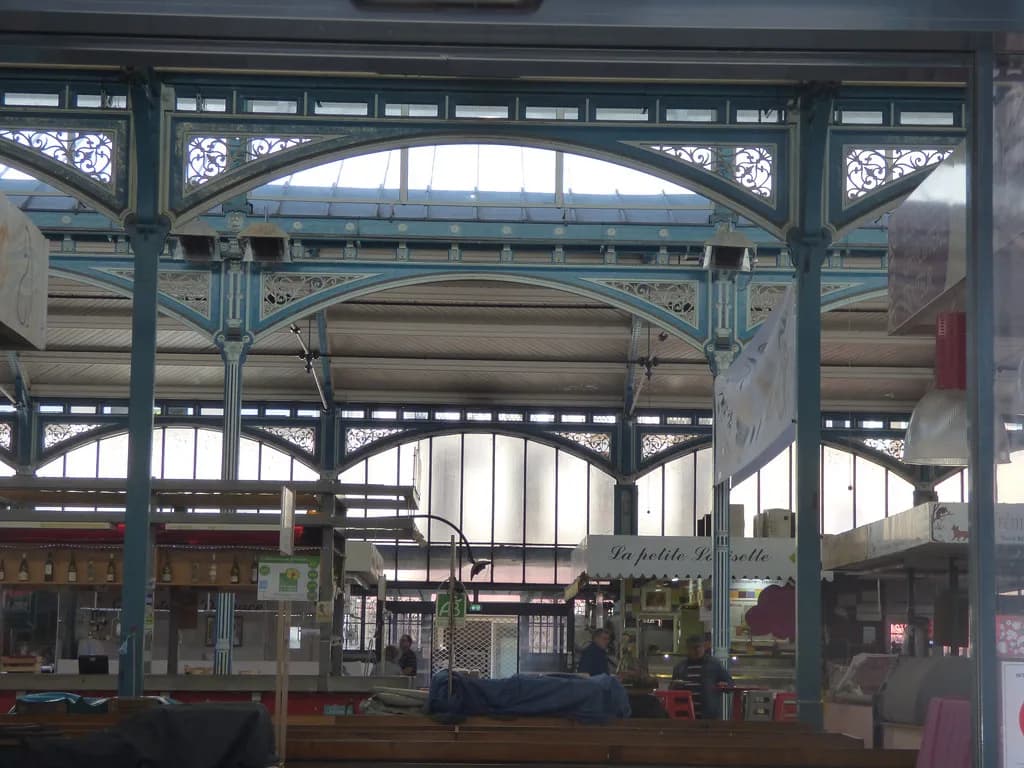
Give the market hall a full morning. Inside you find butchers, cheese sellers, olive vendors, florists and bakers, with cafés and restaurants around the outside of the building if you want to sit down. There is a free toilet inside, which is a small but useful detail on a walking day.
The streets around the hall reward aimless wandering, and just outside is one of the prettiest corners of the city — a flower-covered wall with a café on the adjacent corner for people-watching. Build in time for a pastry or a coffee before you move on.
Good coffee in the centre includes JSB Coffee on Rue Musette, a short walk from the hall and a sensible stop before the museum hours begin.
Day 2 Afternoon: Jardin Darcy, Rue Verrerie and the Half-Timbered Lanes
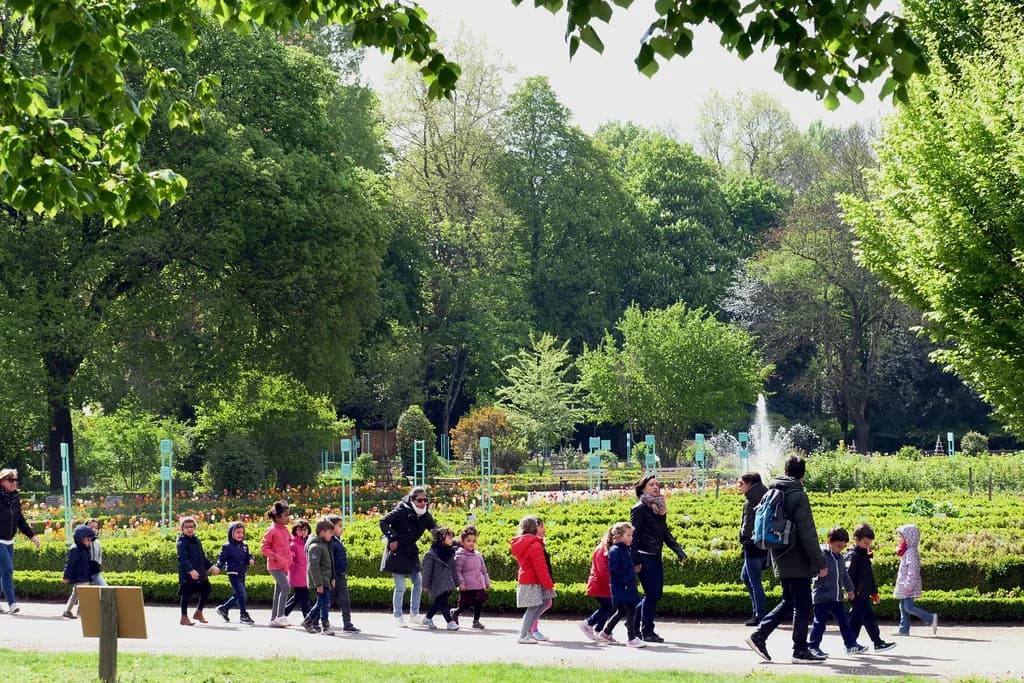
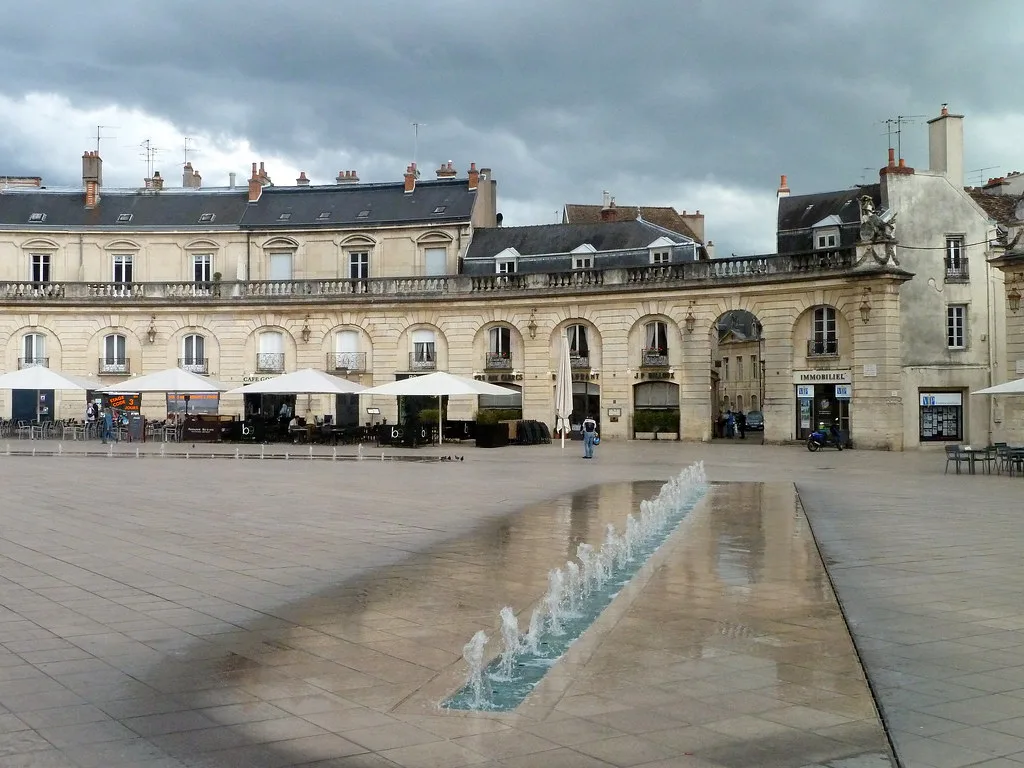
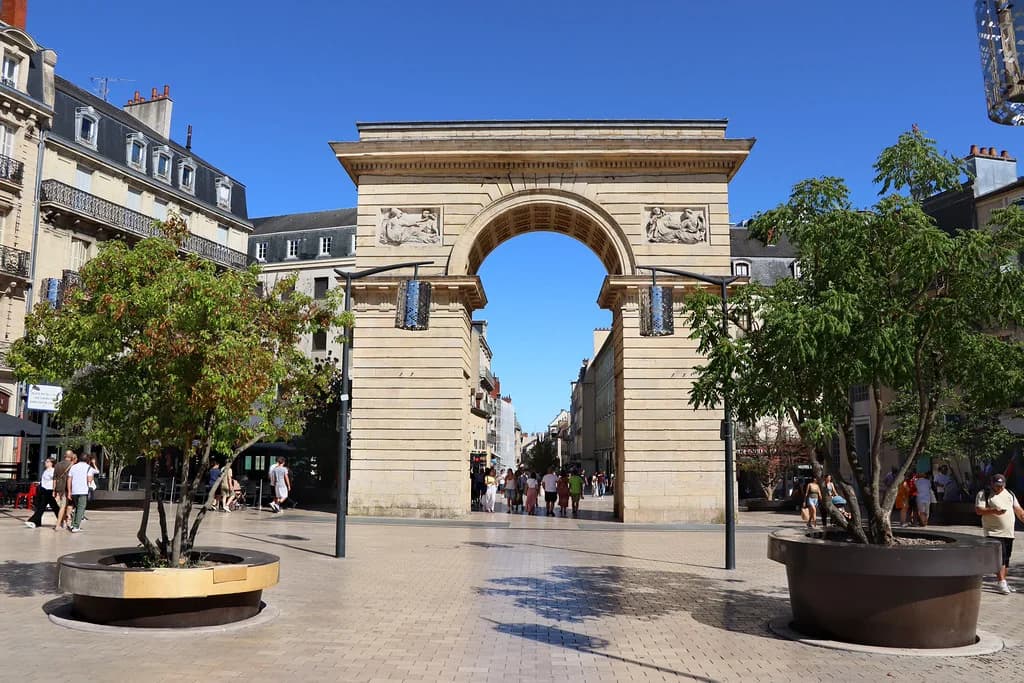
Spend the afternoon on the quieter side of the old town. Jardin Darcy, with its polar bear sculpture, is the city's best-known small park, and the surrounding walk takes you past the Porte Guillaume arch and the fountain plaza at the entrance to the old city.
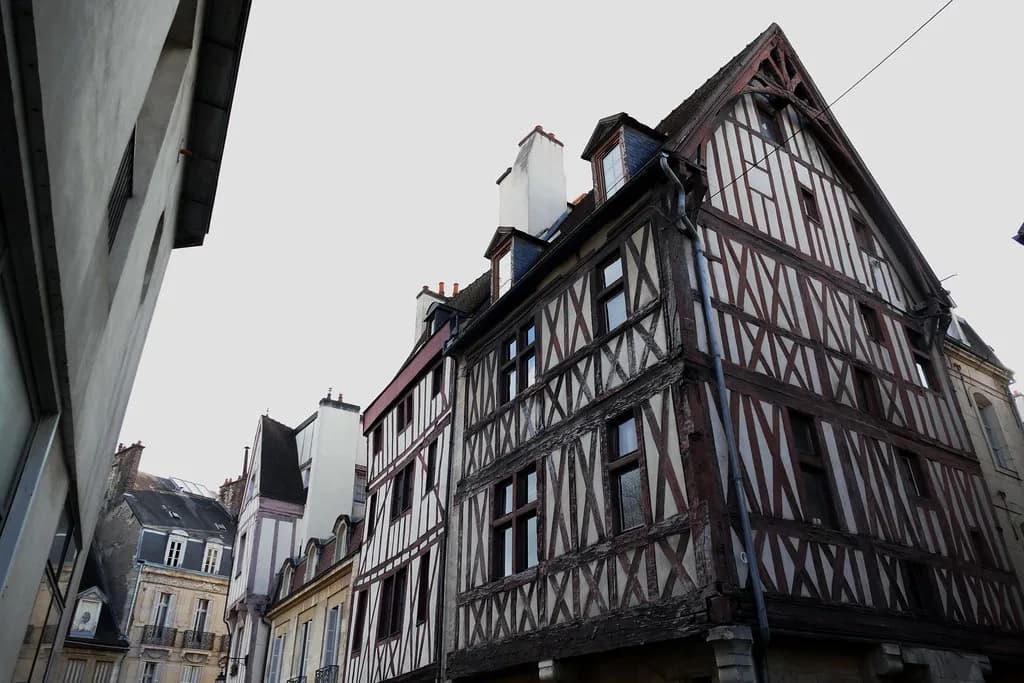
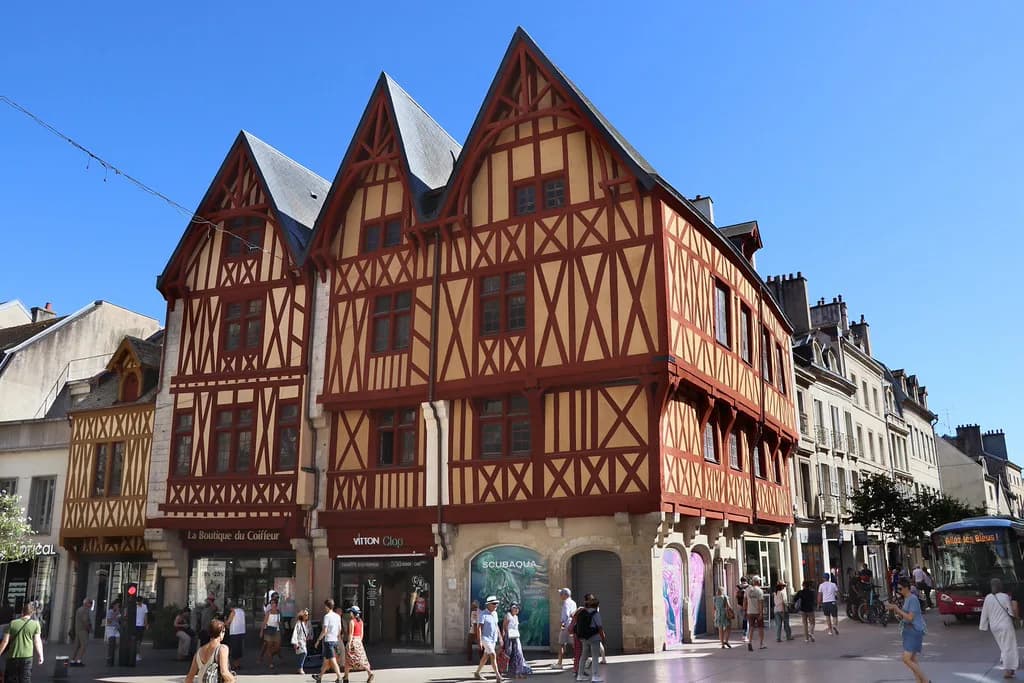
Then head for Rue Verrerie, one of the most beautiful lanes in Dijon thanks to its half-timbered façades, now mixed with concept stores, galleries and design shops. Much of the old town is kept car-free, so wandering is genuinely pleasant rather than a constant sidestep around traffic.
Our shopping in Dijon guide covers these streets if you want a plan rather than a drift, with Rue de la Liberté as the main commercial axis.
Day 3 Options: Cité de la Gastronomie and a Slower Morning
South of the station, the Cité de la Gastronomie is worth the walk for the architecture alone, and a tram stop right in front gets you back to the station quickly afterwards. Its exhibits closed at 6pm on a summer visit, so treat it as an afternoon stop rather than an evening one.
For mustard shopping, the Boutique Moutarde Maille at 32 Rue de la Liberté lets you try flavours such as mushroom, balsamic and pesto, and sells small jars that pass carry-on rules. The Moutarderie Edmond Fallot on Rue de la Chouette and the Mulot & Petitjean delicatessen for pain d'épices are the other obvious stops for local food gifts.
If you have a third day free and the weather is kind, a short trip out to Beaune pairs naturally with Dijon as a wine and art town, but keep it to a half-day so the centre does not get squeezed.
Where to Eat and What to Book Ahead
Book the tower first, then restaurants. Dijon currently holds three one-star Michelin restaurants and one with two stars, and the better places fill up — Stéphane Derbord served a three-course surprise lunch menu for 30 euros (2023), while its Menu Harmonie cost 105 euros, and William Frachot's signature menu was 150 euros.
For a mid-range lunch, Dz'envies holds a Bib Gourmand and serves modern Burgundian cooking; many Dijon restaurants take bookings by phone rather than online, so call ahead rather than turning up. Alternatives include the wine bar Dr. Wine on Rue Musette, Maison des Cariatides on Rue Chaudronnerie and the vegetarian Treize Lucioles on Place Émile Zola.
For the full shortlist by budget and neighbourhood, see our pick of the best restaurants in Dijon before you book.
Costs and the Dijon City Pass
The Dijon City Pass bundles museum entry, public transport and discounts, sold in 24, 48 and 72-hour versions. Our own verdict is cautious: much of what the pass covers — castles and museums — lies outside the city, a 10 to 60-minute drive away, so unless you plan to rent a car and explore the surrounding area, the pass rarely earns its keep for a city-centre break.
If you do buy it, the useful city-centre inclusions are the Tour Philippe le Bon and the Musée des Beaux-Arts, plus discounts such as 10 per cent off bike rental and 50 per cent off gifts in the tourist office shop. Remember that a 24-hour pass is not 24 hours of sightseeing, since museums close in the late afternoon.
Walking costs nothing and covers most of the centre; trams and buses are worth it mainly at the end of the day or in bad weather.
The One-Day Version
With one day, cut the Cité de la Gastronomie and the parks, and choose either the Musée des Beaux-Arts or the tower rather than both. Do the owl trail in the morning, take the market in if your day falls on Tuesday, Thursday, Friday or Saturday, and finish on Place de la Libération at dusk, when the square looks its best over an apéritif.
Book the tower slot in advance and keep lunch short so you are not racing the museum closing time in the late afternoon.
Practical Points: Trains and Getting Around
Dijon sits on the TGV network, with Basel under an hour and a half away; Lyon is roughly an hour and a half by direct train. Book TGV tickets as early as possible, since the cheapest fares go first and last-minute tickets cost considerably more.
Once in the city, walk. The station-to-old-town stretch is short, the sights cluster, and the tram is mainly a way to cover the last leg to the station when you are short of time.
What to Skip or Save for a Return Visit
Save the parks, the Consortium contemporary art centre and the outlying castles for a longer trip, and do not try to bolt a winery visit onto a two-day city break — it eats the best part of a day. If you are still weighing up whether the city justifies the journey, is Dijon worth visiting sets out the honest case for a short break.
The rest of the city's sights, quarter by quarter, sit in our things to do in dijon guide, which fills in the corners this itinerary leaves out.
If you are comparing short-break cities, our 3 days in Cannes plan shows how a compact French city break works when the weather is the main draw rather than the architecture.
Plan Your Visit
Anchor your Dijon itinerary on two things: the guided Tour Philippe le Bon, booked ahead, and a market morning at Les Halles on a Tuesday, Thursday, Friday or Saturday. Everything else in the compact old town fits around those, on foot, without much planning.
Three days lets you add the Cité de la Gastronomie and a quiet afternoon in Jardin Darcy; two days is the realistic minimum for a weekend break, and one day is a taster worth doing only if you accept what you will leave out.
Explore more Dijon guides
Frequently Asked Questions
Is one day in Dijon enough?
It is enough for the owl trail, Notre-Dame, the palace and one museum or the tower, but it will feel hurried. If your day falls on a market morning, give Les Halles priority and cut the parks and the Cité de la Gastronomie.
What should you do on a two-day trip to Dijon?
Day one: the Parcours de la Chouette, Notre-Dame and the stone owl, then the Palais des Ducs, the Musée des Beaux-Arts and the Tour Philippe le Bon. Day two: Les Halles in the morning, then Jardin Darcy, Rue Verrerie and the half-timbered lanes.
Which day is Les Halles market open in Dijon?
Les Halles is open on Tuesday, Thursday, Friday and Saturday from morning until afternoon. Arrive in the morning, when the stalls are fullest and the hall is busiest.
Do you need to book the Tour Philippe le Bon in advance?
Yes. The tower is only accessible on a guided tour, and slots book up quickly. Reserve online through Dijon Tourism or at the tourist office next to the station.
Is the Dijon City Pass worth it?
For a city-centre break, not usually. Much of what it covers is outside Dijon, reachable by a 10-60 minute drive. The city-centre inclusions are the Tour Philippe le Bon and the Musée des Beaux-Arts, plus transport and discounts. It pays off if you rent a car and stay longer.
What should you see first in Dijon?
The tourist office beside the station, for the owl trail map, then the Parcours de la Chouette through the old town. It strings the main sights together, including Notre-Dame and the Opera House, so you see the city in order rather than zig-zagging.
Sources
Notes for French city breaks
Optional updates to our guides.
You might also like
Continue reading
More guides you'll find useful