Shopping in Orléans: Which Streets and Days to Choose
A practical guide to shopping in Orléans, from old-town lanes to vinegar and mustard shops, with honest notes on Sunday, Monday and lunchtime closures.
On this page
Shopping in Orléans fits into an afternoon, not a weekend. The old town was heavily rebuilt after the Second World War and is compact enough to cross on foot, so the sensible plan is one continuous loop from the Loire bridges through the centre rather than repeated trips back to the same streets. Pair it with a morning of sightseeing from our guide to the things to do in Orléans and you still have time for a long riverside walk before dinner.
Shopping in Orléans: the short answer
Orléans is a browse-and-buy city, not a destination for big-name retail. What you get is a walkable centre of independent shops, food specialists and covered market buildings, with the vinegar and mustard trade as the one purchase with real local roots. One guide describes the centre as boutique shops, outdoor cafés and historic streets within easy walking distance of each other.
Budget a couple of hours for the streets plus another hour for food shopping, and keep the two separate in your head: the browsing streets are for time, the food shops are for money. If your main reason for coming is the sights rather than the shops, read is Orléans worth visiting first and slot the shopping in around it.
How the shopping areas fit together on foot
The centre reads as four pieces: Rue Royale running in from the river, Place du Martroi at the middle, the lanes of the Orléans Old Town around Sainte-Croix Cathedral, and Place du Châtelet with its old market halls to the east. Walk them in that order and you never double back, finishing near the food shops rather than carrying purchases around all afternoon.
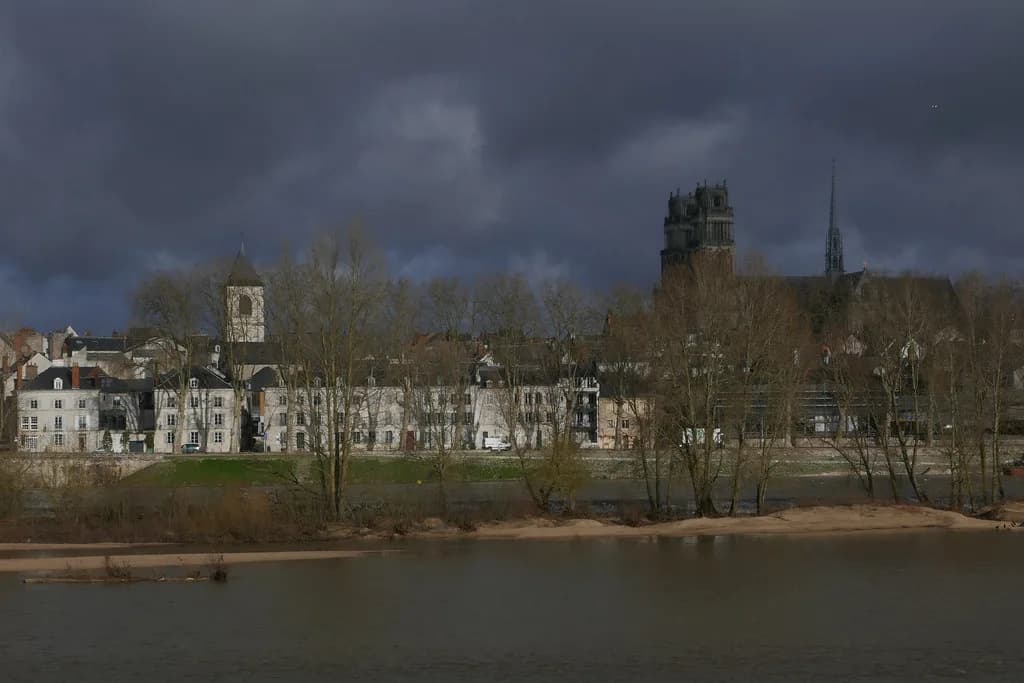
Nearly everything sits within a twenty-minute walk, so a single pair of comfortable shoes covers the whole loop. The one stretch worth treating as a separate outing is the riverbank, which is a promenade rather than a shopping street and better saved for the end of the day.
Rue Royale and the approach from George V bridge
Start at the George V bridge and walk straight up Rue Royale, the grand boulevard that opens the perspective all the way to Place du Martroi. It was laid out after the new bridge was built and is lined with boutiques, coffee shops and covered galleries, which makes it the easiest place in the city to combine a coffee stop with a first look at the shops.
This is the modern, everyday end of the centre rather than the historic one, so treat it as a warm-up. The architecture improves sharply once you leave the boulevard, and the purchases worth making are further in.
Place du Martroi and the old-town lanes around it
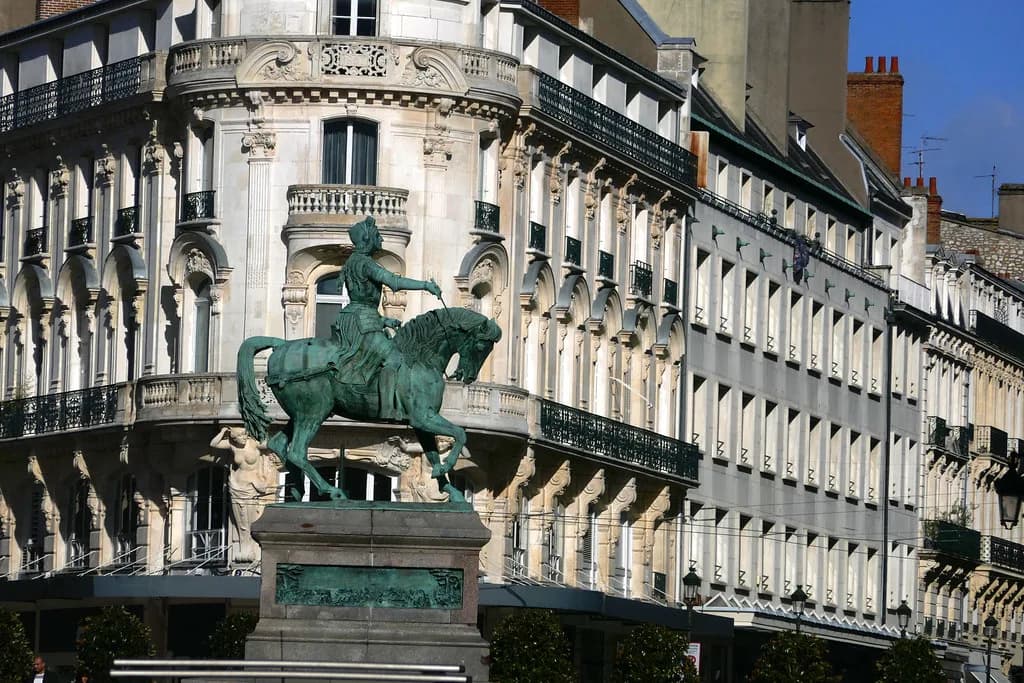
Place du Martroi is the square you keep returning to, with the equestrian Joan of Arc statue at its centre and restaurant terraces spilling onto the pavement in summer. In winter the same square hosts the city's Christmas market, which turns it into the busiest shopping spot in town for a few weeks.
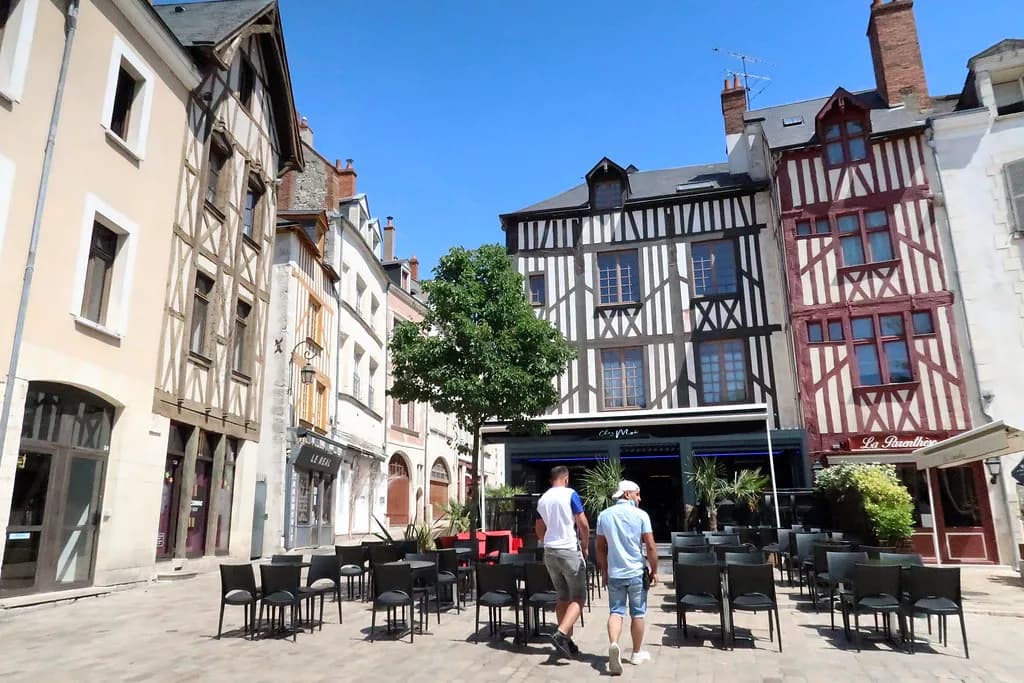
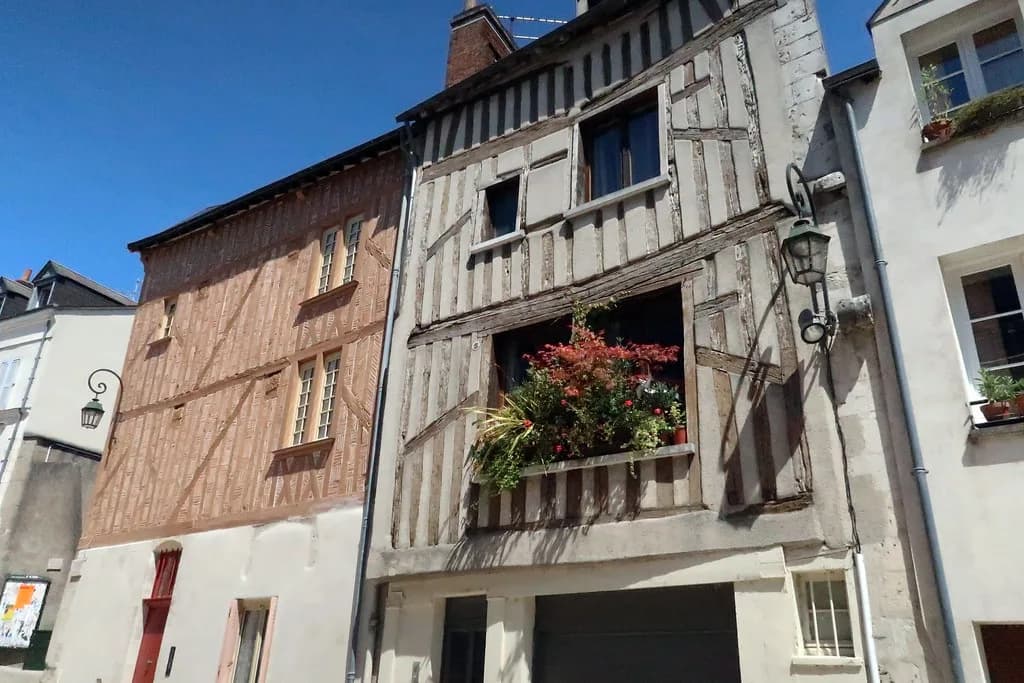
From the square, work north-east into the lanes. Rue de la Poterne is the prettiest single street, sloping gently down toward the Loire with timber-framed houses and the cathedral visible in one direction and the river in the other. Rue du Bœuf Sainte-Croix is easy to miss but has coloured timber houses framing a view of the cathedral, and it is the kind of street you photograph rather than shop.
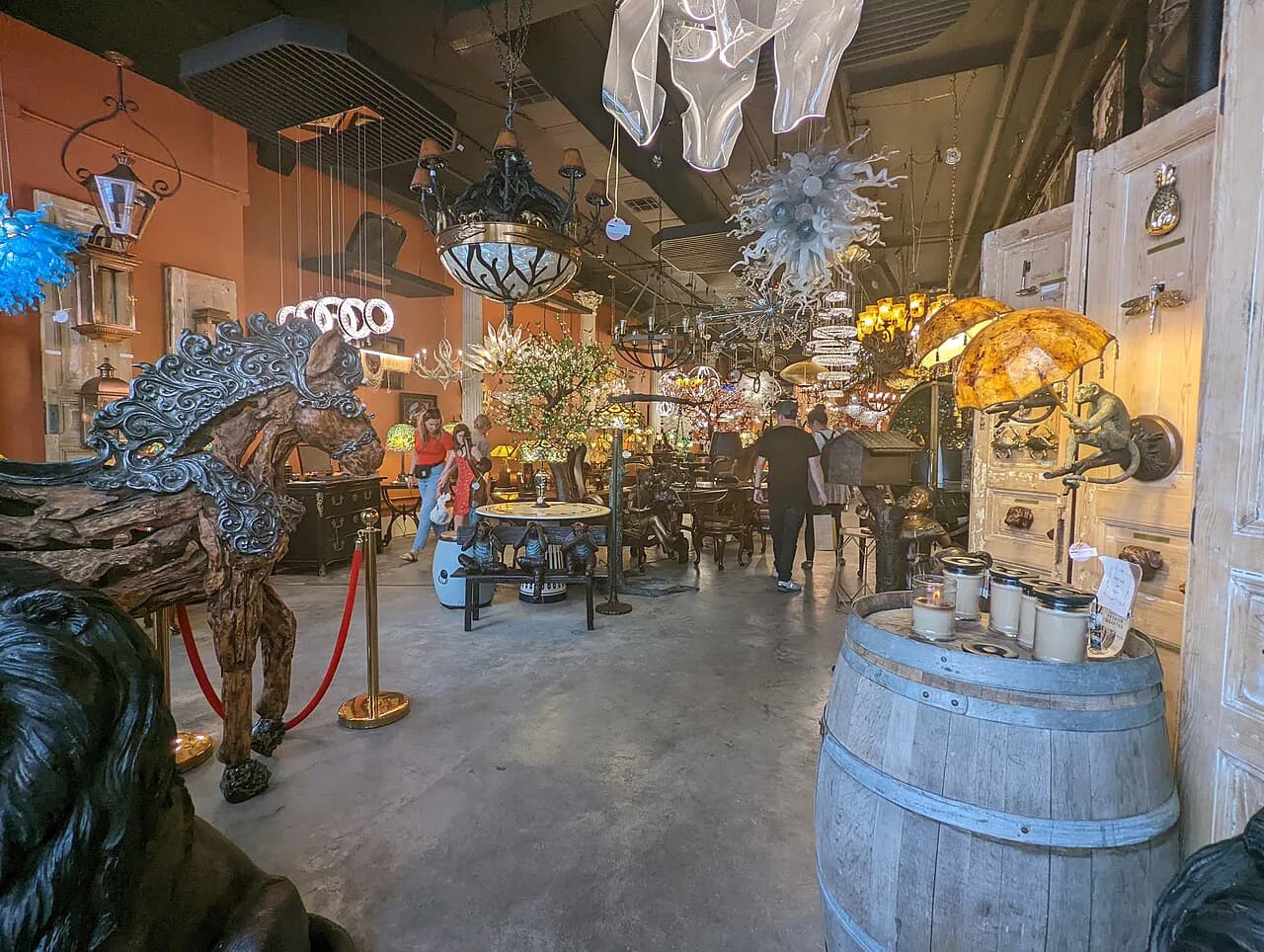
Rue de Bourgogne is the restaurant and bar street, busy with locals in the evening, and it holds at least one crammed antiques and curiosities shop worth poking your head into even without buying. If eating is the priority rather than shopping, our pick of the best restaurants in Orléans starts on this street.
Place du Châtelet and the old market halls quarter
Place du Châtelet took its current shape in the 1880s, when four large metal halls were built to house the city's wholesale market and more than forty shops clustered around them. The timbered façades around the square give it the most medieval look in the centre, and it is the quarter to wander if you want atmosphere rather than specific shops.
The House of Jean d'Alibert, built around 1560 for a wealthy merchant, survived the construction of the market halls and is one of the few sixteenth-century homes left in this part of town. It is a façade to stop for, not a shop to enter.
Market days and market halls: what to plan around
Orléans has a proper market tradition centred on Place du Châtelet, and the market is the reason to keep a morning free rather than an afternoon. Our full guide to the orleans market sets out which days the halls and outdoor pitches operate so you can build the rest of the day around them.
Treat market timing as the fixed point in your plan and let the shops flex around it. Food bought in the morning also sets up a picnic later, which is the cheapest good lunch in the city.
Local specialities worth buying: Orléans wine vinegar
Wine vinegar is the product that actually ties to Orléans, and it is what to buy if you buy only one thing. The city built a trade on it, and the Musée Historique et Archéologique de l'Orléanais devotes space to the history of wine vinegar making alongside its Gallo-Roman bronzes. A bottle travels well and gets used at home in dressings, dips and marinades.
It is also the local ingredient you will see on menus, made into dishes such as poulet jaune, so tasting it at lunch is a sensible way to decide whether to carry a bottle home. Buy after you have eaten rather than before.
Mustard made with wine vinegar
Orléans mustard is made by soaking the seeds in wine vinegar before grinding, which gives it a sharper, more acidic edge than the standard Dijon style. It is a small, light, useful souvenir and considerably easier to pack than a bottle of vinegar.
If you want something to eat on the train rather than to take home, the same shops and the surrounding food streets sell local wine and goat cheese from the surrounding Loire Valley. Both make a better picnic than a restaurant lunch on a warm day.
Martin Pouret: the vinegar and mustard shop
Martin Pouret has been producing traditional French vinegar and mustard for generations, and its boutique is the obvious stop for both. It is a browse-and-taste sort of shop rather than a quick errand, and a worthwhile one even if you leave empty-handed.
Buy the mustard if you are travelling with hand luggage and the vinegar only if you are checking a bag or driving, since liquids are the whole problem here. Both pack flat and neither needs refrigeration before you get home.
Souvenirs that are not fridge magnets
The best free souvenir in Orléans is a photograph of the MifaMosa street mosaics, small pixel-art characters fixed above street signs around the centre. They are the work of a local street artist and there are dozens across the old town, with a Joan of Arc on horseback on Rue Jeanne d'Arc and others near the cathedral, Place du Martroi and Rue de Bourgogne.
For something you can hold, the tourist office shop stocks books, sweet and savoury treats and T-shirts themed on the Orléans Loire Valley rather than generic French motifs. It is the sensible stop when you need a gift for someone who wants neither food nor wine.
Paper and prints are the other option. The Musée des Beaux-Arts holds the largest collection of pastels in France after the Louvre, and its shop is the place to look for art-related gifts rather than a chain store.

Markets and food shopping for a picnic by the Loire
Food shopping in Orléans is best done with the river in mind. Buy bread, cheese and fruit in the centre in the morning, then walk down to the Loire banks, where the promenade has benches and the light turns golden toward sunset. It is the cheapest good meal in the city and the one most locals seem to use the riverbank for.
The Jardin des Plantes and the Jardin de l'Évêché are both free and both close enough to the centre to eat a bought lunch in, which gives you two bad-weather-proof alternatives to a bench. Both are gardens rather than shopping stops, so do them after the shops rather than instead of them.
When shops shut: Sundays, Mondays and lunchtime
Orléans museums and shops do not keep the same rhythms, and the museum pattern is the one to plan around if you want both. Many smaller Loire châteaux nearby close on Mondays and Tuesdays, a pattern one traveller ran into during a visit, and the same days are worth assuming for smaller independent shops until you have checked.
The city's own museums mostly close on Mondays, which makes Monday a natural shopping and riverside day: the Musée des Beaux-Arts opens Tuesday to Saturday from 10am to 6pm and Sunday from 1pm to 6pm, closing at 8pm on Thursdays, while the Maison Jeanne d'Arc and the history museum run Tuesday to Sunday. Outside the museums' Tuesday-to-Sunday run, treat lunchtime as a real risk for small food shops and plan the browsing streets for the middle of the day.
Large department stores and chain shops keep different hours from the independents, and a quick look at a shop's own door or website the day before is more reliable than any general rule. If the exact hours decide your trip, that check is worth two minutes.
Rainy-day shopping and indoor stops
When it rains, the covered galleries along Rue Royale and the arcades around Campo Santo give you short dry stretches between shops. Campo Santo, the twelfth-century cemetery turned cultural space, has arcades added in the fifteenth and seventeenth centuries and is free to walk through, which makes it a decent shelter with something to look at.
The strongest wet-weather stop is the Musée des Beaux-Arts, which is close to the cathedral and to the shopping lanes. Its galleries of European painting from the fifteenth to twentieth centuries, including a large holding of pastels, can absorb an hour or two until the rain passes.
Budgeting for a shopping afternoon in Orléans
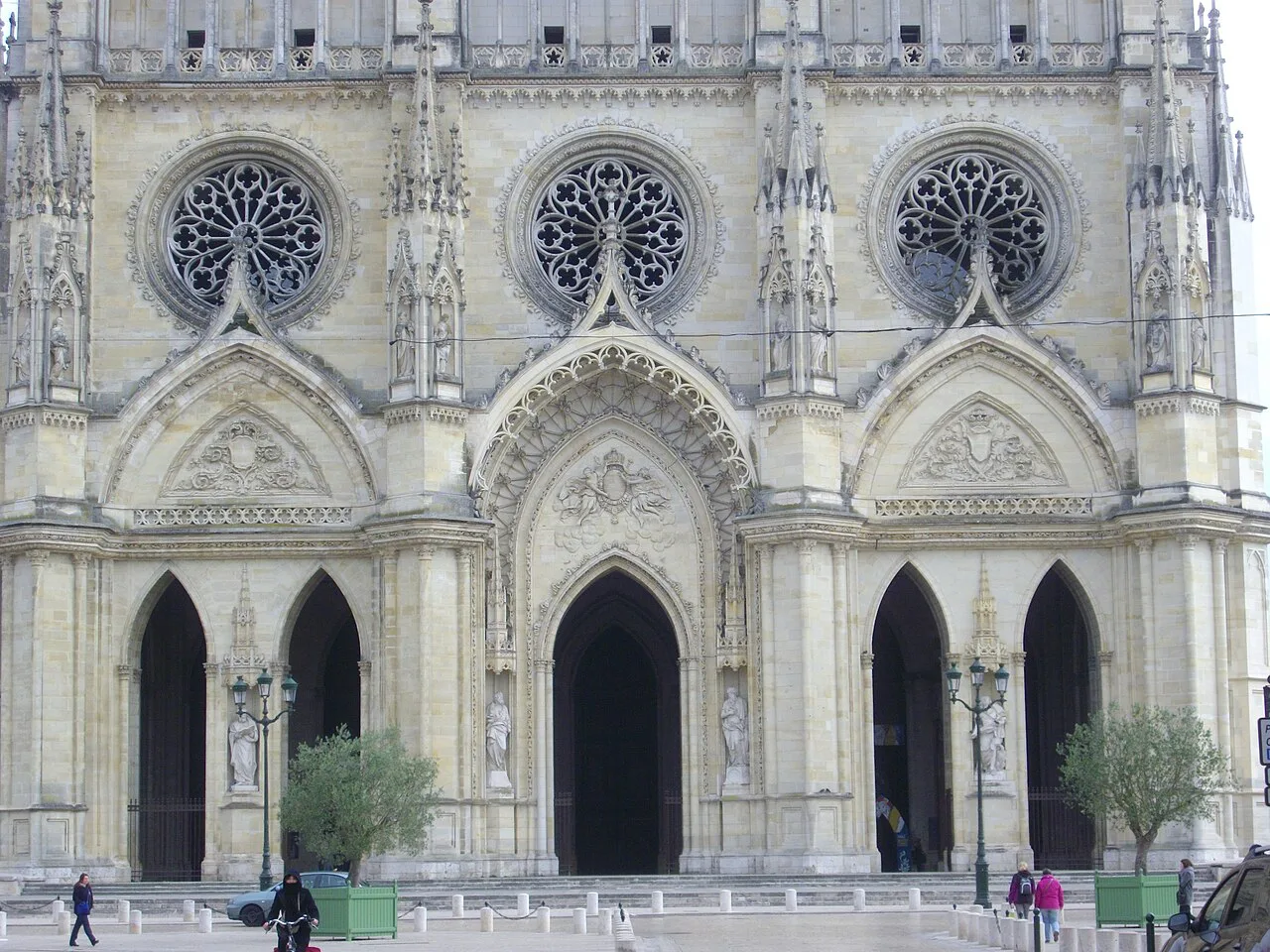
The good news is that the browsing costs nothing: the cathedral is free to enter, as are the Jardin des Plantes and the Jardin de l'Évêché, so a shopping afternoon can be mostly a walk if the shops do not appeal. The cathedral opens daily at 9am and closes at 6pm from November to March and 7pm from April to October, which makes it an easy anchor for the middle of the day.
Where money goes is food and presents: a decent lunch, a bottle of vinegar, a jar of mustard and a small gift will be the bulk of it. Product prices are not published in a way worth quoting, so check labels in the shop rather than budgeting from a guide.
Keep one museum ticket in reserve rather than buying it blind. The combined ticket covering the Musée des Beaux-Arts, the Maison Jeanne d'Arc, the history museum and the MOBE is valid for a single day and costs €8, so it only pays if you are doing two or more of them.
Plan Your Shopping Afternoon
Build the afternoon in one direction: George V bridge, Rue Royale, Place du Martroi, the lanes around Sainte-Croix, then Place du Châtelet and the food shops. That order gives you the architecture first, the shopping in the middle and the vinegar and mustard last, so nothing heavy travels with you.
If you have a second day, spend it on the riverbank and the gardens rather than more shops, and use the Loire Valley guide to decide whether a château is worth the trip out. For a city this size, one focused shopping afternoon is the right amount.
Explore more Orléans guides
Frequently Asked Questions
Where do you go shopping in Orléans?
The centre, and on foot. Start at the George V bridge and walk up Rue Royale to Place du Martroi, then work through the old-town lanes around Sainte-Croix Cathedral and finish at Place du Châtelet and its old market halls. The whole loop sits within about twenty minutes' walk of end to end.
What local product should I buy in Orléans?
Wine vinegar, and the mustard made by soaking seeds in it. Martin Pouret sells both from its boutique, and vinegar is the purchase most clearly tied to the city's history. It is also the local ingredient you will see used in dishes such as poulet jaune.
Are shops in Orléans open on Sundays?
There is no single city-wide rule, and it varies by shop type. Assume larger stores and chains are more likely to open than small independents, and check the individual shop's door or website for the day you plan to visit. Sunday mornings are generally the riskiest slot.
Is Orléans good for a shopping weekend?
It is good for a shopping afternoon, not a shopping weekend. The centre is compact and built around browsing streets, food specialists and markets rather than large retail. Most visitors do better pairing one shopping afternoon with sightseeing, the riverbank and the gardens.
What is there to buy in Orléans old town?
Vinegar and vinegar-based mustard, local wine and goat cheese for a picnic, books and regional gifts from the tourist office shop, and art-related presents from the Musée des Beaux-Arts. The MifaMosa street mosaics are free to photograph and make a better souvenir than most things you can buy.
How long does shopping in Orléans take?
Allow two hours for the streets and another hour for food shopping, which fits comfortably into an afternoon. If you stop for lunch and a coffee on Rue Royale, budget three to four hours in total. Monday is the practical day for it, since the city museums mostly close then.
Sources
- 19 Best Things to Do in Orleans, France - France Voyager
- 22 Best Things to See and Do in Orléans | A Local's Guide to the City of Joan of Arc
- Orléans, France: Paris Without the Price Tag! - Big World Small Pockets
- Au musée des Beaux-Arts d'Orléans, une exposition dévoile les chefs-d'œuvre d'une exceptionnelle collection de peintures anciennes
- Christmas gifts: The best of Orleans Loire Valley under ...
Notes for French city breaks
Optional updates to our guides.
You might also like

Continue reading
More guides you'll find useful