Orléans Old Town: A Walking Guide to the Historic Streets
Walk Orléans old town in about two hours: the cathedral, Rue de la Poterne, Place du Martroi and the Loire banks, with honest notes on what is small and quiet.
On this page
Orléans old town is a compact historic core you can walk in roughly two hours, and the pleasure comes from the streets rather than a long checklist of monuments. Much of the city was destroyed in the war, so the old quarter is smaller than the Loire Valley's bigger names, but the surviving medieval and Renaissance buildings sit close together and reward a slow route.
This walk starts at Place du Martroi, works north and east through the cathedral quarter, then drops to the Loire and finishes on Rue de Bourgogne where the sightseeing gives way to dinner. It assumes you have already sorted the wider trip; if you are still choosing what to do across the weekend, our guide to things to do in Orléans covers the rest of the city.
Give the old town a half-day rather than a full one, and treat the rest of the day as Loire Valley time. Orléans is an easy base for the châteaux and an easy train ride from Paris, which makes the historic core a good first morning rather than the whole point of the trip.
Where the Old Town Sits
The city's orientation line is Rue Royale, the broad boulevard that runs from the George V bridge straight to Place du Martroi. Arriving over the bridge, you get the whole axis in one view, which makes it the simplest way to fix your bearings before you start walking.
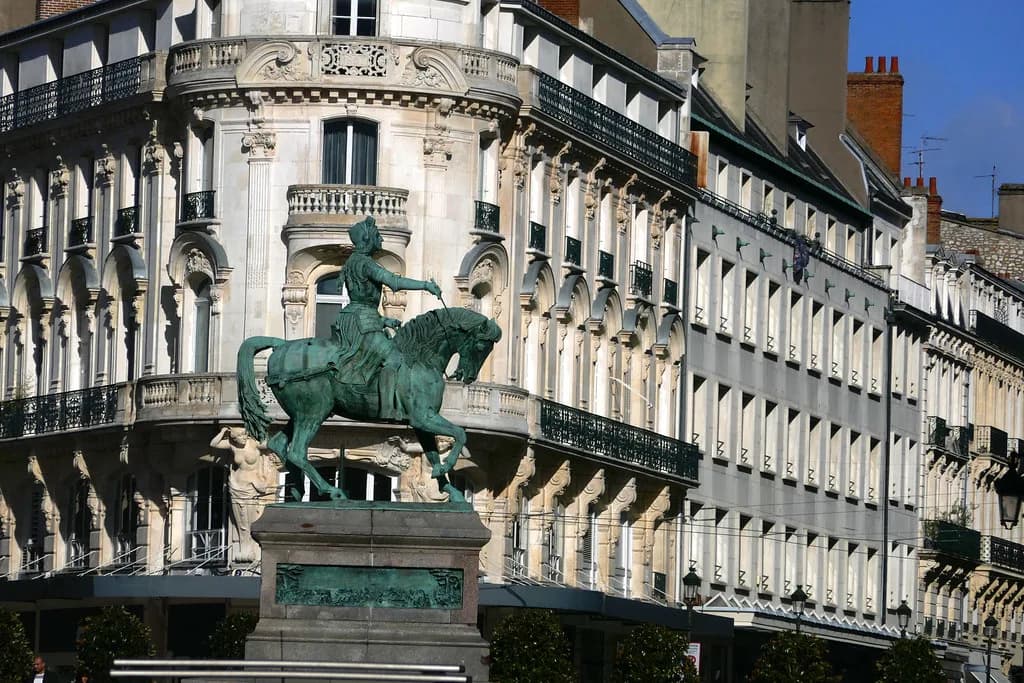
Place du Martroi is the centre of gravity. It holds the equestrian statue of Joan of Arc, and restaurant terraces fill the square in summer. In winter the Christmas market takes over the space, so expect a different, busier square rather than a quiet one.
The Loire lies to the south, a short walk downhill from the square through the oldest lanes. That gives you a simple mental map: station and main approach to the north, cathedral quarter to the east, river to the south. Our Orléans attractions hub gathers the individual visitor guides if you want to read up on one sight before you go.
Start at Place du Martroi
Begin on Place du Martroi with the Joan of Arc statue, which is the image most visitors carry home. The square is also the natural place to pause, with cafés around the edges and the Rue Royale opening off it to the north.
If your visit falls on a market morning, the surrounding streets are where the city does its food shopping rather than the tourist circuit. Our guide to markets in Orléans sets out what runs and where, so you can time the square around it.
Allow ten minutes here rather than half an hour. The square is a starting point and a meeting place, not a sight in itself, and the walk gets better as soon as you leave it.
Sainte-Croix Cathedral
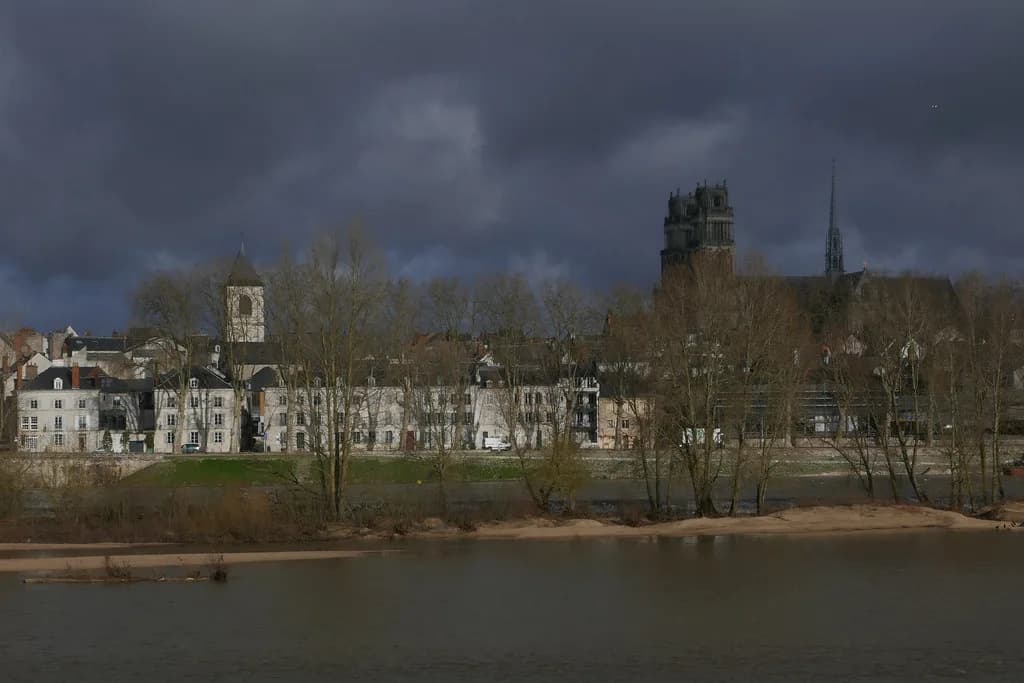
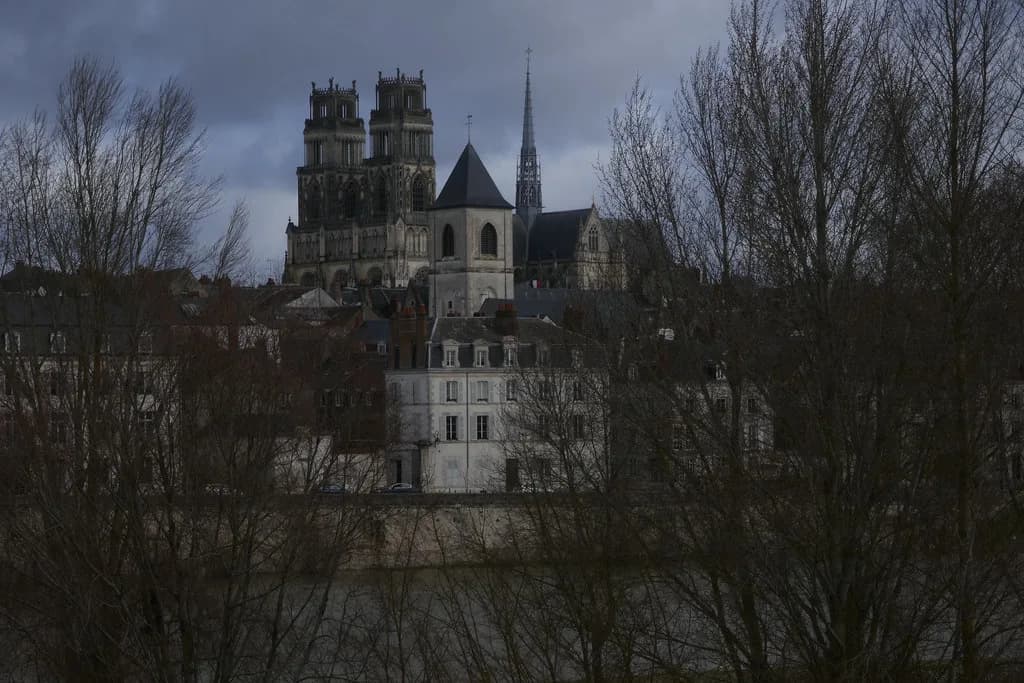
Sainte-Croix Cathedral dominates the eastern side of the old town, its Gothic façade and towers visible from several streets. The exterior is the highlight: flying buttresses, stone tracery and a scale that echoes both Notre-Dame and Reims.
Step inside for the stained glass and the height of the vaults; even without religious interest, the interior is worth twenty minutes. Christmas brings light projections onto the façade at night, a spectacle rather than a quiet visit.
If you want to see the city from above, the tourist office runs themed explorations of the cathedral's upper levels and the underground passages. These are guided visits rather than open access, so they need booking, and availability varies by season.
Rue de la Poterne and the Timber-Framed Lanes
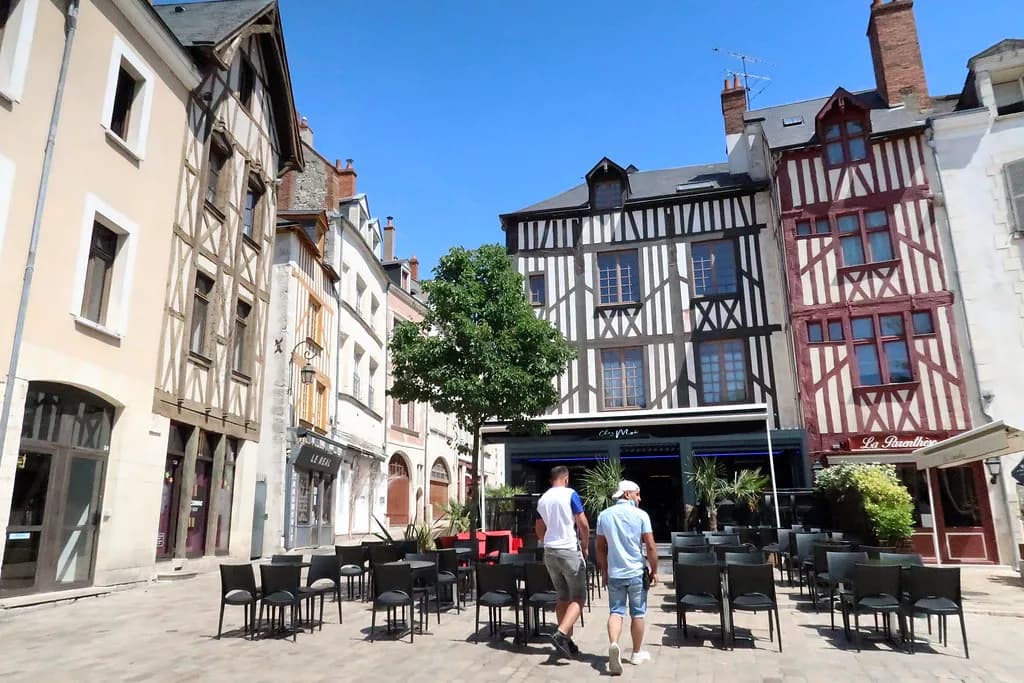
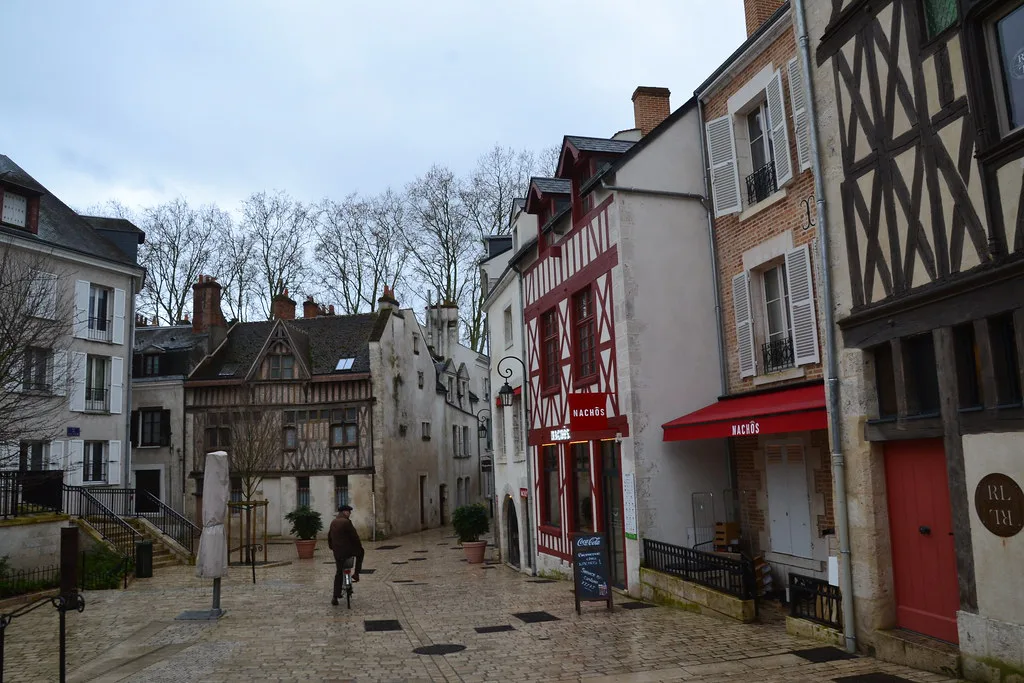
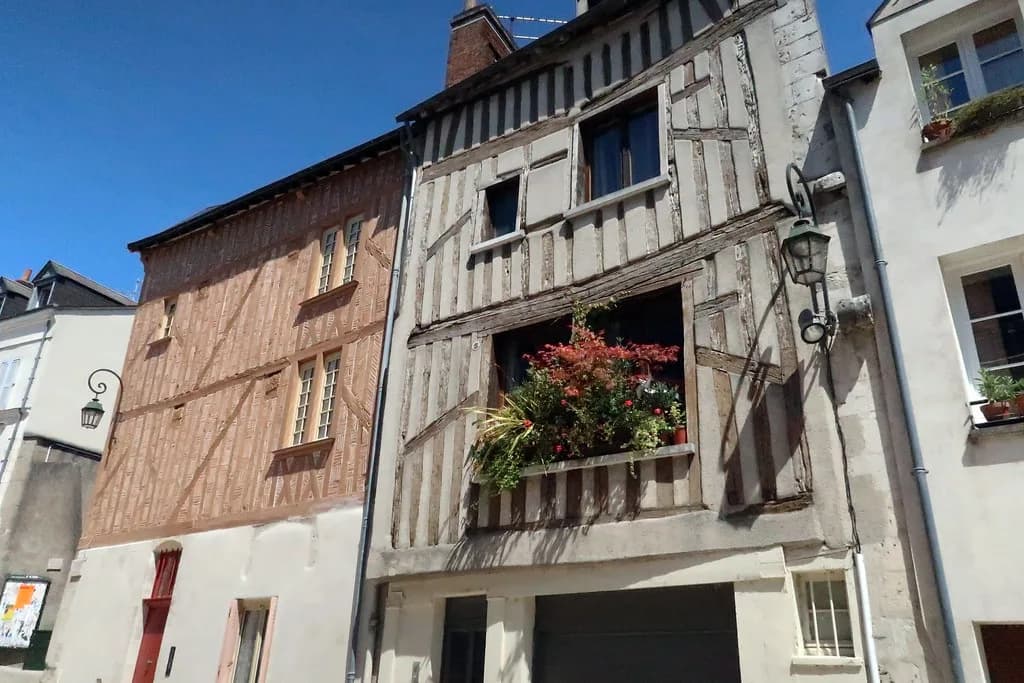
Rue de la Poterne is the street to slow down in. It slopes gently downhill toward the Loire, with timber-framed houses on either side and a long perspective that ends at the river; the cathedral is visible looking back the other way.
Rue du Bœuf Sainte-Croix is the other essential, easy to miss and easy to photograph. Coloured houses with exposed timber frame the view toward the cathedral, and the street rewards stopping rather than rushing through.
Place du Châtelet, further south, is the third piece of this walk. The square took its present shape in the 1880s, when metal market halls were built to house the wholesale market, and the timbered façades around it survive alongside the halls. The nearby Jean d'Alibert house, built around 1560 for a wealthy merchant, is one of the rare sixteenth-century homes not swept away when the halls went up.
Rue Royale and Its Covered Galleries
Rue Royale is the grand approach, created after the new bridge was built and lined with boutiques, coffee shops and covered galleries. It is less crowded than its Parisian equivalent and much easier to walk.
Use it twice: once to orient yourself on arrival from the bridge, and again if you need shops. The arcades give shelter in wet weather, which matters more than it sounds in a city where the walking is the point. For a wider look at the shops along this axis, see our shopping in Orléans guide.
Campo Santo and Hôtel Groslot
Campo Santo began as the city's main cemetery in the twelfth century and is now a grassy cloister framed by arcades added in the fifteenth and seventeenth centuries. It is listed as a historic monument, and the arcades host a medieval market during the Joan of Arc festivities around 8 May.
Hôtel Groslot, built in the sixteenth century by the king's bailiff, is the other pause on this stretch. Royal guests including Charles IX and Catherine de Medici stayed here, and the red brick façade is the draw.
The gardens behind Hôtel Groslot are the quiet corner of the walk, with lawns and a view back to the cathedral towers. This is the place to sit for ten minutes instead of pushing straight on to the next sight.
Hôtel Cabu and the Renaissance Survivals
Hôtel Cabu, across the square from Hôtel Groslot, is often called the finest Renaissance building in Orléans. It was built around 1550 for the lawyer Philippe Cabu and acquired by the city in 1862 as a home for its historical museum.
The museum holds the Neuvy-en-Sullias treasure, a collection of Gaulish and Roman bronze statuettes, which is the reason to go in rather than just admire the courtyard. If archaeology leaves you cold, the façade alone justifies the detour.
Hôtel des Créneaux, the city's first town hall, mixes Gothic and Renaissance detail in its sixteenth-century stonework. Nearby, the carved doorway of the Thesis Hall opens onto the last remaining medieval library in France, built in the fifteenth century and free to visit. It is one of the best free stops in the old town.
Church of Saint-Aignan and the Quieter Lanes
Saint-Aignan is the church most visitors skip in favour of the cathedral, and it has its own quiet charm. Its origins go back to the ninth century, with centuries of rebuilding since, and the interior is peaceful enough to be a deliberate contrast to the busier sites.
The lanes around it are part of the appeal: fewer tour groups, more ordinary city life. Take them east and south toward the river rather than retracing your steps to the cathedral.
Rue Coligny is worth a detour for its Renaissance stonework, especially the carved façade of a house whose name you will not find on a map. This is the kind of street where the reward is looking up rather than arriving anywhere.
The Loire Banks
The Loire banks are Orléans' best free promenade, with boats moored along the water and a restaurant on a moored boat at the quay. Wild ducks are a common sight in the middle of the city, which is not something every French city can claim.
Come at sunset if you can. The light turns the river golden and the walk back toward Place du Martroi is short, so you are not committing to a long hike in the dark.
Jardin de la Charpenterie is the small green space above the river, less a garden than a viewpoint. Go for the perspective over the Loire and the timbered houses of Rue de la Charpenterie, not for the garden itself.
Rue de Bourgogne: Where the Old Town Turns into a City
Finish on Rue de Bourgogne, the street where locals actually spend their evenings. Bars and restaurants line it, and the atmosphere is livelier than anything on the monument circuit.
Our best restaurants in Orléans guide covers the honest options along this street and nearby, so you can book before you arrive.
Keep your eyes open for the street art of Mifamosa, especially around the corner of Rue de Bourgogne and Rue Parisie. The mosaics add a modern layer to the medieval streets and cost nothing to find.
Practical Trade-Offs for the Walk
The single most useful thing to know is that the historic core is small. Figure on two hours if you move steadily, longer if you stop for coffee or a museum, and do not try to stretch it into a full day of sights.
Two sights are better outside than in. The Maison de Jeanne d'Arc is a striking half-timbered building with a corner turret, but the interior holds little more than video projections, so treat it as a photo stop and spend the time at Campo Santo or Hôtel Cabu instead.
Guided walking tours of the old town are available from the tourist office. The published rate is 10 euros or 11 euros per person for a two-hour historic tour, worth checking against your dates before booking.
If you are weighing up whether the city justifies a weekend, start with our honest verdict on whether Orléans is worth visiting, then use this walk as the spine of your first morning.
Fitting the Old Town into a Loire Valley Trip
Orléans sits about an hour by direct train from Paris Austerlitz, which makes the old town easy to reach for a short break. A car gives more flexibility for the châteaux, but it is not needed for the historic core itself.
Treat the old town as your first morning and use the rest of the weekend for the Loire Valley: Chambord, Cheverny and Blois are all within reasonable driving distance. Other Loire towns such as Amboise old town make a natural second stop if you are moving west along the river.
The same street-first approach works elsewhere in France. If you like Orléans for its timbered lanes and compact centre, the old town of Aix-en-Provence offers a comparable pleasure with a very different climate and architecture.
Plan Your Visit
Walk the old town early, start at Place du Martroi, and let the streets do most of the work. Give the cathedral and Hôtel Cabu real time, treat the Maison de Jeanne d'Arc as a photo stop, and end on Rue de Bourgogne with dinner rather than another monument.
Check the tourist office and individual museum pages for current opening days and tour availability before you travel, since these change by season and by site.
For the wider weekend, the Loire Valley remains the reason most people come, and Orléans works best as a calm, walkable first chapter rather than a destination in its own right.
Frequently Asked Questions
How long do you need to see Orléans old town?
About two hours at a steady pace, longer if you stop at the cathedral, Hôtel Cabu or a café. The historic core is small because much of the city was destroyed in the war, so plan a half-day rather than a full day of sights.
Is Orléans old town worth visiting?
Yes, if you value compact medieval and Renaissance streets over scale. It suits travellers who want a walkable Loire Valley base close to Paris rather than the bigger crowds of Tours or Amboise.
What are the main sights in Orléans old town?
The core is Place du Martroi, Sainte-Croix Cathedral, Rue de la Poterne, Rue du Bœuf Sainte-Croix, Campo Santo, Hôtel Groslot and Hôtel Cabu. Rue Royale is the orientation line and the Loire banks are the best place to end the walk.
How do you walk from Place du Martroi to the Loire?
Head south through the oldest lanes, taking in Rue de la Poterne and Place du Châtelet on the way. The slope runs gently downhill toward the river and the walk takes roughly fifteen minutes without stops.
How far is Orléans from Paris?
About an hour by direct train from Paris Austerlitz, or roughly an hour and a half by car on the A10. It is close enough for a day trip and comfortable as a weekend base.
Is the Maison de Jeanne d'Arc worth going inside?
Treat it as a photo stop. The half-timbered exterior is striking, but the interior holds little more than video projections, so spend the time at Campo Santo or Hôtel Cabu instead.
Sources
Notes for French city breaks
Optional updates to our guides.
You might also like
Continue reading
More guides you'll find useful