Is Grenoble Worth Visiting? An Honest Short-Break Guide
Is Grenoble worth visiting for a weekend? An honest look at the cable car, Bastille views, old town and markets, and who will love a short break here.
On this page
Grenoble is worth visiting if you want a city break where mountains sit at the end of the street rather than a coach ride away. The centre is compact enough to cover on foot, the Téléphérique de Grenoble Bastille lifts you straight up to a fort above the rooftops, and the old town and its market give the days structure. It suits travellers who would rather have a view and a working Alpine city than a polished resort.
The short answer: a city break with mountains at the door
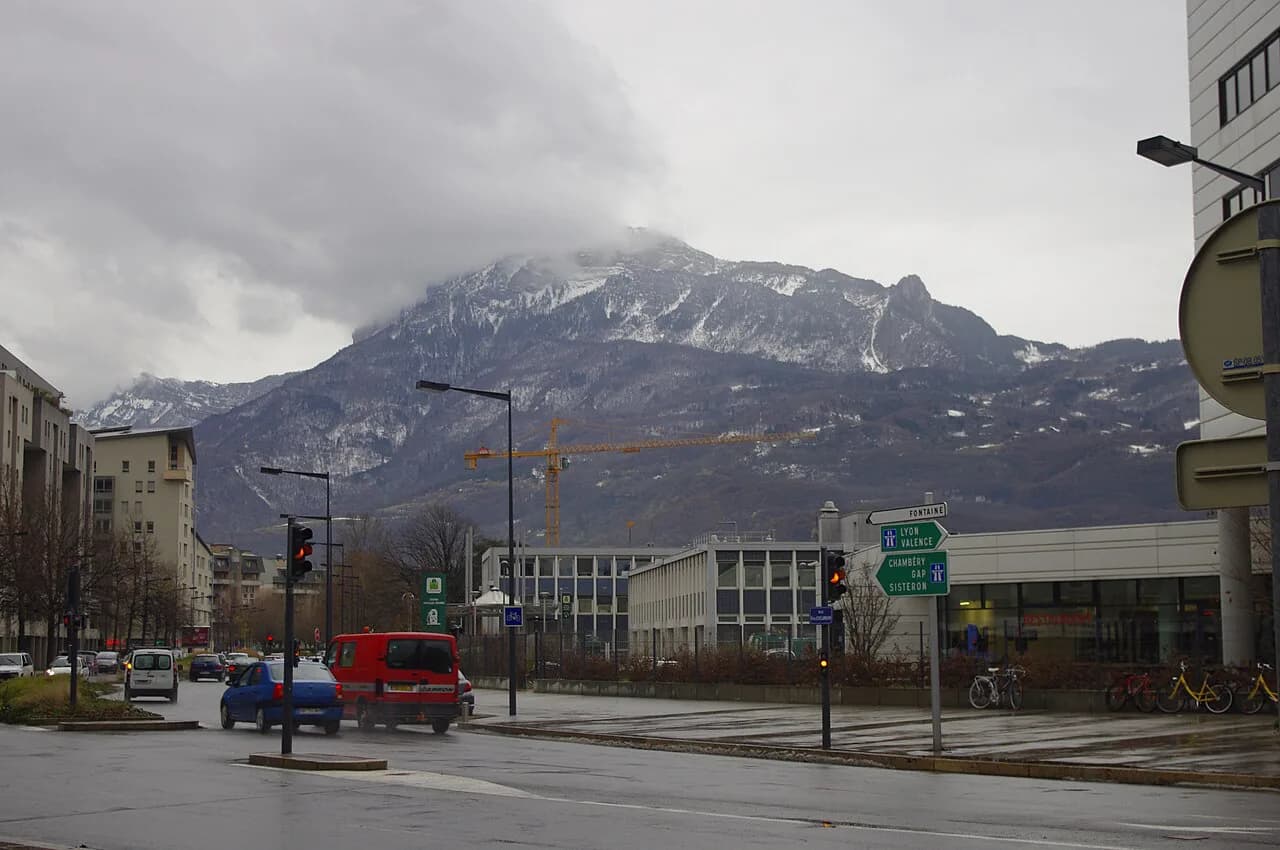
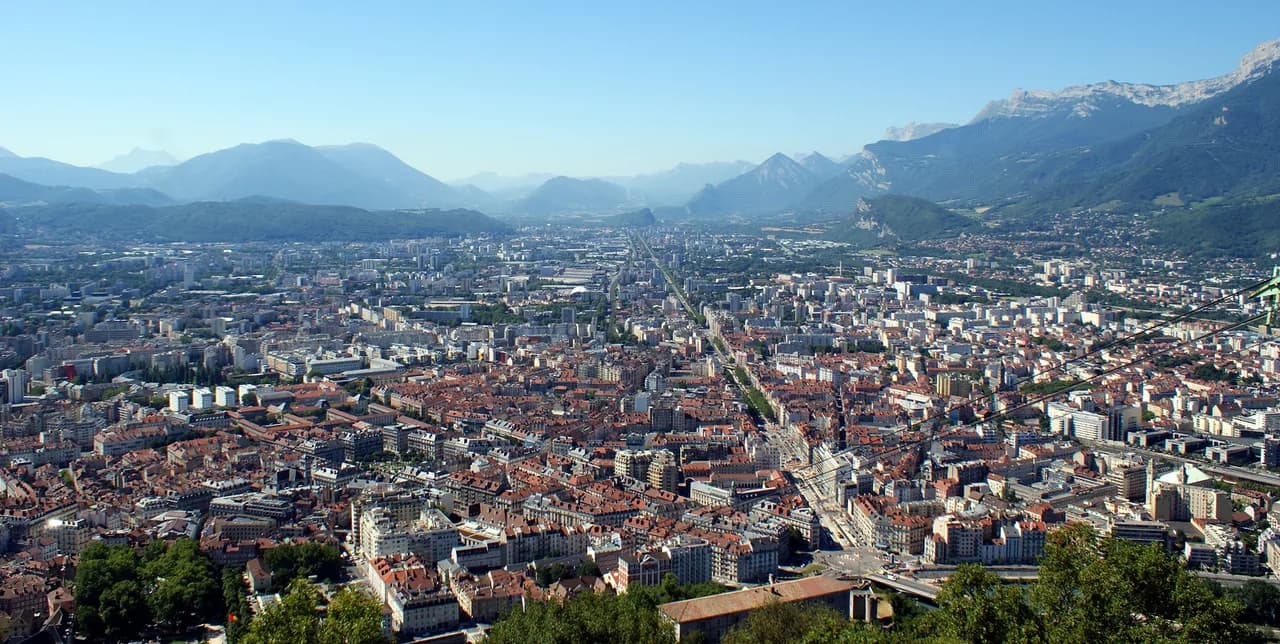
Grenoble works as a two-night short break: one day for the cable car and Bastille hill, one for the old town, the market and a museum. The city sits in the French Alps at the meeting point of the Isère and Drac rivers, and it was the capital of the Dauphiné before it passed to France in 1349. That history shows in the older quarters, while the mountain setting gives the place a scale that most French cities cannot match.
The main reason to come is the combination rather than any single sight. You can spend a morning in a gallery, eat lunch in a covered market and still be looking at 360-degree mountain views by mid-afternoon. If your idea of a city break excludes steep streets and a bit of planning around market mornings, Grenoble is a harder sell.
How Grenoble is laid out: a compact centre beneath Bastille Hill
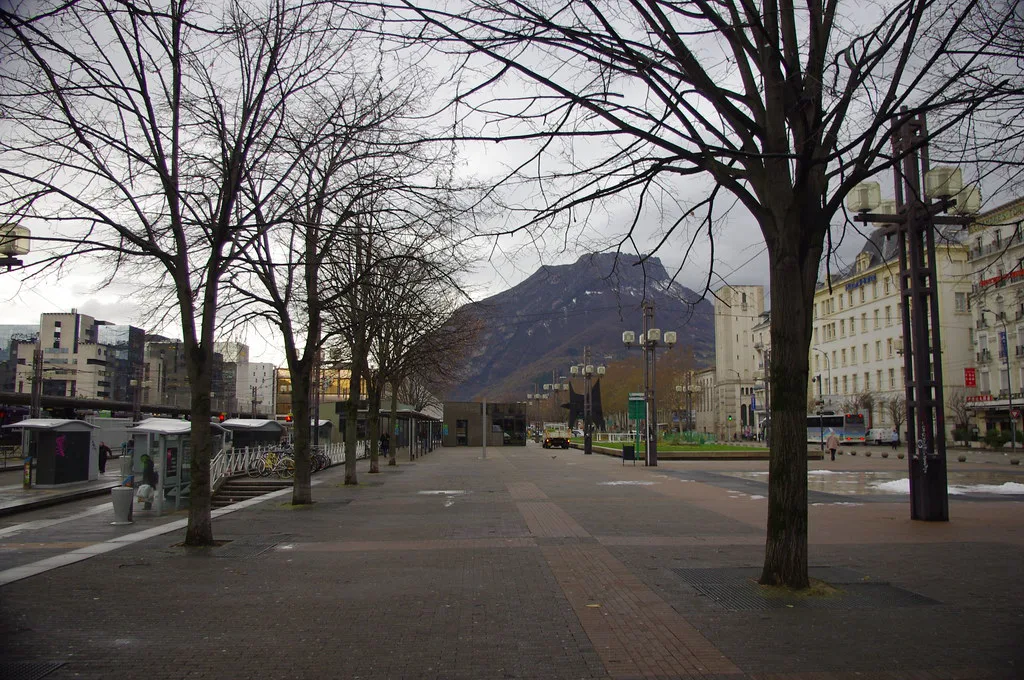
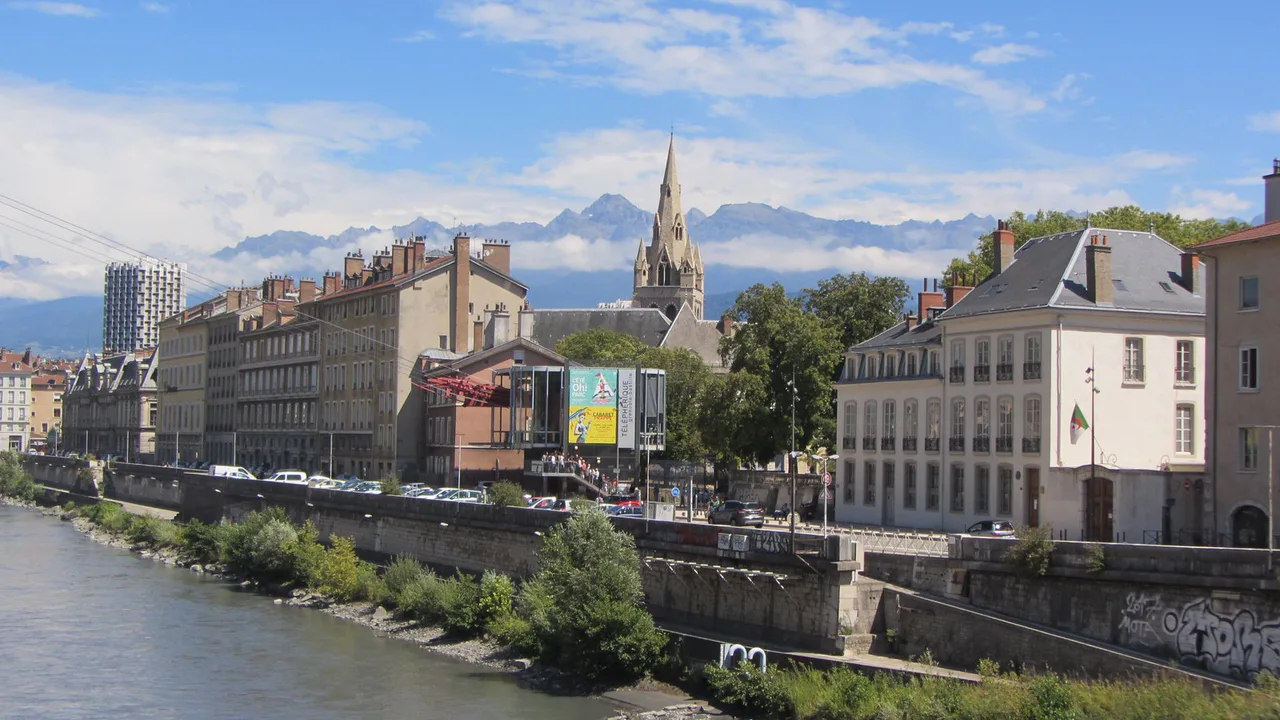
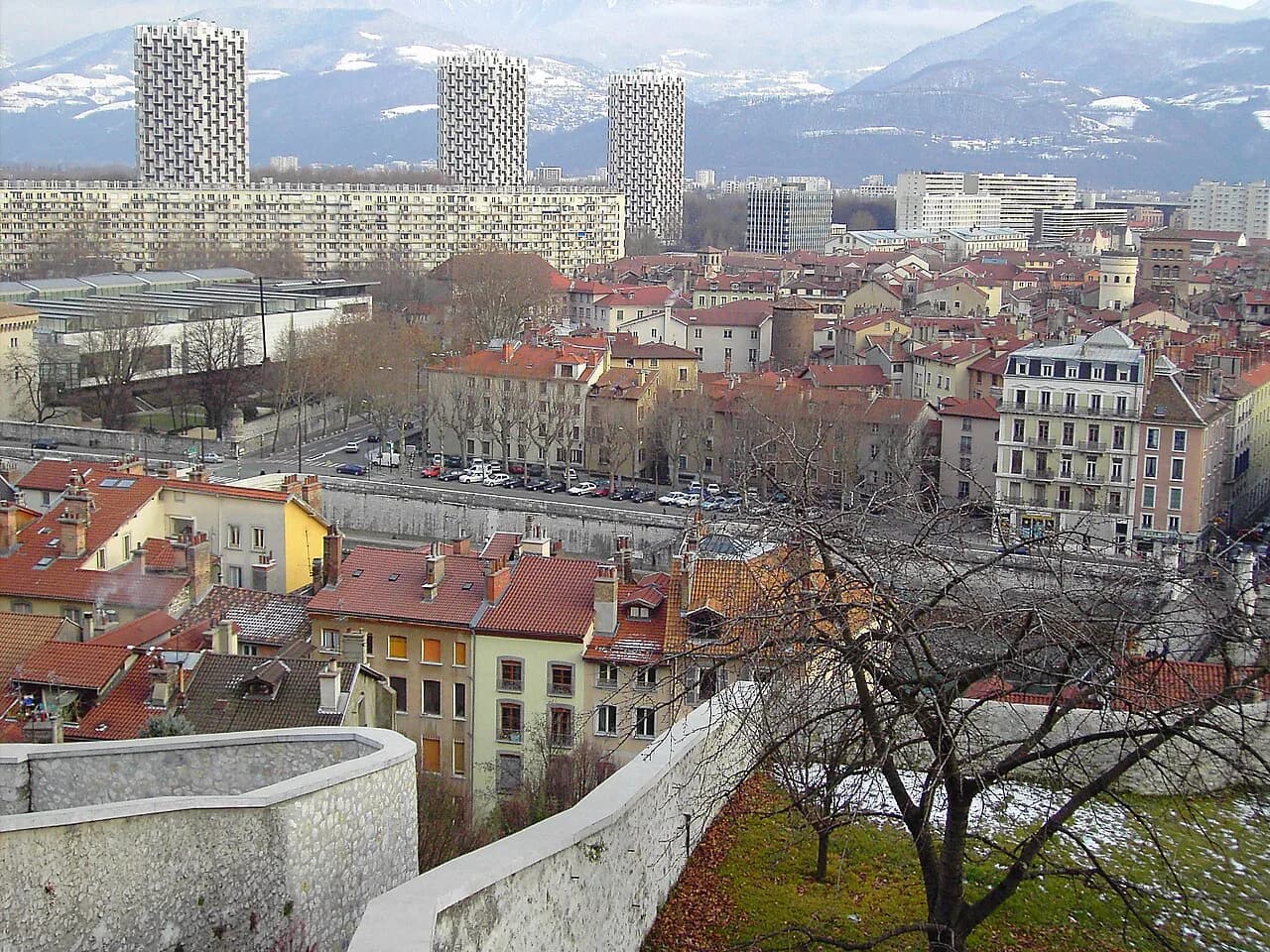
The city centre is small and walkable, gathered around Place Grenette and the Jardin de Ville, with the old town just east of them around Notre Dame Square. The Isère runs along the northern edge of the centre and the Drac to the west, so rivers frame the historic core rather than cutting through it. Bastille Hill rises directly above the old town, which is why the cable car feels like part of the street scene rather than a trip out of town.
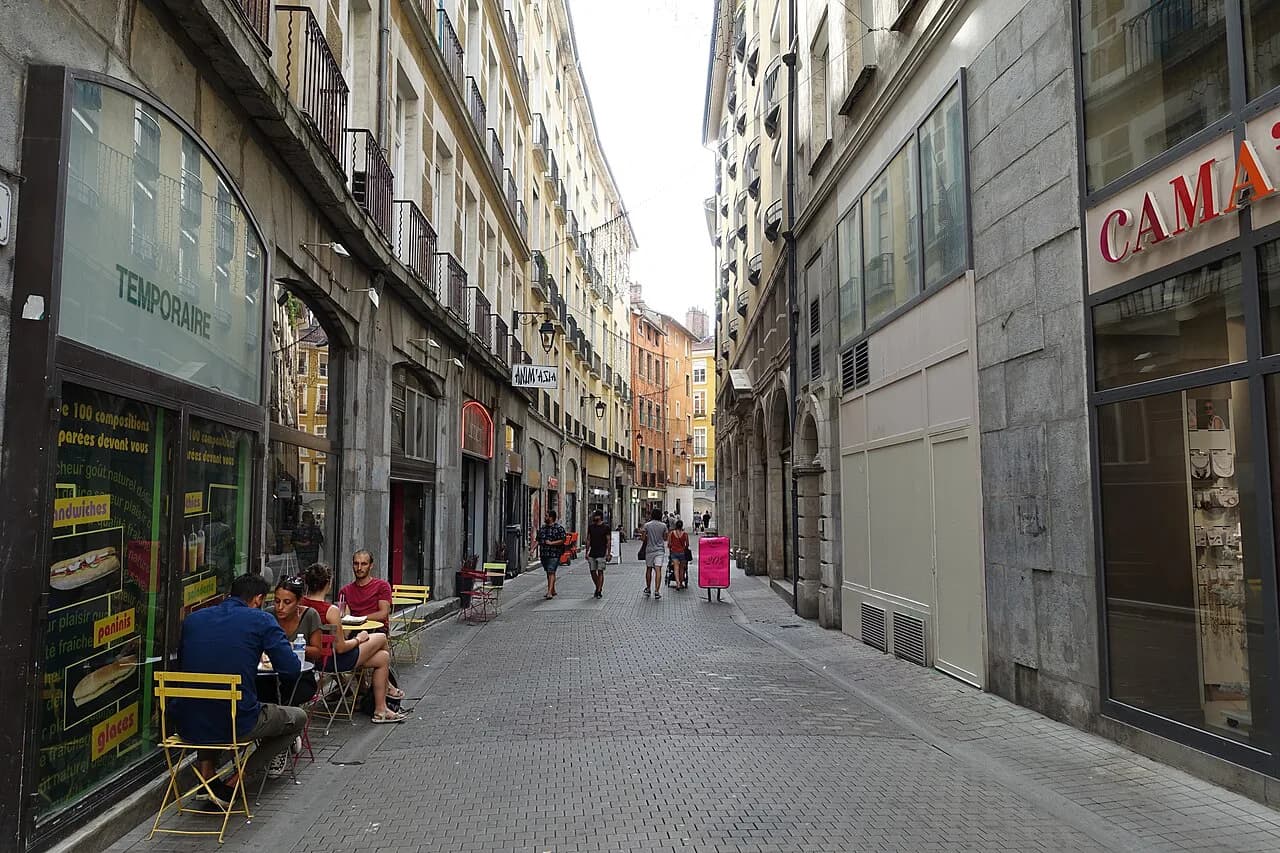
That layout rewards slow mornings. Place Grenette is the main square, lined with cafés and historic houses, and the Jardin de Ville at the foot of the hill makes a natural pause between the two. From there you can cross into the old town on foot in a few minutes and reach the cathedral complex without needing transport at all.
The headline experience: the Téléphérique de Grenoble Bastille and the fort
The Téléphérique de Grenoble Bastille is the set piece, and it is one of the world's earliest urban cable cars, opened in September 1934. Its bubble-shaped cabins run from the city centre up to the Fort de la Bastille, a 19th-century fortification built between 1823 and 1848 that now serves as a viewpoint and leisure site. The ascent is short, but the 360-degree views over the city and the surrounding mountains are the reason most visitors make the trip. For the practical details, see the Grenoble itinerary.
Build the rest of the hill into the day rather than riding straight back down. The Mandrin Caves, originally a stone quarry during construction of the fort and later linked to it by an underground passage, stay cool in summer and make an easy add-on. Walking trails and more demanding routes fan out across the hill for anyone who wants a longer stretch.
The old town on foot: Place Grenette, the Jardin de Ville and the Fountain of the Three Orders
Start the old town loop at Place Grenette, where the Lavalette Fountain, inaugurated in 1824, throws a jet reported to reach twenty-two metres. The square was a grain and animal market in the 17th century and is now the café terrace of the city. The Jardin de Ville below Bastille Hill is free year-round, covers 1.6 hectares and was once part of the 17th-century estate of the Duke of Lesdiguières.
Look for the Fountain of the Three Orders, sculpted by Henri Ding in the 19th century from limestone. Its three figures, a commoner, a clergyman and a nobleman, were carved to commemorate the events of 1788 in the Dauphiné, and the basin is held up by four bronze tritons. It is a two-minute stop, but it ties the square to the city's pre-revolutionary history better than any plaque.
Grenoble Cathedral and Notre Dame Square
Grenoble Cathedral anchors the old town from Notre Dame Square, its limestone and brick tower visible before you reach the square itself. Construction began in the early 13th century, with heavy renovation in the 19th century and again in the 1990s. Unusually, the cathedral and the adjoining St Hugues Church form a double-church complex with the ancient baptistery, which gives the site more layers than the plain exterior suggests.
Treat Notre Dame Square as a short stop on the old town walk rather than a destination in itself. The square is a working part of the city, so the pleasure is in the surroundings, the tower and the streets leading off it. Twenty minutes is enough unless you want to sit with a coffee and watch the square fill up.
Museums that earn a slot: the Musée de Grenoble and the Musée Archéologique Saint-Laurent
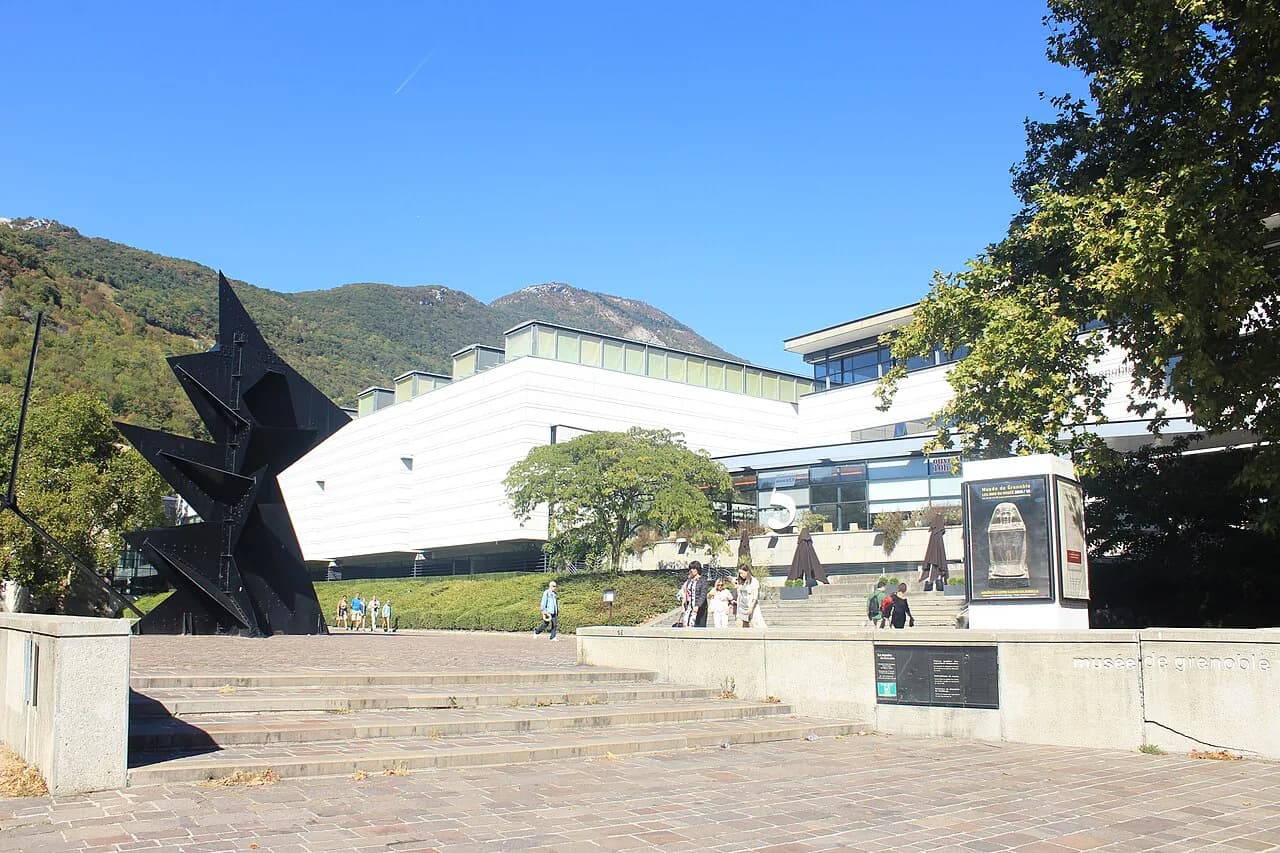
The Musée de Grenoble, founded in 1798, is the one museum to prioritise if you have a single slot to fill. Its collection runs chronologically from the 13th century to contemporary art, with Rubens, Canaletto, Renoir, Picasso, Chagall and Warhol among the names on the walls, plus Egyptian antiquities brought back by Champollion. Outside, sculptures line the François Mitterrand Esplanade and Albert Michallon Park.
The Musée Archéologique Saint-Laurent is the other name that keeps coming up, and it suits anyone who would rather see one site properly than a whole gallery. It ranks among the top attractions in the city on TripAdvisor's list of things to do in Grenoble. Check the museum's own opening times before you build a day around either one, since French museums often close on a Monday or Tuesday.
Les Halles Sainte-Claire: a morning market for a food-led lunch
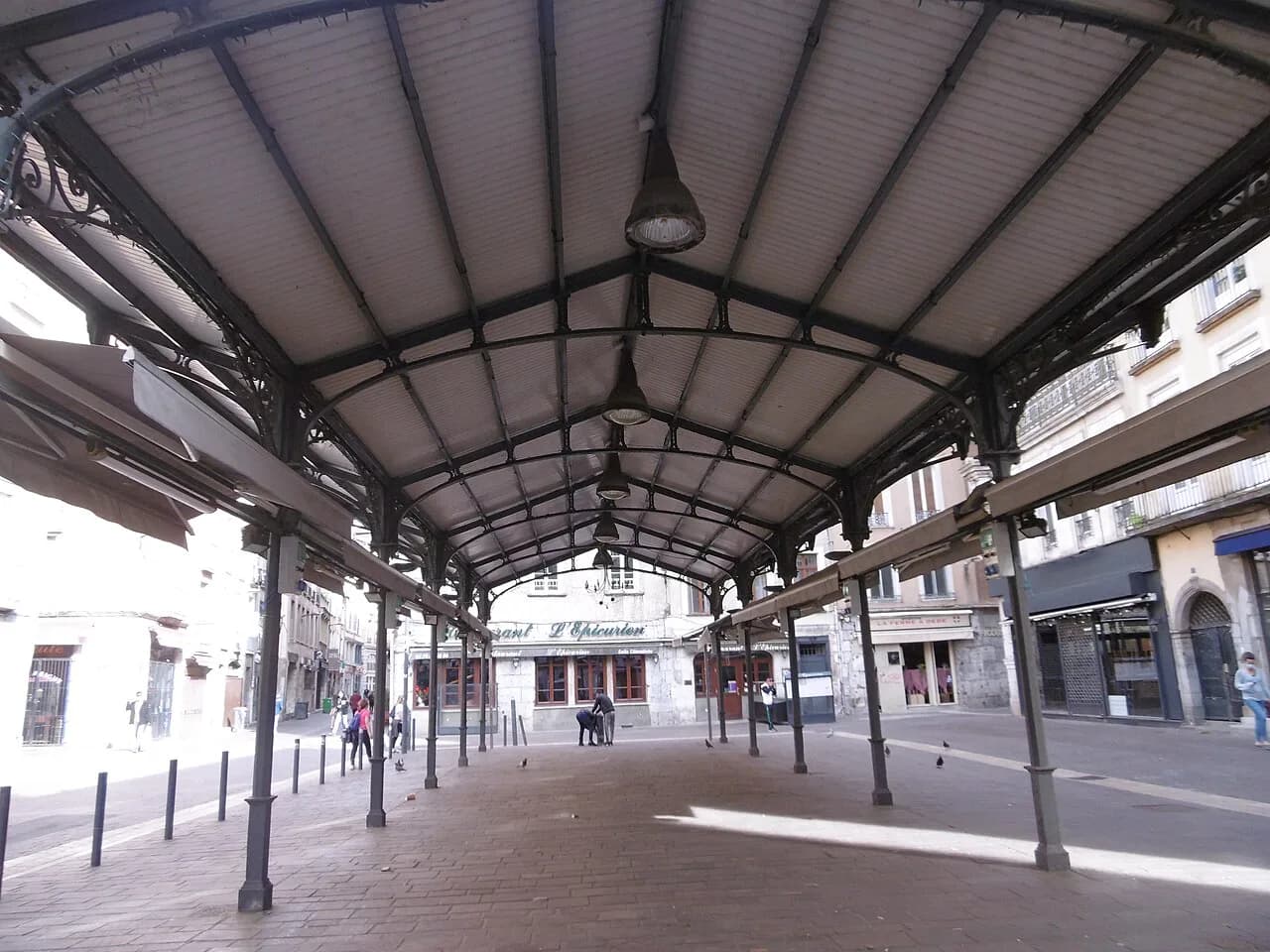
Les Halles Sainte-Claire is the anchor for a food-focused day. The hall was built in 1874 with Parisian influence and has around 20 stalls, open every morning from Tuesday to Sunday, selling bread, produce, meat, poultry, fish, cheese, wine and flowers. It sits in the historic centre, so you can shop for a picnic or eat on the spot before the afternoon sights.
Plan the market for a Tuesday-to-Sunday morning and use the rest of the day for the hill or a museum. Arriving before the lunch rush gives the best choice of stalls and a better chance of a seat. It is the fixed point around which a Grenoble weekend is easiest to organise.
Where Grenoble surprises people: street art and the Alpine identity
Grenoble's street art is the thing most visitors do not expect. The Grenoble Street Art Fest runs at the end of spring, roughly 300 walls in the city have been painted since 2015, and the tourist office organises guided walks and cultural events around the murals. Even outside the festival, the works give the newer parts of the city a reason to walk through them.
The Alpine identity runs through everything else, from the cable car to the scientific reputation that replaced glove-making and hydropower as the city's economic engine. The city hosted the 1968 Winter Olympic Games and remains the largest metropolis in the Alpine region, with around 160,000 residents and roughly 550,000 in the wider area. That mix of students, researchers and mountain culture is what makes Grenoble feel less like a museum town and more like a place with work to do.
How many days Grenoble needs: a day, a weekend, or a base for longer
One day covers the cable car, the fort and a quick old town circuit, but it leaves no room for a museum or a relaxed market lunch. Two days is the sweet spot: the hill on one morning, the old town, cathedral and market on the other, with a museum in the afternoon. Three days only makes sense if you want a slower pace or a second museum.
If you are weighing Grenoble against other French cities for the same long weekend, the trade-off is straightforward. Cities such as Aix-en-Provence and Arles offer warmer, flatter streets and a gentler rhythm, while Grenoble gives you altitude and a view that no Provençal town can replicate. Both models work; they suit different travellers.
Who will love it and who may not
Grenoble suits travellers who want outdoor access without leaving the city, and who are happy to trade a little polish for authenticity. The Bubble cabins, the fort, the market hall and the street art all sit within walking distance of one another, which makes the city efficient for a short break. Anyone who prefers flat promenades, formal gardens and a gently curated centre will find the hills and the working-city feel harder work.
Practical trade-offs: hills, walking and market mornings
The single biggest practical point is gradient. The cable car saves you the climb to the fort, but the old town itself is uneven and the streets below Bastille Hill rise steadily. Comfortable shoes matter more than a transport pass for most of the centre.
The second is timing. Les Halles Sainte-Claire is a morning market from Tuesday to Sunday, so a Monday or a late-afternoon arrival removes the food highlight from the trip. Check current opening details at the tourist office before you lock in a museum day, then leave the rest of the plan loose.
Grenoble is reached by direct trains from Paris, with the fastest services covering the trip in about three hours, and it has rail links to Lyon, Geneva, Chambéry and Annecy. Flying into Lyon or Geneva and taking a bus is often the cheaper route than using Grenoble's own airport. No car is needed for a city break.
Verdict: worth it for a mountain-edged weekend
Grenoble is worth visiting if your ideal short break mixes a compact historic centre with a genuine mountain edge. Two nights gives you the cable car, the fort, the old town, a museum and a market morning without rushing, and the views do the rest. If you want warmth, flat streets and a slower tempo, look at Provence instead and save Grenoble for a trip where the Alps are the point.
Plan Your Visit
Give Grenoble two nights, keep one morning free for Les Halles Sainte-Claire, and put the cable car and fort on the other half-day. Check museum opening days before you go and wear shoes that can handle steep streets, then let the city's mix of old quarter and Alpine backdrop do the persuading.
Explore more Grenoble guides
Frequently Asked Questions
Is Grenoble worth visiting for a weekend?
Yes, for two nights. The centre is compact, the Téléphérique de Grenoble Bastille and Fort de la Bastille give you a mountain view within minutes of the old town, and Les Halles Sainte-Claire supplies a food-led morning from Tuesday to Sunday. One day feels tight if you want a museum or a market lunch.
What is Grenoble known for?
Grenoble is known as the capital of the Alps for its mountain setting, its cable car to the Fort de la Bastille, and its history as capital of the Dauphiné. It is also a scientific and university city, hosted the 1968 Winter Olympic Games, and has a street art scene with around 300 painted walls since 2015.
How many days do you need in Grenoble?
Two days covers the main sights at an unhurried pace: the cable car and fort, the old town around Place Grenette and the Jardin de Ville, the cathedral, one museum and a market morning. Add a third day only for a second museum or a slower rhythm.
What should you do in Grenoble for a day?
Ride the cable car up to the Fort de la Bastille in the morning for the views, walk back through the Jardin de Ville and Place Grenette, then spend the afternoon on the old town, Notre Dame Square and the Fountain of the Three Orders. If your day is a Tuesday to Sunday, swap in a lunch at Les Halles Sainte-Claire.
Is Grenoble good for a short city break from the UK?
It works well if you accept the trade-off of a working Alpine city rather than a polished resort. Direct trains from Paris take about three hours and there are rail links to Lyon, Geneva, Chambéry and Annecy. Flying into Lyon or Geneva and taking a bus is often cheaper than using Grenoble's own airport.
Which French city is known as the capital of the Alps?
Grenoble carries the title, because it is the largest metropolis in the Alpine region and sits at the foot of the mountains where the Isère and Drac rivers meet.
Do you need a car to see Grenoble?
No. The centre, the cable car and the old town are within walking distance of each other, and the market hall sits in the historic centre. A car is only useful for leaving the city, which is outside the scope of a short break.
Sources
Notes for French city breaks
Optional updates to our guides.
You might also like
Continue reading
More guides you'll find useful