Is Strasbourg Worth Visiting? An Honest Weekend Verdict
Yes, Strasbourg earns a short break: a UNESCO island core, a 142-metre cathedral and half-timbered Petite France. Here is who it suits and how long to allow.
On this page
Yes, Strasbourg is worth visiting, above all for a two-night break built around one walkable island. The Grand-Île holds the cathedral, Place Gutenberg and enough lanes to fill a day, with La Petite France a short walk across the Pont du Faisan. If you want a French city that fits a weekend without a metro map, this is one of the strongest cases in the country.
The honest caveat is scale and mood. Strasbourg is a regional capital with a UNESCO-listed island core rather than a metropolis, so two days covers the highlights comfortably and a third is a bonus rather than a necessity. Travel in high season or during the Christmas period and the postcard streets around Petite France fill up, which is exactly why the quieter waterside stretches matter.
What Strasbourg does well in a weekend
Strasbourg's strength is concentration. The Grand-Île was listed as a UNESCO World Heritage Site in 1988 for a monumental heritage that blends French and Germanic influences from the late Middle Ages onward, and most of what you came to see sits inside it. That means one base, one pair of shoes and no transport planning.
The second strength is contrast within walking distance. You can stand under a 142-metre cathedral spire, cross into half-timbered canals at Petite France and climb a 17th-century dam for the classic view, all in an afternoon of strolling. Few French cities pack a Gothic landmark, a canal quarter and a park with storks into that small an area.
The short answer: who Strasbourg suits and who it doesn't
Book Strasbourg if you like cities you can cross on foot, architecture layered across centuries and an unhurried cafe-and-museum rhythm. It rewards travellers who read the streets rather than tick off big-ticket attractions. Couples and first-time France visitors get a lot from a two-night stay.
Look elsewhere if you want capital-city energy, late-night bustle or a beach. Strasbourg's draw is charm and compactness, and the tourist core can feel crowded on peak weekends. Travellers who need three full days of headline sights will run out of city before they run out of time.
The better comparison is with other mid-sized French cities rather than with Paris. If you are weighing a south-of-France short break instead, it is worth reading how Is Arles Worth Visiting? What You Get, Who It Suits and How Long to Stay frames a compact Roman city, or is Aix-en-Provence worth visiting for a slower, fountain-and-square rhythm.
The Grand-Île: the historic core on foot
Start on the island and stay there for your first day. The Grand-Île is the historic heart, and its landmarks, cathedral included, sit within a compact area you can cover on foot without planning a route. Treat the island as your default and let the streets do the work.
The island also holds Église Saint-Thomas, a church worth stepping inside for the organ Mozart once played, and Place Gutenberg with its 1840 statue of the printer holding a parchment inscribed with the words Et la lumière fut. Both are free-to-enter or quick stops that break up a walking day.
If you want the deeper street-by-street version, the Strasbourg Old Town guide covers the island's lanes and squares in detail. For a short break, though, the island's appeal is that it needs no schedule at all.
Strasbourg Cathedral and Place Gutenberg
The Cathédrale Notre-Dame de Strasbourg is the one sight to build a day around. At 142 metres it was the tallest building in the world from 1647 to 1874, and it still dominates the island skyline from almost every angle. Give it real time rather than a photo stop.
Next door, Place Gutenberg is the natural pause after the cathedral, with the Gutenberg statue and the Renaissance chamber of commerce building framing the square. It is also a sensible spot to sit down and reset before heading toward the canals. Pair the two in a single morning.
La Petite France and the Pont du Faisan
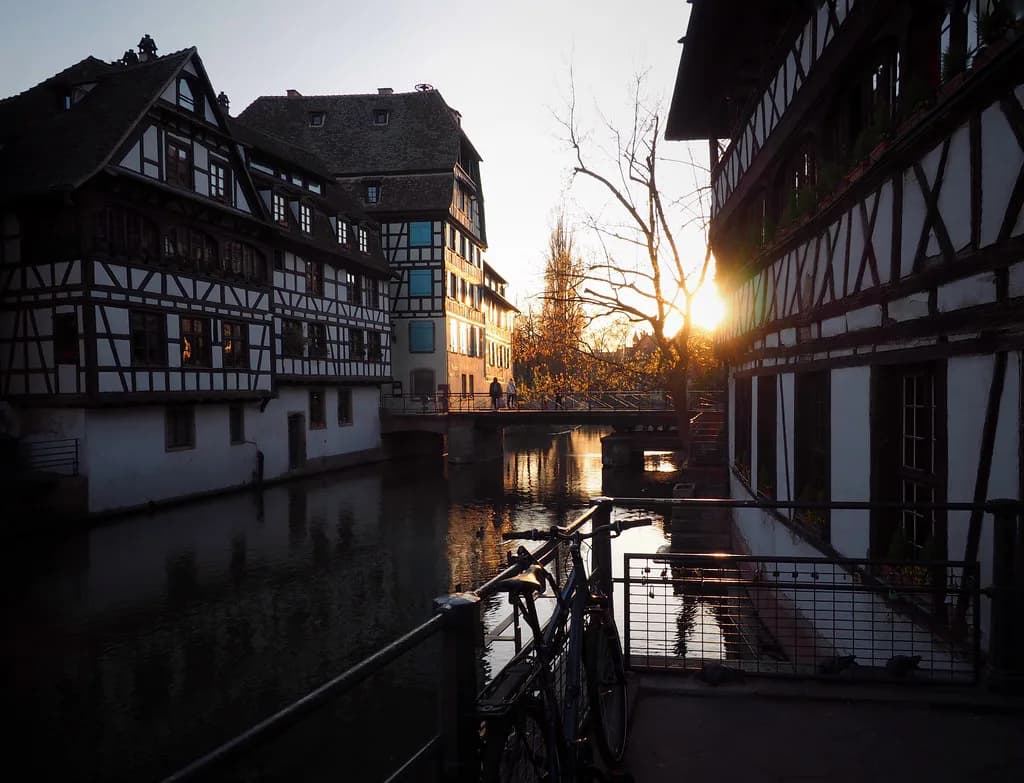
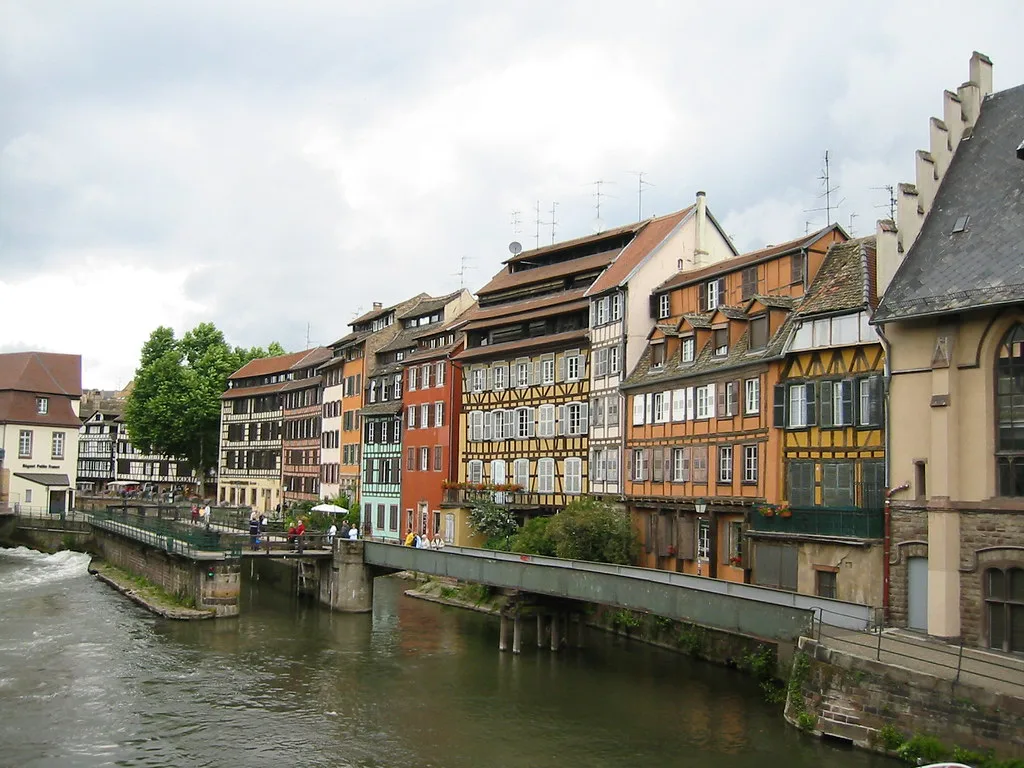
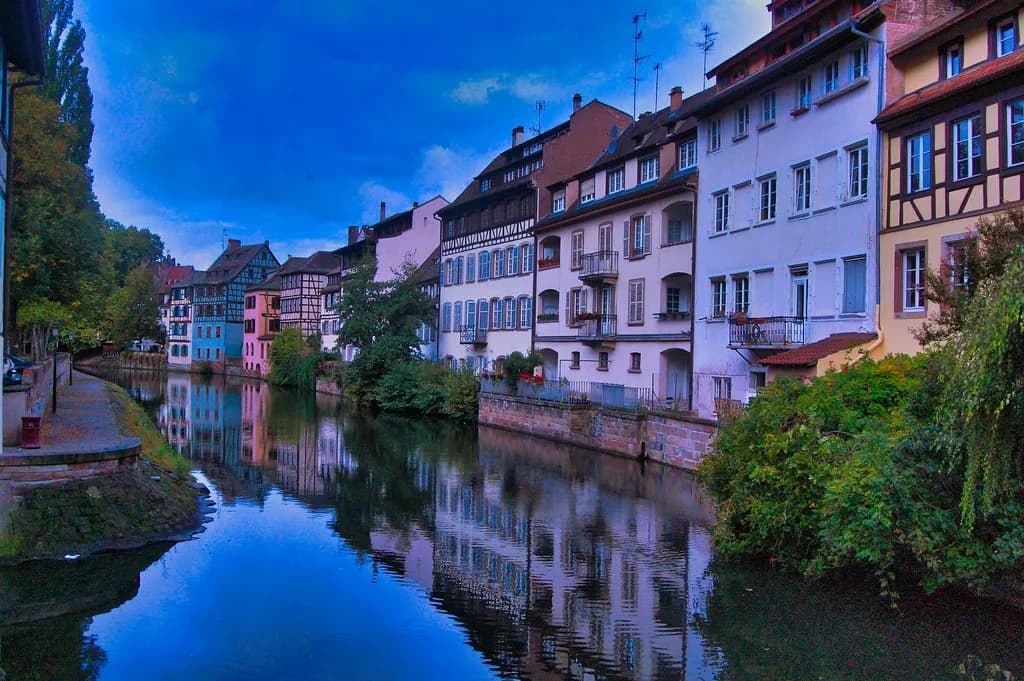
La Petite France is the postcard quarter, spread across five arms of the Ill River and lined with half-timbered houses from the 16th and 17th centuries. Cross the Pont du Faisan, a small bridge built in 1888, to reach it from the Grand-Île.
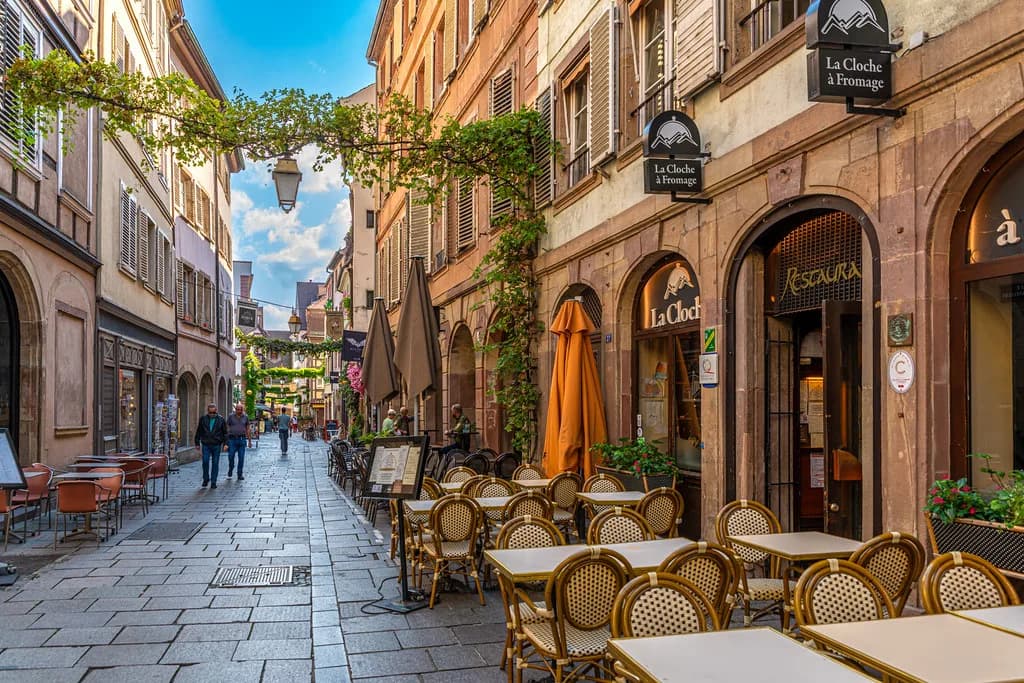
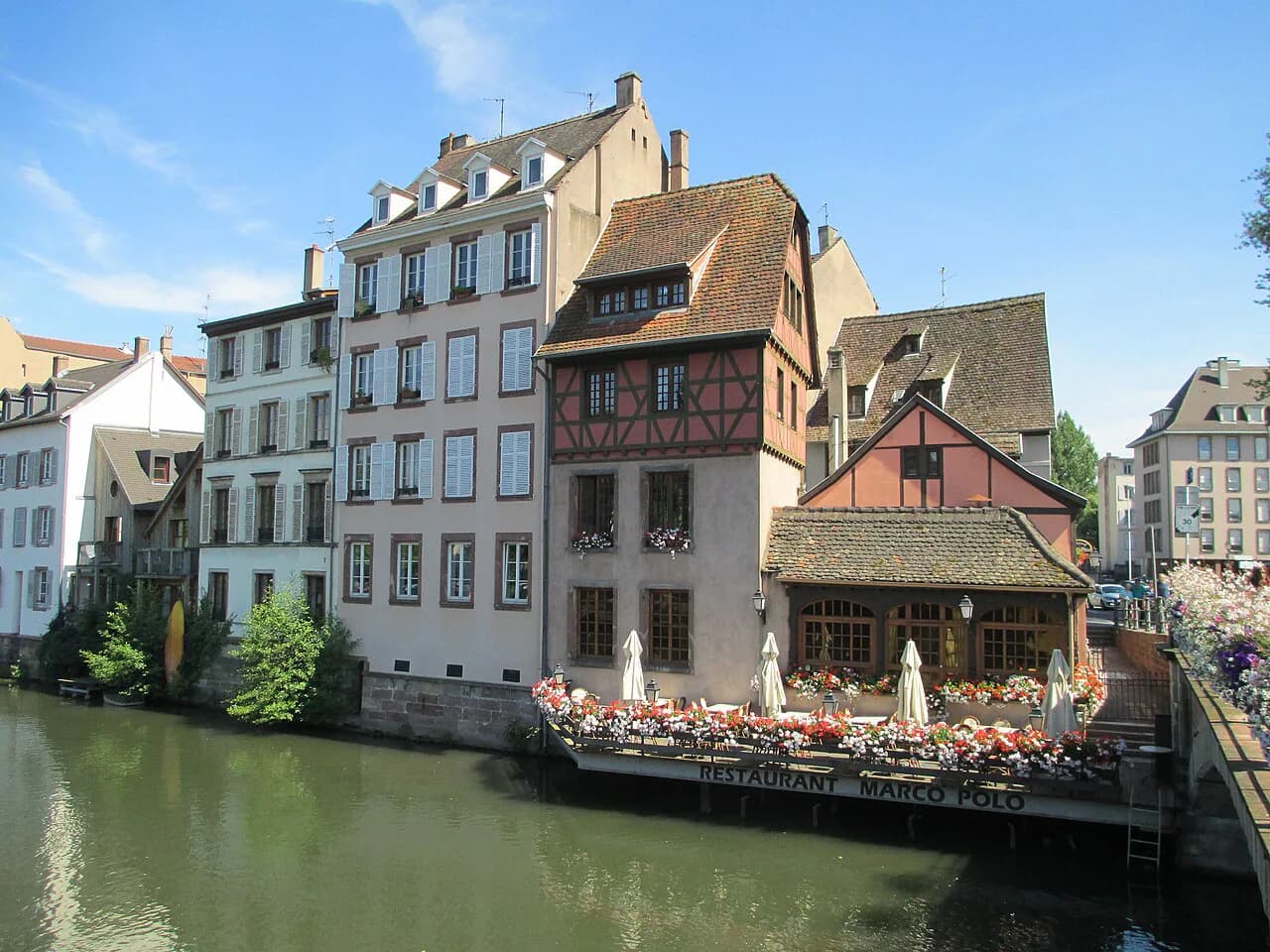
This is where you take photographs, and it is also where you should not plan to linger at a table without a booking in high season. The streets and terraces here are the most photographed in the city. Eat here if you want traditional Alsatian cooking in an old building, but treat the quarter as a scenic wander rather than your whole afternoon.
Barrage Vauban and the Ponts Couverts viewpoint
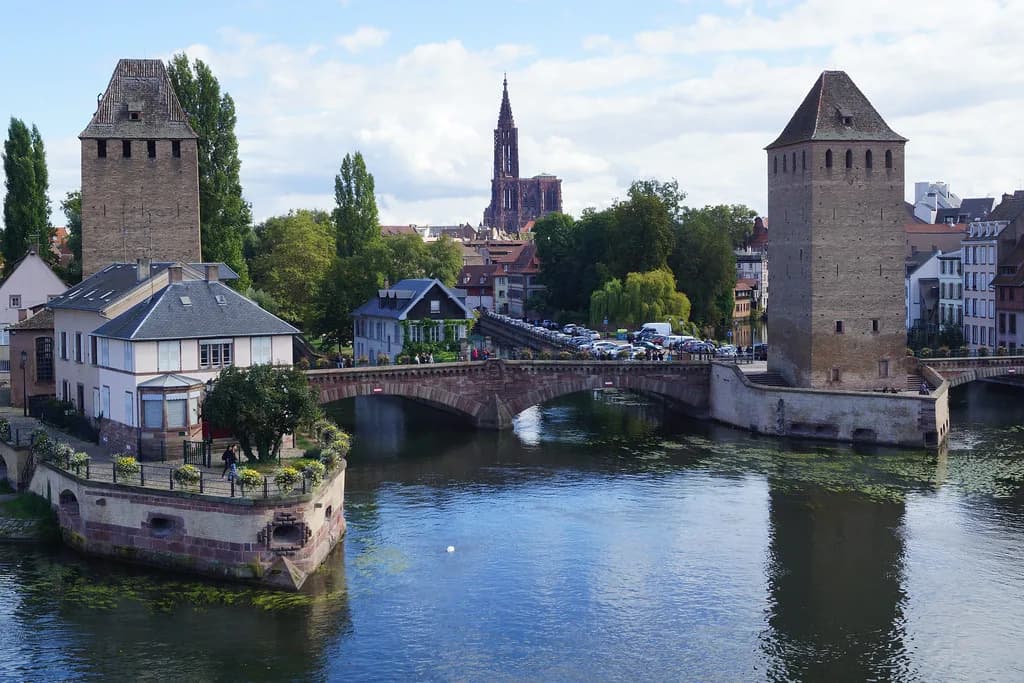
Walk west from Petite France to the Barrage Vauban, a stone bridge and dam from the 17th century whose rooftop terrace gives the best free panorama in the city. You can see the cathedral spire framed above the Ponts Couverts, four towers and three bridges dating back to the 13th century. Go up for the view and go down to the riverside for the quieter angle.
Place Kléber, Neustadt and the Krutenau
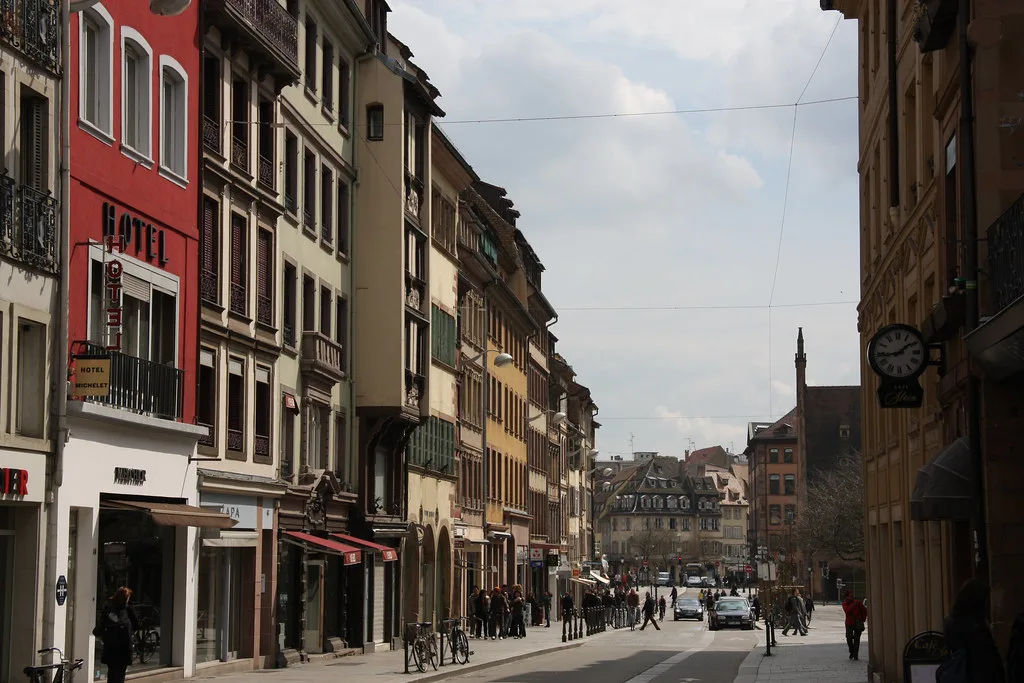
Place Kléber is the working heart of the city, lined with shops and cafes and easily combined with a wander into Neustadt, a UNESCO-listed quarter of Italian Neo-Renaissance, Neo-Gothic and Art Nouveau buildings. The Krutenau, south-east of the island, is the lively district for independent shops, restaurants and bars. These three give you a modern-city contrast to the medieval core.
If your trip is partly about browsing, plan an hour or two for the shopping streets and covered passages around Place Kléber and the Krutenau rather than trying to fit retail into the museum days.
Quai des Bateliers and the Orangerie
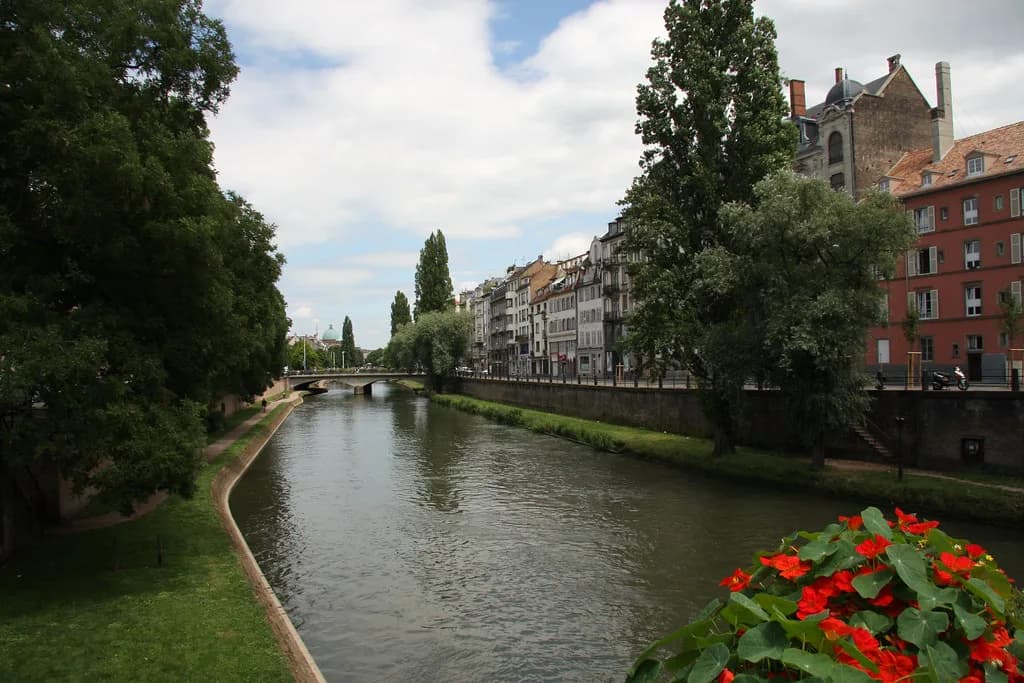
Two quieter stretches pay off once the island crowds build. The Quai des Bateliers by the Krutenau is the place for a slow sit by the water, with little shops and cafes and space to walk. The Orangerie, the city's oldest park, is known for its storks, the symbol of Alsace, and the European Parliament building is a short walk on from it.
Museums worth your hours: Palais Rohan, Musée Alsacien, Musée Tomi Ungerer
Strasbourg's museums reward the time you give them. The Palais Rohan sits beside the cathedral and houses three museums, including a small museum of decorative arts. Across from the cathedral, the Musée de l'Œuvre Notre-Dame holds many of the cathedral's originals, moved there to protect them from pollution.
For a small city, the choice is unusually good: the Musée Alsacien gives a charming picture of life in Alsace, the Musée Tomi Ungerer covers the Alsatian artist and writer, and the Palais Rohan cluster alone can absorb half a day. On a short break, pick two rather than trying to do them all.
Check current opening days and ticket prices on each museum's own site before you build a day around it, because French museums routinely close on one weekday. The cathedral-adjacent group is the most time-efficient choice for a two-night stay.
How many days Strasbourg needs
Two nights is the right answer for most travellers. That gives you a full day on the Grand-Île with the cathedral and Place Gutenberg, and a second day for Petite France, the Barrage Vauban and one museum. It is enough to see the city properly without padding.
Add a third day only if you plan to spend serious time in the museums or want a slower afternoon on the Quai des Bateliers. A single day is achievable if you accept a highlights-only visit, but it leaves no room for a museum. The Strasbourg Itinerary lays out a one-day and two-day version if you want the walking order fixed for you.
When to go: seasons and months
Strasbourg is a year-round city rather than a single-season one, and May, June, September, October and December are the months a long-time local resident picks out. That is an opinion, not data, but it tracks with the city's two obvious peaks: late spring bloom and the winter market period. Spring and early autumn are the most comfortable for walking the island.
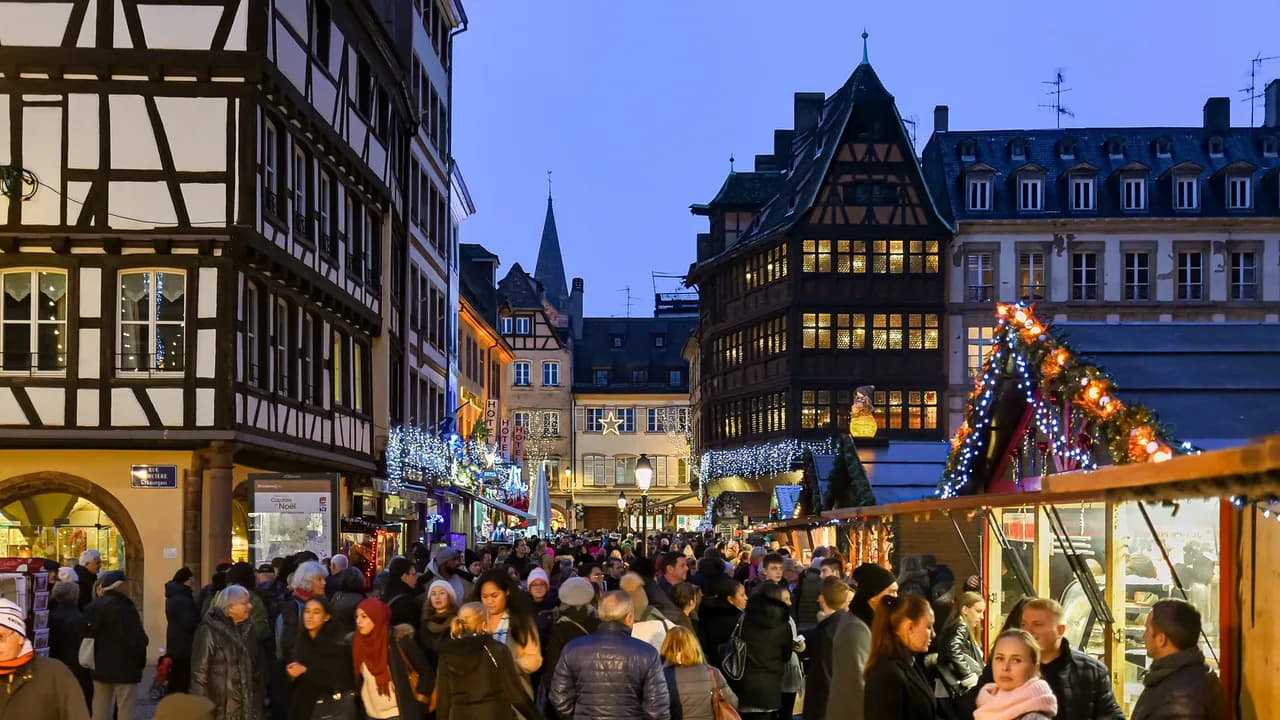
December brings the city's famous Christmas markets and corresponding crowds, so book well ahead if that is your plan. If what you want is the cathedral, the canals and the terraces without fighting for space, choose a shoulder-season month instead.
Strasbourg or Colmar: which to pick
Pick Strasbourg as your base and Colmar as the day trip, not the reverse. Colmar is about an hour away by train and famously photogenic, but it is smaller and, in season, more touristed. Strasbourg gives you a bigger city, more museums and an easier arrival by train.
The trade-off is charm density versus range. Colmar is the more concentrated fairy-tale experience, while Strasbourg is the better short break with more to do when it rains. If your trip is only two nights, stay put in Strasbourg and enjoy it properly.
What Strasbourg costs and where the money goes
Budget for three main lines: a cathedral visit, one or two museum tickets and meals in the tourist core. Museum admission is not uniform across the city, so check each institution's own site for current prices before you commit your day. Restaurants in Petite France charge for the location as much as the food.
You can keep costs down by building the day around free sights: the Grand-Île streets, Place Gutenberg, the Barrage Vauban terrace and the Orangerie park cost nothing to wander. Spend instead on one good museum and one proper Alsatian meal. For where to eat, the best restaurants in Strasbourg guide covers the city's tables by quarter.
Getting around and orientation
You will not need public transport for a short break. The Grand-Île, Petite France and the Barrage Vauban form one continuous walk, and Neustadt and the Krutenau are adjacent. Wear comfortable shoes and treat the tram as a backup for luggage days rather than a daily tool.
The one planning decision that matters is where you sleep relative to the island. A base inside or just beside the Grand-Île puts everything within walking range, which is the whole point of a Strasbourg weekend.
Verdict: book it or skip it
Book Strasbourg for a two-night break if you want a walkable French city with a genuine Gothic landmark, a canal quarter and museums worth your morning. It delivers a lot for a short trip and asks very little of you in logistics. It is the easy, rewarding choice.
Skip it if you need big-city scale, nightlife as the main event or a beach within reach. And if your dates are fixed to December, accept that the markets bring the crowds along with the atmosphere. Otherwise, the answer is straightforward: Strasbourg is worth visiting.
Explore more Strasbourg guides
Frequently Asked Questions
How many days do you need for Strasbourg?
Two nights is enough for most visitors: one day for the Grand-Île, the cathedral and Place Gutenberg, and a second for Petite France, the Barrage Vauban and one museum. Add a third only if you want several museums or a slow afternoon on the Quai des Bateliers. A single day works as a highlights-only visit with no museum time.
Is Strasbourg worth visiting for a weekend?
Yes. The historic core is an island you can cross on foot, with the cathedral, Place Gutenberg and Petite France within a short walk of each other. A weekend gives you the headline sights, one or two museums and proper time at the waterside. You will not need public transport to see the main quarter.
Which is nicer, Strasbourg or Colmar?
They do different jobs. Colmar is the more concentrated fairy-tale town and is about an hour from Strasbourg by train. Strasbourg is the larger city with more museums, a bigger historic core and better range when it rains, which makes it the stronger base for a short break. Stay in Strasbourg and visit Colmar as a day trip.
What is the best month to visit Strasbourg?
May, June, September, October and December are the months a long-time local resident names as the nicest, which is an opinion rather than a data-backed ranking. Spring and early autumn are the most comfortable for walking the island. December brings the Christmas markets and the heaviest crowds, so book well ahead if that is your reason for going.
What is Strasbourg famous for?
Its cathedral, a 142-metre Gothic landmark that was the world's tallest building from 1647 to 1874, and the half-timbered canals of Petite France. The Grand-Île was listed as a UNESCO World Heritage Site in 1988 for a heritage blending French and Germanic influences. The city is also the seat of the European Parliament and, in December, a major Christmas market destination.
Is Strasbourg worth visiting in December?
December is one of the months a local resident recommends, and the Christmas markets are the reason many people come. The trade-off is crowds in the streets around Petite France and the cathedral, so book early and plan museum time as a counterweight. If you want the architecture without the crush, a spring or autumn visit is calmer.
Sources
Notes for French city breaks
Optional updates to our guides.
You might also like
Continue reading
More guides you'll find useful