Montpellier Old Town Guide: Écusson Walk for Short Breaks
Plan a wander through Montpellier's old town, the Écusson: marble-paved streets, hidden squares, hôtels particuliers and the elevated Promenade du Peyrou.
On this page
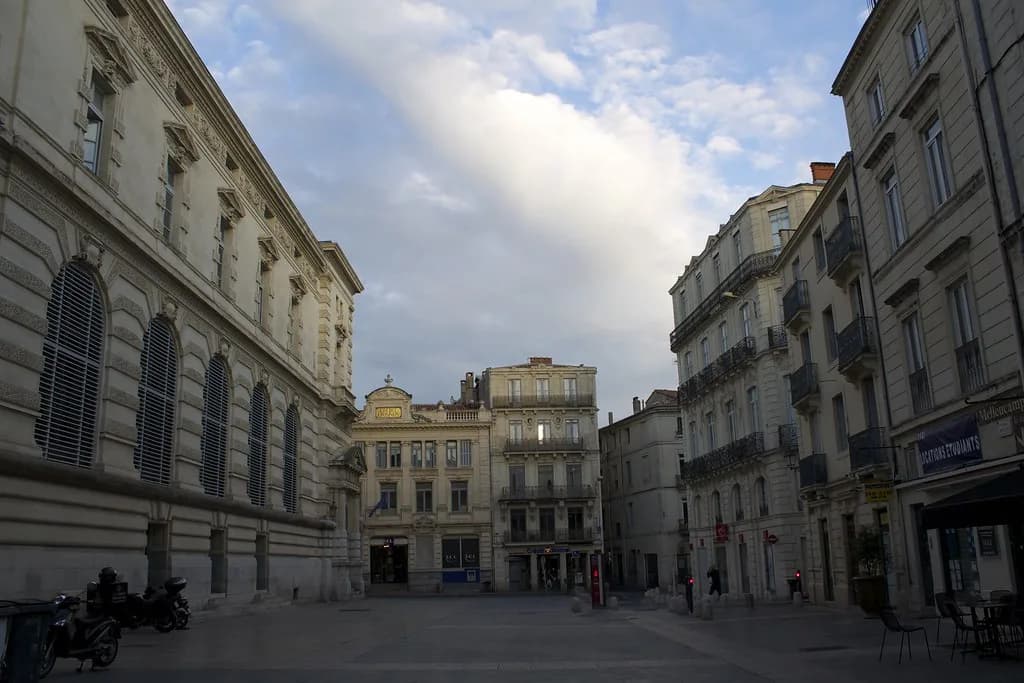
Montpellier's old town is the Écusson, the medieval core of narrow streets and small squares that sits behind Place de la Comédie. It rewards wandering rather than ticking off sights: duck down a side street and you find marble paving, a neo-Gothic church front or a courtyard behind an 18th-century façade. This guide gives a walking order through it, names what to pause at, and explains how much time a short break needs.
What the Écusson is and where it sits
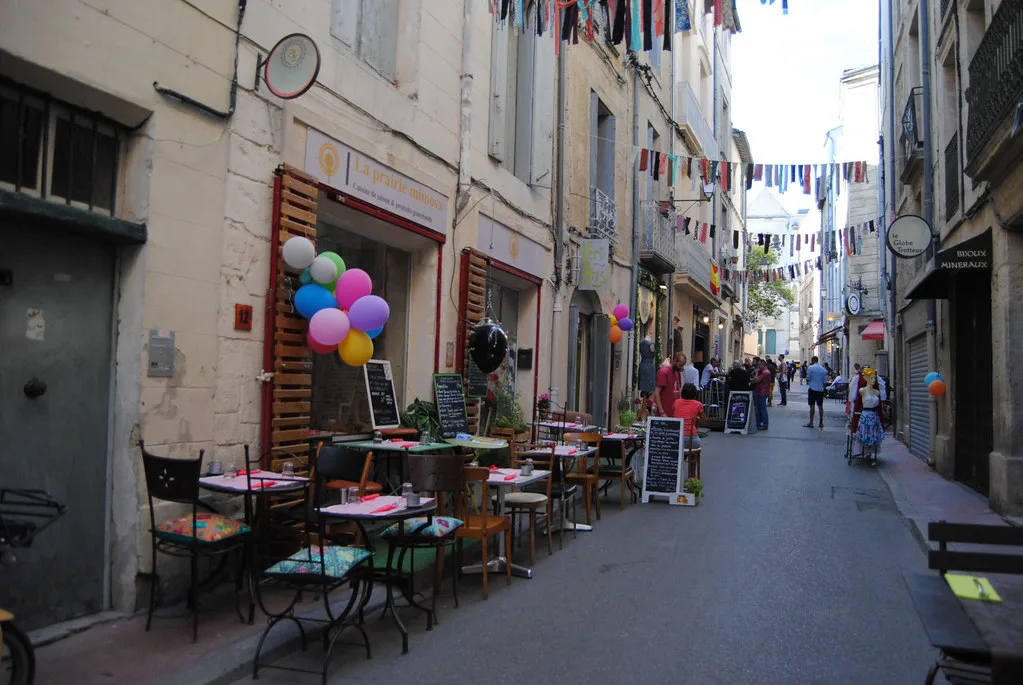
The historic centre is known as the Écusson, a compact grid of old alleyways and narrow streets packed with elegant town houses, shops and restaurants. Montpellier was founded in the Middle Ages rather than in Roman times, so the old town reads as medieval lanes overlaid with wealthy 17th- and 18th-century building rather than as a Roman grid. That matters for how you walk it: there is no straight cardo to follow, just a knot of streets that opens onto small squares.
It is also a working university city, not a museum quarter. Roughly 70,000 students live here and about half the residents are under 35, which keeps the centre busy into the evening and gives the squares around Place Jean-Jaurès a different feel from the formal hôtels particuliers further south. If you want quiet lanes for photography, go early; if you want the squares at their liveliest, go late.
How the old town is laid out
Orient yourself at Place de la Comédie, the open square on the edge of the Écusson that most visitors reach first. From there the old town spreads north and west in a tangle of lanes, with the broad Place Jean-Jaurès to the north and the elevated Promenade du Peyrou to the west. Treat the square as your anchor and loop back to it rather than trying to cross the Écusson in a straight line.
Two landmarks help you fix direction while you walk. The Musée du Vieux Montpellier, behind an 18th-century façade near Place de la Canourgue, sits in the western half among the grandest town houses, while Place Jean-Jaurès marks the northern edge of the old centre. If you remember only those two, you can place yourself without a map at every junction.
A walking route through the Écusson
Start with Rue de l'Ancien Courrier, a centuries-old street paved with white marble that cuts through the centre. It is the clearest introduction to the Écusson's texture: polished stone underfoot, tall shuttered buildings on either side and shopfronts at street level. Take the side streets off it rather than hurrying along the main line.
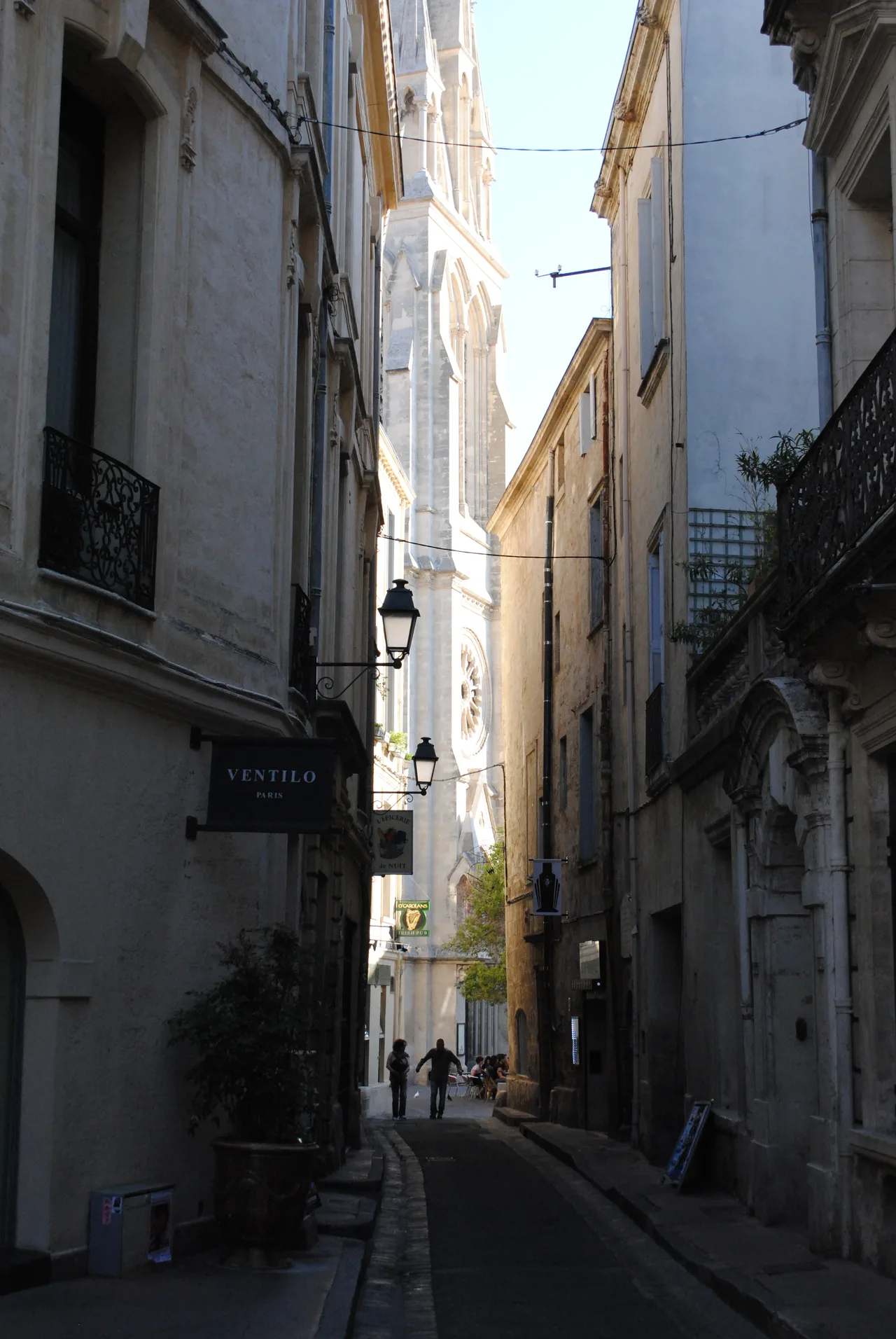
One of those side streets brings you to Place Saint-Roch, a small square with busy terraces set around a neo-Gothic church that served as a stop on the pilgrimage route to Santiago de Compostela. The surrounding lanes hold Mediterranean tapas places and wine bars, so this is a natural pause rather than a photo stop. Nearby, Place Saint-Ravy is a tiny square with a few terraces and an old fountain, easy to miss and worth the detour.
Place Jean-Jaurès and the crypt beneath it
Place Jean-Jaurès is the large square north of the old heart and the centre of student life. For years people gathered on it without knowing that a forgotten crypt, Notre-Dame-des-Tables, lay underneath; today that underground space houses the Musée de l'Histoire. It is the single easiest sight to walk past, so build it into your route rather than hoping to stumble on it.
Check the museum's opening days and ticket price before you set out, since these change and you do not want to arrive on a closed day. The university quarter around the square also holds the city's medical faculty, founded in the 13th century, and France's oldest botanical garden is associated with it. Both are useful anchors when you are planning how to split a day.
Hôtels particuliers and Place de la Canourgue
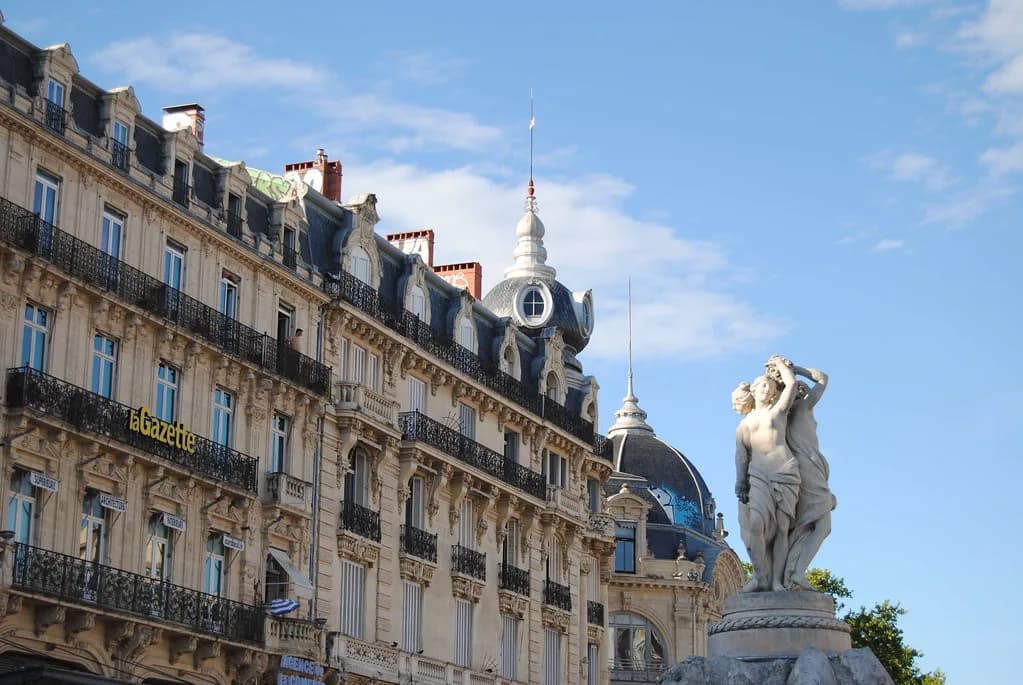
Montpellier's real wealth shows in its hôtels particuliers, the town houses built by rich merchants in the 17th and 18th centuries. Their carved gables are impressive from the street, but the courtyards behind them, with spiral staircases and ornate railings, are the best part. Most of those courtyards can only be seen on guided tours run by the Office du Tourisme.
One exception is open to the public: Hôtel de Varennes, which houses two museums. The 18th-century façade of the Musée du Vieux Montpellier hides a much older interior with Gothic arches, so the building itself is part of the visit. Around Place de la Canourgue, a 17th-century square with a marble fountain and a view of the cathedral, you will find more of the same architecture grouped together.
The mikveh and other unexpected finds
A few streets from Place de la Canourgue, a homeowner looking for the source of a leak uncovered a 13th-century mikveh, a stone bath used in Jewish ritual cleansing and one of the oldest in Europe. The find is a reminder that the Écusson's interesting corners often sit behind an ordinary door. Walk slowly and look at entrances and courtyards rather than only at the skyline.
Promenade du Peyrou: the elevated pause
West of the old town, the Promenade du Peyrou is an elevated park laid out in the time of Louis XIV that catches a breeze on hot days. It gives a view over the hinterland and towards the coast, which makes it a good place to end a walk rather than start one. The park has been there since the Sun King's era and various monuments stand within it.
Montpellier is often described as having around 300 days of sunshine a year, so shade and water matter more than you might expect on a summer afternoon. Plan Peyrou as a deliberate stop with a drink or a sit-down, not another monument to tick off. Daylight lasts well into the evening in summer, so you can walk the old town earlier and climb to the promenade later.
How long the old town needs
A half-day covers the Écusson comfortably on foot: Place de la Comédie, Rue de l'Ancien Courrier, Place Saint-Roch, Place Saint-Ravy and a look at Hôtel de Varennes. Add Place Jean-Jaurès and the Musée de l'Histoire and you have used most of a day once you allow for a proper lunch and a pause on the terraces. That pace suits a weekend better than a rushed circuit.
If you only have one full day, spend the morning in the lanes and the afternoon on Peyrou, and keep the museums for the part of the day when you want to be indoors. If you have two days, split the Écusson down the middle and give the second half to the western hôtels particuliers and the promenade. Either way, the old town is compact enough that you will pass the same square twice and notice something new the second time.
Guided tours and practical timing
Because so many courtyards are private, the Office du Tourisme guided tours are the practical way to see inside the hôtels particuliers. Book in advance for weekends and ask which houses are on that day's route, since the itinerary varies. If you prefer to walk independently, Hôtel de Varennes and the public squares still give you the architecture without a guide.
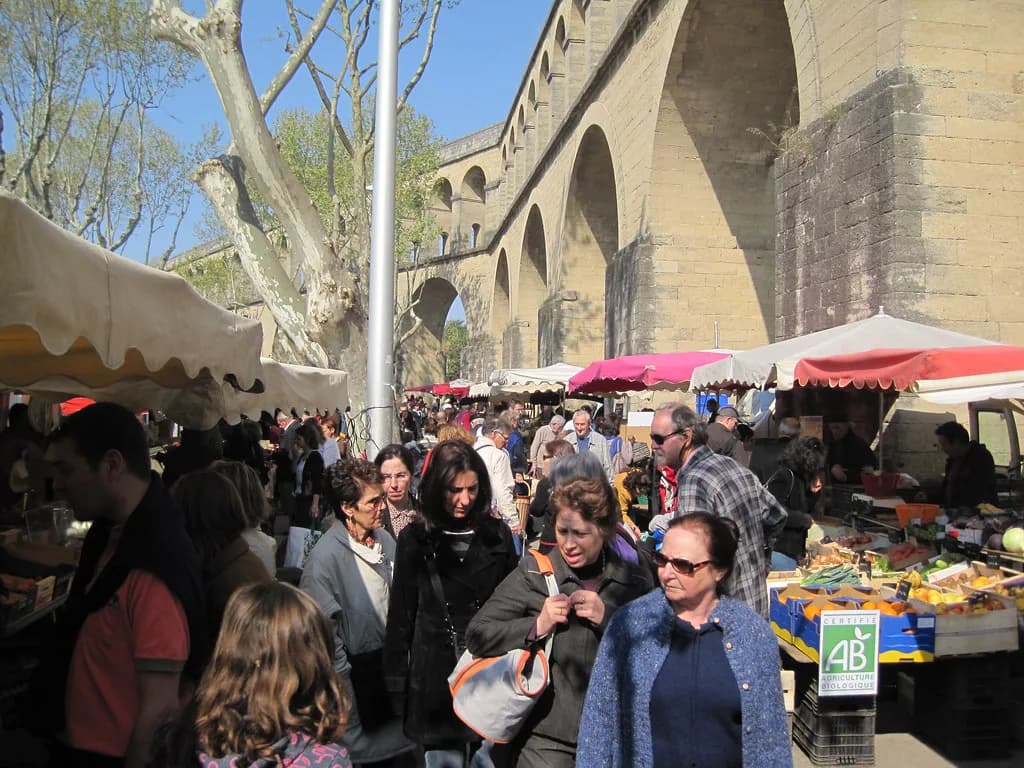
Shop and market rhythms shape the walk more than you might expect: many independent shops in French city centres keep Sunday hours that differ from weekdays, and some close at lunchtime. Check the days you plan to be in the Écusson against the shops you want to visit, since trading hours vary street by street, and keep the market morning free if browsing is part of your plan.
Where the old town fits in a wider weekend
The Écusson is the reason to come to Montpellier for a short break, and one day here plus a second day elsewhere in the city makes a sensible weekend. If you are weighing up whether the city justifies the trip, the answer usually turns on whether medieval lanes, town-house architecture and a lively student centre appeal more than beaches or big museums. If you like the sound of that comparison, our guide to the Aix-en-Provence old town covers the same kind of walk in a smaller Provençal centre.
Plan Your Visit
Build your old-town day around Place de la Comédie, Rue de l'Ancien Courrier and Place Saint-Roch in the morning, then Place Jean-Jaurès and the crypt museum, and finish on the Promenade du Peyrou. That order keeps you walking downhill through the interesting part and saves the breezy, elevated finish for when you need it. Confirm museum opening days and any tour times before you travel, as these can vary by season.
Explore more Montpellier guides
Frequently Asked Questions
Where is Montpellier's old town?
The old town is the Écusson, the medieval core of narrow streets and squares that begins just behind Place de la Comédie. Place Jean-Jaurès marks its northern edge and the elevated Promenade du Peyrou lies to the west, so you can use those squares to orient yourself.
How many days do you need in Montpellier's old town?
A half-day covers the main lanes, squares and Hôtel de Varennes on foot. Add the Musée de l'Histoire under Place Jean-Jaurès and a pause on the Promenade du Peyrou and you have a full, unhurried day.
What are the must-see things in the Écusson?
Start with Rue de l'Ancien Courrier and its marble paving, then Place Saint-Roch and the tiny Place Saint-Ravy. See Hôtel de Varennes, which houses two museums, walk to Place de la Canourgue, and finish at the Promenade du Peyrou.
Can you visit the courtyards of the hôtels particuliers?
Most courtyards are private and can only be seen on guided tours run by the Office du Tourisme. Hôtel de Varennes is the exception among the town houses, since it is open to the public and holds two museums.
Is Montpellier's old town worth visiting for a short break?
Yes, if medieval lanes, 17th- and 18th-century town houses and a lively student centre are what you want from a city break. It is compact, walkable and easy to combine with the Promenade du Peyrou in a single day.
When is the best time to walk the old town?
Montpellier is often described as having around 300 days of sunshine a year, so mornings and late afternoons are more comfortable in summer. The lanes are shadier than the squares, and the elevated Promenade du Peyrou catches a breeze.
What should I check before visiting the museums?
Check opening days and ticket prices directly with the Musée de l'Histoire and the Musée du Vieux Montpellier before you travel. These details change by season and are not something to assume from a guide.
Does Montpellier have Roman remains in its old town?
No. Montpellier was founded in the Middle Ages rather than in Roman times, so the old town is medieval in plan with 17th- and 18th-century buildings layered on top.
Sources
Notes for French city breaks
Optional updates to our guides.
You might also like
Continue reading
More guides you'll find useful