Is Montpellier Worth Visiting? An Honest Weekend Verdict
Yes, Montpellier earns a weekend: a big pedestrian old town, France's oldest botanical garden and street art. Here's who will love it and who won't.
On this page
Yes, Montpellier earns a weekend, provided you want a walkable southern French city rather than a checklist of grand monuments. The historic centre is largely pedestrianised and compact, with Place de la Comédie at one end, the Arc de Triomphe and Peyrou at the other, and a maze of medieval lanes between. It suits travellers who like wandering, street art, a good fine-art museum and an easy-going student-city atmosphere.
The city's strength is density rather than scale. Students make up about a quarter of the population, and the mix of old and new shows in everything from a 1593 botanical garden to L'Arbre Blanc, a 17-storey residential tower completed in 2019 with cantilevered balconies shaped like branches. Expect charming streets and lively squares more than awe-inspiring cathedrals.
The short answer: yes, for the right kind of weekend
Book Montpellier if your ideal short break means strolling a big car-free centre, stopping for coffee on a handsome square, and turning up interesting murals on side streets. The city spreads its appeal across atmosphere, food and street-level detail rather than a single must-see sight. If you need a headline monument to justify the trip, you may find the centre gentler than expected.
The practical case is strong: the old town is compact enough to cover on foot over two days without rushing, and the surrounding region adds options if you stay longer. High-speed rail links make it easy to reach from major French cities, Brussels and London, and the airport sits about ten minutes from the city, which suits a Friday-evening arrival.
What Montpellier does well: a compact, largely pedestrianised old town
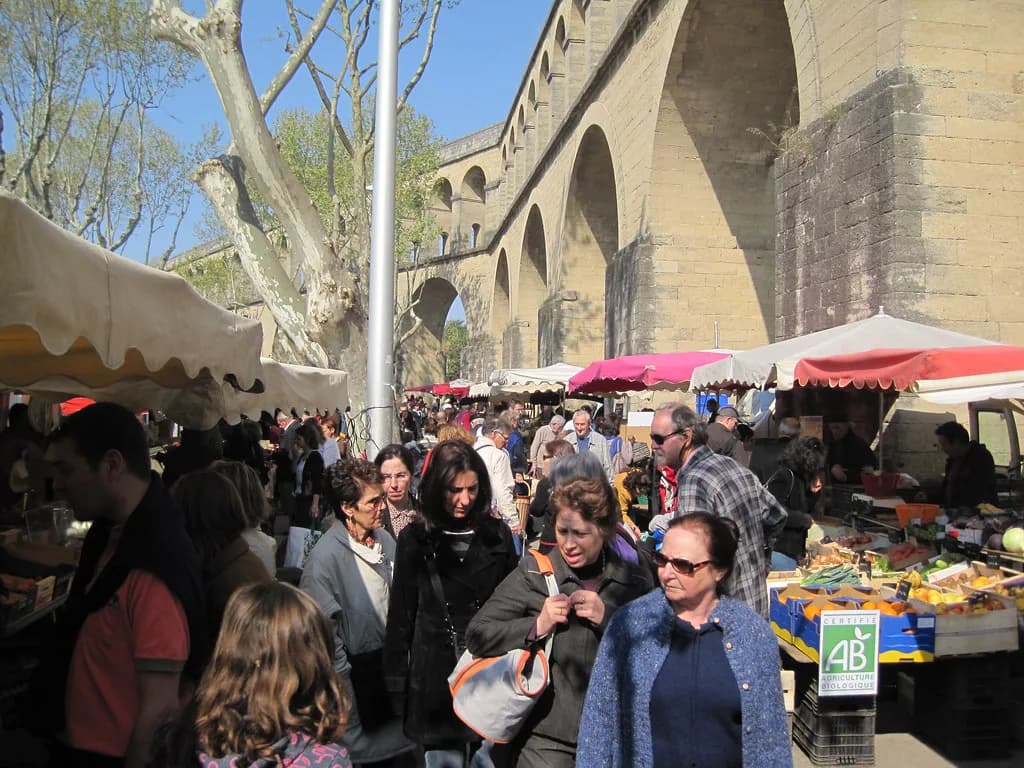
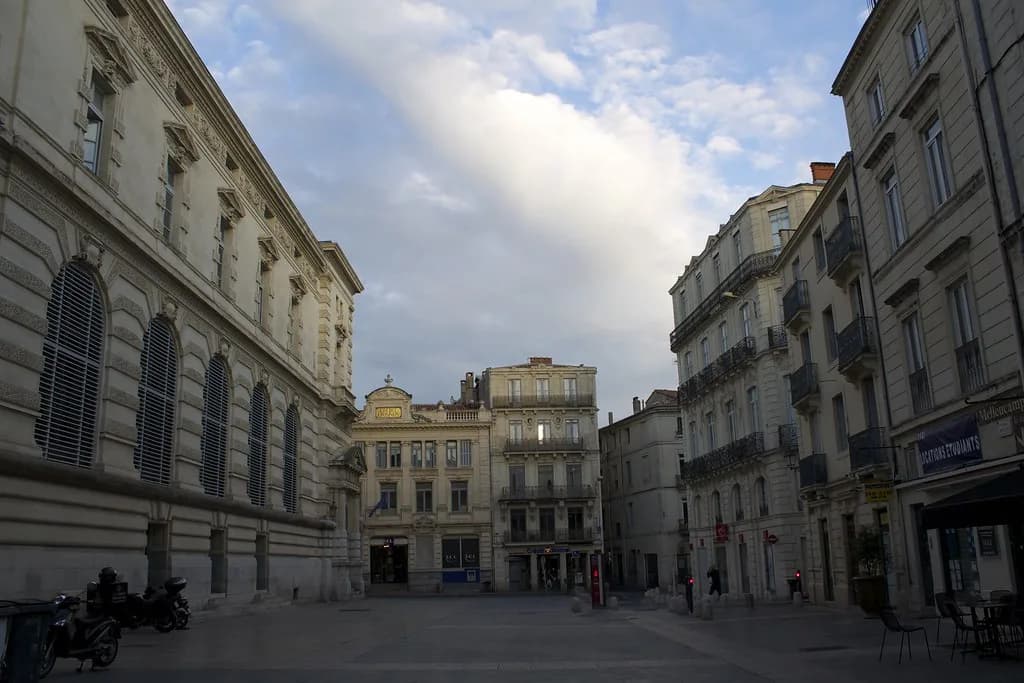
The best way to start is to pick either end of the centre, Place de la Comédie or the Arc de Triomphe, and walk to the other through the cobbled lanes. You pass quiet alleys, lively squares, 18th-century mansions and Renaissance façades without needing a plan or a ticket. The reward is atmosphere rather than set pieces.
Specific corners are worth steering towards: Place de la Canourgue and its cafés and rose gardens, the square beside the Église Saint-Roch, and the little square where Rue du Plan d'Agde meets Rue du Petit Saint-Jean. Rue du Bras de Fer, with its colourful steps, Rue de la Valfère and Rue de l'Argenterie give the clearest sense of the medieval street pattern. The 12th-century Tour de la Babote is an easy landmark to tick off on the way.
The headline sights, end to end: Place de la Comédie, Rue Foch and the Arc de Triomphe
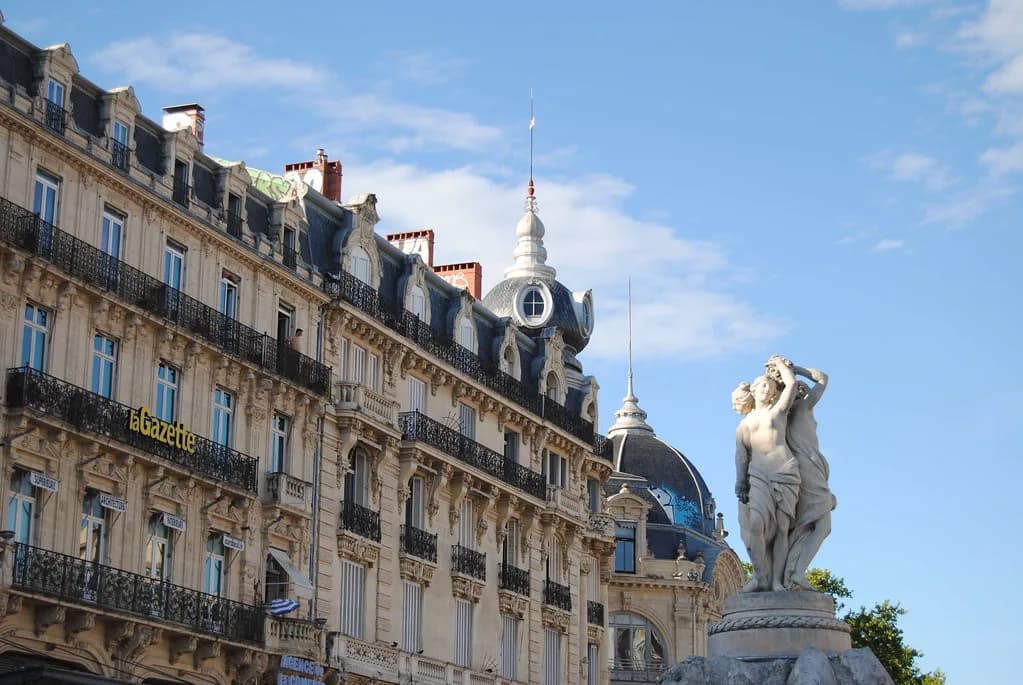
Place de la Comédie is the city's main hub and one of the largest squares in Europe, with the Opéra Comédie at one end and the leafy Charles-de-Gaulle park at the other. Renaissance buildings line it, and the cafés facing the open space are made for an unhurried drink and people-watching. It is also the natural reference point for finding your bearings.
From there, Rue Foch runs straight to the Arc de Triomphe at the edge of the old town, a short walk lined with handsome Renaissance buildings. Treat the arc as a gateway to the Peyrou rather than a destination in itself: you arrive, look back down the avenue, and carry on to the promenade. The walk takes minutes, so build it into a loop rather than a separate outing.
Place Royale du Peyrou and the Aqueduc Saint-Clément
The Place Royale du Peyrou, also called the Promenade du Peyrou, is a popular spot with locals, centred on an equestrian statue of Louis XIV. At the far end stand the Château d'Eau and the Aqueduc Saint-Clément, which give the esplanade its elegant skyline. Come in the late afternoon when the light softens and the square fills up.
The promenade is a public open space, so it costs nothing and needs no planning beyond picking a dry day. Its scale is modest compared with the grandest European squares, but it delivers the open-sky contrast the dense old town otherwise lacks. Combine it with the arc and Rue Foch for a natural half-day circuit.
The Cathedral of St. Pierre and the medieval lanes worth hunting down
The Cathedral of St. Pierre is arguably the most striking monument in the old town, imposing with its two circular towers. It is a short detour off the main wandering routes, so slot it into a lane-by-lane amble rather than building a visit around it. Its scale is memorable; the interior is the work of minutes, not hours.
The lanes around the cathedral repay slow walking more than any single sight. Look for the small galleries, boutiques and cafés tucked into the medieval street pattern, and use the tram lines as a rough boundary so you always know which side of the centre you are on. The trams are the local way of getting your bearings and seeing more of the city.
Musée Fabre and the Jardin des Plantes: the two indoor and green stops
Musée Fabre sits just off Place de la Comédie and holds an impressive fine-art collection, mainly older works with known artists and local masterpieces. Give it a proper block of time: the galleries are substantial enough that a rushed lap leaves you tired and skipping the later rooms. Splitting it across two visits is an option if art is the reason for your trip.
The Jardin des Plantes, founded in 1593, is the oldest botanical garden in France, and the lotus pond is the standout. It is the obvious place to cool off in summer and to break up a day of walking. Both Fabre and the garden give a rainy or hot afternoon a sensible fallback, and both sit within easy reach of the centre.
Saint Roch and the street art: Montpellier's distinctive card
Saint Roch, next to the old town, has a laid-back feel, plenty of cafés, restaurants and shops, and a dense concentration of street art. Montpellier's murals range from portraits and Banksy-like pieces to large trompe-l'œil walls, with plenty more in the Verdanson and Rondelet districts. Hunting them down is the most distinctive thing you can do here.
Keep your eyes up and down as you walk: some pieces sit high on walls and others near ground level, and the fish motifs scattered through the old town are easy to miss. A tourist-office map of marked graffiti spots turns a wander into a route if you prefer structure. Either way, this is a free activity that fills a morning without a ticket.
L'Arbre Blanc and the modern-architecture contrast
L'Arbre Blanc, designed by Sou Fujimoto and completed in 2019, is a 17-storey residential tower whose cantilevered balconies mimic branches. It sits at the edge of the city centre and is a genuine treat for fans of contemporary architecture. A restaurant and bar on the rooftop offer views across the city, though you should confirm current access before planning around it.
Pair it with the old town to see the contrast that gives Montpellier its character: medieval lanes on one side, bold contemporary design on the other. It needs perhaps half an hour unless you eat there, so treat it as a light add-on rather than a core sight. It is the clearest single symbol of the city's mix of old and new.
How the city is laid out and how much walking it involves
Think of the centre as a rough line between Place de la Comédie and the Arc de Triomphe and Peyrou, with the medieval lanes filling the space between and Saint Roch sitting just alongside. Once you fix those anchors, the rest is walkable, and getting deliberately lost is part of the appeal. The trams loop around the old town and are a useful mental boundary.
Expect plenty of walking on cobbles, so comfortable shoes matter more than a tram pass inside the centre. Use the trams for longer hops or to reach the outer districts, and remember that crossing the tram lines is how you leave the old town. There are several lines, each with its own design, which makes them easy to tell apart.
How many days Montpellier needs for a weekend
Two full days is the right shape. Give the first to the old town, the Arc de Triomphe and Peyrou, and the second to Musée Fabre, the Jardin des Plantes and Saint Roch, with L'Arbre Blanc as a flexible extra. That pace leaves room for long lunches and the street art that gives the city its character.
With a single day, cut the museum and concentrate on the walk from Place de la Comédie to the Peyrou, then drift through Saint Roch. With three days, add a half-day out of the city, since Nîmes, Sète, Saint-Guilhem-le-Désert and Aigues-Mortes are all within easy reach by car or train. Beyond that, the centre starts to repeat itself.
Who will love it, and who should look elsewhere
Montpellier suits travellers who enjoy wandering, street-level detail, contemporary architecture and a young, lively atmosphere. It works well for a first short break in the south of France, especially for couples and friends who want a compact centre and good food without a punishing schedule. Architecture fans get the old-meets-new contrast in a single afternoon.
If your short break depends on a beach you can walk to, grand Roman monuments or a heavyweight cathedral, look at coastal towns or Nîmes instead. Montpellier's sights are modest in scale, so it rewards curiosity rather than a checklist. Comparing it with Aix-en-Provence or Arles is fair game: each has a different pull, and Montpellier's is atmosphere.
The honest trade-offs: the beach is not on the doorstep and the big sights are modest
The Mediterranean is separated from the city by a chain of lagoons and lakes, so the sand is a trip out rather than a stroll from your hotel. Popular spots include Palavas-les-Flots, Maguelone, Carnon and the Le Grand Traverse area, with Espiguette the wildest and least developed. If beach time is central to your weekend, plan the transfer properly.
The other trade-off is scale. The cathedral, arc and Peyrou are pleasant rather than overwhelming, and the old town's charm lies in its lanes and squares, not in headline monuments. Come for the walkability, the street art and the easy-going rhythm; if you need blockbuster sights to feel a trip was worthwhile, you may leave underwhelmed.
When to go and what a day looks like in practice
Spring and early autumn give the best balance of comfortable walking weather and lively squares; midsummer can be hot enough to make the Jardin des Plantes and shaded lanes the sensible middle of the day. Whatever the season, check museum opening days before you fix your plan, since a single closed day can reshuffle a two-day trip.
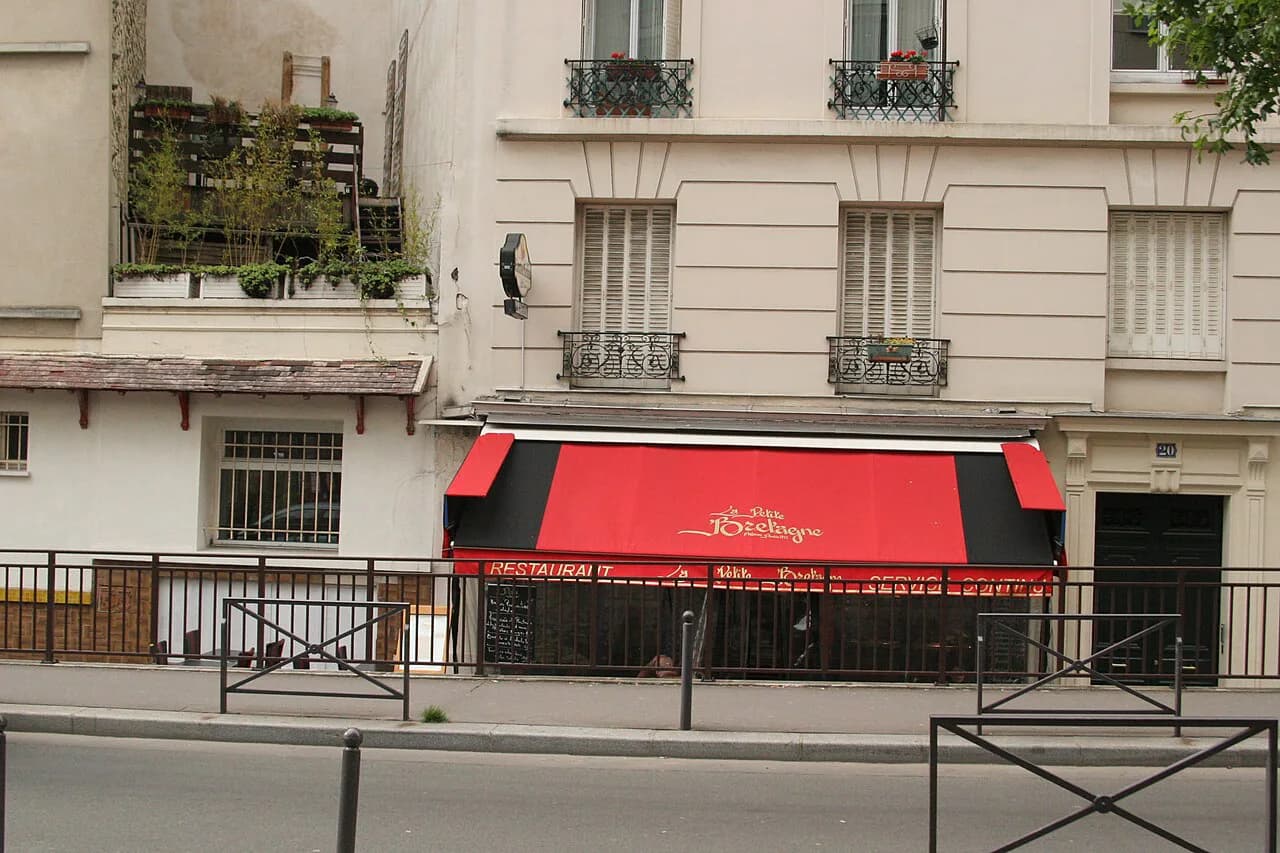
A realistic day starts with coffee on Place de la Comédie, moves through the lanes to the cathedral, and finishes on the Peyrou with the aqueduct in view. An evening in Saint Roch, where the restaurants and bars cluster, is the natural close. Eating well is part of the point here: Rosemarie, La Bistrote, Restaurant Leclere and Pastis are all in or near the centre.
Getting there and getting around
Montpellier is on the French high-speed rail network, making it easy to reach from major French cities, Brussels and London, and the airport is about ten minutes from the city with frequent flights to European hubs. Once you arrive, the trams and your own feet cover most of what a weekend needs. Hiring a car makes sense only if you plan to explore the wider region.
Inside the centre, walk: it is compact, largely pedestrianised and the fastest way between the squares. Use the trams for longer hops and for the districts beyond the old town, and keep a contactless card handy for the machines. Bear in mind that the centre's cobbles are hard on the feet after a full day.
Plan Your Visit
Yes, Montpellier is worth visiting for a weekend if you want a walkable, characterful southern French city with strong street art and a good art museum, and if you accept that the beach is a trip out. It works best for two days: the old town and Peyrou first, then Musée Fabre, the Jardin des Plantes and Saint Roch.
If you want grand monuments or a doorstep beach, choose elsewhere; if you want atmosphere, food and a compact centre you can cover on foot, book the trip. Check museum opening days and any garden closures before you arrive, and keep a flexible half-day for the beach or a nearby town if the weather is kind.
Explore more Montpellier guides
Frequently Asked Questions
Is Montpellier worth visiting for a weekend?
Yes, if you want a compact, walkable old town with strong street art, a fine-art museum and France's oldest botanical garden. It is less convincing as a beach break, since the Mediterranean sits behind a chain of lagoons and needs a trip out. Two days is enough to cover the centre without rushing.
How many days do you need in Montpellier?
Two full days covers the old town, the Arc de Triomphe and Peyrou, Musée Fabre, the Jardin des Plantes and Saint Roch. One day is enough for the headline walk from Place de la Comédie to Peyrou. Add a third only if you want a half-day out to a nearby town.
What is Montpellier famous for?
A large pedestrian old town, one of Europe's biggest squares at Place de la Comédie, France's oldest botanical garden, and a dense street-art scene, particularly around Saint Roch. It is also a student city, with around a quarter of the population studying here, which gives the centre its lively feel.
Is Montpellier good for a city break without a beach?
Yes. The old town is largely pedestrianised, the museums and squares are close together, and the architecture gives it plenty to fill two days. The beach is a separate outing rather than a stroll from the centre, so plan the weekend around the city itself and treat sand as an optional extra.
Is Montpellier walkable?
The historic centre is compact and largely pedestrianised, with Place de la Comédie and the Arc de Triomphe marking two ends of a walk you can do at an easy pace. Saint Roch sits just alongside. Cobbles are hard on the feet, so comfortable shoes matter, and the trams cover longer hops.
What is there to see in Montpellier's old town?
The lanes between Place de la Comédie and the Arc de Triomphe, Place de la Canourgue, the Cathedral of St. Pierre, Rue du Bras de Fer and the Tour de la Babote, plus murals scattered through the streets. The pleasure is in wandering rather than ticking off a single sight.
Is the Jardin des Plantes the oldest in France?
Yes, it was founded in 1593 and is described as the oldest botanical garden in France. It is the obvious place to cool off in summer or break up a walking day, and its lotus pond is the highlight. Confirm opening hours before you go, as they vary by season.
Is Montpellier or Marseille better for a short break?
That depends on what you want: Montpellier is compact, walkable and centred on a young, lively old town, while a larger port city offers different, heavier attractions. If easy walking, street art and a short, manageable centre are your priority, Montpellier is the simpler choice for two days.
Sources
Notes for French city breaks
Optional updates to our guides.
You might also like

Continue reading
More guides you'll find useful