Is Nancy Worth Visiting? An Honest Weekend Verdict
Yes for Art Nouveau fans and anyone wanting grand squares without Paris crowds. Here is what Nancy does well, who it suits and how long to stay.
On this page
Yes, Nancy is worth a weekend for most people planning a short city break in France, provided they care about architecture, museums and a compact historic centre rather than nightlife or scale. The city packs a UNESCO World Heritage square, a medieval old town and a genuine Art Nouveau heritage into a centre you can cross on foot. It rewards curiosity more than it offers spectacle.
The honest catch is that Nancy is not Paris. Its sights are close together and its evenings are quiet, so two nights is plenty for the headline monuments and a third day only pays off if you want to slow down in museums. Use our guide to things to do in Nancy to map the individual sights before you book trains.
Is Nancy worth visiting? The short answer
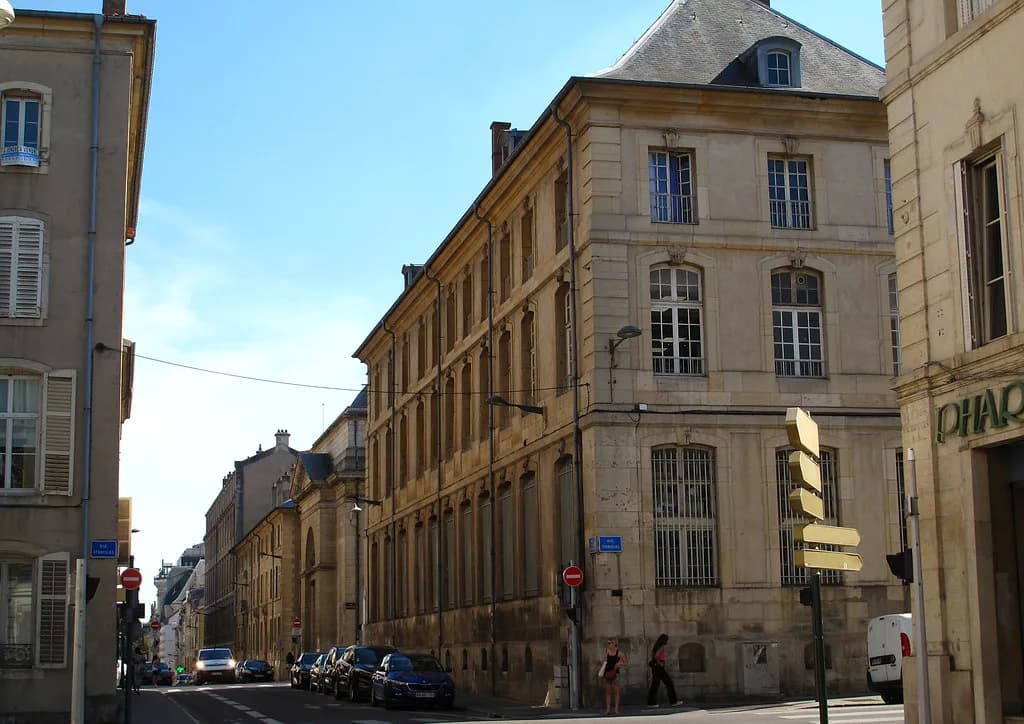
Nancy suits architecture lovers, museum-goers and anyone who wants a grand French city without the crowd management that Paris demands. The historic core combines Renaissance streets with early twentieth-century Art Nouveau houses, and the old town is small enough that a wrong turn costs you five minutes rather than an afternoon. As a weekend destination it works best when you arrive ready to walk.
It is a weaker fit for travellers who need constant evening entertainment, a waterfront or a checklist of blockbuster sights. Nancy's pleasures are cumulative: a doorway here, a stained-glass window there, a square that stops you mid-stride. If that sounds thin, consider a larger French city and treat Nancy as a stop rather than the main event.
For a useful comparison, our verdict on whether is Aix-en-Provence worth visiting shows how a Provençal city break differs in pace and season, while is arles worth visiting covers a smaller southern city built around Roman remains. Nancy belongs to neither camp, which is part of its appeal.
What Nancy does better than most French cities
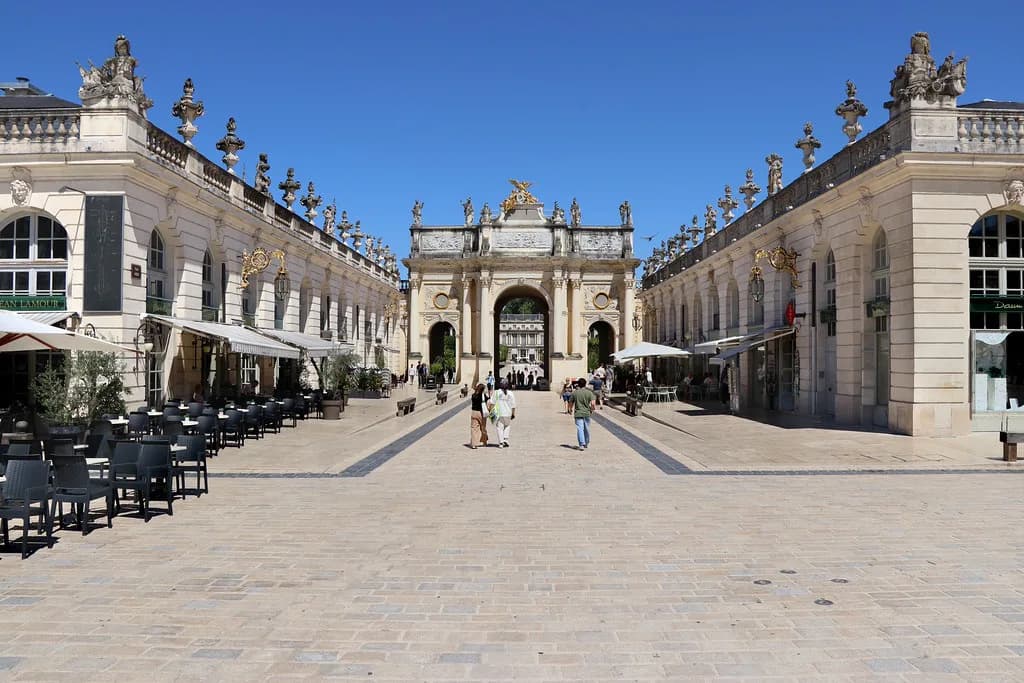
Place Stanislas is the reason many people first look at Nancy, and it justifies the trip on its own. The eighteenth-century square is enclosed by gilded wrought-iron gates made by Jean Lamour, flanked by two fountains designed by Barthélémy Guibal and centred on a statue of Stanislas Leszczynski, the former King of Poland who became Duke of Lorraine. It is fully pedestrianised.
The UNESCO designation covers more than the square itself. Place Stanislas, the adjoining Place de la Carrière and the hemicycle that links them form a single classical ensemble, listed as a World Heritage Site. Walking the three in sequence takes minutes and shows how deliberately the eighteenth-century city was staged.
Art Nouveau is the city's second strength, and it is unusually concentrated. Between 1890 and 1914, wealthy patrons commissioned houses in the École de Nancy style, leaving a district where the movement's details appear on ordinary streets. Few French cities let you read an entire decorative movement on foot in an afternoon.
Place Stanislas and the UNESCO ensemble
The square is ringed by classical buildings with specific roles: the Town Hall, the Opera House and the Museum of Fine Arts. That means you can see a major museum without leaving the ensemble. In summer the pedestrianised square hosts a sound and light show lasting about thirty minutes, staged annually rather than nightly.
From Place Stanislas you can reach Place de la Carrière, the medieval square once used for equestrian exercises and tournaments, and then the Government Palace built there in the eighteenth century as the seat of the Intendant of France. The route is short and flat, which makes it a sensible first orientation walk before you commit to any museum.
If you only see one square in Nancy, make it this one, and go at the start of the day when the space is quiet and the gates are easy to photograph. Save the surrounding streets for later, when you know the geography and can link the square to the old town without doubling back.
Art Nouveau: Villa Majorelle and the École de Nancy Museum
Villa Majorelle at 1 Rue Louis Majorelle was the first entirely Art Nouveau house in Nancy. The artist and industrialist Louis Majorelle commissioned architect Henri Sauvage to build it, and it holds Art Nouveau furniture as well as evidence of how a wealthy industrial household worked at the start of the twentieth century.
A few minutes' walk away, the Musée de l'École de Nancy occupies the former home of Eugène Corbin, a major collector who gave part of his collection to the city. It is one of the few museums in France dedicated entirely to Art Nouveau, with stained glass, furniture, ceramics and glassware. Pairing the two in one morning avoids a second trip across town.
Check opening days and ticket prices on the museums' own pages before you commit a half-day, since these two are the main reason many visitors come. Our guide to museums in Nancy covers the wider set of collections if you want to build a rainy-day plan.
The old town: Grande Rue, Porte de la Craffe and Saint-Epvre
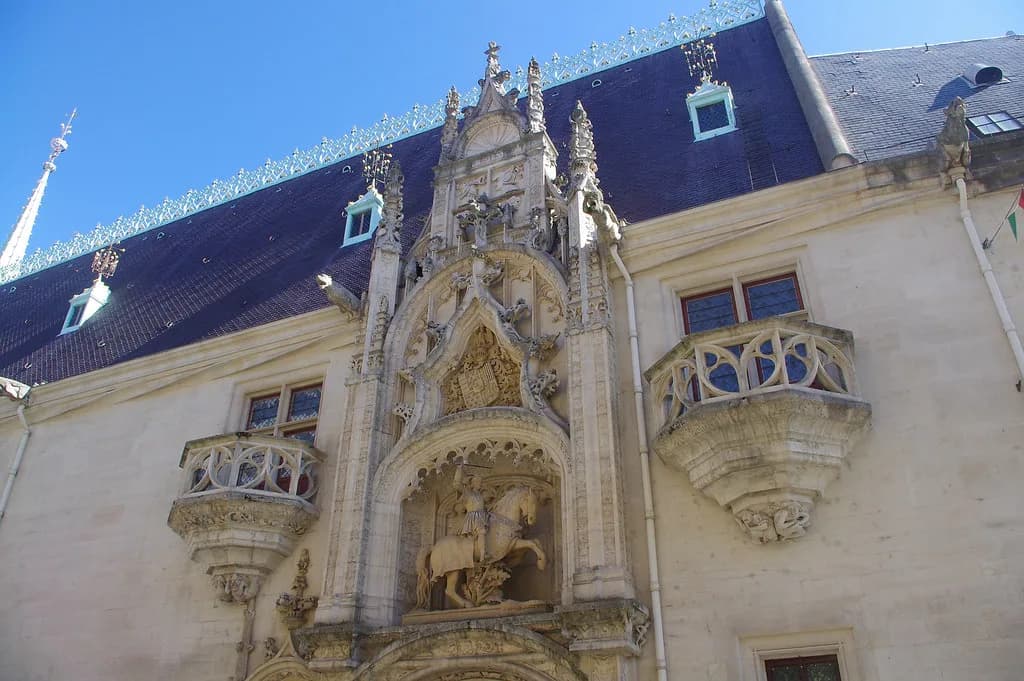
The Grande Rue runs from Place Vaudémont to Porte de la Craffe and forms the main axis of the historic centre. Along it you pass the Ducal Palace, a sixteenth-century building that served as the residence of the Dukes of Lorraine before the court moved to Lunéville, and which has housed part of the Lorraine Museum since 1848. Its guardhouse gatehouse draws on the royal château of Blois and blends Gothic with Italian Renaissance detail.
Porte de la Craffe closes the street at the northern end and is the only surviving remnant of the medieval walls, with two round towers added from 1463. It later served as a prison until the nineteenth century, and the Notre-Dame gate behind it doubled the city's defences. It now reads as the gateway to the old town rather than a barrier.
Basilique Saint-Epvre sits in the heart of the old town, built in the nineteenth century by the architect Prosper Morey in neo-Gothic style and classified as a historic monument since 1999. Step inside for the stained glass if the doors are open, then use the surrounding lanes for the small shops and restaurants that cluster between the basilica and Porte de la Craffe.
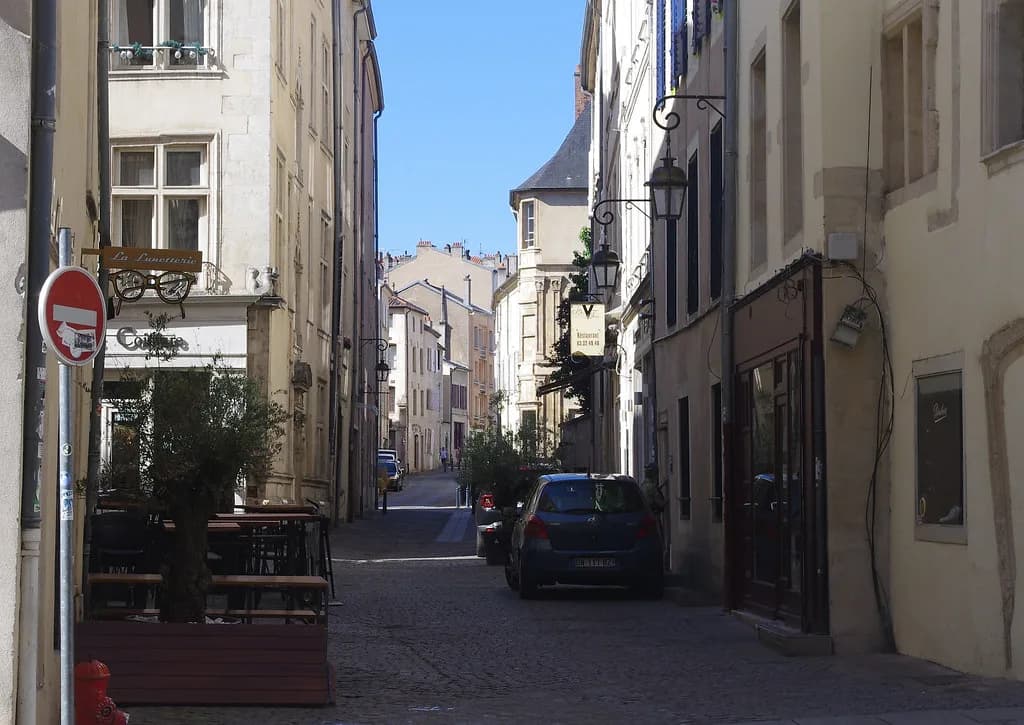
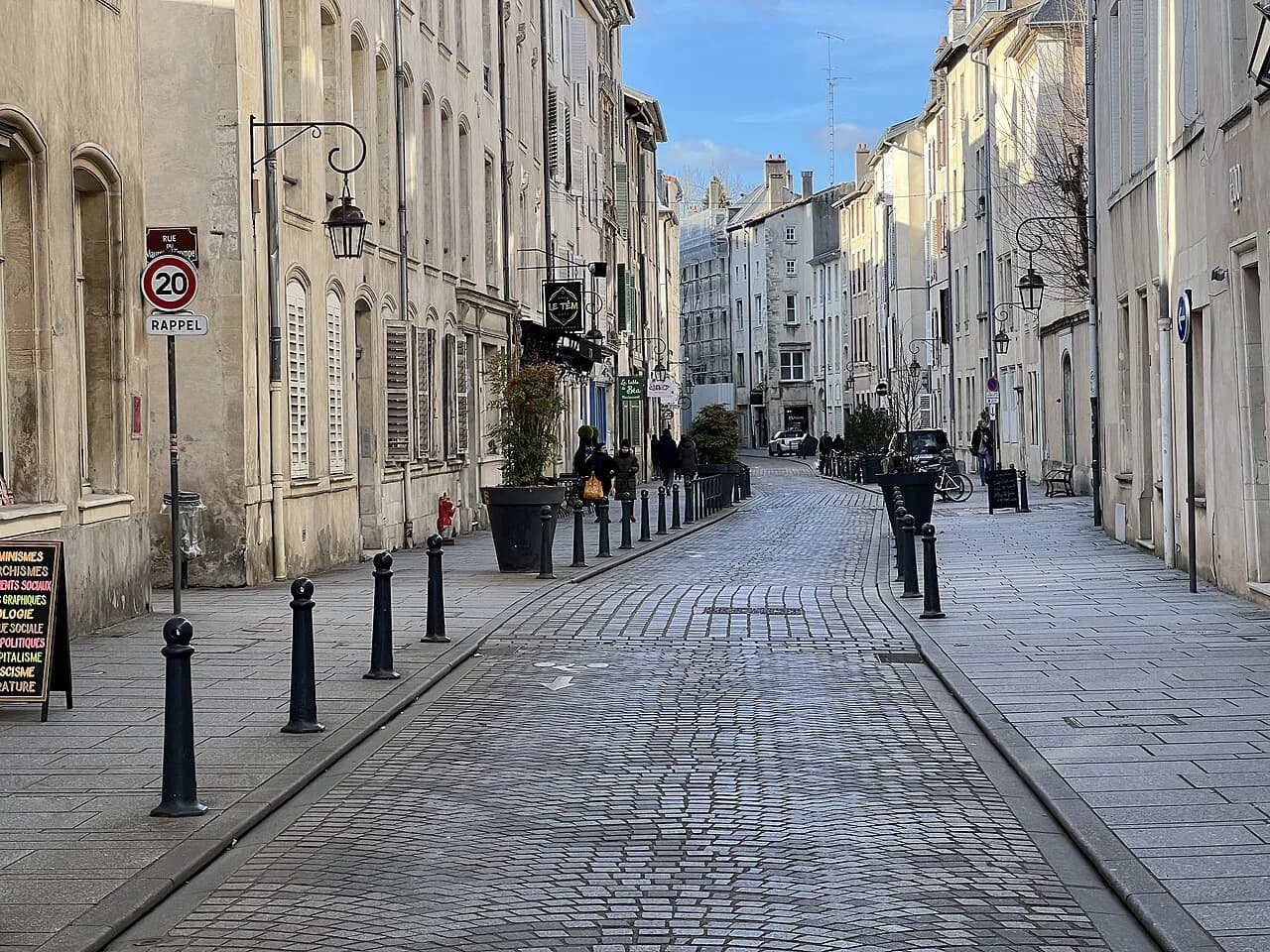
This is the part of Nancy that rewards drifting. The Vieille Ville keeps medieval street lines and the houses of old Lorraine families, and it is lively enough to absorb an afternoon without a fixed itinerary. Our guide to Nancy old town picks out the individual streets worth finding.
Museums beyond Art Nouveau: fine art and the Lorraine Museum
The Musée des Beaux-Arts occupies a corner of Place Stanislas and spreads across 9,000 square metres, covering European art from the sixteenth century onwards. Its holdings include works by Rubens, Delacroix, Perugino, Modigliani and Caravaggio, alongside regional artists such as Jacques Callot and Émile Friant. It is the strongest single indoor stop in the city.
The Lorraine Museum in the Ducal Palace tells the regional story that the Art Nouveau houses do not. It is a history museum rather than a decorative-arts one, so it works well as a counterweight to a morning of furniture and glass. Both are large enough to justify checking what is open on your dates before you build a day around them.
Free and outdoor Nancy: Parc de la Pépinière and street art
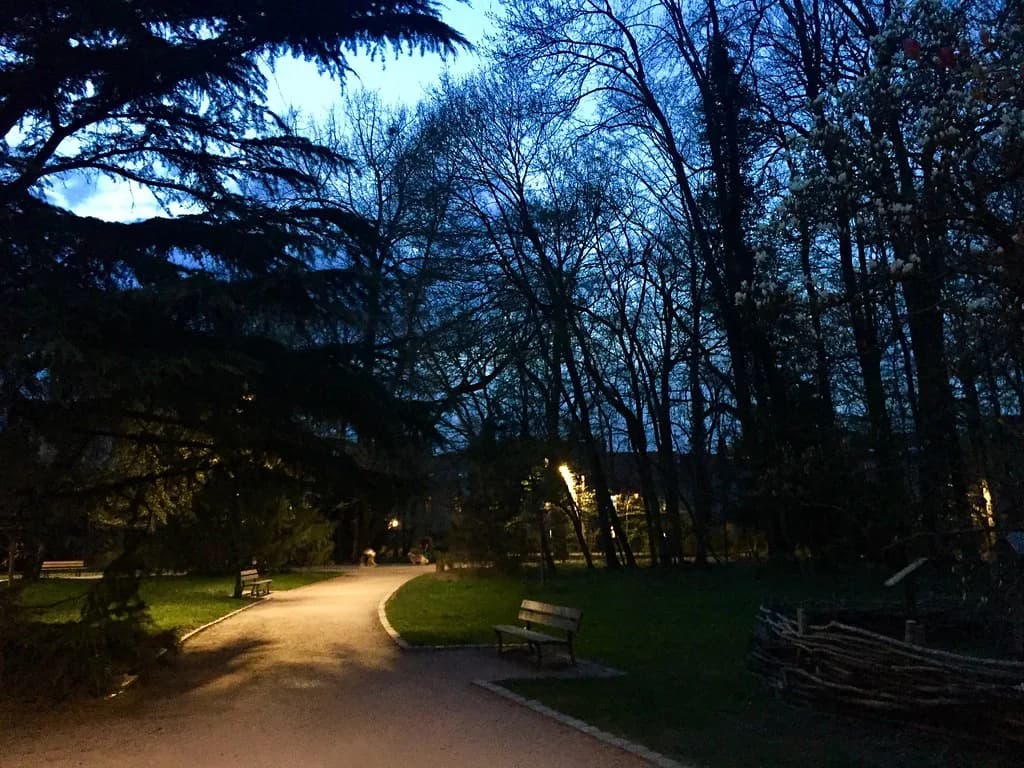
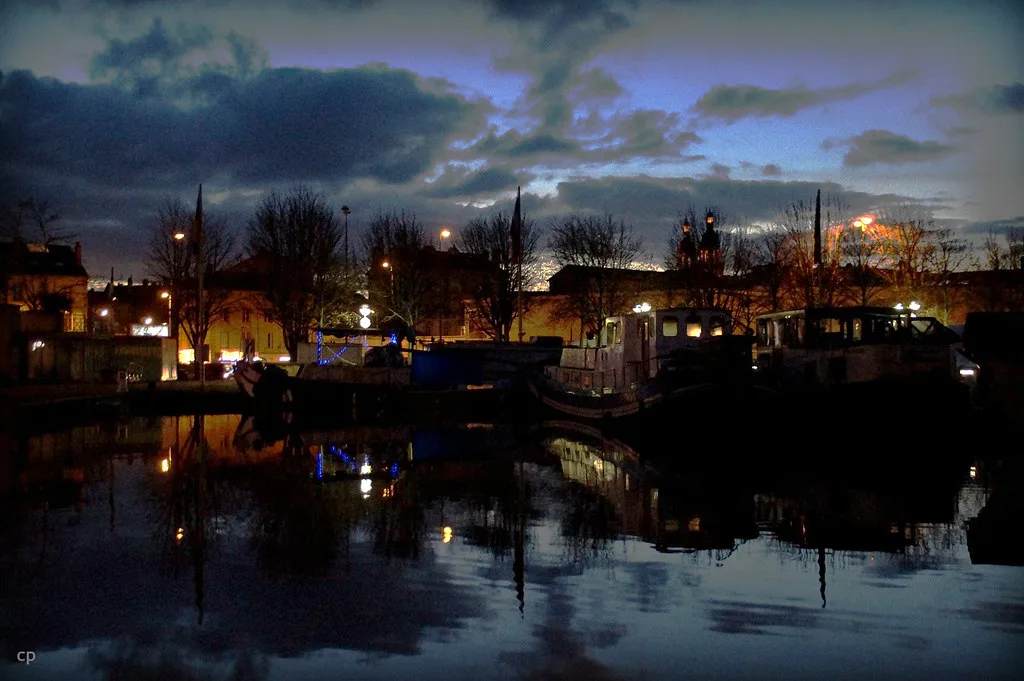
Parc de la Pépinière covers almost 21 hectares near Place Stanislas and is nicknamed the city's green lung. It has a rose garden, playgrounds and a small zoo with monkeys, deer and mouflon, so it works for families and for anyone who needs a break between museums. Look for Rue des Écuries, a small street named for the Duke of Lorraine's stables, where private houses connect to the park by little bridges and suspended footbridges.
Street art gives the city a second, more contemporary layer. The DNA route, Art Dans Nancy, leads to works including David Walker's Fresque Giulia, the three-metre Le Red Bull and Jorge Orta's Le Cœur du Grand Nancy. It is a free way to fill a late afternoon when museums have closed.
Budget-conscious visitors should note that the parks and squares cost nothing to enter, which makes a weekend here easier on the wallet than a comparable break in a bigger French city. Our guide to Nancy parks compares the green spaces if you want more than one.
The market and what to eat in Nancy
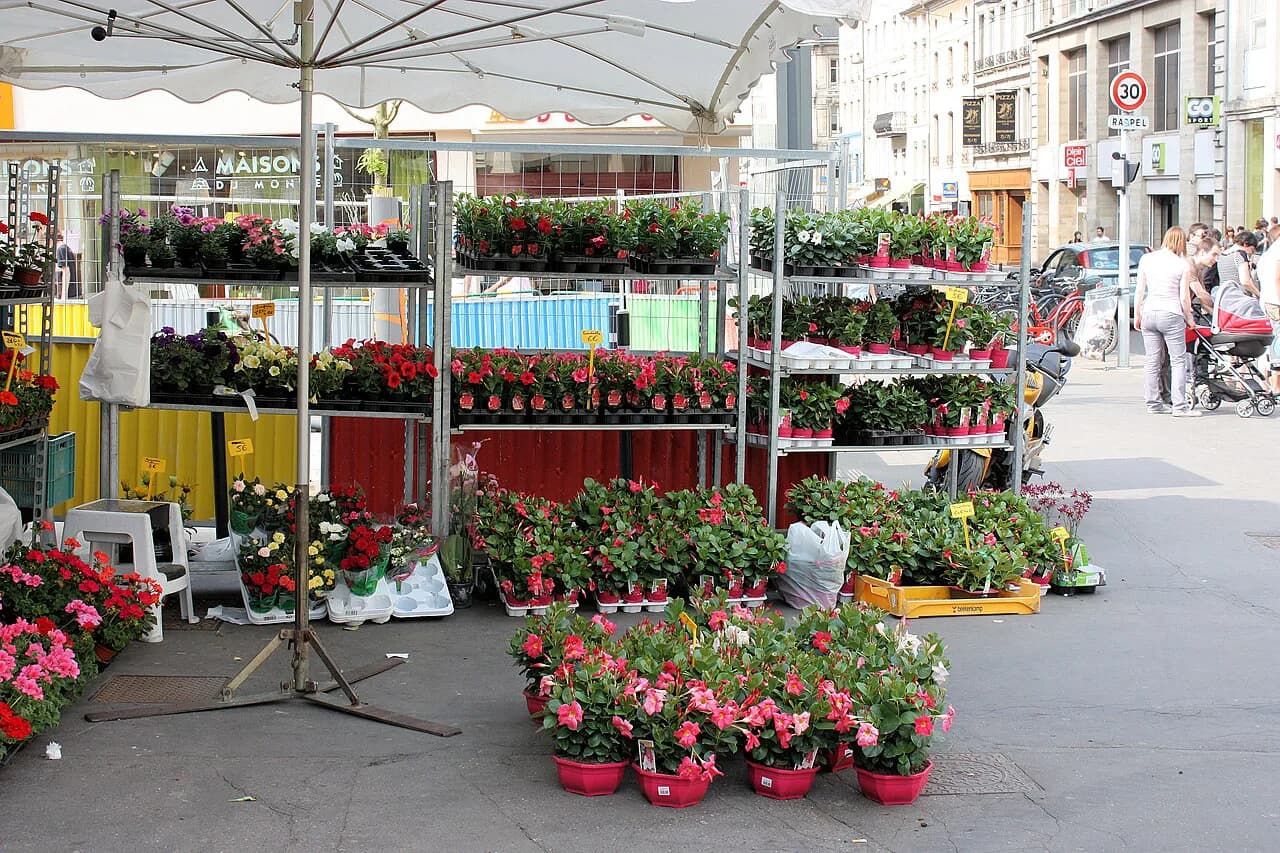
The Marché de Nancy on Rue Saint-Dizier brings together almost 60 traders in a U-shaped building and is an easy way to read local life in an hour. It opens five days a week, so match your visit to the days you are actually in town before planning around it. Small restaurants inside let you eat where the shopping happens.
Two Nancy specialities are worth seeking out: macarons and bergamots, the small citrus-flavoured sweets associated with the city. Buy them at the market or from a specialist shop rather than a station kiosk, and treat them as a small purchase rather than a meal. Our Markets in Nancy guide covers the trading pattern in more detail.
For sit-down meals, the old-town lanes between Place Saint-Epvre and Porte de la Craffe hold the densest cluster of restaurants and bars. Our pick of the best restaurants in Nancy is a starting point rather than a ranking, so book ahead for Saturday night when the good rooms fill.
How the city is laid out and how much you can walk
Nancy's centre is compact and best treated as a walking city. Place Stanislas anchors the classical core, the Grande Rue runs north to Porte de la Craffe through the old town, and the Art Nouveau cluster around Villa Majorelle and the Musée de l'École de Nancy sits a short walk west. Everything in that triangle is reachable on foot in a day without rushing.
Public transport fills the gaps. The city has a tram and a dozen bus lines, and the station sits within reach of the centre, so you can arrive, drop bags and start walking without a taxi. Our Nancy Attractions hub groups the individual sights by area if you want to plan by neighbourhood rather than by day.
How many days Nancy needs
Two days covers the essentials comfortably: Place Stanislas and the adjoining squares on the first afternoon, then the Art Nouveau pair and the old town on a full day. A third day makes sense only if you want the Musée des Beaux-Arts and the Lorraine Museum at an unhurried pace. One day is enough for a flying visit but leaves no room for the museums.
Treat the train timetable as part of the planning. From Paris there are about ten daily TGVs from the Gare de l'Est taking roughly one hour and thirty minutes, from Lille three daily TGVs of just over two hours, and from Bordeaux three daily TGVs of around five hours. Note that the Lorraine TGV station sits outside the city and needs a shuttle connection to the centre.
If the journey is long, consider whether a shorter break elsewhere delivers more per hour of travel. Our comparison of is arles worth visiting is useful for weighing a southern city of similar size against Nancy.
Who will love Nancy and who should skip it
Nancy rewards people who like looking up. If you will cross a street to inspect a wrought-iron balcony or a stained-glass window, the city pays you back repeatedly, and the density of École de Nancy work means you do not need a car or a guide to find it. Museum-goers also do well here, with a fine-art collection on the main square and two dedicated Art Nouveau sites close together.
Skip Nancy, or compress it to a day, if your ideal weekend involves markets, beaches and long evenings out. The city's centre is quiet after dinner, the sights are concentrated in a small area, and there is no coastline to fall back on. Travellers chasing a Provençal atmosphere should read is aix-en-provence worth visiting instead.
When to go
Late spring and early autumn give the best balance for walking the centre, since most of a Nancy weekend happens outdoors between museums. The city's Saint-Nicolas celebrations in December cloak it in a festive atmosphere, though that period is busier and colder, and Christmas markets are covered elsewhere.
Summer brings the sound and light show on Place Stanislas, which runs annually for about thirty minutes and gives an evening shape to a day that might otherwise end early. It is an outdoor event, so keep the square in your plans rather than committing to a specific night.
Getting there from the UK and Ireland
By rail, Nancy is straightforward from Paris, and Paris is the usual connection point for travellers arriving from London or Dublin via Eurostar. The direct TGV from the Gare de l'Est takes roughly an hour and a half, with about ten departures a day, so a Friday-evening or early-Saturday arrival is realistic. From Lille, three daily TGVs take just over two hours.
By air, the practical options are Strasbourg Airport at roughly two hours from the city and Basel-Mulhouse-Fribourg at around 200 kilometres, with car hire available at either. Neither is on the doorstep, so rail usually wins for a short break. Look for through tickets before you split the journey across separate bookings.
A workable two-day plan
Start with Place Stanislas and its adjoining squares, then cross to the old town along the Grande Rue, ending at Porte de la Craffe and Basilique Saint-Epvre before dinner in the surrounding lanes. This order keeps you moving in one direction instead of retracing steps. Leave the museums for the next morning.
Day two belongs to Art Nouveau: Villa Majorelle first, then the Musée de l'École de Nancy a few minutes away, followed by the Musée des Beaux-Arts back on Place Stanislas if time allows. Finish with the DNA street-art route or a slow hour in Parc de la Pépinière. If you would rather spend the afternoon shopping, our guide to shopping in Nancy picks out the streets and passages to target near the square.
Plan Your Visit
Nancy justifies a weekend for architecture and museum travellers, and it does so without the logistics of a capital. Book trains early, plan around the market's five trading days and the museums' opening days, and leave room for an unhurried walk through the old town. The city's scale is the point, not a limitation.
Check opening days, ticket prices and train times on official pages before booking, since these change by season. Our things to do hub for Nancy links the individual sights so you can build the plan in one place.
Frequently Asked Questions
Is Nancy worth visiting for a weekend?
Yes for most travellers interested in architecture, museums and a compact historic centre. Place Stanislas and the adjoining squares form a UNESCO-listed classical ensemble, the Art Nouveau houses and museum form a second distinct cluster, and the old town is small enough to walk. It is a weaker fit if you want beaches, nightlife or big-city scale.
What is Nancy famous for?
Nancy is known for Place Stanislas and its UNESCO World Heritage ensemble, for its École de Nancy Art Nouveau heritage including Villa Majorelle and the Musée de l'École de Nancy, and for its medieval old town along the Grande Rue. The city's decorative arts and architecture are the main reasons visitors come.
How many days do you need in Nancy?
Two days covers the main squares, the Art Nouveau pair and the old town without rushing. Add a third day if you want to see the Musée des Beaux-Arts and the Lorraine Museum at a relaxed pace. One day is enough for a brief orientation but leaves out the museums.
Is Nancy good for Art Nouveau?
It is one of the strongest Art Nouveau cities in France. Villa Majorelle was the first entirely Art Nouveau house in Nancy, and the Musée de l'École de Nancy is dedicated entirely to the movement, with stained glass, furniture, ceramics and glassware. The two sit a few minutes' walk apart.
How do you get to Nancy from Paris?
Take a TGV from the Gare de l'Est, with roughly ten departures a day and a journey of about an hour and a half. Note that the Lorraine TGV station is outside the city and requires a shuttle to reach the centre. From Lille, three daily TGVs take just over two hours.
What can you do for free in Nancy?
The public squares, the old-town streets, Parc de la Pépinière and the DNA street-art route cost nothing to visit. Basilique Saint-Epvre can be entered for a look at its interior when open. Museums and their admission policies vary, so check each site before you go.
Is Nancy walkable?
Yes. Place Stanislas, the Grande Rue, Porte de la Craffe and Place de la Carrière sit within a short walk of each other, and Villa Majorelle and the Musée de l'École de Nancy are minutes apart. A tram and twelve bus lines cover the wider city and the station.
What food is Nancy known for?
Nancy is associated with macarons and bergamots, the small citrus-flavoured sweets. The Marché de Nancy on Rue Saint-Dizier gathers almost 60 traders and has small restaurants inside, which is a practical place to try local produce alongside everyday shopping.
Sources
Notes for French city breaks
Optional updates to our guides.
You might also like
Continue reading
More guides you'll find useful