Montpellier Markets: Which Ones to Visit and When
Montpellier's markets run from the covered Halles Castellane to the Sunday flea market on the Promenade du Peyrou. Here is what each sells and how to visit.
On this page
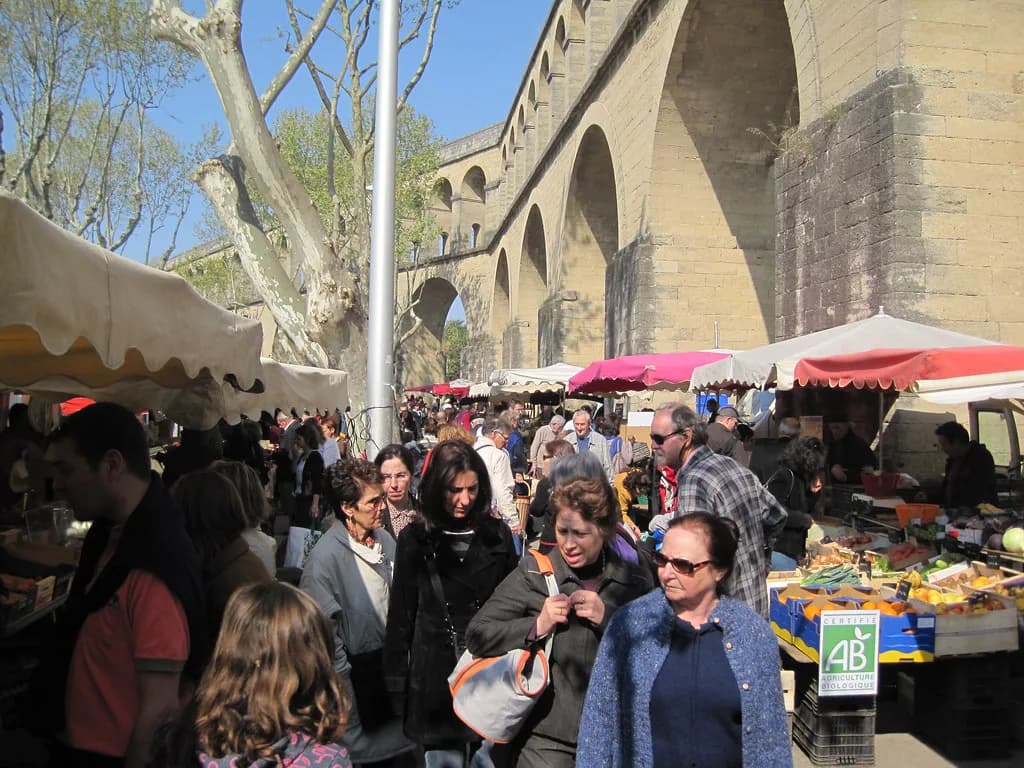
Montpellier's markets divide into two useful groups: a covered food hall in the old town for shopping and lunch, and open-air or specialist markets further out for browsing. Halles Castellane is the practical first stop, a 19th-century hall a short walk from Place de la Comédie with roughly 30 food shops under one roof. The Sunday flea market on the Promenade du Peyrou suits a slower morning, while Marché du Lez near Port Marianne needs a deliberate trip.
Montpellier's Market Scene at a Glance
The geography makes the choice easy. Halles Castellane sits in L'Ecusson, the medieval core, so it fits any morning spent wandering the old streets. The Promenade du Peyrou is on the western edge of that core, a raised esplanade with the Louis XIV equestrian statue and an 18th-century water tower, which is where the Sunday stallholders set up. Marché du Lez is the outlier, in the southeastern Port Marianne district.
“Halles” is the French word for a covered market hall, and it is the term to look for on signs and maps. In Montpellier that means a permanent building with individual traders rather than a row of temporary stalls. Knowing the difference saves wasted trips: a hall trades on its own schedule and is weatherproof, whereas a street or flea market depends on its set day.
Halles Castellane: The Central Covered Market
Halles Castellane has anchored downtown shopping since the 19th century and was substantially renovated in the early 2000s. Around 30 food shops fill the hall, covering fruit and vegetables, meat, cheese, seafood and gourmet goods. It is particularly strong on seafood and crustaceans, and the wine selection leans local.
For a short break, treat it as both a sight and a food stop. Walk the aisles first to see what looks good, then buy a small spread of cheese, charcuterie or oysters and eat it there rather than carrying it across town. The address is 8 Place Castellane, minutes from the Comédie.
If you want more context on the surrounding quarter before you go, the wider old town is compact enough to combine with the hall in a single loop. It slots naturally into any list of things to do in Montpellier, and most of the historic streets are within a 15-minute walk.
What to Buy and Eat at a Covered Hall
A market lunch in Montpellier works best as an assembly job rather than a sit-down meal. Buy cheese from one counter, charcuterie from another and fruit from a third, then add oysters or prawns if the seafood looks fresh. Local Languedoc wines, including the Grés de Montpellier appellation, are the natural pairing.
Prices vary by stall and season, and nothing is fixed at city level, so compare a couple of counters before committing. The same hall is good for picnic supplies if you are heading to the Jardin des plantes or the Peyrou afterwards. Stallholders generally reward a bit of French and a clear order.
Dimanches du Peyrou: The Sunday Flea Market
Every Sunday, the Promenade du Peyrou fills with a flea market known as Les Dimanches du Peyrou, selling antiques, collectables and general bric-a-brac. It is a browsing market, not a food market, so do not plan lunch around it. The setting does the heavy lifting: the esplanade looks out over the city and sits beside the statue of Louis XIV and the 18th-century water tower.
Arrive in the morning for the best choice of stalls and the least crowding, then use the rest of the day for the old town. From the Peyrou it is an easy walk downhill to Place de La Canourgue, a leafy square lined with 17th-century mansions and a view towards Pic Saint Loup. Markets in aix-en-provence follow a similar rhythm if you are comparing cities.
Treat it as a two-hour stop rather than a full morning unless you are a serious collector. Prices are negotiated stall by stall and vary widely by object.
Marché du Lez: Workshops, Vintage and Restaurants
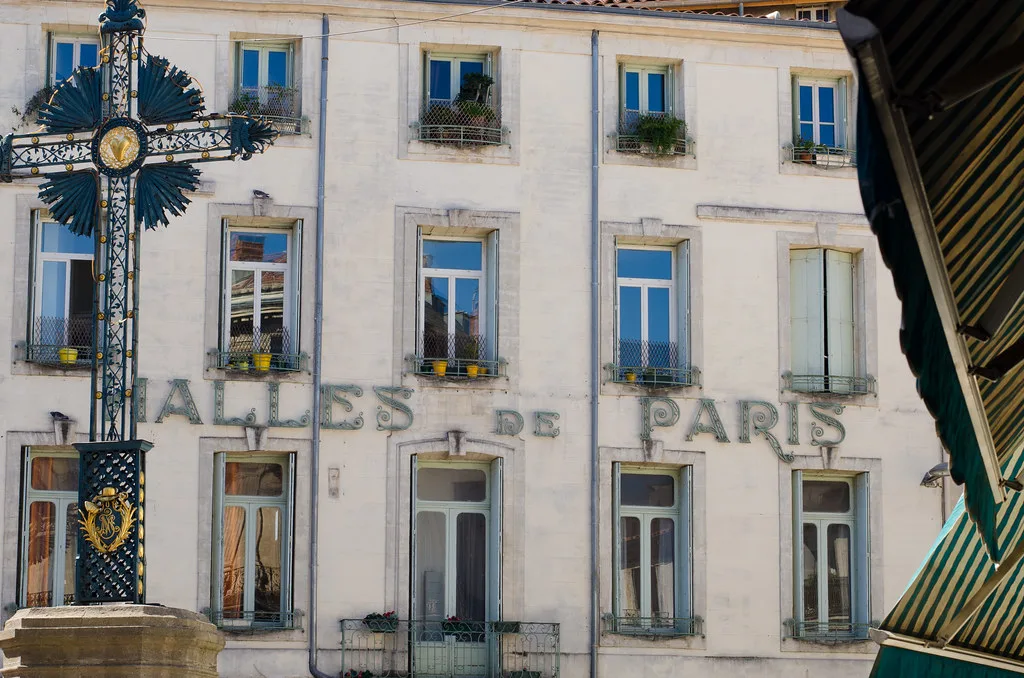
Marché du Lez opened in 2016 on a former industrial and agricultural site near Port Marianne. It combines artist workshops, antique and vintage sellers, shops and restaurants in a rustic-industrial setting. The result feels closer to a creative quarter than a traditional French market.
The trade-off is distance. It sits at 1348 Avenue de la Mer-Raymond Dugrand, in the southeastern part of the city, well away from the historic centre. On a weekend break that is a chunk of an afternoon, so go only if workshops and browsing appeal more than another church or museum.
Modern Montpellier: Antigone, Port Marianne and Le Polygone
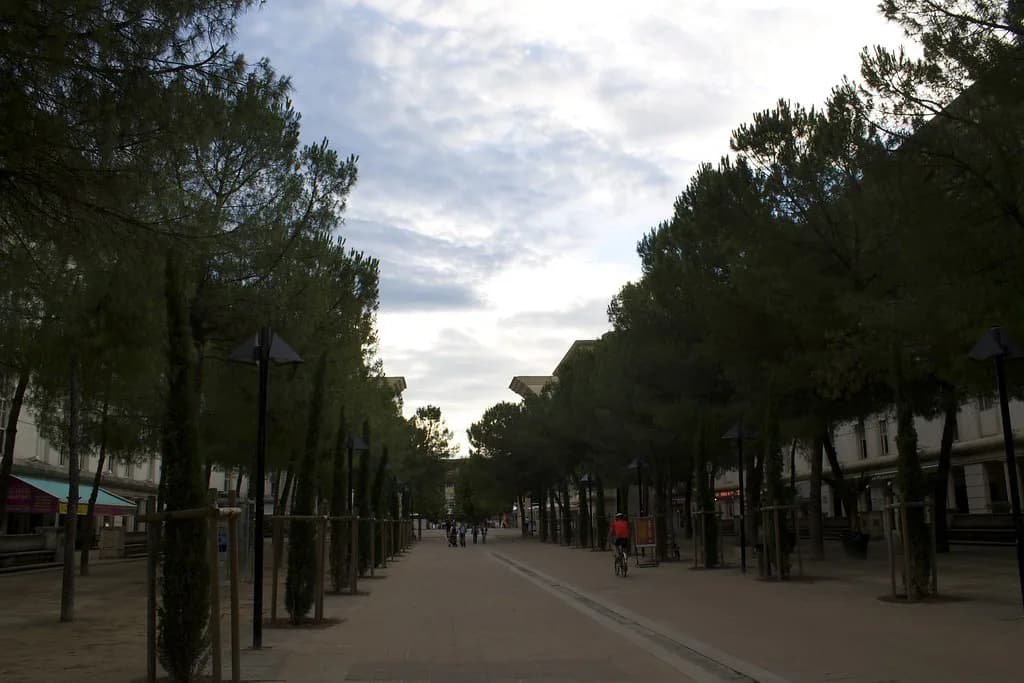
The districts around Marché du Lez give you a second, newer Montpellier to see. Antigone is the neoclassical quarter designed by Spanish architect Ricardo Bofill, with wide avenues and the Esplanade de l'Europe leading past lawns and fountains. Port Marianne stretches along the Lez river and includes the Bassin Jacques Coeur.
For contrast with the food halls, Le Polygone is the modern shopping mall in this part of town, useful for practical shopping rather than browsing. Plan it as a short add-on, not a destination in its own right. The covered food market remains the better use of a morning.
Fitting Markets into a Weekend on Foot
The old-town cluster is walkable. Start at Halles Castellane, work through L'Ecusson and Place de La Canourgue, then climb to the Promenade du Peyrou; the whole loop is a comfortable half-day. If your visit falls on a Sunday, put the Peyrou flea market first, while the stalls are still full.
Marché du Lez, Antigone and Port Marianne sit together in the southeast and work as a separate half-day. Do not try to combine them with the old town on foot in one morning. If you are weighing whether the city justifies a weekend at all, read is Montpellier worth visiting, and check current market days and opening hours before you set out.
Market Rhythm: Mornings, Sundays and Fallback Plans
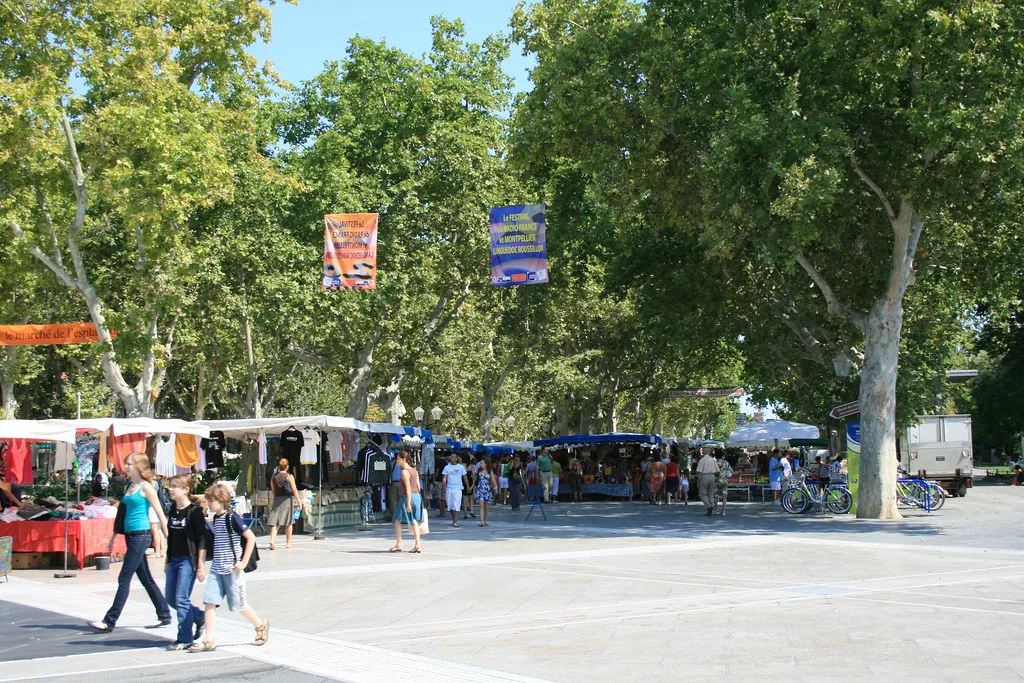
Markets reward early starts: stalls are fullest, produce is least picked over, and you still have the afternoon free. The covered hall suits any day, since it is a permanent building rather than a set-day street market. Check the Peyrou flea market is running before you build a Sunday around it.
If a market is not running or the weather turns, Montpellier has good wet-weather alternatives. Musée Fabre holds European painting and sculpture from the medieval period to the contemporary, and the Pavillon Populaire runs photography exhibitions near Place de la Comédie. Carré Sainte-Anne, a converted 19th-century church, shows contemporary art.
Sunday opening for museums and shops in France is patchy and varies by institution, so confirm before you travel. The Pavillon Populaire and Carré Sainte-Anne both run temporary exhibitions, which means programmes change through the year.
Markets, Museums and Gardens: Building a Full Day
Pair a market morning with the city's green spaces. The Jardin des plantes dates to 1593, covers nearly five hectares and holds more than 2,600 plant species, making it a free-feeling counterweight to a morning of shopping and eating. It is a short walk from the old town.
The Cathédrale Saint-Pierre de Montpellier, with its Romanesque bell tower and twin conical pillars, is another easy addition to an old-town loop. Keep one long block free for the hall and one for a museum, and the weekend fills without rushing. If you want more green space, there are several parks around the city worth adding.
For evening eating, book ahead for anywhere popular, since a good market lunch does not guarantee an easy dinner table. The best restaurants in Montpellier cluster mostly in the old town and around the Comédie.
Plan Your Market Visit
Build your Montpellier weekend around two market stops: Halles Castellane for food and lunch in the old town, and the Promenade du Peyrou on a Sunday for antiques and the view. Add Marché du Lez only if you have a spare half-day and want the newer city alongside it.
Explore more Montpellier guides
Frequently Asked Questions
What markets are there in Montpellier?
The main ones for a short break are Halles Castellane, a covered food hall in the old town with around 30 food shops; the Sunday antiques and flea market on the Promenade du Peyrou; and Marché du Lez, a former industrial site near Port Marianne with workshops, vintage sellers and restaurants.
Is there a market in Montpellier on a Sunday?
Yes. Les Dimanches du Peyrou is a Sunday flea market on the Promenade du Peyrou, selling antiques and collectables rather than food. It sits beside the Louis XIV statue and the 18th-century water tower.
What is sold at Halles Castellane?
Around 30 food shops sell fruit and vegetables, meat, cheese, seafood and gourmet goods. The hall is particularly strong on seafood and crustaceans, with a good selection of local wines.
What is a covered market called in France?
A covered market hall is called a halle in French, so look for “halles” on signs and maps. In Montpellier, Halles Castellane is the central one, a 19th-century building renovated in the early 2000s.
How far is Marché du Lez from central Montpellier?
It is well southeast of the historic centre, in the Port Marianne area on Avenue de la Mer-Raymond Dugrand. It is not a walk you would combine casually with an old-town morning, so plan it as its own half-day.
Is Montpellier expensive for food shopping?
Prices vary by stall and season, and comparing a couple of counters is sensible before buying. For a cheap lunch, assemble cheese, charcuterie and fruit from several traders rather than sitting down.
What should I do if a market is not running?
Use the covered hall, which is a permanent building, or switch to museums and gardens. Musée Fabre, the Pavillon Populaire and Carré Sainte-Anne all offer indoor alternatives, and the Jardin des plantes is close to the old town.
Sources
Notes for French city breaks
Optional updates to our guides.
You might also like

Continue reading
More guides you'll find useful