Montpellier Itinerary: A Realistic 2–3 Day Plan
A practical Montpellier itinerary for two or three days, grouped by area, with the Écusson, Musée Fabre, Promenade du Peyrou, markets and honest walking notes.
On this page
Two days are enough for Montpellier's historic centre, and a third day is best spent on art, the Antigone quarter and a long market lunch. Add a coastal excursion only if you are willing to cut something from the city itself. The plan below groups each half-day by walking area so you are not criss-crossing the old town.
Central Montpellier is compact and largely pedestrian, with most of the headline sights within walking distance of one another, so you can leave the car behind. Trams fill the gaps for the stations and the newer districts. The day order below is a suggestion, not a rule; shift it to fit market mornings and the day you arrive.
How the City Is Laid Out
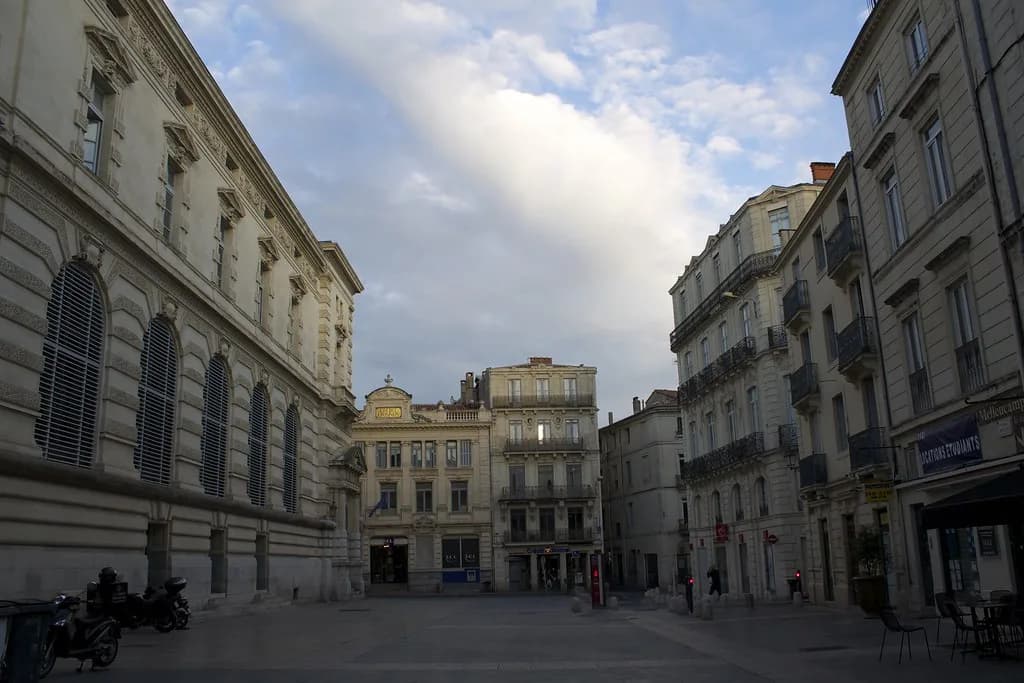
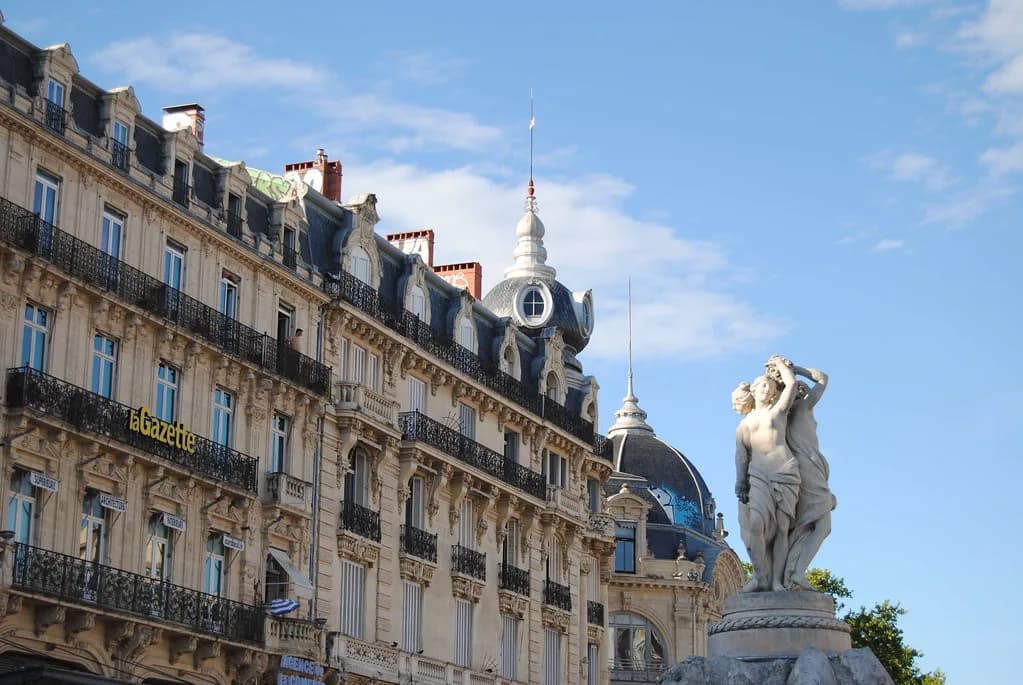
Think of Montpellier as three layers. Place de la Comédie, the oval square locals call Place de l'Œuf, is the hinge between the old town and the modern city, with the Opéra Comédie at one end and the Fountain of the Three Graces near its centre. Behind it, the Écusson is the shield-shaped medieval core of narrow pedestrian lanes, townhouses and small squares.
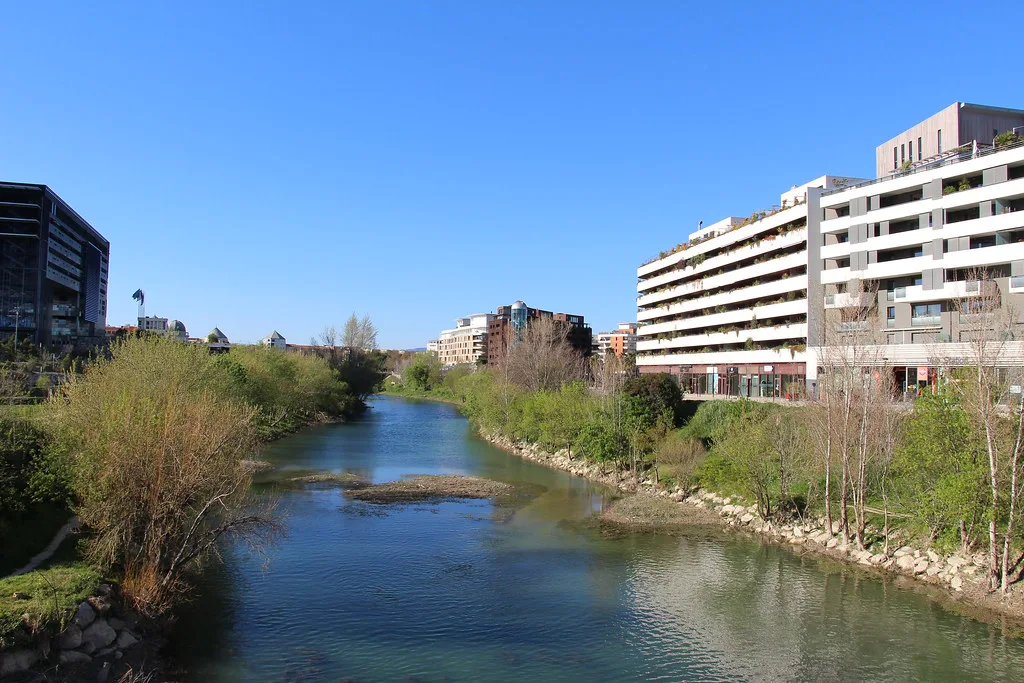
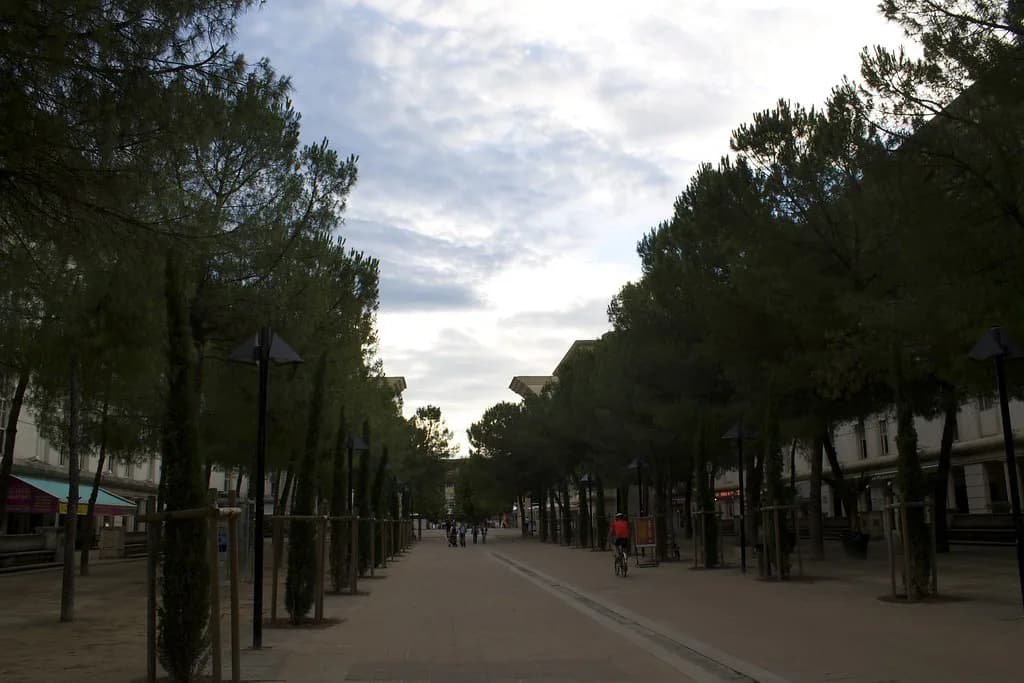
East of the centre, the Antigone district runs from the Polygone shopping centre down to the Lez river in a deliberately grand, symmetrical style designed by Ricardo Bofill and built mainly in the 1980s. The old town rewards wandering; Antigone rewards a single straight walk. Knowing which is which stops you wasting a morning zig-zagging between them.
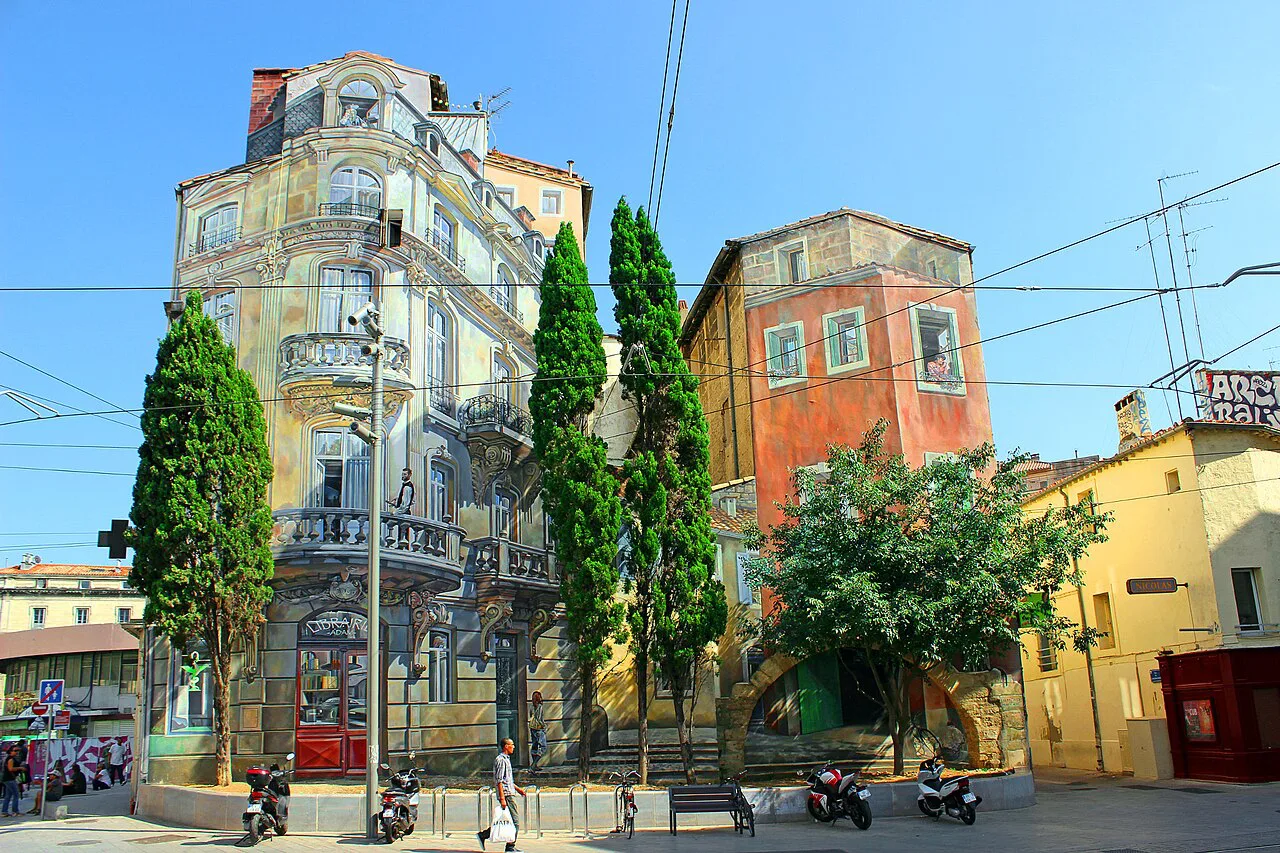
The historic core is where the atmosphere lives, and the lanes around Rue du Bras de Fer and Place Saint-Roch are the places to slow down rather than tick off.
Getting In and Around Without a Car
Direct TGV trains link Paris Gare de Lyon with Montpellier in as little as about three hours and a quarter. The city has two main stations: Montpellier Saint-Roch sits in the centre near Place de la Comédie, while Montpellier Sud de France is outside the historic core and connects to it by Tram Line 1. Book to Saint-Roch if your accommodation is central.
Five tram lines radiate from the centre, and a standard TaM ticket has been quoted at €1.90 for 90 minutes of unlimited bus and tram travel; fares change, so buy through the TaM app or a ticket machine and check the current rate there. Visitors pay for tickets even though the network is free for eligible local residents.
From the airport, the LiO shuttle 620 has been listed at €2, or €3 combined with a tram connection, taking roughly 25 minutes to Place de l'Europe. Confirm the current fare when you buy. For the city itself, you do not need a car: the old town is pedestrian-friendly and parking is a distraction.
Day 1 Morning: Place de la Comédie and the Écusson
Start on Place de la Comédie, find the Fountain of the Three Graces and look up at the 1888 Opéra Comédie; the marble original of the fountain is kept inside the opera house, and the square carries a replica. Arrive early for a calmer square, then walk straight into the pedestrian lanes of the Écusson rather than looping back.
Work in Rue du Bras de Fer, a narrow passage known for its colourful staircase and street art, then pause at Place Saint-Roch with its cafés facing the church. This is browsing territory rather than sightseeing: boutiques along Rue de l'Argenterie and the grand doorways of the hôtels particuliers reward a slow hour.
If courtyards and hidden medieval corners appeal, the tourist office runs guided walks that open spaces normally closed to the public. It is the one booking worth making before you travel, because access is limited.
Day 1 Afternoon: Cathedral, Jardin des Plantes and the Peyrou
Cathédrale Saint-Pierre, begun in the 14th century and raised to cathedral status in 1536, has a fortress-like Gothic porch on huge cylindrical pillars and a Sébastien Bourdon painting inside. Entry has been free, and the cathedral generally shuts over lunchtime and may restrict sightseeing during services, so slot it before or after the middle of the day.
Combine the cathedral with the Jardin des Plantes next door, the oldest botanical garden in France, which gives you shade and a breather before the climb to the Peyrou.
Finish at the Promenade du Peyrou, one of the city's high points, where the equestrian statue of Louis XIV, the ornate Château d'Eau and the Saint-Clément Aqueduct line up, with the Arc de Triomphe marking the eastern entrance. Late afternoon is the time to be here: the light on the rooftops does the work.
Day 1 Evening: Dinner in the Écusson
Stay in the old town for the evening rather than trekking back across the city. Le Petit Jardin serves Mediterranean cooking in a garden setting, and Pastis offers refined seasonal dishes; both suit a sit-down dinner after a long walking day.
Book ahead for anything promising on a Friday or Saturday, when the Écusson fills up. If you would rather keep the evening flexible, the lanes around Place Saint-Roch give you plenty of choice on foot without committing to a table in advance; there are plenty of restaurants in the old town.
Day 2 Morning: Musée Fabre
Give the Musée Fabre a clear morning and at least two hours. Founded in 1828 by the Montpellier-born painter François-Xavier Fabre, it holds European paintings and sculpture plus modern and contemporary work, with names such as Delacroix, Courbet, Rubens, Frédéric Bazille and Pierre Soulages in the collection. Prioritise the Bazille rooms and one old-master gallery rather than trying to see everything.
The museum has generally opened Tuesday to Sunday from 11am to 6pm, with the permanent collection free on the first Sunday of the month. Hours shift, so check the museum's own site the week you travel. For the wider picture of what else is worth your time indoors, start with the museums overview.
Day 2 Midday: Markets That Shape the Plan
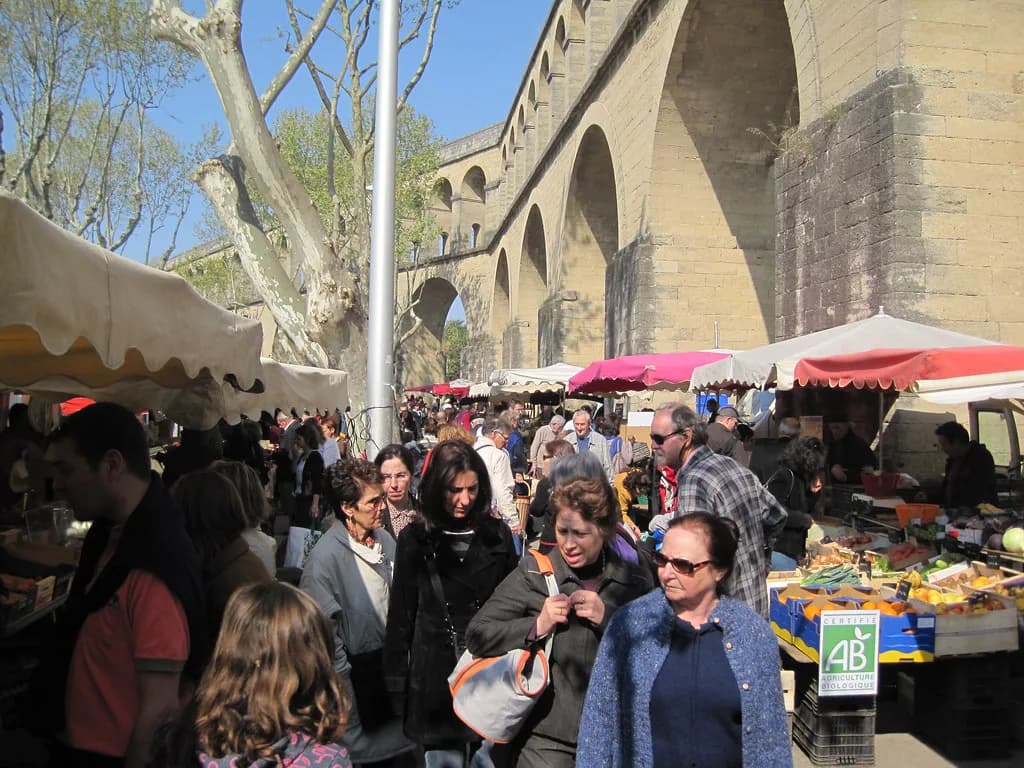
Marché des Arceaux runs on Tuesday and Saturday mornings, which makes either day the natural home for this stop. Go hungry: regional produce, bread, cheese and prepared food are the point, and it doubles as lunch. Bring cash, since not every stall takes cards.
On a Sunday, Les Dimanches du Peyrou antique and flea market has taken place from roughly 7.30am to 2.30pm. It pairs neatly with a Peyrou walk rather than a museum morning.
Whichever morning you get, the market is the fixed point the rest of the day bends around; the surrounding Les Arceaux area is handy for a coffee afterwards.
Day 2 Afternoon: Antigone and the Lez
Walk Antigone from the Polygone shopping centre through Place de Thessalie toward the Lez and the Esplanade de l'Europe. The neoclassical columns and wide pedestrian walkways are free to stroll and make a sharp contrast with the medieval lanes you covered yesterday. Morning or late afternoon light flatters the geometry.
For lunch or an evening away from the centre, Marché du Lez is a creative riverside district with restaurants, vintage shops, art and the Halles du Lez food hall. Individual units keep different hours, so treat it as a flexible option rather than a fixed stop.
If you want to fold shopping into the day, the Polygone end of Antigone is the obvious place to start.
Day 2 Evening: Sunset and a Second Look
Return to the Peyrou for sunset if the weather is clear, or use the evening for a second pass through the cathedral quarter now that you know your way around. Both cost nothing and neither needs a booking.
Keep dinner simple and close to where you end up. After two full days on cobbles, a table near your last stop beats a cross-city reservation.
Day 3 Options: Art, Coast or Another Quarter
With a third day you have a real choice. One option is the modern and contemporary side of the city, including MO.CO. Hôtel des Collections and the free Jardin des Cinq Continents, a planted garden near Montpellier Saint-Roch station. It is a calm, low-cost half-day that suits a slower pace.
A second option is the coast: direct regional trains reach Sète in roughly 20 to 30 minutes, where canals, a market and the climb up Mont Saint-Clair fill a day. Espiguette beach near Le Grau-du-Roi is wilder and easier by car, so pick it only if you have one.
If you are weighing up whether the city justifies the trip at all, the honest answer is that two days already deliver the core.
A Wet or Low-Energy Version
When rain sets in or your legs give out, cut Antigone and the Peyrou and build the day around the Musée Fabre, a covered market and a long lunch. The Écusson's narrow lanes also give more shelter than the wide open spaces at either end of the city.
This pared-back day still covers the essentials, so it is not a lesser version of the fuller plan. Two hours in the Fabre plus a market lunch is a perfectly good Montpellier day.
Sunday and Monday Planning
Build the week around fixed points rather than a rigid day order. Marché des Arceaux falls on Tuesday and Saturday, Les Dimanches du Peyrou on Sunday, and the Musée Fabre has generally run Tuesday to Sunday; shift the museum to a day that fits and put the market morning where it belongs.
On a Sunday, pair the Peyrou flea market with a walk through the old town and an early dinner, and leave the museum for another day. Confirm the museum's current week on its own site before locking the plan.
What to Skip on a Short Trip
The Parc Zoologique de Montpellier is a poor use of two days even at its best, and it has been listed as closed from 1 August 2026 for a 29-month renovation, with reopening expected in the second half of 2028. Treat that as the published position and check before planning around it.
Save the Languedoc vineyards and any long coastal excursion for a longer stay. Trying to fit wine country into a weekend means sacrificing either the Fabre or the old town, and both are better value for a first visit.
Two Mistakes First-Timers Make
The first is overloading day one. Cramming the cathedral, the Jardin des Plantes, the Peyrou and the Fabre into a single day leaves no time to sit in a square, which is half the reason to come.
The second is splitting the Écusson across separate days and walking the same lanes twice. Give it one generous block on day one and keep day two for the museum, the market and Antigone.
Practical Notes: Walking, Shoes and Timing
The old town is cobbled and gently hilly toward the Peyrou, so bring shoes you can walk in for several hours at a stretch. Spring and autumn give the most comfortable temperatures for a city break built on foot.
Leave slack in the plan for a closed shop, a museum queue or a market you want to linger in. A realistic Montpellier itinerary has empty space in it by design.
Plan Your Visit
Two days is the honest minimum for Montpellier's core, and a third day is best spent on the Musée Fabre at an unhurried pace, the Antigone quarter and a market morning. Build the plan around Tuesday or Saturday for Marché des Arceaux, or Sunday for the Peyrou flea market, and shift the museum day to suit.
If those two days leave you wanting more, or wondering whether the city earns a longer stay, read the verdict before you book.
If you are comparing southern cities for the same weekend, the same area-by-area logic works elsewhere: a Cannes itinerary concentrates on the seafront and La Croisette, while an Aix-en-Provence itinerary is built around the Cours Mirabeau and the old centre.
Explore more Montpellier guides
Frequently Asked Questions
How many days do you need in Montpellier?
Two full days cover the historic centre comfortably: Place de la Comédie, the Écusson, the cathedral, the Jardin des Plantes and the Promenade du Peyrou on day one, then the Musée Fabre and Antigone on day two. A third day adds contemporary art, a market morning at a relaxed pace or a coastal excursion.
Is two days enough to see Montpellier?
Yes, for the core. Two days let you walk the old town properly and still give the Musée Fabre two hours. What you cut is the wider region: vineyards, beaches and the zoo all belong in a longer trip.
What should you do on a first visit to Montpellier?
Start at Place de la Comédie, walk into the Écusson and finish the day at the Promenade du Peyrou for late light. On day two, take the Musée Fabre and then walk Antigone down to the Lez.
Which day is best for the Musée Fabre?
The museum has generally opened Tuesday to Sunday from 11am to 6pm, so any of those days works; check its own site for the week you travel. Tuesday to Saturday keeps your Sunday free for the Peyrou flea market.
When is the Marché des Arceaux held?
It runs on Tuesday and Saturday mornings. Plan your market morning around one of those days and treat it as lunch rather than a quick stop.
Do you need a car in Montpellier?
No. Central Montpellier is compact and largely pedestrian, and five tram lines connect the centre with the stations and outer districts. A car only helps for rural vineyards and outlying beaches.
Is the tram free in Montpellier for visitors?
No. Free travel applies to eligible local residents; visitors buy TaM tickets from the app or ticket machines, and the fare is displayed there.
What can you do in Montpellier on a Sunday?
Combine Les Dimanches du Peyrou flea market with a walk through the old town and the Promenade du Peyrou, then eat an early dinner in the Écusson. Leave the museum for another day.
Sources
Notes for French city breaks
Optional updates to our guides.
You might also like

Continue reading
More guides you'll find useful