Shopping in Montpellier: Streets, Markets & Picks
Shop Montpellier with a plan: the Comédie and Antigone districts, Le Polygone, L'Écusson's independent lanes and the Sunday flea market on the Promenade du Peyrou.
On this page
Shopping in Montpellier is a question of district rather than street. The city stacks three distinct experiences within walking distance: the open squares and medieval lanes of the centre, the covered mall at Le Polygone beside the modern Antigone quarter, and the open-air market and flea-market pitches on and around the Promenade du Peyrou. Decide which of those you want before you set out, and a short break gives you room for all three.
The practical constraint is timing, not distance. Place de la Comédie anchors the centre, Musée Fabre sits a few minutes west on Boulevard Bonne Nouvelle, and the Peyrou and Les Arceaux climb away to the north-west, so a sensible day runs from the square through the old lanes and finishes uphill. Build the plan around the days each market and venue actually operates rather than around a list of shop names.
Where shopping in Montpellier happens
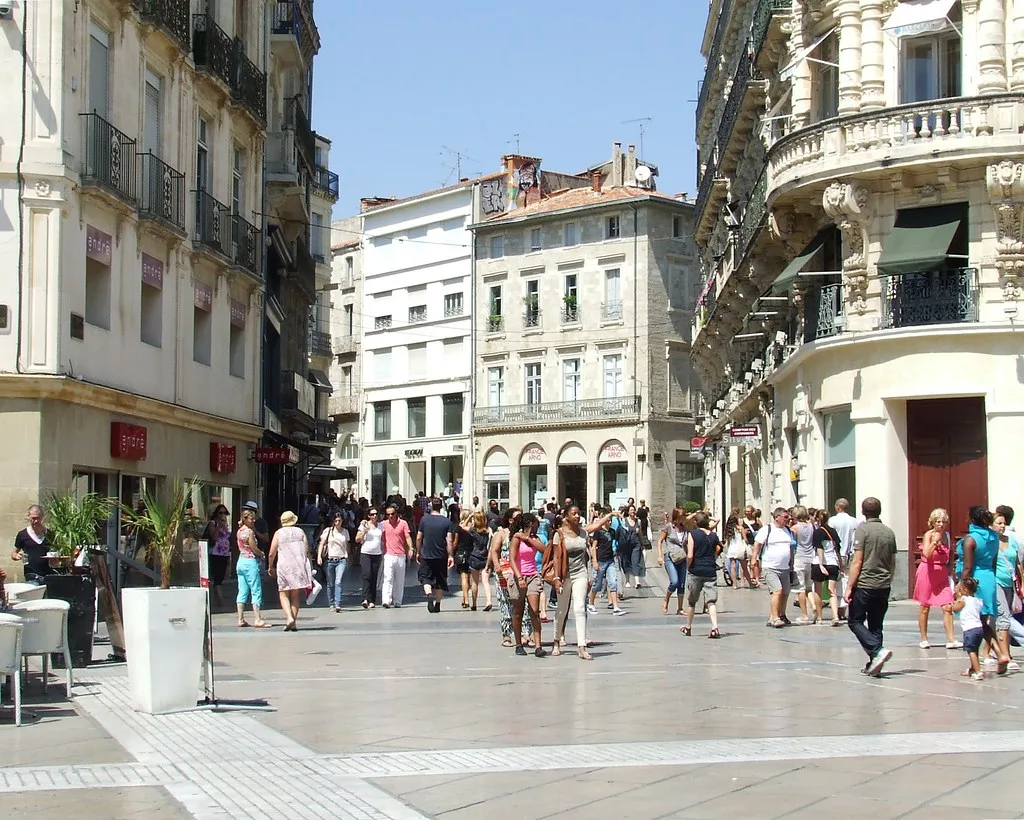
Think of the city in three bands. The first is the Comédie–Antigone axis, running from the main square east through Le Polygone and into the neoclassical avenues of Antigone, which suits a wet or windy afternoon under cover. The second is L'Écusson, the old town, where the streets are narrow, the shopfronts small and the browsing slower.
The third band is the outer retail and modern districts: Port Marianne along the Lez, with the Bassin Jacques Coeur and the Odysseum shopping centre nearby, and the residential quarter of Les Arceaux below the aqueduct. These are not browsing districts in the old-town sense, but they make sense if you want chain stores, a cinema or a supermarket run rather than independent shops.
Place de la Comédie and the surrounding streets: start here
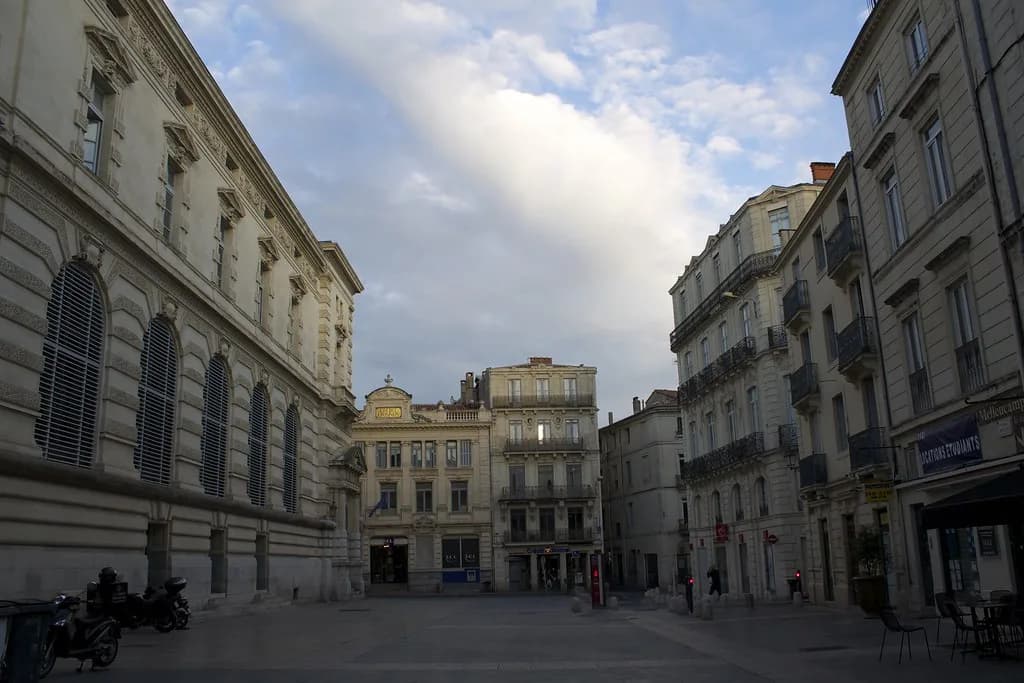
Place de la Comédie is the obvious first stop: a wide pedestrian square ringed by cafés and market-style street trading, with art nouveau buildings on one side and the modern L'Arbre Blanc tower within sight. It is a place to orient yourself and pick up everyday items rather than a destination for a single purchase.
From the square, the shopping streets run north into L'Écusson. Rue de la Loge is the handiest of them for a quick loop, with food stops along the way, while the surrounding lanes reward wandering without a fixed target. Treat the square as the start and finish of a walk rather than the whole trip.
Centre Commercial Le Polygone: the all-weather option
Le Polygone sits on Rue des Pertuisanes at the edge of the old town, designed by Ricardo Bofill and physically connected to the Antigone district. It carries the department-store and supermarket names you would expect from a French city-centre mall, including Galeries Lafayette and Monoprix, which makes it the reliable stop for fashion, groceries and local food products under one roof.
The trade-off is character: you get weather-proof convenience and predictable stock, but not the vaulted ceilings and one-off finds of the old lanes. Use it when the weather turns or when you need a specific size, and keep the independent browsing for L'Écusson.
Antigone and Port Marianne: architecture-led wandering
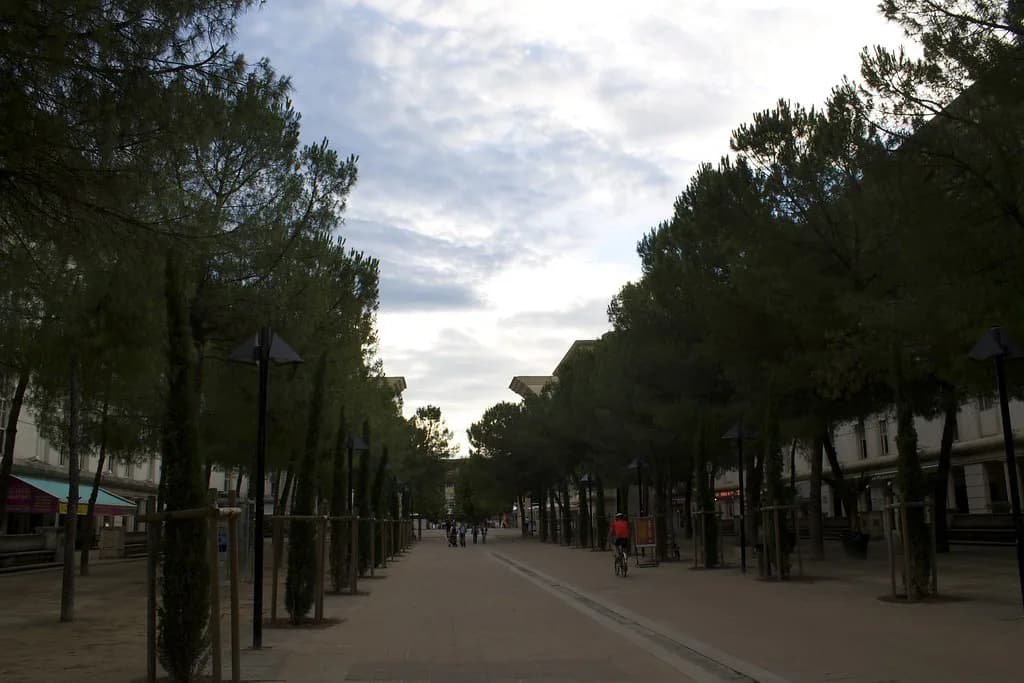
Antigone is worth an hour even if you buy nothing. The district's wide avenues and neoclassical blocks were laid out by Ricardo Bofill, and the Esplanade de l'Europe opens onto lawns and fountains that lead towards the Lez. The retail here is chain-led, but the walk between the mall and the river is the point.
Port Marianne continues that modern thread south-east along the Lez, with the Bassin Jacques Coeur, cafés and shops, and the Odysseum centre a short distance away for larger stores, an ice rink and a cinema. Choose this side of town if your shopping list is practical rather than decorative.
L'Écusson: Rue de la Loge, Rue de l'Aiguillerie and the old lanes
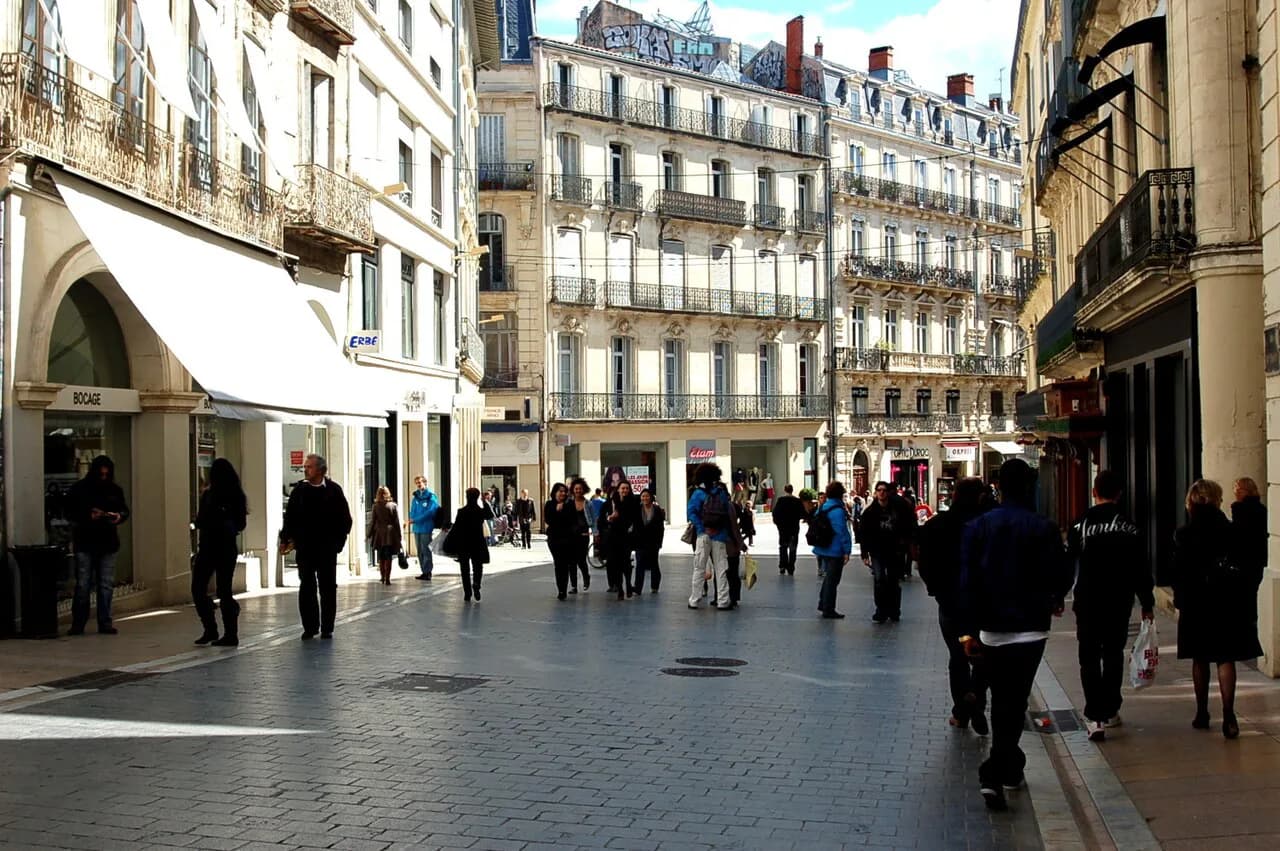
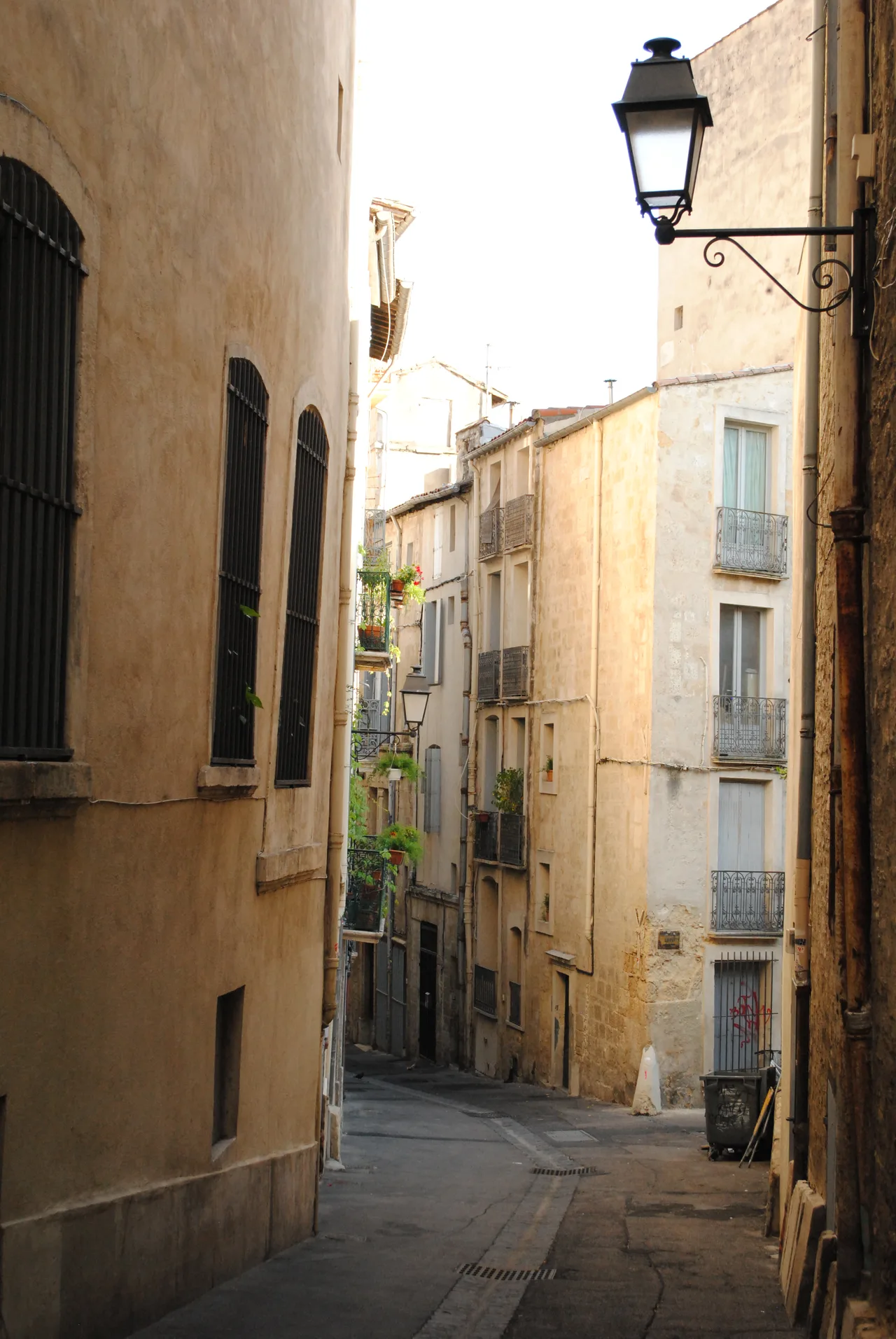
L'Écusson is the medieval heart, and its shopping is the reason to come to Montpellier rather than a mall. The tourism board points visitors towards the narrow streets, where shops sit under vaulted ceilings and the mix runs to designers and antique dealers rather than uniform chains. Allow time to look up as well as in.
Rue de la Loge and Rue de l'Aiguillerie are the two lanes to know. Rue de la Loge carries small food stops and sits at the centre of the pedestrian grid; Rue de l'Aiguillerie runs parallel and holds one of the city's better toy shops. Work north from the Comédie and let the lanes pull you uphill towards the Peyrou. If you enjoy this kind of compact old-town browsing, the shopping in Annecy offers a similar pleasure in a smaller medieval grid.
Two squares break up the walking. Place de la Canourgue, ringed by seventeenth-century townhouses, is the prettiest pause, with café terraces and a view towards Pic Saint Loup. Place de la Comédie at the bottom of the grid does the same job for orientation.
Independent and one-off shops worth seeking out
Pomme de Reinette et Pomme d'Api on Rue de l'Aiguillerie is a proper toy shop, arranged in themed rooms with artisanal toys and board games, and it is a better souvenir stop for children than any museum gift shop. It sits within a few minutes of the Comédie, so it slots into an old-town loop without a detour.
For clothing, two second-hand names stand out. ALTERNATIVE dépôt-vente on Rue des Sœurs Noires deals in consigned designer pieces, and La Clique Boutique on Rue de la Carbonnerie mixes vintage with work by local designers in a small space. Both reward a rummage rather than a targeted hit, so leave slack in the schedule.
One correction worth having before you walk: CHAMPIN Boutique on Rue Montpelliéret is marked as permanently closed, so do not build a route around it. Confirm the current status of any single shop on the day, since independent addresses in the old town turn over quickly.
Markets: Les Arceaux and the Sunday flea market on the Promenade du Peyrou
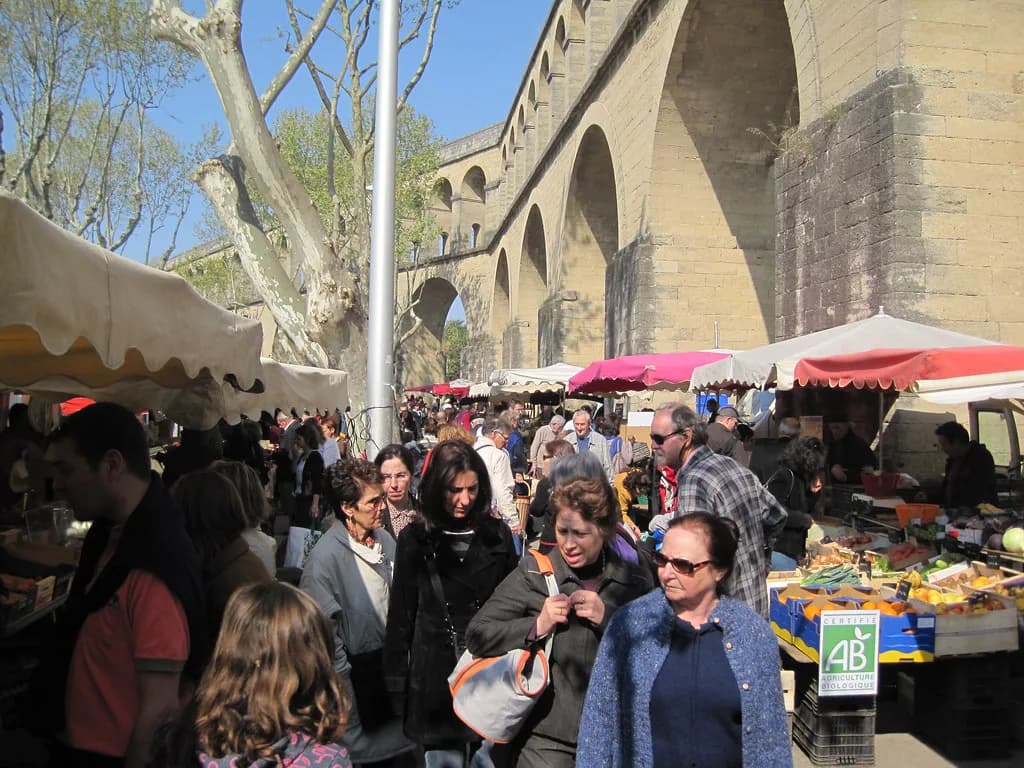
Les Arceaux is a residential quarter below the eighteenth-century Aqueduc Saint-Clément, with a view of the aqueduct and the Château d'Eau water tower from the streets around it. It is listed among the city's market areas, and it makes a natural pairing with the Promenade du Peyrou just above.
The market that should shape your weekend is Les Dimanches du Peyrou, a flea market held every Sunday on the Promenade du Peyrou, with antiques, collector's items and general bric-a-brac laid out beneath the statue of Louis XIV and the water tower. If you are in Montpellier on a Sunday, build the day around it rather than treating it as an afterthought.
The square itself is free to enter and the walk up from the old town takes in the Arc de Triomphe gateway and the aqueduct. Bring cash for the stalls, and check the city's own page for the market before travelling if a Sunday is the reason for your dates.
Local products and souvenirs: what to buy
Montpellier's souvenirs are edible and everyday rather than branded. The Monoprix inside Le Polygone is the efficient stop for regional food products to carry home, and the old-town food shops around Rue de la Loge cover the same ground in smaller quantities. Buy what you will actually eat rather than what survives the flight.
For something more lasting, the old town's designers and antique dealers are the draw, with the Peyrou flea market the best single source of second-hand objects. Toys from Rue de l'Aiguillerie cover the children, and the vaulted-ceiling shops cover gifts that do not look like airport stock.
Sunday, Monday and lunchtime: building a shopping day
The Sunday flea market makes Sunday a genuine shopping day in Montpellier, at least outdoors. Pair it with the Promenade du Peyrou and Les Arceaux, and treat the covered mall as your fallback rather than your first stop. Confirm the opening hours of individual shops before relying on them, since they are not fixed across the city.
For the rest of the week, the sensible approach is to book shopping into the middle of the day and leave mornings and late afternoons for sights. The city's shops cluster tightly enough that a closure costs you a short walk, not the day.
A half-day shopping route on foot
Start at Place de la Comédie, cross into L'Écusson by way of Rue de la Loge, and work north through the lanes to Place de la Canourgue for a coffee. Continue to the Musée Fabre on Boulevard Bonne Nouvelle if the weather turns, then climb to the Promenade du Peyrou and Les Arceaux. Allow three to four hours including stops.
An alternative loop flips the order: Le Polygone and Antigone first for practical purchases, then back through the old town as the light softens. The trade-off is that you see L'Écusson when some shops may be winding down, so check hours for anything specific.
Common mistakes and what to skip
The first mistake is treating the mall as the main event. Le Polygone is useful, but the reason to shop in Montpellier is the old town's vaulted lanes and the Peyrou market. The second is planning a Sunday around indoor browsing when the flea market is the better use of the day.
The third is routing around shops that no longer trade: CHAMPIN Boutique is marked permanently closed, and the zoo on Avenue Agropolis is marked temporarily closed, so neither belongs in a shopping plan. Skip Odysseum unless you specifically want chain retail or the cinema.
Plan Your Visit
Montpellier rewards a shopper who picks a district and commits. Give L'Écusson a full morning for the lanes, Le Polygone an hour when you need cover, and the Promenade du Peyrou a Sunday morning if your dates allow it.
Check opening hours for the specific shops and the market before you travel, and keep the walking route flexible enough to absorb a closure. The city is compact enough that a change of plan costs you minutes, not a day.
Explore more Montpellier guides
Frequently Asked Questions
What is the best area for shopping in Montpellier?
L'Écusson, the old town, is the best area for browsing. Its narrow lanes hold independent shops under vaulted ceilings, with Rue de la Loge and Rue de l'Aiguillerie as the two streets to know. For covered, chain-led retail, head to Centre Commercial Le Polygone on Rue des Pertuisanes, which connects to the Antigone district.
Is there shopping in Montpellier on a Sunday?
Yes, outdoors. Les Dimanches du Peyrou is a flea market held every Sunday on the Promenade du Peyrou, with antiques and collector's items. The rest of the city's shops keep their own hours, so check the specific ones you want before relying on them.
Where do locals shop in Montpellier?
Residents use both the old town and the modern districts. Le Polygone carries Galeries Lafayette and Monoprix for everyday needs, the lanes of L'Écusson hold designers and antique dealers, and the residential quarter of Les Arceaux has market pitches below the Aqueduc Saint-Clément.
What souvenirs should I buy in Montpellier?
Regional food products are the practical souvenir, and the Monoprix inside Le Polygone is the efficient stop for them. For something more lasting, look to the old town's designers and antique dealers, or browse the Peyrou flea market on a Sunday for second-hand objects.
How much does shopping in Montpellier cost?
Prices vary by shop and by what you buy, and no single figure covers the city. The Sunday flea market on the Promenade du Peyrou is free to enter, and you pay only for what you buy from the stalls. Check individual shops for their prices.
Is Le Polygone worth visiting?
It is worth an hour if you need cover or a specific purchase. The mall houses Galeries Lafayette and Monoprix, so it covers fashion, groceries and local food products in one stop. It lacks the character of the old lanes, so treat it as a practical backup rather than the main event.
Sources
Notes for French city breaks
Optional updates to our guides.
You might also like

Continue reading
More guides you'll find useful