Best Restaurants in Montpellier: Where to Eat
Plan where to eat in Montpellier, from Michelin-starred menus in L'Écusson to jambon beurre lunches, market halls and coffee stops, with area-by-area picks.
On this page
Montpellier eats well because it sits in Languedoc, where good bread, ham, charcuterie and wine are everyday shopping rather than a treat. The city's old core, L'Écusson, is a maze of small lanes and sunlit squares with restaurants tucked into corners, while the outer districts of Les Arceaux, Beaux Arts and Port Marianne add markets, wine bars and newer cooking. Two days buys you a tasting menu, a market lunch and several cheap plates if you choose your areas carefully, so pick restaurants by neighbourhood rather than by queue.
Michelin lists 36 restaurants in and around the city, among them the starred Reflet d'Obione and Pastis. That means one dinner can carry the whole trip if fine dining matters to you, while a lunch of bread and ham, a bakery breakfast and a covered-market graze keep the rest of the budget intact. Plan the geography before you plan the calendar: everything below is grouped by where it sits, so you walk rather than tram across the city twice a day.
How to Plan Meals Around a Montpellier Weekend
Treat lunch as the anchor of each day. A long midday meal suits a city where the sights are compact and the afternoons are warm, and it leaves the evening free for a lighter wine-bar plate or the reverse if a tasting menu is the point of the trip. Two days gives you roughly four proper meals, so choose one starred dinner, one market lunch and one old-city first-night dinner, then let bakeries and coffee fill the gaps.
Book around a fixed point rather than a list. If a Michelin-starred dinner is your priority, hold one evening for it and keep that day's sightseeing close to the centre so you are not crossing town twice. For everything else, walking between the old city and the tram lines is quick, so an evening can combine a drink on Place de la Canourgue with dinner on the east side of L'Écusson.
Use the trams for the outer stops. Beaux Arts, where Braise sits, and Port Marianne, beyond which Terminal #1 and the Marché du Lez lie, are both easy tram rides, but they take you away from the centre for an evening. If you only have two nights, choose either the outer trip or the old-city crawl, not both.
What to Order in Montpellier: Languedoc Dishes Worth Seeking Out
Start with charcuterie and let the region do the work. Generous plates of cured meat, local cheeses and the olive-studded fougasse served in wine bars are the city's easy, excellent introduction, and a plate of both with a glass of local white is a proper meal for one. The fougasse here is flaky and rich rather than crusty, so order it alongside rather than instead of bread.
Look for boudin noir, duck and local fish on menus. The black pudding arrives crumbly and almost sweet with caramelised apple, duck turns up as confit or as a simply roasted cut, and the Mediterranean kitchen sends out tuna as tartare or barely seared tataki. Desserts run classic: rum baba, chocolate mousse, and in the market halls an ice cream counter worth leaving room for.
Michelin-Starred Dining: Reflet d'Obione and Pastis
Reflet d'Obione, near the Jardin des Plantes, earned its star for cooking that works with seasonal, local ingredients and a gluten-free approach. Its calling card is a long tasting menu: nine courses played out over something like four hours, with local wine pairings, built around fish, chicken and cheese. That is a whole evening rather than a meal between sights, and the pacing is deliberately slow, so book it for a night when nothing else is scheduled.
Pastis, in the old city on rue Terral, is the other starred address, and it serves a surprise menu with no swaps unless you have an allergy. The dining room is small and beautifully plain, and the cooking leans on simplicity: local duck served with a confit-stuffed bread roll and sticky jus was the memory left by one lunch. For a short break, lunch here is the more practical way to sample star-level cooking without giving up an entire evening.
Choose between them on the shape of your day. Reflet d'Obione is the splurge for a celebration, with a long menu and pairings that carry you through the night near the botanical gardens. Pastis suits a midday slot in the middle of the old town, when you want a single superb meal and an afternoon of walking afterwards. Neither is cheap, so check the current menus and reserve ahead through the restaurants themselves.
Michelin's Montpellier pages list both, so use them to confirm a star is current before you build a trip around one.
Classic L'Écusson Addresses: The First-Night Dinner
Le Bouchon Saint Roch, on a corner of a square in the old town, does the job of a first night almost perfectly. The room celebrates pigs and pork in its decoration, the tables glow warmly, and the cooking is robust and earthy: a generous charcuterie plate, boudin noir with apple, then a chocolate mousse or a rum baba soaked through with booze. It is unpretentious food in an inviting setting, which is what you want when you have just arrived and do not yet know the streets.
Save one evening for a wander rather than a reservation. The lanes around the old town hide terraces on small squares, and a table outside on a warm evening is half the pleasure of eating here. If you plan your visit for spring or autumn you get those evenings without the crush of midsummer, and a market lunch stays pleasant.
Cheap and Quick: Jambon Beurre, Bakeries and Lunch on the Move
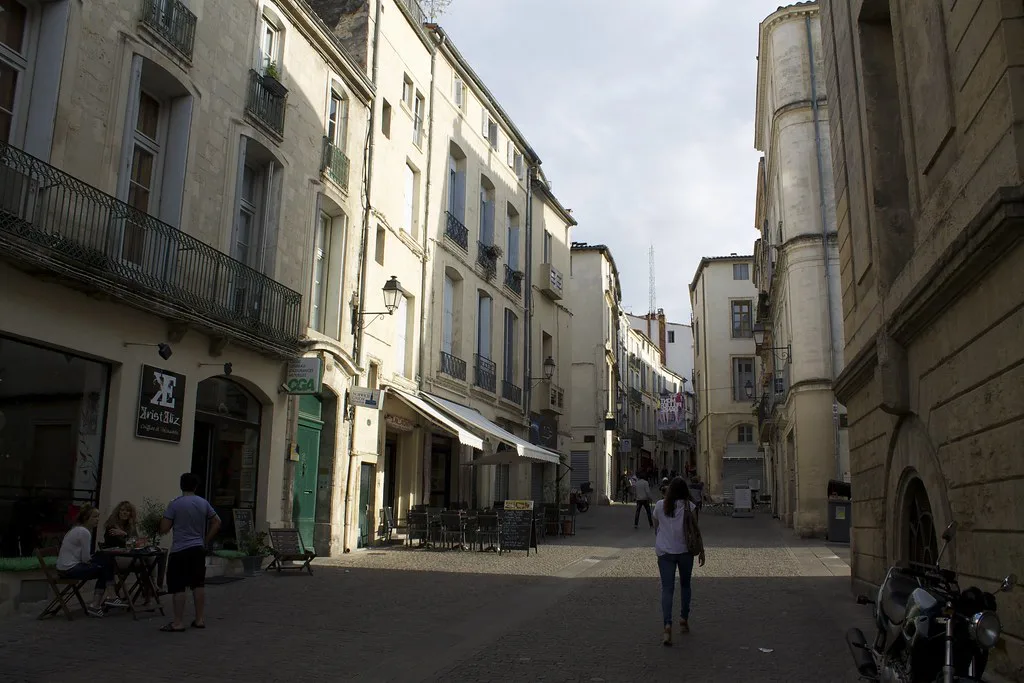
JB & Co, a hole in the wall on rue des Étuves with a single table outside, sells little beyond the jambon beurre. You pick your bread and your ham, the ham is sliced thin in front of you, and cornichons cut through the butter. A lunch like this, somewhere around five euros, is the honest answer to an expensive-tasting-menu trip, and it is the sort of sandwich that makes a long museum afternoon possible.
Des Rêves et du Pain, close to the old city's triumphal arch, is the morning stop: buttery, well-laminated pastries, cakes and even granola, with a queue that can stretch up the street because only a couple of customers fit inside at a time. Go early on a weekday and take your pain au chocolat to a square. The city's bakeries are dense and consistently good, so a bakery breakfast costs little and frees the budget for dinner.
Carry a plan B for Sunday and lunchtime closures. Many French shops shut on Sunday and some close over lunch, so buy picnic supplies in the morning and keep a bakery breakfast as your fallback. Shopping streets and covered halls are worth checking the same trip.
Market Eating: Les Halles Laissac, Les Arceaux and Ice Cream
Les Halles Laissac is one of the city's two covered markets, with stands selling wine, charcuterie, cheese and the rest of the Languedoc larder. It is also where Les Glaces MPL sells ice cream in a long list of flavours, including a black sesame scoop and a salted caramel worth ordering. Treat a hall visit as a meal built from several counters rather than a single restaurant booking, and go hungry.
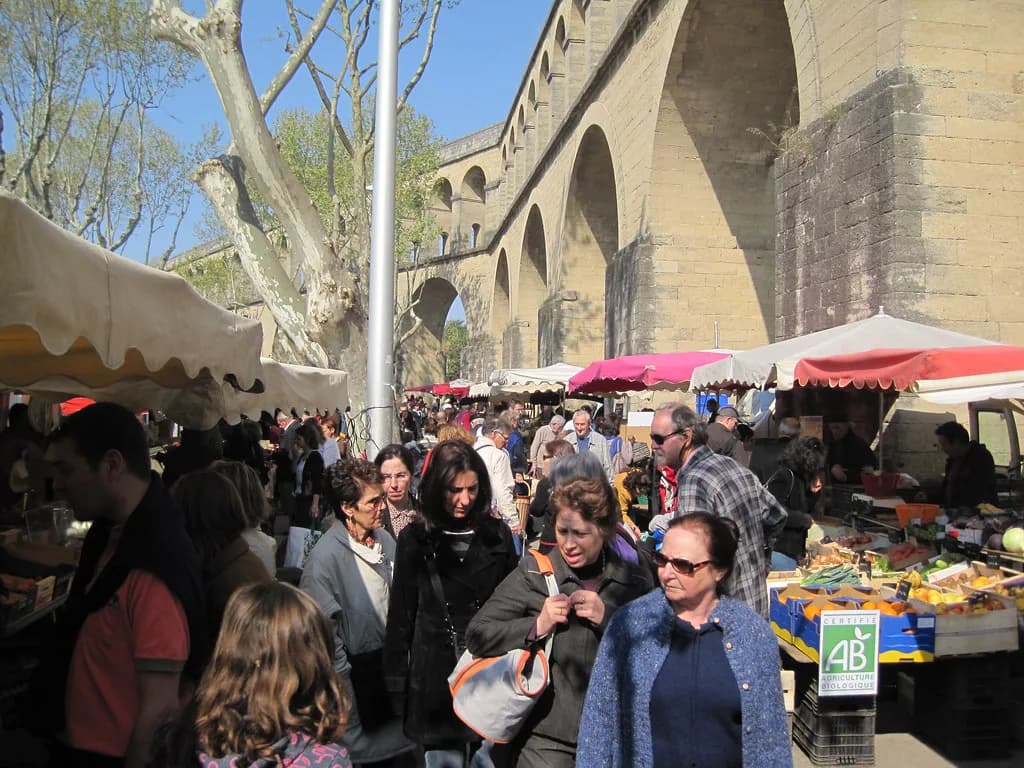
The market under the arches at Les Arceaux, in the shadow of the aqueduct west of the centre, is the other hall worth building a morning around: cheese, charcuterie, olive oil, wine and cider stalls, in a neighbourhood that feels residential rather than touristic. Combine it with a walk under the aqueduct and the Jardin des Plantes, and you have a morning that needs no restaurant at all.
Where to Drink: Wine at O'Petit Trinque Fougasse and Coffee at Café BUN, Coffee Club and Coldrip
O'Petit Trinque Fougasse, on Boulevard Ledru Rollin, is a wine bar for a few glasses and a plate: a short list of reds and whites by the glass, saucisson, burrata with pesto, local cheeses and the eponymous olive-studded fougasse. A few doors down, a beer shop introduces the city's craft scene, which has grown up recently and is concentrated in specific spots rather than spread evenly across every quarter.
For coffee, Café BUN off Place de la Comédie roasts its own beans and was the city's first speciality coffee house, with outside tables for watching the square. Coffee Club on rue Saint-Guilhem is tiny and sits at the top of a hill, and Coldrip on the northern side of the old town serves good lattes and a brunch menu leaning on smashed avocado and halloumi. Any of the three makes a useful mid-morning pause between sights.
Beyond the Centre: Braise, Terminal #1 and the Marché du Lez
Braise, in Beaux Arts, is a restaurant and wine bar with an open kitchen, a wood fire and a wine list running to hundreds of bottles. The cooking is modern and sometimes uneven but memorable at its best: smoked mackerel with cauliflower, short rib with a sharp slaw, a serious Comté. The neighbourhood is a tram ride from the centre and feels entirely local, so this is the pick when you want to eat where the city eats.
Terminal #1, out past Port Marianne on Avenue de la Mer, is a bright, busy room with a strong raw-fish opening: tuna tartare with avocado, and a barely seared tataki. Nearby, the Marché du Lez is a permanent street-food market with several traders, best treated as a flexible lunch stop rather than a destination in itself. Both are worth the tram ride if you have a third day or a spare afternoon.
How to Split Two or Three Days Across These Restaurants
On a two-day trip, give the first evening to Le Bouchon Saint Roch for a robust old-town dinner, then hold the second night for Reflet d'Obione or dinner at Pastis if a starred meal is the reason for the trip. Fill day one with a bakery breakfast, a market graze at Les Halles Laissac and coffee at Café BUN, and day two with a jambon beurre lunch and a wine-bar evening at O'Petit Trinque Fougasse.
With a third day, take lunch at Pastis in the old town and spend the afternoon walking it off, then ride the tram out to Braise for dinner in Beaux Arts, or head to Terminal #1 for a lighter, buzzier meal near Port Marianne. Keep the Marché du Lez as a fallback on a day when plans slip. Build the rest of the day around the museums and squares so the eating fits the walking.
Plan Your Eating Around the City
Montpellier rewards a plan built on areas and meal slots: a starred dinner or lunch as the centrepiece, a market hall for a grazing midday meal, a cheap jambon beurre or bakery breakfast to balance the budget, and a wine bar for the last hour before bed. Two days covers the old town thoroughly, and a third buys you the outer districts without rushing back. If you are weighing up another city-break kitchen, compare these with the best restaurants in Aix-en-Provence.
Check menus, prices and reservation policies directly with each restaurant before you travel, and confirm market days for the halls you plan to visit. If you are still weighing up the city against another short break, the honest verdict on whether it is worth visiting should settle it.
Explore more Montpellier guides
Frequently Asked Questions
What is Montpellier famous for food?
The city draws on Languedoc produce: cured meats, local cheeses, olive-studded fougasse, boudin noir with apple and duck. Chefs make the most of the region's fish and wine, and the covered markets at Les Halles Laissac and Les Arceaux are the easiest places to taste the range from several stalls rather than one kitchen.
Which restaurants in Montpellier have Michelin stars?
Michelin lists Reflet d'Obione, near the Jardin des Plantes, and Pastis on rue Terral among its Montpellier restaurants. Check the current Michelin listings for each address before booking, since star status and menus change.
What are the best affordable restaurants in Montpellier?
For a cheap lunch, JB & Co on rue des Étuves does little beyond jambon beurre and gets the bread and ham right. Bakeries such as Des Rêves et du Pain cover breakfast, the covered market halls let you build a meal from several stalls, and a glass and a plate at O'Petit Trinque Fougasse makes an inexpensive evening.
Where should you eat in Montpellier old town?
Start with Le Bouchon Saint Roch on a corner square for a robust first-night dinner of charcuterie, boudin noir and classic desserts. Pastis and Café BUN sit within the old core, while the lanes and small squares around Place de la Canourgue hide terraces for a drink before or after dinner.
What should you not miss eating in Montpellier?
Order the fougasse, the boudin noir with caramelised apple and a rum baba, and leave room for ice cream from Les Glaces MPL inside Les Halles Laissac. A jambon beurre at JB & Co gives you the everyday version of the same good bread and ham.
Sources
Notes for French city breaks
Optional updates to our guides.
You might also like
Continue reading
More guides you'll find useful